


What Are the 10 Best Warehouse Racking Systems?

Choosing the right Warehouse Racking System can reshape productivity, safety, and storage capacity. A carefully planned layout reduces travel time and protects inventory. Yet the strongest option depends on real operating conditions. There is no universal winner. Product dimensions, turnover rates, available floor space, and handling equipment all influence the decision. A cold-storage facility may need corrosion-resistant materials. A spare-parts warehouse may benefit from dense shelving and clear labeling.

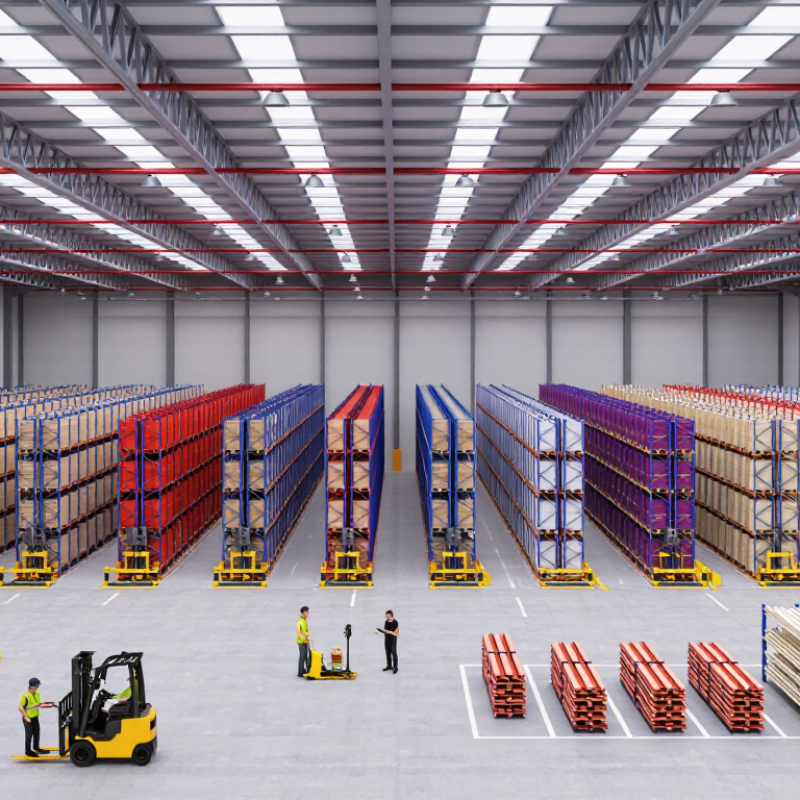
This guide examines ten leading warehouse racking systems and their practical applications. It compares selective pallet racks, drive-in racks, push-back racks, cantilever racks, and other proven designs. The discussion considers access speed, storage density, installation complexity, and long-term maintenance. It also addresses aisle width, beam capacity, forklift clearance, and inventory rotation. These details matter. A rack that looks efficient on paper may slow picking inside a busy facility. Load ratings must match actual pallet weights, not estimates. Ignoring damaged beams or loose anchors creates avoidable risk. Safety cannot be decoration.

Reliable selection begins with accurate measurements and honest workflow analysis. Experienced warehouse teams should verify manufacturer specifications before installation. Applicable safety requirements and inspection procedures also deserve careful attention. Photos, measurements, and traffic observations can reveal problems that a simple floor plan misses. Still, every recommendation has limits. Some facilities may need a mixed system rather than one standard solution. That uncertainty deserves attention. The goal is not merely to fit more pallets. It is to create a dependable storage environment that supports people, equipment, and future growth.
What Are the 10 Best Warehouse Racking Systems?

What Makes a Warehouse Racking System Effective?

An effective warehouse racking system begins with operational evidence, not appearance. In field audits, I have seen attractive layouts create long travel paths and hidden congestion. The right design matches pallet weight, SKU velocity, equipment reach, and replenishment frequency. Fast-moving cartons need accessible positions near picking zones. Reserve stock can sit higher or farther away. Clear load plaques, protected uprights, and consistent beam levels also reduce daily uncertainty.

Safety must remain measurable. The U.S. Occupational Safety and Health Administration reports about 85 annual forklift fatalities and 34,900 serious injuries in the United States. Racking design cannot remove every risk, but it can separate pedestrians, widen turning areas, and prevent overloaded bays. Floor anchors matter. So do inspections. A bent frame is not a minor cosmetic issue. It may signal impact damage or poor traffic control.

Technology should support practical decisions. MHI’s 2024 Annual Industry Report surveyed more than 1,000 supply-chain professionals, and 95% said innovation would influence future success. That finding supports better inventory visibility, but automation alone cannot fix poor slotting. Measure pick rate, storage density, replenishment time, damage incidents, and order accuracy before changing the layout. No system is perfect. Seasonal demand, unusual pallets, and rushed workers will expose weaknesses. Leave adjustable space. Review the design after real operations begin, not only after installation.

What Are the 10 Best Warehouse Racking Systems? - What Makes a Warehouse Racking System Effective?

No. Racking System Best Use Typical Storage Density Selectivity Typical Load per Level Main Advantages Important Considerations
1 Selective Pallet Racking Warehouses requiring direct access to many stock-keeping units (SKUs) Low to medium Very high; every pallet position is generally accessible Approximately 500–5,000 lb (225–2,270 kg), depending on design Flexible layout, easy inventory control, broad pallet compatibility Uses more aisles and floor area than high-density systems
2 Drive-In Racking Large quantities of the same product with low SKU variety High Low; pallets are stored in deep lanes Approximately 1,500–4,000 lb (680–1,815 kg) Strong floor-space utilization and efficient storage of uniform loads Requires careful forklift operation; limited stock rotation and selectivity
3 Push-Back Racking Multiple pallets per lane where higher density and faster access are both needed Medium to high Medium; normally operates on a last-in, first-out basis Approximately 1,000–3,000 lb (455–1,360 kg) Good density, fewer aisles, and faster loading than drive-in storage Not ideal for strict first-in, first-out inventory rotation
4 Double-Deep Racking Facilities seeking more density while retaining access to a reasonable range of SKUs Medium to high Medium; requires a reach truck or suitable double-deep equipment Approximately 1,500–4,000 lb (680–1,815 kg) Improves space utilization without fully sacrificing pallet access May increase inventory handling and reduce selectivity for rear pallets
5 Pallet Flow Racking Perishable goods or operations that require first-in, first-out rotation High High by lane; loading and picking occur from opposite sides Approximately 1,000–3,000 lb (455–1,360 kg) Supports FIFO rotation, organized replenishment, and reduced travel distance Higher initial cost and greater maintenance requirements for rollers and brakes
6 Carton Flow Racking Piece-picking operations with fast-moving cartons, totes, or cases Medium to high High; individual cartons are replenished from the rear Approximately 100–750 lb (45–340 kg) per shelf or section Improves picking speed, product presentation, and FIFO control Needs correctly sized cartons and regular replenishment planning
7 Mobile Racking Cold stores or space-constrained facilities where aisle space must be minimized Very high High, but usually only one or a small number of aisles are open at a time Approximately 1,000–4,000 lb (455–1,815 kg) per pallet position Can significantly reduce fixed aisle requirements and increase storage capacity Higher installation cost, slower access, and need for floor and safety controls
8 Very Narrow Aisle (VNA) Racking High-bay warehouses with large SKU ranges and high vertical space High Very high; most pallet positions remain directly accessible Approximately 1,500–4,000 lb (680–1,815 kg) Uses building height efficiently while maintaining strong pallet selectivity Requires specialized trucks, precise floor tolerances, and operator training
9 Mezzanine or Multi-Tier Racking Small-parts storage, order picking, and facilities with unused vertical clearance High for small items High for hand-picked inventory Approximately 250–1,000 lb (115–455 kg) per shelf or bay, subject to engineering Adds usable storage or work levels without expanding the building footprint Requires structural review, access protection, stairs, and applicable permits
10 Cantilever Racking Long, bulky, or irregular products such as timber, pipe, tubing, and panels Medium for long products High; open-front design provides direct access Approximately 500–6,000 lb (225–2,720 kg) per arm, depending on configuration Accommodates non-palletized loads and adjustable product lengths Requires suitable load support, stability controls, and adequate handling clearance

Note: Load capacities and storage-density descriptions are typical planning ranges only. The final rack design must be verified by a qualified engineer using the actual pallet dimensions, load weights, building conditions, seismic requirements, forklift specifications, and applicable local safety standards.


How to Compare Warehouse Racking Capacity, Access, and Flexibility

Comparing the 10 best warehouse racking systems starts with usable capacity, not the number of pallets shown on a drawing. Measure clear height, aisle width, floor loading, pallet dimensions, and beam levels. A selective system offers direct access to every pallet, but it consumes more floor space. Drive-in and push-back racks increase density, although forklift access and stock rotation become less flexible. Pallet-flow racks support faster first-in, first-out movement. Cantilever racks suit long, uneven loads.

Capacity must include safety margins. Confirm each upright, beam, connector, and slab against engineered load ratings. The Rack Manufacturers Institute’s ANSI MH16.1 standard provides design criteria for industrial steel storage racks.

It is not a substitute for a site-specific assessment. Real warehouses often have damaged frames, uneven floors, or changing pallet weights. Ignore those details, and the “best” system may fail operationally.

Access should be measured in pallet touches, travel distance, retrieval time, and selectivity. Flexibility matters when SKU counts change. MHI’s 2024 Annual Industry Report found that 55% of supply-chain leaders expect to adopt robotics and automation by 2028. That trend increases the value of consistent rack geometry, readable locations, and predictable aisle clearance. However, automation can reduce adaptability when layouts become too specialized.

A practical comparison should score capacity, access, expansion cost, inspection needs, and recovery after damage. Some assumptions will be wrong. Test one aisle with real pallets and real operators before approving a full installation.

The 10 Best Warehouse Racking Systems for Different Storage Needs

The 10 Best Warehouse Racking Systems for Different Storage Needs

The best racking system depends on product size, turnover, access, and floor space. Selective pallet racks suit mixed stock and frequent picking. Drive-in racks provide dense storage for large batches. Push-back racks add depth while preserving front access. Pallet-flow racks support first-in, first-out rotation. Double-deep racks increase capacity, but they need reach equipment. Cantilever racks handle timber, pipes, and other long goods. Carton-flow racks improve manual picking for small cartons. Mobile racks reduce aisle space through movable bays. Mezzanine systems create usable vertical work areas. Automated storage and retrieval systems support high-volume, data-driven operations. No rack is perfect.

MHI’s 2024 Annual Industry Report, based on more than 1,300 supply-chain professionals, shows technology investment remains a major operational priority. That matters when comparing mobile or automated systems. However, automation cannot correct poor slotting or inaccurate inventory records. In practice, a simple selective layout may outperform a complex design when workers need constant access. OSHA reports that powered industrial trucks cause about 85 fatal accidents and 34,900 serious injuries annually in the United States. Rack design must therefore include load ratings, impact protection, inspections, and clear travel paths. Small oversights become expensive.

Tips: Measure usable height, aisle width, pallet weight, and daily movements before choosing a system. Test one zone first. Review the result after four weeks. I would also challenge the assumed capacity gain; deeper storage can reduce access speed. Document beam levels, anchor points, and inspection dates. Train operators on the actual layout, not a generic manual.

What Are the 10 Best Warehouse Racking Systems?

Representative planning benchmarks for comparing storage density and operational suitability across common warehouse racking systems.

The storage-density index is a practical comparison score based on how efficiently each system uses warehouse floor space, ranging from 1 to 10. Selective pallet racking provides the highest accessibility, while drive-in, mobile, pallet-flow, and automated systems generally offer greater density. Actual performance depends on load weight, aisle width, building height, inventory turnover, SKU variety, and automation requirements.

How to Choose the Right Racking System for Your Warehouse

Choosing the right warehouse racking system starts with your inventory, not the rack catalog.

Selective pallet racking suits many SKUs and direct access. Double-deep racking increases density but reduces immediate access. Drive-in racking supports uniform pallets with limited rotation needs. Push-back racking handles several pallets per lane. Pallet-flow racking supports first-in, first-out movement. Carton-flow racking improves manual picking. Cantilever racking fits long materials. Mobile racking saves floor space. Mezzanine systems add usable levels. Automated storage and retrieval systems support high-volume operations.

Measure before purchasing.

Record pallet dimensions, load weights, SKU counts, daily movements, and forklift turning space.

A 2024 MHI Annual Industry Report found that 46% of surveyed supply-chain professionals use robotics and automation. That figure supports planning for future integration, even when automation is not immediate.

Leave clear cable, sensor, and maintenance access. Small details matter.

In practice, the densest design is not always the best design.

A narrow aisle can increase capacity, yet slow picking or complicate emergency access.

Check floor strength, seismic conditions, sprinkler clearance, and rack protection requirements. ANSI MH16.1 provides structural guidance for industrial steel pallet racks.

Recheck every calculation with a qualified engineer.

I have seen layouts fail because “average” pallet weights hid heavier seasonal loads.

Test one representative aisle before expanding.

Warehouse data changes.

Your rack plan should change with it.

Key Safety and Maintenance Considerations for Warehouse Racking

What Are the 10 Best Warehouse Racking Systems?

Key Safety and Maintenance Considerations for Warehouse Racking

Safe racking begins with accurate loading information. Every bay should display its maximum load clearly. Workers must understand beam levels, pallet dimensions, and uneven weight distribution. During daily operations, watch for bent uprights, loose anchors, cracked welds, and missing beam locks. A small impact from a forklift can weaken a frame without obvious collapse. Treat it seriously. Damaged components should be isolated until a qualified person assesses them. Never straighten structural parts with improvised tools.

Tips: Keep aisles clear and lighting bright. Mark pedestrian routes beside forklift lanes. Inspect rack connections at the start of each shift. Record findings with dates, photos, and corrective actions. Clean spilled liquids quickly, especially near base plates. Dust can hide corrosion.

Maintenance also requires disciplined records and realistic scheduling. Monthly checks may miss damage caused during busy periods, so high-traffic areas deserve more frequent attention. Review load changes before adding deeper pallets or extra levels. The rack may look strong, but its original design assumptions may no longer fit. Train new operators beside the equipment, not only through written instructions. Practical demonstrations reveal habits that manuals often miss. No inspection plan is perfect. Review it after incidents, layout changes, and repeated near misses.

Powder Coat Booths

For those larger-sized parts, or smaller quantity runs, we have 2 independent powder coat booths and ovens. The quality, durability and affordability of today’s powder coating finishes make this the process of choice for world-class companies.

Powder coating advantages over other forms of coating are many. Materials used in the Powder coating process can be metals and non-metals that come in a multitude of thicknesses, textures, colors, etc. Another of Powder coating’s biggest advantages over conventional coatings is its ability to create finishes in many different textures. Powder Coating Booths allow us the ability to apply these advantages to large products.

Wet Paint Line

Tri-State Fabricators runs a full-service conveyor line for painting. Wet painting can provide protection or decoration to many different part styles. From start to finish, every project is easier to undergo random and point-based inspection by our skilled painting team.

Advantages to our Wet Paint Line are these lines start with product prep and ends with a thorough inspection of a high quality finished product. Our ability to complete large and small projects with a superior finish and doing so in a timely and economical fashion. This passes along the savings in production to our customers. When powder coating ins not an option, our Wet Paint Line gets the job done right the first time.

Wet Paint Booths

When the parts get big and heavy we roll-out our custom paint racks and oversize booth. By utilizing our partnerships with all the major paint brands, we can match virtually any color with wet paint.

The advantages of having access to a Wet Paint Booth are many. Large projects of many different shapes can be loaded into the booth. The Wet Paint Booth offers an environment that is much more controlled than a typical parts painting operation.

Not only are they used because of their controlled environment, but they’re are also advantageous when it comes to applying paint to parts that are needed in industries that require specialty coatings such as medical, aerospace, etc.

Military CARC

Our military forces have some very high standards when it comes to the finish of their vehicles and equipment. From the first pre-treatment step to final coat, it takes a great deal of knowledge and experience to protect the men and women of our armed forces. They deserve only the best, and Tri-State Fabricators provides it.

All of our processes are closely monitored by our staff and management teams. Both of which are highly trained in the processes of metal fabrication and finishing. Tri-State Fabricators’ goal is to always fully satisfy each and every customer, including the military. We will always put a 110% into what we do.

Glass-Bead Blasting

Abrasive media blasting is an excellent way to remove old paint, rust, and increase the paint/powder adhesion. Glass beads produce a much smoother and brighter finish than angular abrasives; leaving the part clean yet without any dimensional change. Chemically inert and environmentally friendly, we can recycle our beads approximately 30 times; making them a more preferred method of metal cleaning or surface finishing.

Advantages to Glass Bead Blasting are many. Glass bead blast media is used when a project is needing rough surfaces need to become smooth for applications of coatings such as paint. It is typically used to clean paint and rust from a product surface without deforming the surface it is being used on. Overall, compared to many other blasting media, Glass Bead Blasting is a very economical choice and those savings are always passed on to our customers.

Part Washing

Tri-State Fabricators utilize a zinc phosphate wash to clean and etch the material to ensure the best paint adhesion possible. The unique design of our 3-stage wash system does the work like a 5-stage. From Cleaning and rinsing to conversion coating and post-treatment, Our Part Washing process is a complete service and works throughout the fabrication service and the finishing service.

Along with the previously mentioned benefits, Curing is a vital chemical reaction that leaves the product finish hard and relatively safe from mild abrasion and aggressive corrosion. This process can be done in more than one way; ambient air-dry or in curing ovens at temps that exceed 240°.

Burn-Off Oven

From fixing paint mistakes (someone else’s of course) to simply cleaning our paint line hooks, our burn-off oven is put to good use. After a quick burn-off, a little clean up, and a fresh coat of paint, your parts will look better than new.

Why does our Burn-Off Oven work so well? Because super heating the air around parts turns the materials into ashes. From paint and powder coatings to rubber and machining oils, high temps do the job without degrading the integrity of the part.

Masking

Masking is a vital part of producing high quality products. We have die-cut masking patterns to protect machined surfaces as well as a wide range of plugs and caps to protect threaded holes and bolts. We provide permanent and temporary masking.

Masking allows the selected sections of a product to be protected from a fabrication or finishing service. This can be with both chemicals when etching and tapes, paints when only finishing just a section of the product. Masking is great in aiding the customization process of a project.

Screen Printing

Screen printing is a photographic process that transfers artwork onto a porous nylon screen which allows colored ink to flow through the screen and be deposited on an aluminum or plastic component. We can generally have just about any design created onto a screen for your parts.

Some of the advantages of Screen Printing are, brand recognition for your business displaying on your products, assembly instructions, product warnings/hazards, etc. Tri-State Fabricators produces Screen Printing of the highest quality so you know it’s durable.

Metal Finishing

Metal Finishing is the art of treating the exterior portion of product, often metal but can also be made of other materials, so that the surface is clean and free of any debris. Then the process of applying coats or either paint of powder coat takes place. This coating process improves the quality of the product in both appearance and resistance to wear and corrosion.

Tri-State Fabricators, Inc., understands that a project typically isn’t complete until a high-quality finish has been added to your product. This is why our painting and powder coating teams continuously inspect the products throughout the Metal Finishing process.
