2026 Top Horizontal Directional Drilling Machines for Sale
Choosing the right Horizontal Directional Drilling machine in 2026 requires more than comparing horsepower and advertised pullback force. Contractors must examine soil conditions, bore length, drilling-fluid control, tracking accuracy, maintenance access, and operator support. A machine that looks powerful in a brochure may struggle in dense clay, fractured rock, or crowded urban corridors.
David A. Willoughby, a respected HDD author and industry authority, wrote, “Good planning is the foundation of successful horizontal directional drilling.” That principle remains practical today. Before purchasing, buyers should study engine performance, torque, rod size, digital locating systems, and fluid-mixing capacity. They should also verify service availability and parts support near the jobsite. Downtime becomes expensive quickly.
Small details matter. A clean control panel improves operator response during a difficult steering correction. Wide tracks can reduce ground pressure on soft surfaces. A well-designed mud tank can keep drilling fluid consistent during long installations. These features may seem ordinary. They are not.
This guide reviews the 2026 top horizontal directional drilling machines for sale, focusing on capability, reliability, operating comfort, and total ownership value. It does not treat every machine as perfect. Field performance can vary. Manufacturer claims also require careful checking. Buyers should match each model with actual project demands, local ground conditions, crew experience, and applicable safety requirements. The best machine is not always the largest one. Sometimes, a balanced and serviceable unit delivers better results. That point is easy to miss.
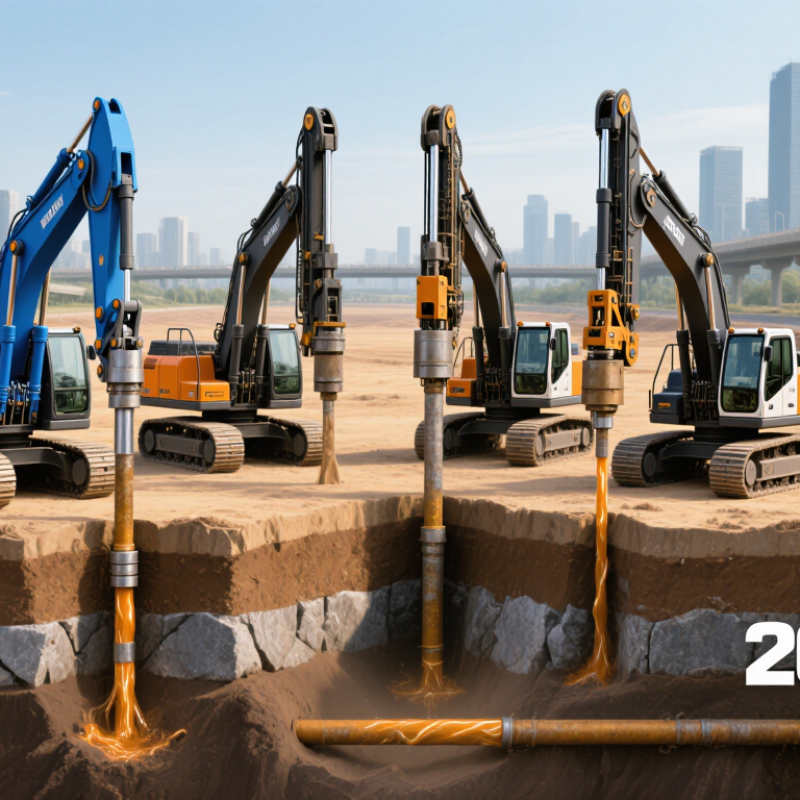
2026 Top Horizontal Directional Drilling Machines for Sale: Key Market Classes
2026 Top Horizontal Directional Drilling Machines for Sale: Key Market Classes
The 2026 HDD market is expanding with utility renewal, fiber deployment, and urban water projects. Recent forecasts from Grand View Research and MarketsandMarkets indicate annual growth near 6% through the decade. Market classes remain more useful than flashy specifications. Micro rigs suit short fiber and service connections. Mini rigs handle residential utilities and compact streets. Midi rigs support longer crossings, larger conduits, and mixed soil. Maxi rigs serve major infrastructure, deep installations, and heavy product pipes.
Pullback force is a practical dividing line. Micro and mini machines often stay below 100,000 pounds. Midi equipment commonly occupies the 100,000–250,000-pound range. Maxi rigs can exceed 500,000 pounds. These ranges vary by manufacturer and test method. That detail matters. A catalog number is not a field result.
Tips: Match rig class with bore length, pipe diameter, soil data, and access space. Check torque, fluid capacity, rod length, tracking system, and transport weight. Ask for verified pullback testing, not only advertised peak force. Review maintenance access around the mud pump and hydraulic controls. Operators should also study utility maps and site records before purchase. The FHWA describes planning and utility coordination as core trenchless practices. I would not choose the largest machine automatically. Oversizing raises transport, setup, and drilling-fluid costs. Undersizing can cause stalled production. Even experienced buyers sometimes misjudge mixed ground conditions. A stronger decision uses local bore logs, contractor experience, and realistic production targets.
2026 Top Horizontal Directional Drilling Machines for Sale - 2026 Top Horizontal Directional Drilling Machines for Sale: Key Market Classes
Typical 2026 market specification ranges for new horizontal directional drilling equipment
| Market Class | Primary Applications | Rated Thrust / Pullback | Rotational Torque | Mud Pump Flow | Typical Rod Diameter | Typical Bore Diameter | Engine Power | Indicative Drilling Length | Approx. Operating Weight | Typical New-Machine Price Range* |
| Mini HDD | Residential utility services, fiber-optic cable, short water and gas connections | 30–100 kN | 1,000–4,000 N·m | 60–150 L/min | 38–64 mm | 100–300 mm | 45–90 kW | 30–60 m | 5–10 t | US$80,000–180,000 |
| Compact HDD | Urban utility installation, telecommunications, service laterals and small road crossings | 100–200 kN | 4,000–10,000 N·m | 100–250 L/min | 50–89 mm | 200–600 mm | 75–150 kW | 60–120 m | 10–18 t | US$150,000–320,000 |
| Mid-Size HDD | Municipal pipelines, medium-distance utility work, multi-cable ducts and highway crossings | 200–400 kN | 10,000–25,000 N·m | 150–350 L/min | 64–114 mm | 400–900 mm | 110–250 kW | 100–250 m | 18–30 t | US$300,000–650,000 |
| Large HDD | Large-diameter water, gas and power conduits, river crossings and long highway installations | 400–800 kN | 25,000–60,000 N·m | 250–600 L/min | 89–140 mm | 700–1,400 mm | 200–450 kW | 200–500 m | 30–55 t | US$650,000–1,400,000 |
| Rock HDD | Hard-rock formations, mixed ground, cobble layers and projects requiring downhole tooling | 300–700 kN | 20,000–55,000 N·m | 200–500 L/min | 64–114 mm | 300–1,000 mm | 150–350 kW | 100–300 m | 20–45 t | US$500,000–1,200,000 |
| Ultra-Large HDD | Long-distance crossings, major transmission pipelines, deep waterways and strategic infrastructure | 800–2,000 kN | 60,000–150,000 N·m | 400–1,000 L/min | 114–168 mm | 1,000–2,000+ mm | 350–900 kW | 400–1,000+ m | 55–120 t | US$1,400,000–3,500,000+ |
*Price ranges are indicative market bands in U.S. dollars for new equipment and may vary according to tooling, drilling-fluid systems, automation, transport configuration, regional certification, taxes and after-sales support. Actual performance depends on soil conditions, bore profile, reaming strategy and operator practices.
Compare HDD Machine Sizes by 100–1,000 kN Thrust and 5,000–100,000 N·m Torque
2026 Top Horizontal Directional Drilling Machines for Sale
Horizontal directional drilling machines now span 100 to 1,000 kN of thrust and 5,000 to 100,000 N·m of torque. Compact units near 100–250 kN suit short utility crossings, narrow streets, and small service connections. Their lower torque reduces ground disturbance, but rocky soil can expose their limits quickly. Machines rated around 300–600 kN offer a practical middle range for municipal lines and moderate crossings. They balance transport, setup time, and pulling strength.
Heavy models deliver 700–1,000 kN thrust for long installations, large-diameter pipelines, and difficult formations. Torque between 60,000 and 100,000 N·m helps rotate larger tooling through dense clay or fractured rock. Still, more torque does not guarantee better production. Rod diameter, drilling fluid quality, pilot accuracy, and operator control matter just as much. Field crews should compare continuous and peak ratings. The difference is significant.
Ratings can mislead.
When inspecting a machine, check its real pullback force, carriage stroke, spindle speed, mud pump capacity, and transport weight. A 500 kN machine may outperform a larger unit when its hydraulic system matches the soil and tooling. I have seen projects lose hours because torque was prioritized while fluid circulation was overlooked. That mistake deserves attention. Buyers should request test records, maintenance access details, and performance data under realistic ground conditions. A clean specification sheet is useful, but jobsite evidence is more reliable.
Match Rig Capacity to 100–1,200 mm Bore Diameters and Ground Conditions
2026 Top Horizontal Directional Drilling Machines for Sale
Choosing an HDD rig starts with bore diameter, not engine power. A 100–300 mm bore usually suits service connections, fiber routes, and narrow utility crossings. Compact rigs improve access around buildings and reduce setup time. For 300–600 mm bores, buyers need higher pullback, stronger torque, and steadier rod handling. These requirements grow quickly.
Larger 600–1,200 mm installations demand careful ground assessment. Dense clay can overload the cutting head. Loose sand may collapse around the bore. Fractured rock can divert the pilot path and increase fluid loss. The Federal Highway Administration’s horizontal drilling guidance emphasizes subsurface investigation, drilling-fluid control, and accurate tracking as major risk controls. Those points remain practical today.
Grand View Research’s 2024 horizontal directional drilling market assessment identifies utility installation as the leading application segment and forecasts continued market expansion through 2030. That growth does not justify buying the biggest rig. MarketsandMarkets’ 2024 trenchless technology analysis also highlights rising underground utility work, but project conditions still control equipment selection. I would compare rated pullback with the actual product length, soil strength, entry angle, and reaming schedule. Rated capacity is not working capacity. Leave a margin for unexpected cobbles, poor returns, and changing alignment. Small details matter. A 1,200 mm bore needs more than a powerful machine; it needs fluid volume, torque reserve, spoil management, and an experienced tracking plan. Mistakes become expensive fast.
Evaluate Drilling Fluid Systems Delivering 100–1,500 L/min for Efficient Cutting Removal
2026 Top Horizontal Directional Drilling Machines for Sale
Evaluate Drilling Fluid Systems Delivering 100–1,500 L/min for Efficient Cutting Removal
On a 2026 horizontal directional drilling machine, fluid capacity directly affects cutting removal and bore stability. A 100 L/min system may suit small pilot holes in soft, uniform ground. Larger crossings can require flows approaching 1,500 L/min. Actual demand depends on hole diameter, formation type, tooling, and drilling speed.
Flow alone is not enough. Pump pressure must maintain circulation through the annulus without damaging weak formations. A reliable system should include a mixing tank, transfer pump, pressure gauge, and solids-control equipment. Operators should check returns at the entry pit, rather than trusting the pump display alone. Watch the fluid closely. A thick, gritty return often signals poor separation or insufficient flow.
Field testing should compare planned output with measured circulation during changing ground conditions. Clay may need stronger suspension properties, while coarse sand can demand faster removal and more frequent fluid conditioning. Temperature also affects viscosity and pump performance. One practical lesson is easy to miss: maximum flow can increase wear, noise, and fluid consumption. I would not select the largest system automatically. Record pressure, return clarity, torque, and cutting volume during a trial bore. The data may challenge the original equipment choice. That is useful. Mistakes are expensive.
2026 Top Horizontal Directional Drilling Machines for Sale
Drilling Fluid Systems Delivering 100–1,500 L/min for Efficient Cutting Removal
The chart shows practical drilling-fluid flow benchmarks from 100 to 1,500 L/min, equivalent to approximately 6–90 m³/h. Higher flow rates can improve cuttings transport, but the required rate depends on bore diameter, soil conditions, drilling-fluid properties, pump pressure, and available returns capacity. Confirm final operating values with the machine and tooling specifications.





