


2026 Top Metal Push Button Switch Suppliers?

Choosing the right Metal Push Button Switch supplier in 2026 requires more than comparing catalog prices. Buyers must examine construction, electrical ratings, sealing performance, and production consistency. A polished product page proves very little. Supplier evidence matters more.

Experienced sourcing teams usually request samples before approving bulk orders. They inspect actuator feel, terminal strength, contact stability, and surface finish. A switch should perform reliably after repeated pressing, vibration, dust exposure, and temperature changes. Ask for test records, material details, quality procedures, and traceability documents. Certifications should be verified against the actual product, not merely the company profile. This distinction is easy to miss.

Supplier capability also affects long-term project risk. Check whether the manufacturer supports custom symbols, panel cutout dimensions, LED colors, wiring options, and packaging requirements. Confirm lead times with realistic production volumes. A low quoted price may hide unstable supply, weak inspection, or expensive replacement work. No supplier is perfect. That is worth remembering.

This guide evaluates leading 2026 suppliers through practical criteria, including manufacturing experience, engineering support, quality control, customization, communication, and after-sales responsiveness. It does not treat brand size as automatic proof of reliability. Instead, it considers how clearly each supplier explains specifications and handles technical questions. Some assessments may remain incomplete because public information changes, and factory performance can vary by order. Readers should verify current documentation, request recent samples, and test every critical switch in its intended panel before making a final decision.
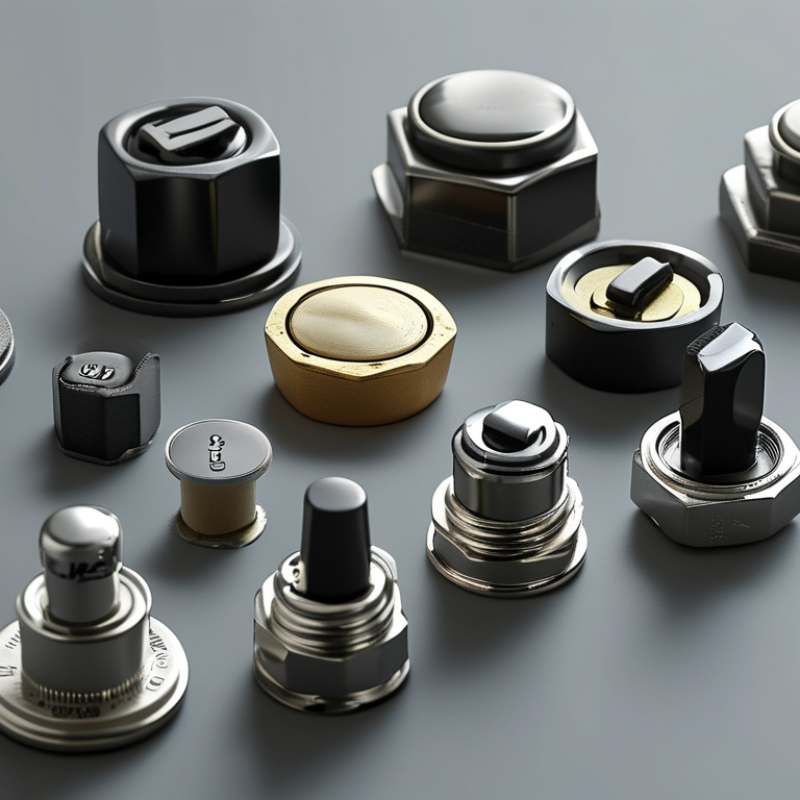
2026 Top Metal Push Button Switch Suppliers?

What Are Metal Push Button Switches and Where Are They Used?

Metal push button switches are manual controls with a metal actuator, housing, or both. Pressing the button changes an electrical circuit from open to closed, or the reverse. Their solid feel suits equipment that faces frequent contact, vibration, dust, or moisture.

In workshops, operators use them on machine panels, control cabinets, and industrial instruments. They also appear in elevators, access equipment, test benches, and public charging stations. A stainless steel button can tolerate repeated handling better than a fragile plastic surface. The visible ring also helps workers locate controls under poor lighting.

Choosing a reliable supplier requires more than comparing prices. Check the contact rating, mounting-hole size, terminal design, operating temperature, and expected electrical life. An IP rating can indicate resistance to dust or water, but installation still matters. A poorly sealed cable entry can defeat a well-rated switch. Confirm test reports, material specifications, and traceable quality records before ordering. Independent testing against relevant IEC requirements adds confidence, especially for safety-related panels.

Small details matter. A short travel may feel quick, yet it can cause accidental activation. A heavier actuator may feel premium, but it can slow repeated operation. Real users should test gloves, lighting, panel thickness, and cleaning routines. Laboratory figures help, but they do not predict every workplace. The best choice may need revision after field feedback.


2026 Metal Push Button Switches: Common Panel Mounting Sizes

Metal push button switches are durable panel controls used in industrial machinery, access systems, control panels, transportation equipment, and automation devices.

The chart shows common nominal panel cutout diameters used for metal push button switches. Actual body dimensions, bezel sizes, and mounting requirements vary by switch design.

How to Identify the Top Suppliers in 2026

Identifying the top metal push button switch suppliers in 2026 requires more than comparing catalog prices. A serious review starts with construction: stainless steel or plated brass, contact material, sealing method, and rated electrical load. Ask for material traceability and current test reports. Check IP ratings, vibration results, cycle-life data, and temperature limits. A supplier should explain test methods clearly. Vague claims deserve caution. A polished website proves little.

Request production samples from the same process used for volume orders. Inspect thread accuracy, actuator feel, terminal strength, and surface finish under bright light. Test several batches. Confirm whether automated inspection detects missing seals, scratches, or loose contacts. Factory capacity matters, but consistency matters more. A low quote can hide tooling fees, long lead times, or substitute materials. Get every specification in writing. Evidence matters.

Reliable suppliers also show disciplined communication. They answer technical questions with drawings, revision control, and realistic failure data. Ask how they handle corrective actions and warranty claims. A factory audit, remote or onsite, can reveal storage conditions and final inspection habits. Still, no checklist is complete. Even experienced buyers may overlook connector compatibility or panel thickness. Leave room for independent testing before approval. The best choice is the supplier whose evidence remains credible when conditions become difficult.

Which Product Features and Certifications Matter Most?

For 2026 metal push button switch sourcing, product features should match the working environment. A stainless steel or aluminum body resists impact, corrosion, and frequent cleaning. Check the actuator diameter, mounting depth, terminal style, and contact rating before comparing prices. A switch rated for 250 volts may still fail when motor inrush current exceeds its load capacity.

Sealing matters in real installations. An IP65 rating can protect against dust and water jets, but only when the gasket, panel cutout, and cable connection are correctly fitted. For exposed equipment, review the IP test conditions and consider an IK impact rating. Short travel, clear tactile feedback, and a stable return force help operators work with gloves. Illuminated versions also need defined voltage, brightness, and heat limits. Small details matter.

Certification evidence should be specific and traceable. Ask for test reports related to IEC 60529, IEC 62262, or IEC 60947-5-1 when those standards fit the application. Regional conformity documentation should identify the tested model, not only a product family. An ISO 9001 certificate shows a quality system, but it does not prove every switch is reliable. Request cycle-life data, temperature ranges, material declarations, and sample inspection records. I would also question unusually perfect claims. Field experience often reveals weaknesses that laboratory tests miss. Supplier response time, change control, and replacement support deserve equal attention.

2026 Top Metal Push Button Switch Suppliers? - Which Product Features and Certifications Matter Most?

A practical, brand-neutral evaluation framework for comparing metal push button switch suppliers and product documentation.

Evaluation Area Recommended Benchmark Why It Matters Relevant Standard or Evidence Suggested Weight Buyer Verification
Contact Configuration Momentary or maintained action; normally open, normally closed, or changeover contacts; single-pole or multi-pole options The contact arrangement determines how the switch integrates with control circuits and safety functions. Clear circuit diagrams, terminal identification, and model-specific datasheets 10% Match the approved circuit diagram with the purchase order and samples.
Electrical Rating Voltage, current, AC/DC load type, inrush current, and utilization category must be specified for the exact contact system. A switch rated for one load type or voltage cannot automatically be assumed suitable for another. DC switching can be more demanding because the arc does not naturally pass through an AC zero crossing. Model-specific electrical ratings tested under the applicable standard 15% Confirm the complete AC and DC rating table, load category, and derating conditions.
Ingress Protection IP65 for protection against dust and water jets; IP67 or IP69K where temporary immersion or high-pressure, high-temperature washing is required. The required rating depends on the enclosure, mounting method, seal design, and actual cleaning or exposure conditions. IEC 60529 test classification; test report or certificate for the exact configuration 15% Check whether the rating applies to the front panel only or to the complete assembled switch.
Mechanical Durability At least 100,000 mechanical operations for general industrial control; higher cycle requirements should be validated for the intended application. Mechanical life and electrical life are different. Contact wear, actuator wear, and load conditions affect service life. Published mechanical and electrical endurance test conditions 12% Request cycle count, operating force, travel, load, and test-speed details.
Material and Corrosion Resistance Stainless steel or corrosion-resistant plated metal for the actuator and bezel; suitable terminal and sealing materials for the environment. Salt, humidity, chemicals, outdoor exposure, and cleaning agents can degrade finishes, seals, and contacts. Material declarations, salt-spray or corrosion test data where applicable, and environmental test reports 10% Verify the exact metal grade, surface treatment, gasket material, and chemical compatibility.
Temperature Performance A declared operating range commonly around −20°C to +55°C or wider, depending on the design and application. Temperature affects contact resistance, seal elasticity, actuator force, LED performance, and material durability. Environmental testing under the IEC 60068 series or an equivalent documented test method 8% Compare the supplier's operating, storage, and transport temperature ranges.
Actuation and Ergonomics Consistent operating force, defined travel, tactile feedback, anti-rotation design, and optional guarded or emergency-stop variants where required. Ergonomic consistency reduces accidental operation and improves operator feedback during repeated use. Mechanical drawings, force-travel curves, actuator test data, and safety-function documentation 8% Test samples with gloves, panel thickness, mounting torque, and the intended operating position.
Lighting and Indication LED voltage options, color consistency, illumination angle, polarity information, and current consumption clearly defined. Incorrect LED voltage or polarity can cause premature failure or prevent illumination. LED electrical specifications, wiring diagrams, and photometric or visual inspection criteria 6% Confirm voltage tolerance, current draw, color code, and illuminated-symbol availability.
Safety and Product Standards Evidence of conformity to the standard applicable to the switch type and end product; certification must be traceable to the exact model or series. A logo or general statement alone does not prove that the selected configuration has been evaluated. IEC/EN 61058-1 may apply to appliance switches; IEC 60947-5-1 may apply to low-voltage control-circuit devices. Applicability depends on design and use. 12% Validate certificate number, scope, ratings, conditions of acceptance, and certification body database entry.
Environmental Compliance RoHS and REACH documentation appropriate to the destination market, with controlled material declarations. Material restrictions and substance reporting may be required for market access and customer audits. EU RoHS Directive 2011/65/EU as amended by Directive (EU) 2015/863; REACH Regulation (EC) No 1907/2006 7% Request current declarations, substance disclosures, and change-notification commitments.
Quality Management Documented quality system, traceability, incoming-material control, process inspection, and corrective-action procedures. Consistent production controls are essential when the same switch is purchased over multiple production lots. ISO 9001 certification can demonstrate a quality-management system; it is not, by itself, product certification. 5% Check certificate validity, manufacturing-site scope, lot coding, and sample inspection records.
Supply Capability Stable lead time, documented minimum order quantity, spare-part availability, engineering support, and formal change control. A technically suitable switch can still create project risk if supply continuity and configuration control are weak. Capacity statements, quality agreements, product-change notices, and representative delivery records 7% Review forecast support, alternate materials, tooling ownership, and end-of-life notification periods.
Total Evaluation Weight 100% Use model-specific evidence before approval.
Important purchasing note: Certification requirements vary by application, destination market, switch construction, and end-product standard. Always verify the exact part number, ratings, test conditions, certificate scope, and current document revision before placing a production order.

How to Compare Supplier Quality, Pricing, and Customization

2026 Top Metal Push Button Switch Suppliers?

Comparing suppliers requires more than checking unit price. A 2024 MarketsandMarkets report projects the global industrial automation market to exceed USD 265 billion by 2030. That expansion increases demand for reliable human-machine controls. Ask suppliers for lifecycle tests, contact resistance data, and failure-rate evidence. A polished datasheet is not enough. I have seen promising samples fail after repeated impact testing.

Quality begins with traceable materials. Request stainless-steel or aluminum grade information, actuator cycle results, and documented inspection records. For outdoor equipment, verify the claimed IP rating against IEC 60529 testing conditions. IEC 60947-5-1 also provides a useful reference for low-voltage control devices. Check whether the supplier tests complete assemblies, not only individual components. That difference matters.

Pricing should include tooling, inspection, packaging, certification, and replacement costs. A low initial quote can become expensive after mold revisions. According to a 2024 report by Grand View Research, customization remains an important growth factor in the industrial controls sector, especially for specialized equipment. Compare suppliers using the same drawings and annual volumes. Then request two samples from separate production batches. Small details reveal much: uneven engraving, stiff movement, or loose terminals. Customization sounds easy. It often is not. Define LED voltage, terminal type, mounting thickness, actuation force, color tolerance, and minimum order quantity before negotiation. One weakness remains: public market reports use different definitions, so their figures should guide decisions, not replace factory audits.

What Should Buyers Check Before Placing an Order?

When comparing 2026 metal push button switch suppliers, buyers should test evidence, not polished catalogs. MarketsandMarkets valued the industrial automation market at USD 191.9 billion in 2021. It projects USD 265.3 billion by 2027. Growth raises demand, but it does not prove switch quality. Ask for a current datasheet, drawing, test report, and lot traceability. Confirm 304 or 316 stainless steel, actuator finish, panel thickness, and mounting cutout. Small dimensional errors can create expensive rework.

Electrical checks come before price. Verify rated voltage, current, load type, contact material, insulation resistance, and service life. Mechanical and electrical life are different. A claim of one million operations may reflect low-current laboratory conditions. Request the test conditions. For outdoor or washdown equipment, match the declared IP rating with IEC 60529 evidence. IP65 is not automatically corrosion-proof. Salt, cleaning chemicals, and poor cable sealing still matter.

Review sample approval, production capacity, lead-time history, packaging, and change-control procedures. Ask whether each batch receives continuity, insulation, and torque checks. IEC 60947-5-1 may apply to low-voltage control devices, depending on the design. Order samples from more than one approved source. Repeat testing after thermal cycling. It costs time. It may expose weak plating or loose terminals. Buyers often overlook replacement planning. Record the part revision, connector type, color code, and minimum order quantity before signing. Vague answers deserve a second review.

Powder Coat Booths

For those larger-sized parts, or smaller quantity runs, we have 2 independent powder coat booths and ovens. The quality, durability and affordability of today’s powder coating finishes make this the process of choice for world-class companies.

Powder coating advantages over other forms of coating are many. Materials used in the Powder coating process can be metals and non-metals that come in a multitude of thicknesses, textures, colors, etc. Another of Powder coating’s biggest advantages over conventional coatings is its ability to create finishes in many different textures. Powder Coating Booths allow us the ability to apply these advantages to large products.

Wet Paint Line

Tri-State Fabricators runs a full-service conveyor line for painting. Wet painting can provide protection or decoration to many different part styles. From start to finish, every project is easier to undergo random and point-based inspection by our skilled painting team.

Advantages to our Wet Paint Line are these lines start with product prep and ends with a thorough inspection of a high quality finished product. Our ability to complete large and small projects with a superior finish and doing so in a timely and economical fashion. This passes along the savings in production to our customers. When powder coating ins not an option, our Wet Paint Line gets the job done right the first time.

Wet Paint Booths

When the parts get big and heavy we roll-out our custom paint racks and oversize booth. By utilizing our partnerships with all the major paint brands, we can match virtually any color with wet paint.

The advantages of having access to a Wet Paint Booth are many. Large projects of many different shapes can be loaded into the booth. The Wet Paint Booth offers an environment that is much more controlled than a typical parts painting operation.

Not only are they used because of their controlled environment, but they’re are also advantageous when it comes to applying paint to parts that are needed in industries that require specialty coatings such as medical, aerospace, etc.

Military CARC

Our military forces have some very high standards when it comes to the finish of their vehicles and equipment. From the first pre-treatment step to final coat, it takes a great deal of knowledge and experience to protect the men and women of our armed forces. They deserve only the best, and Tri-State Fabricators provides it.

All of our processes are closely monitored by our staff and management teams. Both of which are highly trained in the processes of metal fabrication and finishing. Tri-State Fabricators’ goal is to always fully satisfy each and every customer, including the military. We will always put a 110% into what we do.

Glass-Bead Blasting

Abrasive media blasting is an excellent way to remove old paint, rust, and increase the paint/powder adhesion. Glass beads produce a much smoother and brighter finish than angular abrasives; leaving the part clean yet without any dimensional change. Chemically inert and environmentally friendly, we can recycle our beads approximately 30 times; making them a more preferred method of metal cleaning or surface finishing.

Advantages to Glass Bead Blasting are many. Glass bead blast media is used when a project is needing rough surfaces need to become smooth for applications of coatings such as paint. It is typically used to clean paint and rust from a product surface without deforming the surface it is being used on. Overall, compared to many other blasting media, Glass Bead Blasting is a very economical choice and those savings are always passed on to our customers.

Part Washing

Tri-State Fabricators utilize a zinc phosphate wash to clean and etch the material to ensure the best paint adhesion possible. The unique design of our 3-stage wash system does the work like a 5-stage. From Cleaning and rinsing to conversion coating and post-treatment, Our Part Washing process is a complete service and works throughout the fabrication service and the finishing service.

Along with the previously mentioned benefits, Curing is a vital chemical reaction that leaves the product finish hard and relatively safe from mild abrasion and aggressive corrosion. This process can be done in more than one way; ambient air-dry or in curing ovens at temps that exceed 240°.

Burn-Off Oven

From fixing paint mistakes (someone else’s of course) to simply cleaning our paint line hooks, our burn-off oven is put to good use. After a quick burn-off, a little clean up, and a fresh coat of paint, your parts will look better than new.

Why does our Burn-Off Oven work so well? Because super heating the air around parts turns the materials into ashes. From paint and powder coatings to rubber and machining oils, high temps do the job without degrading the integrity of the part.

Masking

Masking is a vital part of producing high quality products. We have die-cut masking patterns to protect machined surfaces as well as a wide range of plugs and caps to protect threaded holes and bolts. We provide permanent and temporary masking.

Masking allows the selected sections of a product to be protected from a fabrication or finishing service. This can be with both chemicals when etching and tapes, paints when only finishing just a section of the product. Masking is great in aiding the customization process of a project.

Screen Printing

Screen printing is a photographic process that transfers artwork onto a porous nylon screen which allows colored ink to flow through the screen and be deposited on an aluminum or plastic component. We can generally have just about any design created onto a screen for your parts.

Some of the advantages of Screen Printing are, brand recognition for your business displaying on your products, assembly instructions, product warnings/hazards, etc. Tri-State Fabricators produces Screen Printing of the highest quality so you know it’s durable.

Metal Finishing

Metal Finishing is the art of treating the exterior portion of product, often metal but can also be made of other materials, so that the surface is clean and free of any debris. Then the process of applying coats or either paint of powder coat takes place. This coating process improves the quality of the product in both appearance and resistance to wear and corrosion.

Tri-State Fabricators, Inc., understands that a project typically isn’t complete until a high-quality finish has been added to your product. This is why our painting and powder coating teams continuously inspect the products throughout the Metal Finishing process.
