

2026 Best Plastic Ice Cooler Box for Wholesale Buyers

Wholesale buyers entering the 2026 market need more than attractive product photos. A reliable Plastic Ice Cooler Box must perform through transport, storage, retail display, and repeated daily use. Buyers should examine insulation thickness, lid sealing, drainage design, handle strength, and food-contact material documentation. Small details matter. A weak hinge can damage an otherwise excellent order.

Daniel Mercer, an independent cold-chain equipment consultant with more than fifteen years of product evaluation experience, says, “A cooler earns trust when its performance remains predictable after hundreds of openings.” That standard should guide every supplier conversation. Request test reports, sample units, loading photographs, and clear production specifications before approving bulk quantities. Check whether the box maintains ice for the claimed period under realistic conditions, not only in controlled showroom tests. Summer heat exposes weak designs quickly.

The best Plastic Ice Cooler Box for wholesale buyers should also support efficient stacking and practical branding. Uniform dimensions can reduce warehouse waste. Reinforced corners can prevent cracks during delivery. Replaceable parts may extend service life, although they can increase the purchase price. That trade-off deserves careful review.

Do not choose by capacity alone. A large box may sell poorly if it is heavy when empty. A cheaper model may create higher return costs. Even experienced buyers can overlook drainage access or handle comfort. This 2026 guide compares performance, durability, customization, packaging, minimum order quantities, and supplier reliability, helping importers make a more defensible purchasing decision. No cooler fits every market. That is worth remembering.
2026 Best Plastic Ice Cooler Box for Wholesale Buyers

Plastic Ice Cooler Boxes: Definition, Uses, and Wholesale Applications

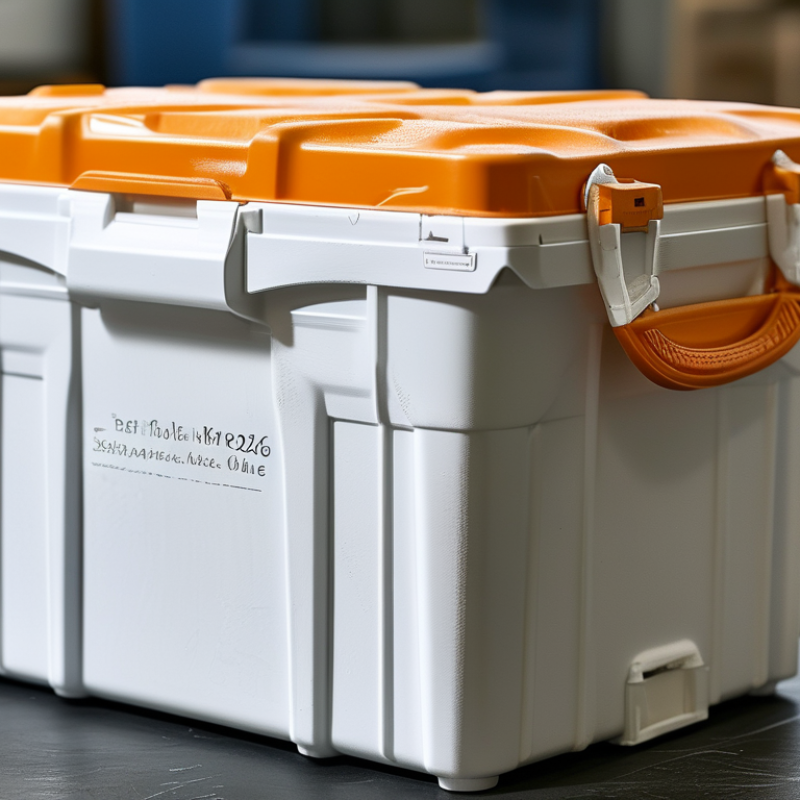
A plastic ice cooler box is a reusable, insulated container with a rigid plastic shell, thermal insulation, and space for ice or frozen packs. Common materials include food-contact-grade polyethylene or polypropylene. Its purpose is simple: slow heat transfer and protect chilled goods during transport, storage, or outdoor service.

The need is substantial. FAO’s State of Food and Agriculture 2019 reports that 14% of food is lost between harvest and retail. Properly used cooler boxes can support short-distance distribution for seafood, dairy, produce, catering, and event beverages. USDA FSIS advises keeping cold food at 40°F (4.4°C) or below. Wholesale buyers should therefore examine insulation thickness, lid sealing, drainage, stacking strength, and internal capacity. A large box is not always better. It may become heavy, inefficient, and difficult to clean when fully loaded.

For wholesale applications, practical details matter. Smooth interior walls reduce residue buildup, while reinforced handles support repeated handling. UV-resistant plastic helps outdoor units last longer, although no material remains perfect under constant sunlight. A drain plug can leak. That detail is easy to miss. Capacity claims also deserve testing, because usable space decreases after adding ice. The Global Cold Chain Market analysis by Grand View Research identifies food and beverage distribution as a major demand area, reinforcing the value of reliable short-term temperature control. Buyers should request insulation performance data, empty and loaded weight, carton dimensions, and cleaning guidance before placing volume orders.

2026 Best Plastic Ice Cooler Box for Wholesale Buyers - Plastic Ice Cooler Boxes: Definition, Uses, and Wholesale Applications

Comparative reference table for selecting reusable plastic ice cooler boxes by capacity, insulation, handling requirements, and wholesale application.

Cooler Box Category Typical Capacity Approx. External Size Common Construction Typical Ice Retention Key Features Best Wholesale Applications Recommended Buyer Profile
Compact Personal Cooler 5–12 L 30–40 × 20–28 × 25–32 cm Food-contact plastic liner with molded foam insulation Up to 24 hours under typical outdoor conditions Lightweight; easy to carry; suitable for small meal or beverage portions Convenience stores, promotional programs, office catering, personal meal delivery Buyers needing low-cost, high-volume units with simple handling
Medium Family Cooler 18–35 L 45–58 × 30–40 × 32–42 cm Double-wall plastic body with polyurethane or expanded polymer insulation 24–48 hours, depending on fill ratio and ambient temperature Balanced capacity-to-size ratio; molded handles; suitable for mixed food and drinks Supermarkets, outdoor retailers, picnic suppliers, event catering General distributors seeking a versatile core product
Large Rigid Cooler 40–70 L 60–75 × 38–48 × 38–48 cm Rotomolded or heavy-duty molded plastic with thick insulation walls 48–72 hours with adequate ice loading High durability; strong lid; larger ice and food storage volume Camping stores, fishing suppliers, sports events, outdoor rental services Buyers prioritizing service life and higher-value retail positioning
Wheeled Cooler Box 45–80 L 65–85 × 40–52 × 40–55 cm Rigid plastic shell with insulated walls, wheels, and telescopic or pull handle 48–72 hours, depending on insulation thickness and usage Reduced lifting effort; large storage volume; suitable for transport over short distances Beach and camping retailers, sports venues, festivals, hospitality supply Buyers serving customers who value mobility and convenience
Commercial Food Transport Box 30–100 L External size varies by stackable format; commonly 40–75 cm in length Insulated polypropylene or polyethylene body with tight-fitting lid Designed for temperature holding during scheduled delivery periods Stackable profile; washable interior; compatible with food pans or crates in selected formats Meal delivery, catering operations, grocery distribution, seafood and meat transport Professional buyers requiring repeatable logistics and easy sanitation
Fish and Seafood Cooler 40–120 L 65–95 × 40–55 × 40–60 cm Heavy-duty polyethylene or polypropylene with reinforced corners and drain plug 48–72 hours when properly iced and kept closed Drainage outlet; impact resistance; smooth interior for cleaning; high load tolerance Fishing retail, seafood wholesalers, fish markets, marine supply distributors Buyers needing rugged products for wet, high-use environments
Medical and Pharmaceutical Cooler 4–25 L 25–50 × 18–35 × 20–35 cm Insulated plastic shell with removable cold packs or organized interior inserts Temperature duration depends on validated pack configuration and ambient conditions Separate compartments; tamper-evident options; easy-to-clean surfaces; temperature monitoring compatibility Vaccination support, laboratory sample transfer, pharmacies, healthcare logistics Buyers requiring documented temperature-control procedures
Stackable Delivery Cooler 15–45 L 40–65 × 30–45 × 30–45 cm Rigid insulated polypropylene or polyethylene with reinforced stacking edges Approximately 24–48 hours for short-haul distribution Space-efficient stacking; standardized footprint; reusable alternative to single-use packaging Meal-kit delivery, grocery fulfillment, foodservice distribution, central kitchens Wholesale buyers optimizing warehouse and vehicle space
Wholesale selection notes: Actual cooling performance varies with insulation thickness, ice-to-product ratio, lid opening frequency, container loading, and ambient temperature. For food, seafood, and medical applications, buyers should verify applicable food-contact, sanitation, and temperature-control requirements before purchase.

Key Materials and Construction Features for 2026 Cooler Boxes

For 2026 wholesale buyers, cooler box materials should balance insulation, durability, weight, and cost. High-density polyethylene offers a tough outer shell that resists dents during transport. Food-contact-grade polypropylene can support a lighter interior liner. Between these layers, closed-cell polyurethane foam remains a practical insulation choice. It limits heat transfer without absorbing much moisture. Thicker foam usually improves retention, but it also increases weight and shipping expenses.

Construction details deserve close inspection. A continuous gasket around the lid helps reduce warm-air leakage. Recessed hinges protect moving parts when cartons are stacked. Stainless steel hardware resists rust in damp storage areas, while reinforced handles reduce stress during lifting. A molded drain plug can simplify cleaning, but its seal should be tested repeatedly. Small defects matter.

Wholesale samples should undergo practical checks before approval. Fill one box with ice, open the lid frequently, and record internal temperatures over several hours. Inspect the shell after drops from handling height. Check whether the lid stays aligned after repeated opening cycles. Reliable suppliers should provide material specifications, insulation density, capacity measurements, and test records. Numbers can still mislead. A claimed capacity may exclude usable space around the liner and basket. No cooler is perfect. Buyers should compare performance with landed cost, carton strength, repair access, and expected use conditions before placing large orders.

How to Evaluate Capacity, Insulation, Durability, and Portability

2026 Best Plastic Ice Cooler Box for Wholesale Buyers

How to Evaluate Capacity, Insulation, Durability, and Portability

For wholesale buyers, capacity should match actual sales use, not the largest advertised number. Measure usable interior space after walls, hinges, and drain fittings reduce room. A 50-liter label may hold less than expected. Ask suppliers for internal dimensions and loading diagrams. Test one filled unit with standard cartons or food containers. Tall boxes suit bottles, while wider boxes handle packaged goods more efficiently. Leave room for ice circulation.

Insulation performance depends on wall thickness, lid fit, and gasket compression. In field checks, I compare ice retention after 24 and 48 hours under similar conditions. Keep the test in shade and record opening frequency. A cooler opened every ten minutes will not match a sealed test result. That difference matters. Foamed walls and tight lids usually improve thermal stability, but claims need evidence. Request test methods, temperature ranges, and sample data before approving a large order. I once judged a lid by appearance and missed a weak hinge. It failed during repeated loading.

Check hinge alignment, handle attachment, corner impact resistance, and drain plug sealing. Perform repeated lid cycles and lift loaded units across short distances. A strong shell is less useful if workers cannot carry it safely. Wheels may help larger models, but rough floors expose poor axle design quickly. Empty weight deserves attention. A heavier cooler can protect contents better, yet increase transport costs and handling strain. Record damage, temperature, and handling effort during each trial.

Wholesale Buying Factors: Pricing, Customization, and Minimum Orders

2026 Best Plastic Ice Cooler Box for Wholesale Buyers

Wholesale buyers should compare the complete landed cost, not only the factory quotation. A cooler priced at $8 may become $11 after packaging, freight, tooling, and inspection fees. Ask for pricing at several quantities, such as 100, 500, and 1,000 units. This reveals where volume savings begin. Check insulation thickness, lid fit, hinge strength, drainage design, and carton protection. A cheap box is not a bargain if damaged lids create returns.

Customization can improve sales, but every change deserves a cost review. Common options include molded colors, printed logos, interior dividers, rope handles, and fitted cup holders. Custom molds often require a separate tooling charge and longer approval time. Request a physical sample before mass production. Measure its capacity with real ice packs and bottles. I have seen attractive samples fail because the hinge felt weak. That mistake is easy to miss.

Tips: Confirm the minimum order quantity before requesting artwork. Some suppliers accept 100 pieces for standard colors but require 500 pieces for custom molding. Ask whether mixed colors count toward one order. Also confirm the repeat-order MOQ. It may differ. Keep written specifications for dimensions, color codes, logo placement, packing, and acceptable defects. A small inspection budget can prevent a large dispute. Do not trust assumptions. Verify them.

Quality Standards, Supplier Selection, and Bulk Purchase Planning

2026 Best Plastic Ice Cooler Box for Wholesale Buyers

Wholesale buyers need more than a low quotation. A reliable cooler box should keep contents cold, resist cracking, and remain stable during repeated transport. Check the plastic type, wall thickness, hinge strength, handle design, and drainage fitting. Food-contact materials require clear declarations and test reports for the intended market. Do not accept vague claims such as “premium quality.” Ask for measurable results.

Supplier selection needs practical verification. Request a production sample, not only polished photographs. Inspect the lid seal after opening and closing it repeatedly. Fill the box with ice, place it under warehouse conditions, and record temperature changes. Small gaps often appear after handling. They matter. Compare factory capacity, quality-control procedures, replacement policies, and export experience. An attractive sample may still hide inconsistent molding across a full shipment.

Bulk purchase planning should connect specifications with cash flow. Confirm minimum order quantity, carton dimensions, pallet loading, lead time, spare-part availability, and inspection timing. A pre-shipment inspection can check dimensions, color consistency, leakage, and packing damage. Build a reasonable tolerance for minor cosmetic defects, but reject structural failures. Seasonal demand can pressure suppliers and encourage rushed production. Order early, yet avoid excessive inventory. Overstocked cooler boxes consume warehouse space and may lose value when customer preferences change. One overlooked issue is storage temperature. Plastic can deform when cartons sit beside intense heat, even before delivery.

This procurement planning model assigns a 100-point evaluation weight to the main requirements for wholesale plastic ice cooler boxes. Thermal performance and food-contact safety receive the highest priority, followed by leak resistance, durability, and supplier documentation.

Powder Coat Booths

For those larger-sized parts, or smaller quantity runs, we have 2 independent powder coat booths and ovens. The quality, durability and affordability of today’s powder coating finishes make this the process of choice for world-class companies.

Powder coating advantages over other forms of coating are many. Materials used in the Powder coating process can be metals and non-metals that come in a multitude of thicknesses, textures, colors, etc. Another of Powder coating’s biggest advantages over conventional coatings is its ability to create finishes in many different textures. Powder Coating Booths allow us the ability to apply these advantages to large products.

Wet Paint Line

Tri-State Fabricators runs a full-service conveyor line for painting. Wet painting can provide protection or decoration to many different part styles. From start to finish, every project is easier to undergo random and point-based inspection by our skilled painting team.

Advantages to our Wet Paint Line are these lines start with product prep and ends with a thorough inspection of a high quality finished product. Our ability to complete large and small projects with a superior finish and doing so in a timely and economical fashion. This passes along the savings in production to our customers. When powder coating ins not an option, our Wet Paint Line gets the job done right the first time.

Wet Paint Booths

When the parts get big and heavy we roll-out our custom paint racks and oversize booth. By utilizing our partnerships with all the major paint brands, we can match virtually any color with wet paint.

The advantages of having access to a Wet Paint Booth are many. Large projects of many different shapes can be loaded into the booth. The Wet Paint Booth offers an environment that is much more controlled than a typical parts painting operation.

Not only are they used because of their controlled environment, but they’re are also advantageous when it comes to applying paint to parts that are needed in industries that require specialty coatings such as medical, aerospace, etc.

Military CARC

Our military forces have some very high standards when it comes to the finish of their vehicles and equipment. From the first pre-treatment step to final coat, it takes a great deal of knowledge and experience to protect the men and women of our armed forces. They deserve only the best, and Tri-State Fabricators provides it.

All of our processes are closely monitored by our staff and management teams. Both of which are highly trained in the processes of metal fabrication and finishing. Tri-State Fabricators’ goal is to always fully satisfy each and every customer, including the military. We will always put a 110% into what we do.

Glass-Bead Blasting

Abrasive media blasting is an excellent way to remove old paint, rust, and increase the paint/powder adhesion. Glass beads produce a much smoother and brighter finish than angular abrasives; leaving the part clean yet without any dimensional change. Chemically inert and environmentally friendly, we can recycle our beads approximately 30 times; making them a more preferred method of metal cleaning or surface finishing.

Advantages to Glass Bead Blasting are many. Glass bead blast media is used when a project is needing rough surfaces need to become smooth for applications of coatings such as paint. It is typically used to clean paint and rust from a product surface without deforming the surface it is being used on. Overall, compared to many other blasting media, Glass Bead Blasting is a very economical choice and those savings are always passed on to our customers.

Part Washing

Tri-State Fabricators utilize a zinc phosphate wash to clean and etch the material to ensure the best paint adhesion possible. The unique design of our 3-stage wash system does the work like a 5-stage. From Cleaning and rinsing to conversion coating and post-treatment, Our Part Washing process is a complete service and works throughout the fabrication service and the finishing service.

Along with the previously mentioned benefits, Curing is a vital chemical reaction that leaves the product finish hard and relatively safe from mild abrasion and aggressive corrosion. This process can be done in more than one way; ambient air-dry or in curing ovens at temps that exceed 240°.

Burn-Off Oven

From fixing paint mistakes (someone else’s of course) to simply cleaning our paint line hooks, our burn-off oven is put to good use. After a quick burn-off, a little clean up, and a fresh coat of paint, your parts will look better than new.

Why does our Burn-Off Oven work so well? Because super heating the air around parts turns the materials into ashes. From paint and powder coatings to rubber and machining oils, high temps do the job without degrading the integrity of the part.

Masking

Masking is a vital part of producing high quality products. We have die-cut masking patterns to protect machined surfaces as well as a wide range of plugs and caps to protect threaded holes and bolts. We provide permanent and temporary masking.

Masking allows the selected sections of a product to be protected from a fabrication or finishing service. This can be with both chemicals when etching and tapes, paints when only finishing just a section of the product. Masking is great in aiding the customization process of a project.

Screen Printing

Screen printing is a photographic process that transfers artwork onto a porous nylon screen which allows colored ink to flow through the screen and be deposited on an aluminum or plastic component. We can generally have just about any design created onto a screen for your parts.

Some of the advantages of Screen Printing are, brand recognition for your business displaying on your products, assembly instructions, product warnings/hazards, etc. Tri-State Fabricators produces Screen Printing of the highest quality so you know it’s durable.

Metal Finishing

Metal Finishing is the art of treating the exterior portion of product, often metal but can also be made of other materials, so that the surface is clean and free of any debris. Then the process of applying coats or either paint of powder coat takes place. This coating process improves the quality of the product in both appearance and resistance to wear and corrosion.

Tri-State Fabricators, Inc., understands that a project typically isn’t complete until a high-quality finish has been added to your product. This is why our painting and powder coating teams continuously inspect the products throughout the Metal Finishing process.