2026 Best Stainless Steel Welding Machines for Buyers

Choosing a welding machine for stainless steel is not simply a matter of buying the highest amperage. In 2026, buyers must match machine design, arc control, duty cycle, and workshop conditions to the stainless grade and joint type. A thin 304 kitchen panel needs different control from a thick 316L pipe. Small details matter. A stable arc can prevent undercut, excessive heat tint, and costly rework.

John C. Lippold, a recognized authority in welding metallurgy, has stated, “Stainless steels are a group of iron-based alloys containing a minimum of 10.5% chromium.” That distinction is important because each stainless family responds differently to heat, contamination, and shielding gas. Our comparison focuses on practical stainless steel welding experience, including TIG precision, pulsed MIG performance, torch comfort, cooling systems, and service support. We also consider real workshop problems, such as a dirty tungsten, a short gas hose, or a machine that overheats before the job ends.

The best machine is not always the most expensive one. It should produce repeatable welds, offer understandable controls, and support the operator’s daily workload. Some models look impressive on paper but feel awkward after two hours. That matters. No ranking is perfect, either; power supply quality, consumables, and operator skill can change the result. This guide helps buyers compare those variables honestly before investing in equipment for professional fabrication, repair, or demanding home workshops.
2026 Best Stainless Steel Welding Machines for Buyers

What Makes Stainless Steel Welding Machines Different

Stainless steel welding machines differ because the material reacts strongly to heat and contamination. Too much heat can distort thin sheet or leave a dark, rough weld. The chromium-rich surface also needs protection from oxidation, especially on the back of a joint. A suitable machine offers stable, controllable output rather than simply maximum power. Smooth arc starts and adjustable settings help maintain a consistent bead on food-grade tubing, tanks, or thin panels. Small details matter.

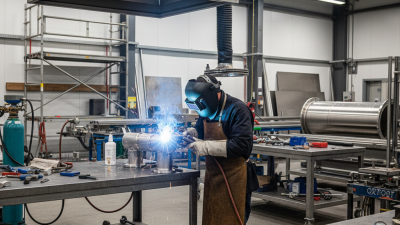
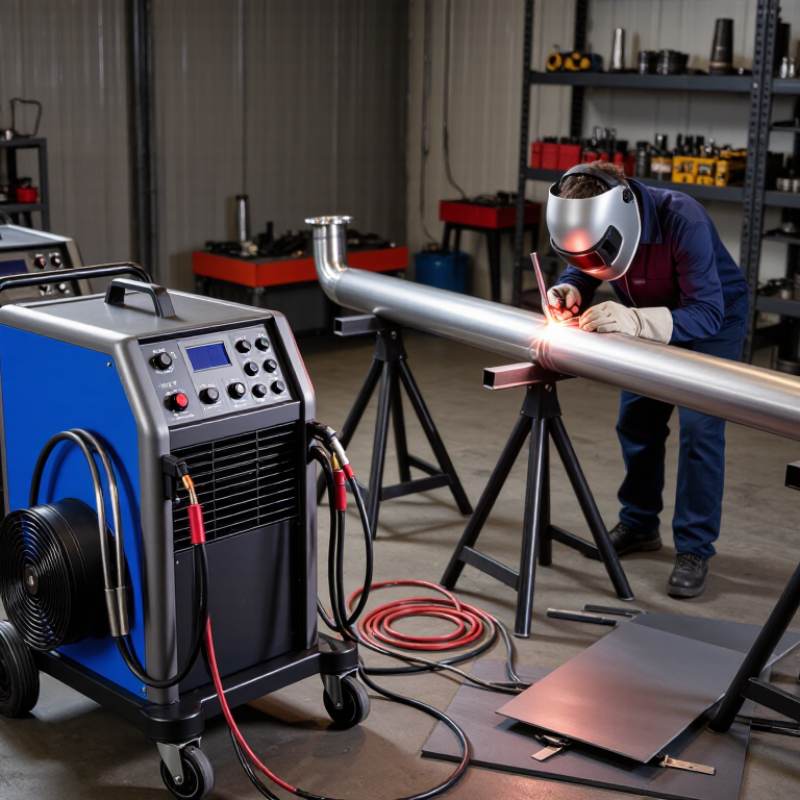
Process choice matters, too. TIG welding gives precise control for thin stainless steel and visible seams, but it takes practice. MIG welding can be faster on thicker sections, provided wire, shielding gas, and settings suit the alloy. Stainless steel expands noticeably as it heats. Fit-up, joint design, and a steady travel speed can reduce warping. Even with a capable machine, poor preparation can spoil the result.

Tips: Clean the joint with dedicated stainless steel tools, and keep carbon-steel dust away. Use the correct filler and shielding gas for the material and application. Test settings on a matching offcut before welding the finished part. Watch for excessive heat tint; it can signal weak shielding or slow travel. One trade-off remains: faster welding is not always better. A neat bead may still need inspection, particularly where corrosion resistance or pressure integrity matters.

Key Specifications for Comparing Welding Machines in 2026

2026 Best Stainless Steel Welding Machines for Buyers

Key Specifications for Comparing Welding Machines in 2026

A machine’s process options matter more than a crowded feature list. TIG offers precise control on thin stainless sheet, while MIG can suit longer seams and faster production. Check whether the unit supports the process you actually use, not just the one highlighted in its controls. For TIG work, confirm DC output and whether pulse settings are adjustable. Pulse can help manage heat on thin material, though it takes practice to set well.

Compare the amperage range with your typical material thickness and joint design. A wide range is useful only when the machine can maintain a stable arc at low output. Review the duty cycle, too: it shows how long the machine can weld within a stated interval before cooling. Read the rating conditions carefully. A figure measured at a lower amperage may not reflect a long production shift. Input voltage and circuit requirements should also match the workshop supply.

Look closely at wire-feed control for MIG, and torch compatibility for TIG. These affect day-to-day work. Check that the machine can accept suitable stainless filler wire or rods, and verify available gas connections and polarity settings. Clear displays and simple adjustments reduce setup errors, but menus can still feel awkward with gloves on. That detail is easy to overlook. A useful comparison also considers weight, cable length, service access, and the availability of replacement consumables. Specifications narrow the choices; a short test weld on your own material can reveal what the numbers miss.

Top Stainless Steel Welding Machine Types and Their Applications

Choosing the right stainless steel welding machine starts with the application. The best option depends on thickness, joint design, production speed, and finish requirements.

TIG machines suit thin sheet, food equipment, laboratory frames, and visible architectural joints. They provide precise heat control and clean welds with limited spatter. A foot pedal helps operators manage heat around corners and tight seams. Thin stainless sheet needs it.

Pulsed TIG improves control when heat distortion is a concern. The current rises and falls in controlled cycles. This protects delicate sections and reduces discoloration.

MIG machines support faster work on storage tanks, railings, kitchen equipment, and medium-gauge fabrication. They are practical for longer welds and repeated production.

However, wire selection and shielding gas settings require careful adjustment. Poor settings can create porosity, excessive heat, or a rough surface. Less forgiving than expected.

For heavy stainless components, high-amperage TIG or specialized automated systems may be more suitable. Orbital welding machines are useful for consistent tube joints in clean manufacturing environments.

Buyers should compare amperage range, duty cycle, pulse functions, torch cooling, and service access.

In my experience, many users focus on power but overlook gas coverage. That mistake can ruin an otherwise sound weld. No machine is perfect. Test samples before committing to large production.

How to Choose the Right Machine for Your Welding Requirements

Choosing the right stainless steel welding machine starts with your actual work, not an impressive specification sheet. Identify the alloy, thickness, joint design, and production pace you handle weekly. Thin stainless steel needs controlled low amperage and a stable arc. For clean, precise joints, choose TIG capability with adjustable pulse control. It can reduce heat distortion and surface discoloration. Heavier sections may require MIG capability, stronger wire feeding, and a higher duty cycle. Do not buy power you rarely use. Check input voltage, torch comfort, and service access before choosing.

Tips: Make a short welding sample before purchasing. Use the same grade, thickness, filler metal, and shielding gas used in production. Inspect bead shape, penetration, heat tint, and cleaning effort. Ask for measurable duty-cycle data, not vague promises. Confirm that settings remain stable during long welds. That detail matters. Record amperage, pulse frequency, gas flow, and travel speed. Small notes can prevent expensive rework.

Experienced welders know stainless steel quickly exposes weak preparation. Clean the joint thoroughly, use dedicated stainless tools, and control gas coverage around the weld. Memory settings can improve repeatability between operators. However, automation cannot fix poor fit-up or contaminated filler metal. Leave room for learning. A cheaper machine may appear suitable, yet unstable starts can waste time and material. Choose a unit with clear manuals, accessible technical support, and replaceable consumables. Test it under realistic conditions before daily production.

Essential Safety, Maintenance, and Purchasing Considerations

For 2026 buyers, a stainless steel welding machine should fit the material thickness, duty cycle, and available power—not just the advertised output. Check whether the process suits your work: TIG offers precise control on thin sheet, while MIG can improve speed on longer seams. Ask for the duty-cycle rating at the amperage you expect to use; a machine rated for brief bursts may overheat during repeated production runs. Small detail, big consequence. Confirm that the controls, torch connections, and replacement consumables are easy to inspect and source.

Safety deserves equal weight. Stainless welding can release fumes containing chromium and nickel. The International Agency for Research on Cancer classifies welding fumes as carcinogenic to humans. NIOSH lists a recommended exposure limit for hexavalent chromium of 0.0002 mg/m³; this is a health reference, not a substitute for local workplace requirements. Use effective local exhaust ventilation, suitable respiratory protection when assessment calls for it, and a documented exposure-control plan. Keep the work area clear of combustible materials, and inspect cables, clamps, and gas lines before each shift.

Maintenance protects both weld quality and investment. Clean the work return connection, check torch liners and contact parts, and keep cooling vents free of dust. Record service dates and recurring faults; patterns often reveal neglected wear. Be realistic: even a capable machine cannot compensate for poor fit-up or rushed setup. Before purchasing, request a demonstration on stainless stock similar to your own, then compare the resulting bead and operating costs.

2026 Best Stainless Steel Welding Machines for Buyers

Typical TIG current starting ranges for stainless steel by material thickness. Actual settings depend on joint design, tungsten size, shielding gas, welding position, and the applicable welding procedure specification.

Buyers should select a machine with stable low-current control for thin stainless steel, sufficient duty cycle for the intended workload, reliable thermal protection, and compatible TIG accessories. Keep the torch, gas system, ground connection, and cooling passages clean, and always use suitable eye, skin, respiratory, and ventilation protection.


Powder Coat Booths

For those larger-sized parts, or smaller quantity runs, we have 2 independent powder coat booths and ovens. The quality, durability and affordability of today’s powder coating finishes make this the process of choice for world-class companies.

Powder coating advantages over other forms of coating are many. Materials used in the Powder coating process can be metals and non-metals that come in a multitude of thicknesses, textures, colors, etc. Another of Powder coating’s biggest advantages over conventional coatings is its ability to create finishes in many different textures. Powder Coating Booths allow us the ability to apply these advantages to large products.

Wet Paint Line

Tri-State Fabricators runs a full-service conveyor line for painting. Wet painting can provide protection or decoration to many different part styles. From start to finish, every project is easier to undergo random and point-based inspection by our skilled painting team.

Advantages to our Wet Paint Line are these lines start with product prep and ends with a thorough inspection of a high quality finished product. Our ability to complete large and small projects with a superior finish and doing so in a timely and economical fashion. This passes along the savings in production to our customers. When powder coating ins not an option, our Wet Paint Line gets the job done right the first time.

Wet Paint Booths

When the parts get big and heavy we roll-out our custom paint racks and oversize booth. By utilizing our partnerships with all the major paint brands, we can match virtually any color with wet paint.

The advantages of having access to a Wet Paint Booth are many. Large projects of many different shapes can be loaded into the booth. The Wet Paint Booth offers an environment that is much more controlled than a typical parts painting operation.

Not only are they used because of their controlled environment, but they’re are also advantageous when it comes to applying paint to parts that are needed in industries that require specialty coatings such as medical, aerospace, etc.

Military CARC

Our military forces have some very high standards when it comes to the finish of their vehicles and equipment. From the first pre-treatment step to final coat, it takes a great deal of knowledge and experience to protect the men and women of our armed forces. They deserve only the best, and Tri-State Fabricators provides it.

All of our processes are closely monitored by our staff and management teams. Both of which are highly trained in the processes of metal fabrication and finishing. Tri-State Fabricators’ goal is to always fully satisfy each and every customer, including the military. We will always put a 110% into what we do.

Glass-Bead Blasting

Abrasive media blasting is an excellent way to remove old paint, rust, and increase the paint/powder adhesion. Glass beads produce a much smoother and brighter finish than angular abrasives; leaving the part clean yet without any dimensional change. Chemically inert and environmentally friendly, we can recycle our beads approximately 30 times; making them a more preferred method of metal cleaning or surface finishing.

Advantages to Glass Bead Blasting are many. Glass bead blast media is used when a project is needing rough surfaces need to become smooth for applications of coatings such as paint. It is typically used to clean paint and rust from a product surface without deforming the surface it is being used on. Overall, compared to many other blasting media, Glass Bead Blasting is a very economical choice and those savings are always passed on to our customers.

Part Washing

Tri-State Fabricators utilize a zinc phosphate wash to clean and etch the material to ensure the best paint adhesion possible. The unique design of our 3-stage wash system does the work like a 5-stage. From Cleaning and rinsing to conversion coating and post-treatment, Our Part Washing process is a complete service and works throughout the fabrication service and the finishing service.

Along with the previously mentioned benefits, Curing is a vital chemical reaction that leaves the product finish hard and relatively safe from mild abrasion and aggressive corrosion. This process can be done in more than one way; ambient air-dry or in curing ovens at temps that exceed 240°.

Burn-Off Oven

From fixing paint mistakes (someone else’s of course) to simply cleaning our paint line hooks, our burn-off oven is put to good use. After a quick burn-off, a little clean up, and a fresh coat of paint, your parts will look better than new.

Why does our Burn-Off Oven work so well? Because super heating the air around parts turns the materials into ashes. From paint and powder coatings to rubber and machining oils, high temps do the job without degrading the integrity of the part.

Masking

Masking is a vital part of producing high quality products. We have die-cut masking patterns to protect machined surfaces as well as a wide range of plugs and caps to protect threaded holes and bolts. We provide permanent and temporary masking.

Masking allows the selected sections of a product to be protected from a fabrication or finishing service. This can be with both chemicals when etching and tapes, paints when only finishing just a section of the product. Masking is great in aiding the customization process of a project.

Screen Printing

Screen printing is a photographic process that transfers artwork onto a porous nylon screen which allows colored ink to flow through the screen and be deposited on an aluminum or plastic component. We can generally have just about any design created onto a screen for your parts.

Some of the advantages of Screen Printing are, brand recognition for your business displaying on your products, assembly instructions, product warnings/hazards, etc. Tri-State Fabricators produces Screen Printing of the highest quality so you know it’s durable.

Metal Finishing

Metal Finishing is the art of treating the exterior portion of product, often metal but can also be made of other materials, so that the surface is clean and free of any debris. Then the process of applying coats or either paint of powder coat takes place. This coating process improves the quality of the product in both appearance and resistance to wear and corrosion.

Tri-State Fabricators, Inc., understands that a project typically isn’t complete until a high-quality finish has been added to your product. This is why our painting and powder coating teams continuously inspect the products throughout the Metal Finishing process.