2026 Top High Frequency Power Transformer Buying Guide?
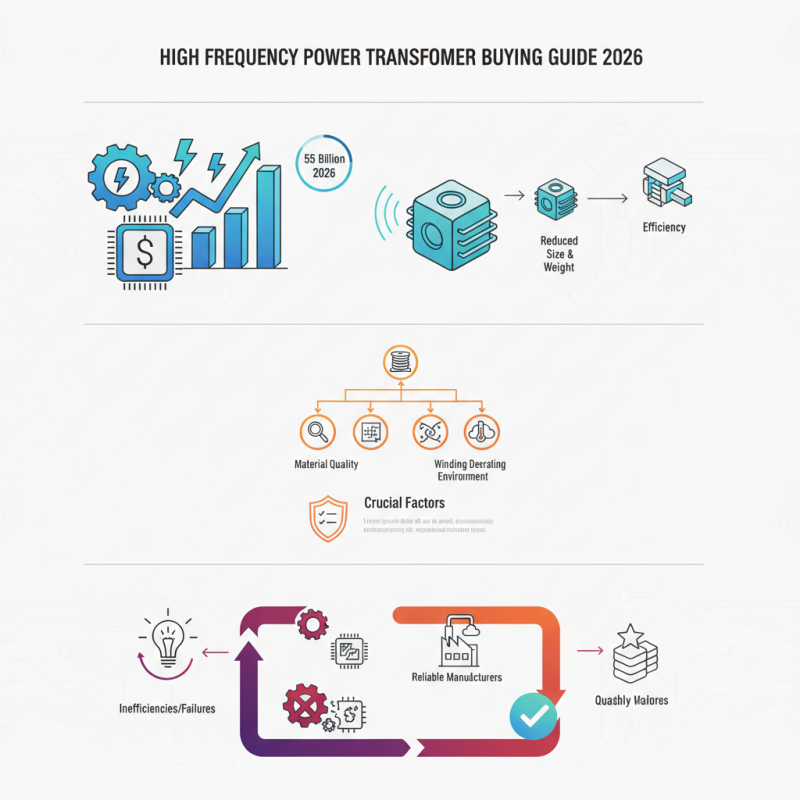
As industries evolve, the demand for high frequency power transformers is increasing. These transformers are vital for applications requiring efficient energy conversion and high-frequency operation. According to a recent industry report by MarketsandMarkets, the global transformer market is projected to reach $55 billion by 2026, emphasizing the crucial role of high frequency power transformers in modern electrical systems.
Today's high frequency power transformers are designed for compactness and efficiency. Their ability to operate at elevated frequencies leads to reduced size and weight without sacrificing performance. Yet, selecting the right transformer can be challenging. Various factors, including material quality, winding design, and operating environment, play a critical role in transformer performance. It's essential to consider these aspects when making a purchase.
Despite advancements, many buyers may overlook crucial specifications or the importance of reliable manufacturers. Quality standards vary across the industry. Failing to assess these factors can lead to inefficiencies or equipment failures. This guide aims to illuminate the complexities involved in choosing the right high frequency power transformer, ensuring informed and strategic purchasing decisions.
Understanding High Frequency Power Transformers: An Overview
High frequency power transformers are crucial in various industries. They convert electrical energy efficiently, handling higher frequencies than traditional transformers. This unique capability allows for lightweight designs, which is advantageous in modern applications. In electronics and telecommunications, their compact size facilitates integration into devices without sacrificing performance.
Understanding the technology behind these transformers is essential. They employ magnetic cores made of high-quality materials, optimizing energy transfer. However, the selection process can be challenging. Users must consider factors like frequency range, voltage requirements, and thermal performance. There are moments of trial and error in choosing the right specifications. Mistakes may lead to inefficiency or device failures.
Some own the misconception that all transformers perform similarly. This oversimplification often leads to subpar setups. Users must acknowledge that application landscapes drastically differ. Testing and analyzing the performance in specific scenarios often reveal crucial insights. The quest for optimal solutions demands patience and a willingness to learn.
Key Specifications to Consider When Buying a High Frequency Transformer
When buying a high frequency power transformer, several key specifications are essential to ensure optimal performance. Power rating is one of the most crucial factors. It determines how much load the transformer can handle without overheating. A transformer with an appropriate power rating will function efficiently, reducing energy loss. It's also important to consider the operating frequency. High frequency transformers operate best in specific bandwidths, which directly affect their efficiency and performance.
Another critical specification is insulation material. Different materials have varying thermal and electrical properties. A suitable insulation will ensure durability and reliability under high voltage conditions. Pay attention to the transformer's size and weight as well. Compact designs are often easier to integrate into different systems, but ensure they meet your power and thermal requirements.
Bear in mind that many factors influence transformer efficiency. Not all high frequency transformers are created equal. Each manufacturer has unique designs and technologies. It’s wise to consult user reviews and technical documents. These insights can reveal both benefits and potential drawbacks. Take time to weigh your options.
Top Brands and Manufacturers of High Frequency Power Transformers
When it comes to high frequency power transformers, choosing the right one involves careful consideration of the brands and manufacturers. These components play a critical role in various applications, from telecommunications to industrial power systems. Some manufacturers have built a strong reputation for their rigorous testing and innovative designs. Reliability is key; a failed transformer can lead to significant downtime and costs.
Many top brands focus on quality control during the production process. They often use advanced materials that enhance performance and durability. Not all companies meet the same standards, which makes research essential. Look for manufacturers with a proven track record. Customer reviews can provide insights into their experiences and satisfaction levels.
However, no brand is perfect. Issues such as compatibility and supply chain problems can arise. It’s important to reflect on specific needs, like power capacity and thermal management. Each application may present unique challenges, urging buyers to think critically about their choices. Engaging with industry experts can offer valuable perspectives. An informed decision will save you time and resources in the long run.
Evaluating Performance Metrics for High Frequency Transformers
When evaluating high frequency power transformers, performance metrics stand out as critical benchmarks. Efficiency is one key metric. According to the latest industry reports, top-tier transformers achieve efficiency ratings above 97%. This figure is significant because even a slight gain can lead to substantial energy savings. High frequency transformers often operate at power densities exceeding 5 kW/kg, as noted in multiple engineering journals. This metric illustrates their compact size and optimal use in space-constrained applications.
Thermal performance is another essential aspect. A transformer’s ability to dissipate heat affects its overall reliability and lifespan. Reports suggest that superior designs incorporate advanced cooling mechanisms, allowing them to maintain safe operating temperatures. Typically, models that manage heat effectively can extend operational lifetimes by 20% or more. However, many products still struggle with thermal management, indicating a gap where innovation is needed.
Lastly, reliability must not be overlooked. Studies show that up to 15% of high frequency transformers face reliability issues in demanding environments. This statistic underscores the need for rigorous testing and quality assurance in design phases. As the industry progresses, focusing on these metrics will ensure manufacturers can meet the increasing demands of modern applications while improving performance and reliability.
2026 Top High Frequency Power Transformer Buying Guide
| Transformer Type | Power Rating (kVA) | Efficiency (%) | Frequency Range (kHz) | Weight (kg) | Cooling Method |
| Flyback Transformer | 1 | 90 | 50-100 | 2 | Air Cooling |
| Buck Converter Transformer | 2 | 92 | 10-50 | 3 | Air Cooling |
| Forward Converter Transformer | 3 | 93 | 50-500 | 4 | Liquid Cooling |
| Half-Bridge Transformer | 5 | 94 | 20-100 | 6 | Air Cooling |
| LLC Resonant Transformer | 10 | 96 | 70-300 | 8 | Liquid Cooling |
Common Applications and Uses of High Frequency Power Transformers
High-frequency power transformers play a crucial role in various sectors, especially in telecommunications and industrial processes. They efficiently convert and transform electrical energy at high frequencies, which is essential for modern devices. These transformers are often used in switch-mode power supplies, which provide better energy efficiency compared to traditional linear designs. In applications like RF amplifiers and broadcast broadcasting, their reliability is vital.
In the renewable energy sector, high-frequency power transformers are key components in inverter systems. These systems convert direct current from solar panels into alternating current for grid usage. Additionally, their compact size makes them perfect for electric vehicle chargers, which require fast energy transfer. However, the demand for miniaturization can result in challenges, such as overheating during operation, which requires careful thermal management.
Despite their advantages, users must be cautious. Selecting the wrong transformer can lead to inefficiencies or even damage to connected equipment. Understanding core materials and winding techniques is essential for optimal performance. Ultimately, while high-frequency power transformers offer numerous benefits, ongoing research and practical testing are necessary for advancements in this field.





