2026 Top Submarine Hose Manufacturers and Suppliers?
Choosing the right Submarine Hose manufacturer requires more than comparing product pages or advertised prices. These hoses operate in demanding marine environments, where pressure, saltwater, movement, and repeated bending can expose weak designs quickly. In 2026, buyers need suppliers with proven engineering capability, transparent testing, and dependable after-sales support.
This guide reviews leading manufacturers and suppliers through practical purchasing criteria. These include hose construction, reinforcement materials, pressure ratings, bend radius, flotation options, and connection quality. It also considers production capacity, quality control, delivery performance, and experience with offshore projects. A capable supplier should explain its testing process clearly. Factory inspections, hydrostatic tests, and traceable material records provide useful evidence. Certifications matter, but they should support real performance rather than replace it.
Field conditions often reveal details that brochures omit. A hose may look suitable on a clean specification sheet, yet fail when dragged across a rough deck. Small design choices can matter. Protective covers, flexible couplings, and corrosion-resistant fittings may reduce maintenance risks. Communication matters too, especially when projects involve changing water depths or complicated installation schedules. No ranking is perfect. Supplier strengths vary by application, region, and budget. Some manufacturers offer excellent customization but longer lead times. Others deliver quickly but provide fewer engineering options. This overview aims to create a practical starting point, not a final purchasing decision. Readers should confirm current specifications, references, and compliance documents before placing an order. Reliable information still needs careful checking.
What Is a Submarine Hose and Where Is It Used?
What Is a Submarine Hose and Where Is It Used?
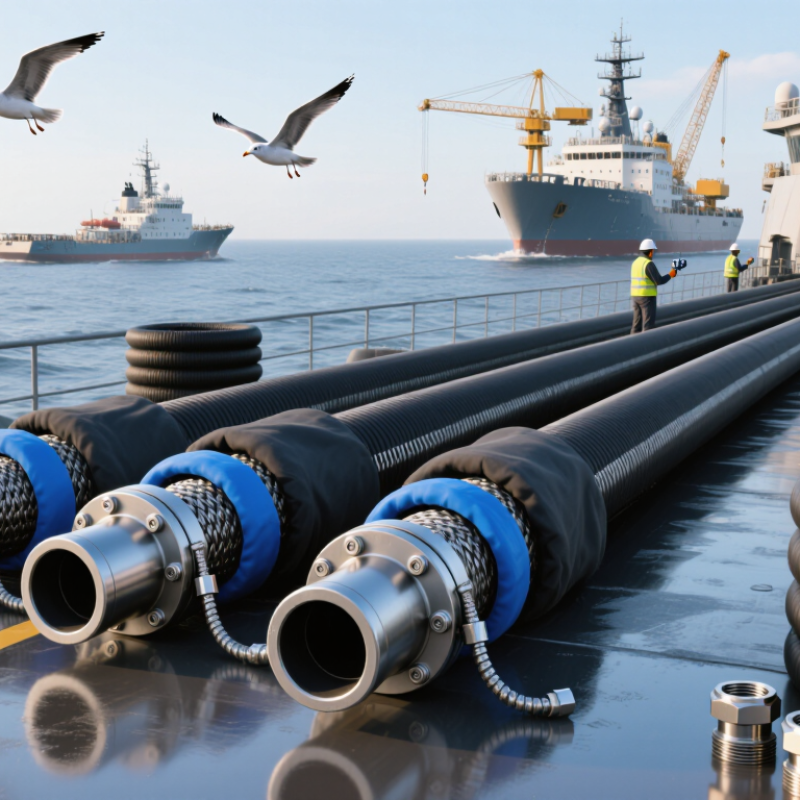
A submarine hose is a flexible, reinforced pipeline designed to transfer fluids underwater. It usually connects an offshore loading system, subsea pipeline, storage vessel, or marine terminal. Its inner tube carries the product, while reinforcement layers resist pressure, tension, and bending. Outer covers protect the hose from seawater, abrasion, sunlight, and mechanical contact.
These hoses are commonly used for crude oil, refined fuels, water, dredging mixtures, and selected chemical fluids. Offshore terminals may use them between floating equipment and underwater pipelines. Dredging projects use larger versions to move sand, silt, or slurry from the seabed. Some systems also support seawater intake, cooling, or emergency transfer operations.
The hose must match the fluid, pressure, temperature, water depth, and movement pattern. A flexible design is not automatically a safe design. Engineers normally review bend radius, buoyancy, connection type, corrosion resistance, and pressure testing records. Regular inspection can reveal cover damage, stiff sections, leaks, or unusual movement before failure occurs.
Details matter greatly.
The term submarine hose is not perfectly standardized. Some suppliers describe similar equipment as an underwater transfer hose or marine loading hose. This can create confusion during purchasing. A reliable specification should state the fluid, operating pressure, length, end fittings, service temperature, and applicable marine requirements. Selection should be checked with experienced engineers, because a visually strong hose may still be unsuitable for its actual service.
2026 Top Submarine Hose Manufacturers and Suppliers
What Is a Submarine Hose and Where Is It Used?
Submarine hoses are flexible, reinforced pipelines designed to transfer fluids underwater or between offshore loading systems. They are commonly used for crude oil, refined products, chemicals, and dredging materials in offshore terminals, single-point mooring systems, floating production facilities, and marine transfer operations.
Chart explanation: The chart compares representative nominal bore sizes commonly specified for offshore and marine hose systems. The millimeter values are exact conversions from nominal inch sizes using 1 inch = 25.4 mm. Final hose selection depends on flow rate, working pressure, fluid compatibility, temperature, bending requirements, and applicable marine standards.
How to Evaluate Submarine Hose Manufacturers and Suppliers
Evaluating submarine hose manufacturers requires more than comparing prices. Start with the hose’s operating profile: water depth, working pressure, temperature, fluid type, flow rate, and movement frequency. Ask for drawings showing bore size, bend radius, wall construction, and end-fitting design. A hose may look heavy-duty, yet fail when repeated bending creates hidden fatigue.
Request documented test results, not broad marketing claims. Useful records include pressure testing, vacuum resistance, buoyancy checks, abrasion testing, and material certificates. Confirm how each hose is identified and traced from production to delivery. Batch numbers, inspection dates, and replacement procedures matter during offshore maintenance. I have found that clear records often reveal more than polished presentations. A neat brochure is not proof.
Study the supplier’s engineering process and field experience. Can its team review installation angles, support spacing, connectors, and emergency replacement needs? Ask for references from comparable water depths and service conditions, while protecting confidential project details. Inspect sample couplings for clean machining, secure reinforcement, and practical handling points. Also examine quality controls for storage and transport; sunlight, contamination, and sharp bends can damage a hose before installation. No evaluation is perfect. Even experienced buyers can overlook changing currents or seasonal temperatures. Leave room for independent inspection and reassess the design when operating conditions change.
2026 Ranking Criteria for Leading Submarine Hose Companies
For a 2026 ranking of leading submarine hose manufacturers and suppliers, performance evidence should outweigh promotional claims. Evaluators should examine field experience in dredging, offshore transfer, and underwater installation. Proven service records matter. A supplier should provide test data for pressure resistance, seawater exposure, abrasion, bending, and fatigue. These details reveal whether a hose can withstand repeated movement, suspended loads, and harsh marine conditions.
Technical authority also depends on controlled production. Ranking criteria should include material traceability, dimensional inspection, burst testing, vacuum performance, and documented quality procedures. Independent certifications can strengthen confidence, but certificates alone are insufficient. Auditors should review production samples, inspection records, and corrective-action histories. Small defects can become expensive failures.
Reliability includes delivery accuracy, engineering support, installation guidance, and responsive after-sales service. Companies with clear drawings, maintenance intervals, and emergency procedures deserve higher consideration. Environmental responsibility should also be assessed through durable designs, reduced replacement needs, and responsible material handling. No ranking is flawless. Weighting each category remains difficult, especially when project conditions differ by region and water depth. A practical ranking should explain its scoring method, disclose evidence limits, and update results when new performance data becomes available. Experience is valuable, but it must remain open to scrutiny.
Global Applications, Standards, and Purchasing Considerations
Submarine hoses support offshore loading, seawater intake, dredging, and underwater transfer systems. Their designs vary with fluid type, depth, temperature, pressure, and movement. A hose used near a calm harbor may fail in strong currents or repeated bending. Site conditions matter more than catalog appearance.
Experienced buyers should check compliance with applicable standards, such as ISO 1823, EN 1765, and marine hose guidance such as GMPHOM. These references address construction, pressure resistance, testing, and oil-transfer performance. Requirements differ by country and project. Therefore, suppliers should provide certificates, inspection records, material traceability, and complete test data. Ask about vacuum rating, minimum bend radius, flange dimensions, buoyancy, and emergency release behavior. Small omissions can become expensive offshore problems.
Reliable manufacturers usually explain their design calculations instead of offering only a price. Request sample drawings and a service-life estimate based on real operating cycles. Confirm whether the supplier has tested similar hose assemblies in waves, currents, or abrasive seabeds. A visually strong hose is not automatically a safe hose. I have seen purchasing teams focus on diameter and delivery time, then overlook storage limits and installation tension. That mistake deserves reflection. Supplier support after delivery also matters, including inspection guidance, spare parts, and failure reporting. The best choice is not always the lowest quotation.





