

2026 Top 12 Volt Marine Toilet Buying Guide

Choosing a 12 Volt Marine Toilet in 2026 requires more than comparing flush buttons and retail prices. Electrical draw, pump design, discharge controls, bowl height, and service access affect daily comfort. A toilet that works quietly at the dock may struggle when batteries weaken offshore. Small details matter.

The NMMA 2023 Recreational Boating Statistical Abstract shows the continuing scale of recreational boating in the United States. Its economic impact reached approximately $230 billion, supporting demand for dependable onboard systems. Market research from Grand View Research also identifies marine sanitation equipment as a specialized product segment, although public reports rarely separate 12-volt toilets clearly. That limitation deserves attention. Broad market growth does not guarantee a better product for your boat.

Nigel Calder, author of Boatowner’s Mechanical and Electrical Manual, offers a useful service principle: “Keep it simple, and make it serviceable.” His advice fits marine toilets precisely. A reliable model should include accessible hoses, protected wiring, replaceable pumps, and clear installation instructions. It should also match the vessel’s battery capacity and plumbing layout. Measure twice.

This 2026 Top 12 Volt Marine Toilet Buying Guide examines practical performance, installation demands, odor control, noise, energy use, and long-term maintenance. It considers real boating conditions, including short-handed cruising, rough water, limited freshwater, and cold starts. Manufacturer claims are not enough. Independent testing remains uneven across this category, so buyers should inspect warranty terms and spare-parts availability carefully. I may be overly cautious, but an offshore toilet is not a decorative upgrade. It is a compact sanitation system that must work when convenience disappears.
2026 Top 12 Volt Marine Toilet Buying Guide

Understanding 12-Volt Marine Toilet Types and Core Functions

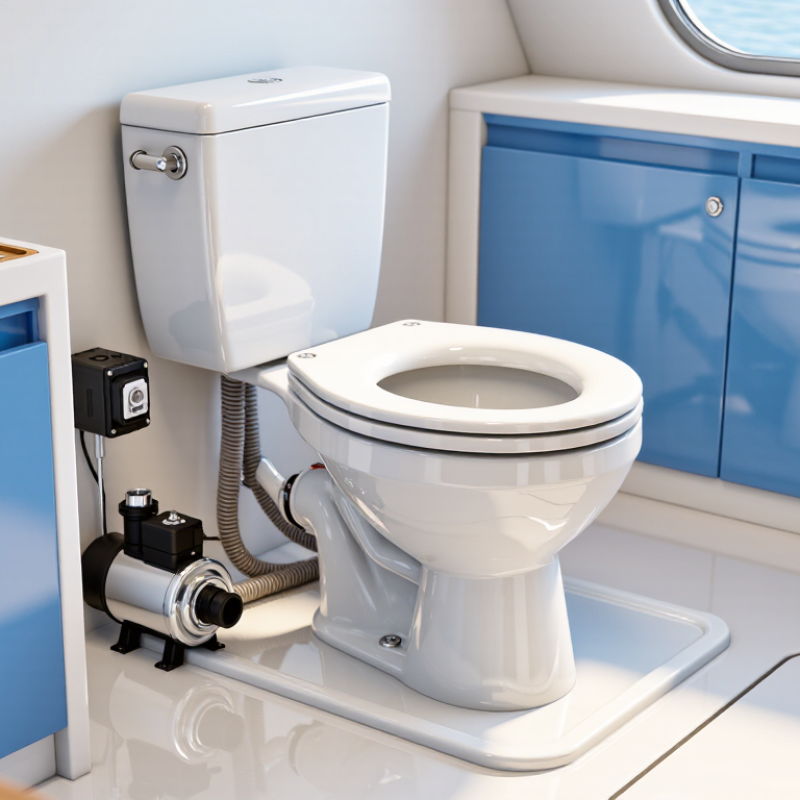
Choosing a 12-volt marine toilet starts with understanding its flushing system. Electric-flush models use a pump to move water and waste. Macerating models also grind waste before discharge to the holding tank. Some toilets use seawater, while others connect to the boat’s freshwater system.

During a small-cabin refit, I checked three details first: battery capacity, hose routing, and pump access. A 12-volt unit may draw significant current during flushing. Undersized wiring can cause slow operation or repeated fuse failures. Noise matters. A compact electric pump can sound surprisingly sharp inside a quiet cabin.

Core functions include water intake, bowl evacuation, maceration, and controlled discharge. The control panel may offer separate fill and flush buttons. Some systems use one-touch operation, but simple controls are easier to troubleshoot.

An anti-siphon loop helps prevent unwanted water movement through the plumbing. The holding tank also needs proper ventilation and secure connections.

Measure the available space carefully. Leave room above the pump and beside the service panel. I once assumed a narrow installation would simplify maintenance. It did not. A blocked hose clamp made a basic inspection unnecessarily difficult. Regularly check seals, wiring terminals, hose clamps, and the fuse. Use only compatible marine sanitation parts, because ordinary household fittings may soften, leak, or fail under vibration.

Checking Boat Compatibility, Power Requirements, and Installation Space

2026 Top 12 Volt Marine Toilet Buying Guide

Checking Boat Compatibility, Power Requirements, and Installation Space

A 12-volt marine toilet should match your boat’s plumbing, battery system, and daily use pattern. Measure the discharge hose diameter before choosing a model. Some boats use older fittings that need adapters. That small mismatch can create leaks, odors, or difficult maintenance.

Check the electrical system carefully. Confirm the toilet’s voltage, fuse rating, and starting current against your boat’s wiring. A long cable run may cause voltage drop, especially when the battery is partly discharged. Use marine-grade wiring with suitable protection. Do not rely on memory. Read the installation manual and measure the actual cable distance. I have seen otherwise suitable toilets perform poorly because the wiring was too light.

Space is often the real limitation. Record the available width, depth, and seat height around the mounting area. Leave room to open the lid and reach the service panel. Check the pump outlet direction before drilling any holes. A compact compartment may still block hose bends or electrical connections. Mock the toilet’s footprint with cardboard first. It feels simple, but this step can reveal awkward access that drawings miss. Also inspect the floor structure. A flexible or damp mounting surface can loosen fasteners over time, and that problem is easy to underestimate.

Comparing Flushing Systems, Water Use, Noise, and Waste Management

A 12-volt marine toilet should be judged by more than its flushing power. On a small cruiser, I have compared electric macerating units with manual pump models during overnight trips. Electric systems usually clear the bowl quickly, but their motor can sound sharp in a quiet cabin. Manual systems are quieter and simpler, though they demand more effort and careful pumping.

Water use affects both comfort and waste capacity. Some electric toilets use less than one liter per flush, while others consume several liters. That difference becomes significant when the holding tank is small. Low-water flushing can leave solids behind if the bowl shape or pump is poorly designed. I once focused too heavily on low consumption and underestimated rinsing performance. That was a costly assumption.

Noise also depends on mounting, hose routing, and battery condition. A weak battery may make the pump sound strained. Check the toilet’s current draw, wiring size, and circuit protection before installation. Waste management requires a sealed holding tank, a clear vent line, and secure sanitation hoses. The vent should not allow odors to collect inside the cabin. Regularly inspect hose clamps and tank fittings for leaks. Local discharge rules must guide tank use and pump-out practices. A practical test should include several flush cycles, a nearly full tank, and operation when the boat is moving. That reveals problems showroom demonstrations often hide.

2026 Top 12 Volt Marine Toilet Buying Guide

Comparing flushing systems, water use, operating noise, and waste-management requirements

The chart uses representative mid-range operating values commonly reported for compact marine sanitation systems. Water use is shown per flush, while noise is measured as a typical sound-pressure level at approximately one metre. Actual performance varies with hose layout, holding-tank distance, battery voltage, installation, and flush settings.

Flushing system Typical water use Typical noise Waste-management considerations
12V electric macerating 0.6–1.2 L/flush 60–75 dBA Cuts waste before discharge; requires reliable 12V wiring, an in-line fuse, service access, and a holding tank or approved overboard discharge system.
12V electric flush 1.0–2.0 L/flush 55–70 dBA Moves waste with an electric pump; larger water volumes can fill the holding tank faster and may require more frequent pump-outs.
Vacuum flush with 12V pump 0.3–0.6 L/flush 55–65 dBA Uses small-diameter sanitation lines and a vacuum reservoir; seals, vacuum lines, and the pump require periodic inspection.
Manual pump baseline 0.5–1.5 L/flush 45–60 dBA No electrical load; depends on manual pumping and gravity or a separate discharge pump, with fewer electrical components to maintain.

Evaluating Materials, Reliability, Maintenance, and Safety Features

A 12-volt marine toilet should be judged by more than flushing power. Material quality matters in saltwater, vibration, and changing temperatures. Look for corrosion-resistant fasteners, reinforced marine hoses, and a bowl that resists staining and cracking. ABYC H-23 and ISO 8099 provide useful guidance for marine sanitation systems. Their requirements help buyers assess installation, discharge control, and system integrity.

Reliability depends on the complete electrical circuit. Check the motor’s current draw, fuse protection, cable size, and switch sealing. ABYC E-11 offers practical standards for marine DC wiring, while ISO 8846 addresses ignition protection for electrical equipment. The 2023 U.S. Coast Guard Recreational Boating Statistics recorded 4,012 accidents, 556 deaths, and 2,641 injuries. A toilet may seem unrelated, but flooding, shorts, and blocked discharge lines can create avoidable onboard hazards. Safety belongs in the buying decision.

Maintenance is where many systems disappoint. Rinse the bowl, inspect hose clamps, and check the anti-siphon loop regularly. Keep replacement seals and a manual backup method onboard. The NMMA 2024 U.S. Recreational Boating Statistical Abstract reported 11.6 million registered recreational vessels in 2023, showing how widely marine equipment is used. Still, a large market does not guarantee reliability. A polished housing can hide weak wiring. Choose serviceable parts, clear instructions, and accessible connections. Perfect maintenance is unrealistic. Consistent maintenance is achievable.

Selecting the Best 12-Volt Marine Toilet for Your Boating Needs

Choosing the best 12-volt marine toilet starts with your boat’s real operating conditions, not appearance. The NMMA’s 2023 Recreational Boating Statistical Abstract recorded approximately 11.6 million registered recreational boats in the United States. Many owners therefore face different priorities, from compact cabin layouts to heavy weekend use. Measure the available space, discharge route, hose length, and battery distance before comparing models.

Check the toilet’s running current, starting surge, flush-water demand, and recommended fuse size. A longer cable run can create voltage drop, especially on older boats. A larger bowl feels more comfortable, but it may reduce usable cabin space. A low-water flush can protect freshwater reserves, yet it may require more frequent cleaning. No choice is perfect.

ABYC Standard H-27 emphasizes proper marine sanitation-system installation, including secure plumbing and ventilation practices. Follow those requirements and the manufacturer’s installation instructions. Select corrosion-resistant fittings, a serviceable pump, and a manual override when practical. During a dockside test, listen for irregular cycling and inspect every connection for seepage. Quiet operation matters. So does easy access.

The best 12-volt marine toilet matches your battery system, crew size, cruising duration, and maintenance habits. I would not judge performance from one short test. Cold mornings, low battery voltage, and rough water can expose weaknesses that showroom demonstrations miss.

2026 Top 12 Volt Marine Toilet Buying Guide - Selecting the Best 12-Volt Marine Toilet for Your Boating Needs

Rank Toilet Configuration Best Use Typical Voltage Typical Current Draw Freshwater Use per Flush Discharge Options Installation Difficulty Key Advantage Important Buying Check
1 Compact 12-Volt Macerating Toilet Small cabins and compact sailboats 12 V DC 15–25 A 0.5–1.0 L Holding tank or overboard where legal Moderate Space-saving bowl and effective waste reduction Confirm the pump can handle the planned discharge-head height and hose length.
2 Standard-Height Macerating Toilet General cruising and family boats 12 V DC 15–30 A 0.5–1.5 L Holding tank or approved overboard discharge Moderate Balanced comfort, flushing performance, and availability Measure seat height, bowl projection, service access, and door clearance.
3 Low-Profile Macerating Toilet Low-deck installations and restricted head compartments 12 V DC 15–30 A 0.5–1.5 L Holding tank or approved overboard discharge Moderate Fits beneath shelves, counters, or limited overhead space Check the pump housing and discharge outlet do not interfere with the sole or structure.
4 Electric Flush Toilet with Remote Pump Layouts requiring a separate pump location 12 V DC 15–30 A 0.5–2.0 L Holding tank or approved overboard discharge Advanced Flexible component placement and easier access to some service parts Plan a dry, accessible pump location and keep suction lines short and well-supported.
5 Quiet-Flush 12-Volt Toilet Sleeping cabins and noise-sensitive cruising 12 V DC 15–25 A 0.5–1.5 L Holding tank or approved overboard discharge Moderate Reduced operating noise compared with louder pump designs Look for published sound data and install vibration-isolating mounts where specified.
6 Dual-Function Flush Toilet Boats needing liquid-saving and full-flush choices 12 V DC 15–30 A 0.2–1.5 L Holding tank or approved overboard discharge Moderate Helps reduce freshwater consumption during extended trips Verify that low-water settings provide adequate bowl rinsing for solids.
7 Freshwater-Fed Electric Toilet Vessels with reliable pressurized freshwater systems 12 V DC 15–30 A 0.5–2.0 L Holding tank or approved overboard discharge Moderate Reduces seawater odor and mineral deposits in the bowl and lines Use a correctly rated anti-siphon arrangement and avoid cross-contamination of the potable system.
8 Seawater-Fed Electric Toilet Boats conserving freshwater during offshore cruising 12 V DC 15–30 A Minimal freshwater use Holding tank or approved overboard discharge Advanced Preserves tank water for drinking, cooking, and hygiene Install a strainer, serviceable intake seacock, anti-siphon protection, and odor-control routine.
9 Remote-Control Panel Toilet Installations requiring convenient flush controls 12 V DC 15–30 A 0.5–2.0 L Holding tank or approved overboard discharge Moderate Allows control placement near the user or outside a wet area Use marine-grade switches, suitable cable protection, and a sealed mounting location.
10 Heavy-Duty Commercial-Style Electric Toilet Charter boats and high-use recreational vessels 12 V DC 20–35 A 0.5–2.0 L Holding tank or approved overboard discharge Advanced Designed for frequent operation and robust service access Check duty-cycle limits, replacement-part availability, and the house battery’s peak-load capacity.
11 Electric Toilet for Long Discharge Runs Layouts with remote or elevated holding tanks 12 V DC 20–35 A 0.5–2.0 L Holding tank or approved overboard discharge Advanced Higher pumping capability for appropriately engineered pipe runs Compare the manufacturer’s maximum vertical lift, horizontal run, and hose-diameter limits.
12 Low-Consumption Electric Marine Toilet Weekend boats and small battery-bank systems 12 V DC 10–25 A 0.2–1.0 L Holding tank or approved overboard discharge Moderate Lower water and energy demand when correctly adjusted Do not select by amp rating alone; verify complete flush-cycle energy use and reliable bowl clearing.
Selection note: The electrical and water-use figures above are typical planning ranges for 12-volt electric marine toilets, not guaranteed specifications for every model. Always confirm the installation manual, wiring requirements, discharge regulations, sanitation-system requirements, and local marine laws before purchase.

Powder Coat Booths

For those larger-sized parts, or smaller quantity runs, we have 2 independent powder coat booths and ovens. The quality, durability and affordability of today’s powder coating finishes make this the process of choice for world-class companies.

Powder coating advantages over other forms of coating are many. Materials used in the Powder coating process can be metals and non-metals that come in a multitude of thicknesses, textures, colors, etc. Another of Powder coating’s biggest advantages over conventional coatings is its ability to create finishes in many different textures. Powder Coating Booths allow us the ability to apply these advantages to large products.

Wet Paint Line

Tri-State Fabricators runs a full-service conveyor line for painting. Wet painting can provide protection or decoration to many different part styles. From start to finish, every project is easier to undergo random and point-based inspection by our skilled painting team.

Advantages to our Wet Paint Line are these lines start with product prep and ends with a thorough inspection of a high quality finished product. Our ability to complete large and small projects with a superior finish and doing so in a timely and economical fashion. This passes along the savings in production to our customers. When powder coating ins not an option, our Wet Paint Line gets the job done right the first time.

Wet Paint Booths

When the parts get big and heavy we roll-out our custom paint racks and oversize booth. By utilizing our partnerships with all the major paint brands, we can match virtually any color with wet paint.

The advantages of having access to a Wet Paint Booth are many. Large projects of many different shapes can be loaded into the booth. The Wet Paint Booth offers an environment that is much more controlled than a typical parts painting operation.

Not only are they used because of their controlled environment, but they’re are also advantageous when it comes to applying paint to parts that are needed in industries that require specialty coatings such as medical, aerospace, etc.

Military CARC

Our military forces have some very high standards when it comes to the finish of their vehicles and equipment. From the first pre-treatment step to final coat, it takes a great deal of knowledge and experience to protect the men and women of our armed forces. They deserve only the best, and Tri-State Fabricators provides it.

All of our processes are closely monitored by our staff and management teams. Both of which are highly trained in the processes of metal fabrication and finishing. Tri-State Fabricators’ goal is to always fully satisfy each and every customer, including the military. We will always put a 110% into what we do.

Glass-Bead Blasting

Abrasive media blasting is an excellent way to remove old paint, rust, and increase the paint/powder adhesion. Glass beads produce a much smoother and brighter finish than angular abrasives; leaving the part clean yet without any dimensional change. Chemically inert and environmentally friendly, we can recycle our beads approximately 30 times; making them a more preferred method of metal cleaning or surface finishing.

Advantages to Glass Bead Blasting are many. Glass bead blast media is used when a project is needing rough surfaces need to become smooth for applications of coatings such as paint. It is typically used to clean paint and rust from a product surface without deforming the surface it is being used on. Overall, compared to many other blasting media, Glass Bead Blasting is a very economical choice and those savings are always passed on to our customers.

Part Washing

Tri-State Fabricators utilize a zinc phosphate wash to clean and etch the material to ensure the best paint adhesion possible. The unique design of our 3-stage wash system does the work like a 5-stage. From Cleaning and rinsing to conversion coating and post-treatment, Our Part Washing process is a complete service and works throughout the fabrication service and the finishing service.

Along with the previously mentioned benefits, Curing is a vital chemical reaction that leaves the product finish hard and relatively safe from mild abrasion and aggressive corrosion. This process can be done in more than one way; ambient air-dry or in curing ovens at temps that exceed 240°.

Burn-Off Oven

From fixing paint mistakes (someone else’s of course) to simply cleaning our paint line hooks, our burn-off oven is put to good use. After a quick burn-off, a little clean up, and a fresh coat of paint, your parts will look better than new.

Why does our Burn-Off Oven work so well? Because super heating the air around parts turns the materials into ashes. From paint and powder coatings to rubber and machining oils, high temps do the job without degrading the integrity of the part.

Masking

Masking is a vital part of producing high quality products. We have die-cut masking patterns to protect machined surfaces as well as a wide range of plugs and caps to protect threaded holes and bolts. We provide permanent and temporary masking.

Masking allows the selected sections of a product to be protected from a fabrication or finishing service. This can be with both chemicals when etching and tapes, paints when only finishing just a section of the product. Masking is great in aiding the customization process of a project.

Screen Printing

Screen printing is a photographic process that transfers artwork onto a porous nylon screen which allows colored ink to flow through the screen and be deposited on an aluminum or plastic component. We can generally have just about any design created onto a screen for your parts.

Some of the advantages of Screen Printing are, brand recognition for your business displaying on your products, assembly instructions, product warnings/hazards, etc. Tri-State Fabricators produces Screen Printing of the highest quality so you know it’s durable.

Metal Finishing

Metal Finishing is the art of treating the exterior portion of product, often metal but can also be made of other materials, so that the surface is clean and free of any debris. Then the process of applying coats or either paint of powder coat takes place. This coating process improves the quality of the product in both appearance and resistance to wear and corrosion.

Tri-State Fabricators, Inc., understands that a project typically isn’t complete until a high-quality finish has been added to your product. This is why our painting and powder coating teams continuously inspect the products throughout the Metal Finishing process.