

Choosing a Cooler Cold Plate manufacturer is not just a price comparison. For global buyers, the right partner must deliver stable thermal performance, consistent machining, and dependable production capacity. A cold plate may look simple, but channel geometry, material selection, surface flatness, and joining quality can affect heat transfer and leak risk. Small details matter.
This 2026 guide examines manufacturers through practical buying criteria. It considers cooling applications, engineering support, customization, quality controls, production scale, and communication across regions. Buyers should review technical drawings, material specifications, pressure-test procedures, and sample results before making a commitment. Ask how suppliers handle design changes and production issues. Clear answers count.
No supplier is ideal for every project. A manufacturer suited to a compact electronics enclosure may not fit a high-flow industrial system. Even published capabilities deserve verification against the buyer’s operating conditions. That takes time. The comparisons ahead are intended to help readers create a shortlist, ask more useful questions, and assess trade-offs with care. They are a starting point, not a substitute for technical review.
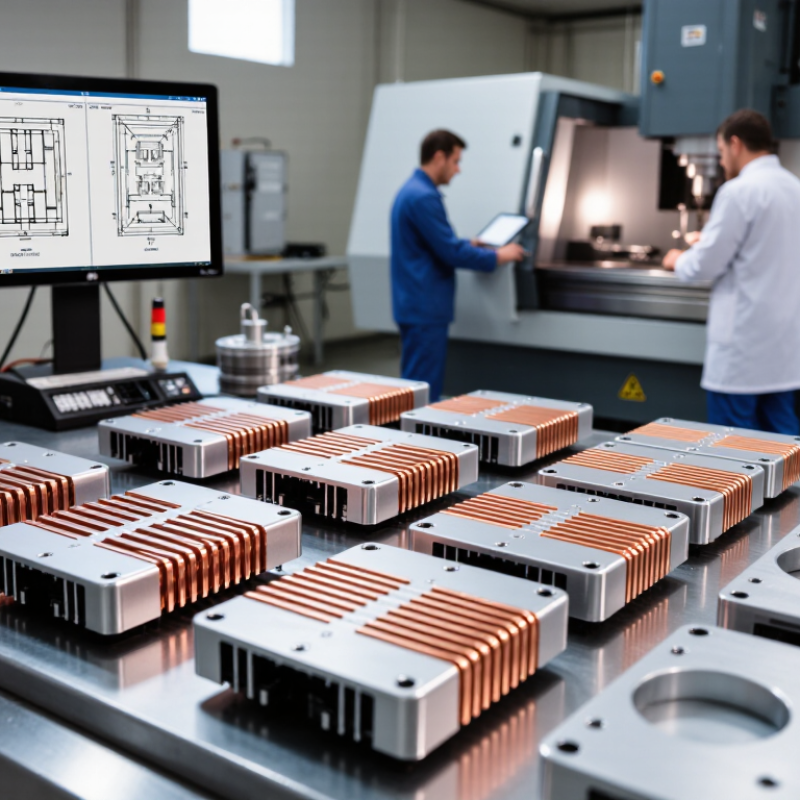
A cold plate transfers heat from a processor into a liquid cooling loop. For a 300 W GPU, it must spread heat across the contact area quickly. The base material, channel pattern, and thermal interface material all matter. A small air gap can raise temperatures sharply.
At 1,000 W, AI chips create a harder engineering problem. The cold plate needs balanced flow, low thermal resistance, and controlled pressure drop. Microchannels may improve heat transfer, but they can also increase blockage risks. Coolant temperature, flow rate, and inlet design require measurement, not guesswork. During validation, sensors should track multiple points across the plate.
Reliable buyers should request thermal test data, leak testing records, and dimensional tolerances. Ask whether results use the same power density as your system. A plate that performs well at 300 W may fail near 1,000 W. That gap is easy to underestimate. Practical testing also exposes imperfect assumptions, especially when interface pressure varies across the chip. Thermal performance is only one concern; service access, corrosion control, and long-term sealing deserve equal attention.
In 2026, global buyers compare four established cold plate suppliers by evidence, not reputation alone. Each supplier may offer aluminum, copper, or brazed constructions. The real difference appears in thermal resistance, pressure drop, and dimensional control. Ask for tested performance at your actual coolant flow and heat load. A laboratory result at ideal conditions may not match a dusty factory floor.
Experienced buyers also inspect mounting flatness, channel design, corrosion protection, and pressure-test records. Reviewers should request drawings, material certificates, flow curves, and sample inspection reports. Lead time matters, but stable quality matters more. A low initial quote can become expensive after redesigns or repeated leakage tests. Some datasheets remain incomplete. That deserves a direct question, not an assumption.
Tips: Compare identical test conditions. Check inlet and outlet locations. Test one prototype under real vibration and cycling. Confirm whether the supplier controls machining, brazing, and final inspection internally. Keep a written acceptance checklist.
In practical evaluations, installation can expose problems that simulations miss. A plate may perform well thermally but restrict the pump. Another may fit perfectly yet require costly surface treatment. We have seen small tolerance errors complicate interface contact. That lesson is easy to overlook. Buyers should also assess technical response speed, change control, packaging, and after-sales support before approving volume orders.
For global buyers, a cold plate rated below 0.05 K/W is a strong starting point, not a complete specification. Thermal resistance shows how effectively heat moves from the source to the coolant. It does not describe pressure drop, flatness, corrosion behavior, or long-term leakage risk. Experienced teams review the test method before comparing suppliers. A result at 20°C coolant may change sharply at higher flow rates. Test conditions matter.
A practical design uses a defined heat load, inlet temperature, flow rate, and mounting pressure. Ask for temperature maps, not only one calculated number. A 500 W plate can look excellent in a laboratory fixture, then perform poorly against a warped processor package. Contact resistance often hides inside the final assembly. Copper or aluminum selection also affects weight, galvanic compatibility, and manufacturing cost. Precision channels improve heat transfer, but narrow passages may collect particles and raise pumping demand. I have seen designs chase lower resistance while neglecting service access. That trade-off deserves scrutiny.
Tips: Specify resistance below 0.05 K/W at your actual load and flow. Request independent test records when project risk is high. Check flatness across the full mounting area. Confirm leak testing, pressure limits, coolant compatibility, and thermal cycling data. Leave design margin; real systems rarely match ideal fixtures. Recheck the model after assembly. Small gaps can matter.
Reference thermal-resistance checkpoints for liquid cold plate design at a 1,000 W heat load. Values are calculated from Rth = ΔT / Q and remain below the 0.05 K/W design threshold.
Lower thermal resistance indicates better heat-transfer performance. The reference points correspond to temperature rises of 20 K, 30 K, 40 K, and 45 K at a constant 1,000 W thermal load.
For global cold plate buyers in 2026, standards should guide selection before advertised wattage.
ASHRAE liquid cooling guidance links supply temperature to equipment limits, facility conditions, and condensation risk. A designer should record inlet temperature, flow rate, pressure drop, and allowable outlet temperature.
Typical data sheets may show 18–27°C operation, but that range is not universal. Others need tighter control.
Cold plate validation should reproduce real installation conditions, not only a short bench test.
IEC 60068 environmental methods can support thermal cycling, humidity exposure, vibration, and shock evaluations when those stresses match the application. IEC 62368-1 may be relevant to system safety, while IEC 60529 applies only when enclosure protection is claimed.
Neither standard automatically proves cooling capacity.
The test report must state fluid chemistry, material pairings, torque, mounting flatness, sensors, and measurement uncertainty.
A reliable manufacturer should provide pressure-drop curves at several flow rates and explain measurement tolerances.
Buyers should request corrosion compatibility evidence, leak testing, thermal resistance, and repeated assembly results.
One practical weakness deserves attention: many comparisons use clean water and perfect contact surfaces. Field systems are less forgiving.
Dust, pump variation, trapped air, and uneven clamping can change performance. A cold plate that passes one IEC sequence may still disappoint beside a crowded rack.
Measure it before approval.
For global buyers sourcing cooler cold plates in 2026, MOQ often depends on material, channel design, and production method. Standard aluminum plates may start at 50–100 units, while copper or heavily customized designs can require higher volumes. Ask for a written MOQ by model, not a general factory promise. Details matter.
Certification checks should match the final application. Request ISO 9001 evidence, RoHS and REACH declarations, material certificates, and documented pressure-test procedures. UL or other safety approvals may apply to the complete cooling assembly, rather than the cold plate alone. I have found that traceable inspection records reveal more than attractive certificates. Still, paperwork can become outdated, so verify revision dates and issuing bodies.
Lead times commonly range from two to four weeks for samples and six to twelve weeks for repeat production. New tooling, brazing fixtures, or special surface treatments may add several weeks. Include tooling, machining, leak testing, packaging, freight, duties, and possible rework in the total cost. The lowest unit price can hide poor flatness or inconsistent channel depth. That hurts. Request sample dimensional reports, thermal test data, and a clear remedy for rejected parts. A realistic supplier should explain capacity limits and seasonal delays, even when that weakens the quotation. Procurement plans are rarely perfect. Build a small schedule buffer.
Planning benchmark, not a supplier ranking: The figures below are indicative ranges for RFQ planning, not verified quotations or claims about individual manufacturers. Actual MOQ, lead time, certifications, and cost depend on design, material, testing, order volume, and destination. Confirm current details directly with each supplier.
| Supplier capability profile | Typical cold-plate construction | Indicative MOQ for a new design | Indicative lead time | Certifications and evidence to request | Total-cost considerations |
|---|---|---|---|---|---|
| Prototype and engineering-focused shop | CNC-machined copper or aluminum; drilled or milled channels; brazed or sealed cover where required. | Often 1–20 units, subject to setup and material availability. | Approximately 2–6 weeks after drawing approval; complex designs may take longer. | Request a current quality-management certificate if required, material certificates, dimensional inspection results, and documented leak-test procedure. | Higher unit price at low volume; account for engineering, fixtures, inspection, and prototype shipping. |
| Production CNC and brazing supplier | Machined plate with brazed cover; copper or aluminum options depending on thermal, weight, and corrosion requirements. | Commonly 50–500 units; tooling or process setup may affect the first order. | Approximately 4–10 weeks for initial production; repeat orders can differ. | Verify certificate scope and validity. Request process-control records, pressure or leak-test criteria, traceability options, and a first-article inspection plan. | Compare machining time, braze yield, post-processing, inspection level, packaging, and freight—not unit price alone. |
| High-volume formed or stamped-plate supplier | Formed or stamped metal plates joined by brazing, welding, or another validated joining process; design is suited to repeat production. | Often 1,000+ units; dedicated tooling may be needed. | Approximately 8–16 weeks or more for initial tooling and qualification; repeat production timing is order-specific. | Request evidence of the applicable quality system, tool qualification, process validation, lot traceability, and agreed sampling or inspection plan. | Evaluate tooling amortization, minimum order commitments, scrap and yield assumptions, change-control costs, and inventory carrying cost. |
| Automotive-oriented supplier | Application-specific brazed, welded, or machined assemblies; materials and validation depend on the vehicle program. | Program-dependent; production commitments may be substantially higher than prototype quantities. | Allow for supplier qualification and product validation in addition to manufacturing lead time; confirm the program schedule directly. | If automotive quality is mandatory, verify a valid IATF 16949 certificate and its site and scope; request customer-specific requirements and applicable validation records. | Include validation, documentation, audits, traceability, warranty exposure, and any customer-specific packaging or logistics requirements. |
| High-reliability or regulated-market supplier | Design and process selected for the specified operating environment; material, cleanliness, and test requirements must be defined by the buyer. | Usually determined by qualification scope and production plan rather than a universal MOQ. | Qualification and documentation can extend the schedule; obtain a milestone-based delivery plan. | Request only standards relevant to the application. Verify certificate status, scope, issuing body, site coverage, and required test reports; do not assume a supplier holds a specific certification. | Budget for qualification builds, special inspection, documentation, controlled packaging, and any customer-required audits or testing. |
| RFQ checklist for all supplier profiles | Specify envelope, channel geometry, material and temper, surface finish, ports, fluid, operating pressure, and thermal performance targets. | Request prototype, pilot, and annual-volume pricing tiers, plus any tooling or setup charges. | Ask for separate estimates for samples, first production, and repeat orders, with assumptions and approval milestones stated. | Define required certificates, material traceability, leak-test method and acceptance criteria, inspection records, and document retention before order placement. | Compare landed cost: unit price + tooling + testing + packaging + freight + duties and taxes + quality costs + inventory and payment terms. |
Lead-time ranges are indicative planning estimates, not guaranteed delivery dates. Certification is site- and scope-specific; request current documentation and verify that it covers the facility and process proposed for your order.


For those larger-sized parts, or smaller quantity runs, we have 2 independent powder coat booths and ovens. The quality, durability and affordability of today’s powder coating finishes make this the process of choice for world-class companies.
Powder coating advantages over other forms of coating are many. Materials used in the Powder coating process can be metals and non-metals that come in a multitude of thicknesses, textures, colors, etc. Another of Powder coating’s biggest advantages over conventional coatings is its ability to create finishes in many different textures. Powder Coating Booths allow us the ability to apply these advantages to large products.
Tri-State Fabricators runs a full-service conveyor line for painting. Wet painting can provide protection or decoration to many different part styles. From start to finish, every project is easier to undergo random and point-based inspection by our skilled painting team.
Advantages to our Wet Paint Line are these lines start with product prep and ends with a thorough inspection of a high quality finished product. Our ability to complete large and small projects with a superior finish and doing so in a timely and economical fashion. This passes along the savings in production to our customers. When powder coating ins not an option, our Wet Paint Line gets the job done right the first time.
When the parts get big and heavy we roll-out our custom paint racks and oversize booth. By utilizing our partnerships with all the major paint brands, we can match virtually any color with wet paint.
The advantages of having access to a Wet Paint Booth are many. Large projects of many different shapes can be loaded into the booth. The Wet Paint Booth offers an environment that is much more controlled than a typical parts painting operation.
Not only are they used because of their controlled environment, but they’re are also advantageous when it comes to applying paint to parts that are needed in industries that require specialty coatings such as medical, aerospace, etc.
Our military forces have some very high standards when it comes to the finish of their vehicles and equipment. From the first pre-treatment step to final coat, it takes a great deal of knowledge and experience to protect the men and women of our armed forces. They deserve only the best, and Tri-State Fabricators provides it.
All of our processes are closely monitored by our staff and management teams. Both of which are highly trained in the processes of metal fabrication and finishing. Tri-State Fabricators’ goal is to always fully satisfy each and every customer, including the military. We will always put a 110% into what we do.
Abrasive media blasting is an excellent way to remove old paint, rust, and increase the paint/powder adhesion. Glass beads produce a much smoother and brighter finish than angular abrasives; leaving the part clean yet without any dimensional change. Chemically inert and environmentally friendly, we can recycle our beads approximately 30 times; making them a more preferred method of metal cleaning or surface finishing.
Advantages to Glass Bead Blasting are many. Glass bead blast media is used when a project is needing rough surfaces need to become smooth for applications of coatings such as paint. It is typically used to clean paint and rust from a product surface without deforming the surface it is being used on. Overall, compared to many other blasting media, Glass Bead Blasting is a very economical choice and those savings are always passed on to our customers.
Tri-State Fabricators utilize a zinc phosphate wash to clean and etch the material to ensure the best paint adhesion possible. The unique design of our 3-stage wash system does the work like a 5-stage. From Cleaning and rinsing to conversion coating and post-treatment, Our Part Washing process is a complete service and works throughout the fabrication service and the finishing service.
Along with the previously mentioned benefits, Curing is a vital chemical reaction that leaves the product finish hard and relatively safe from mild abrasion and aggressive corrosion. This process can be done in more than one way; ambient air-dry or in curing ovens at temps that exceed 240°.
From fixing paint mistakes (someone else’s of course) to simply cleaning our paint line hooks, our burn-off oven is put to good use. After a quick burn-off, a little clean up, and a fresh coat of paint, your parts will look better than new.
Why does our Burn-Off Oven work so well? Because super heating the air around parts turns the materials into ashes. From paint and powder coatings to rubber and machining oils, high temps do the job without degrading the integrity of the part.
Masking is a vital part of producing high quality products. We have die-cut masking patterns to protect machined surfaces as well as a wide range of plugs and caps to protect threaded holes and bolts. We provide permanent and temporary masking.
Masking allows the selected sections of a product to be protected from a fabrication or finishing service. This can be with both chemicals when etching and tapes, paints when only finishing just a section of the product. Masking is great in aiding the customization process of a project.
Screen printing is a photographic process that transfers artwork onto a porous nylon screen which allows colored ink to flow through the screen and be deposited on an aluminum or plastic component. We can generally have just about any design created onto a screen for your parts.
Some of the advantages of Screen Printing are, brand recognition for your business displaying on your products, assembly instructions, product warnings/hazards, etc. Tri-State Fabricators produces Screen Printing of the highest quality so you know it’s durable.
Metal Finishing is the art of treating the exterior portion of product, often metal but can also be made of other materials, so that the surface is clean and free of any debris. Then the process of applying coats or either paint of powder coat takes place. This coating process improves the quality of the product in both appearance and resistance to wear and corrosion.
Tri-State Fabricators, Inc., understands that a project typically isn’t complete until a high-quality finish has been added to your product. This is why our painting and powder coating teams continuously inspect the products throughout the Metal Finishing process.