

Buying a UV lamp in 2026 requires more than comparing one number on a supplier’s quotation. The listed Uv Lamp Price may cover only the lamp body, while power supplies, controllers, replacement tubes, packaging, and freight remain separate. A realistic budget begins with the application, required wavelength, output intensity, operating hours, and installation environment.
This guide examines UV lamp prices for global buyers through practical purchasing details. It compares common lamp types, including mercury, LED, and specialty systems, while considering performance, service life, energy use, and maintenance needs. A lamp priced at $120 may appear attractive, but a shorter service life can increase replacement costs. The cheapest quotation is not always the most economical choice.
Experienced buyers should request clear technical documents, test reports, warranty terms, and delivery conditions before placing an order. Supplier experience matters, especially when products require calibration or customized electrical configurations. Compliance requirements also vary by destination, so buyers should verify applicable safety, electrical, labeling, and import rules with qualified local professionals. Prices can change with material costs, exchange rates, order volume, and shipping routes.
There is no universal “best” price.
Our comparison may not fit every workshop, laboratory, production line, or commercial installation. That limitation deserves attention. Product specifications can also look precise while leaving important details unclear, such as measured output distance or real operating temperature. Use this guide as a purchasing framework, then confirm every critical figure directly with the manufacturer. A careful decision balances upfront cost, verified performance, long-term reliability, and responsible compliance.
UV lamps are not interchangeable. Their wavelength determines their job.
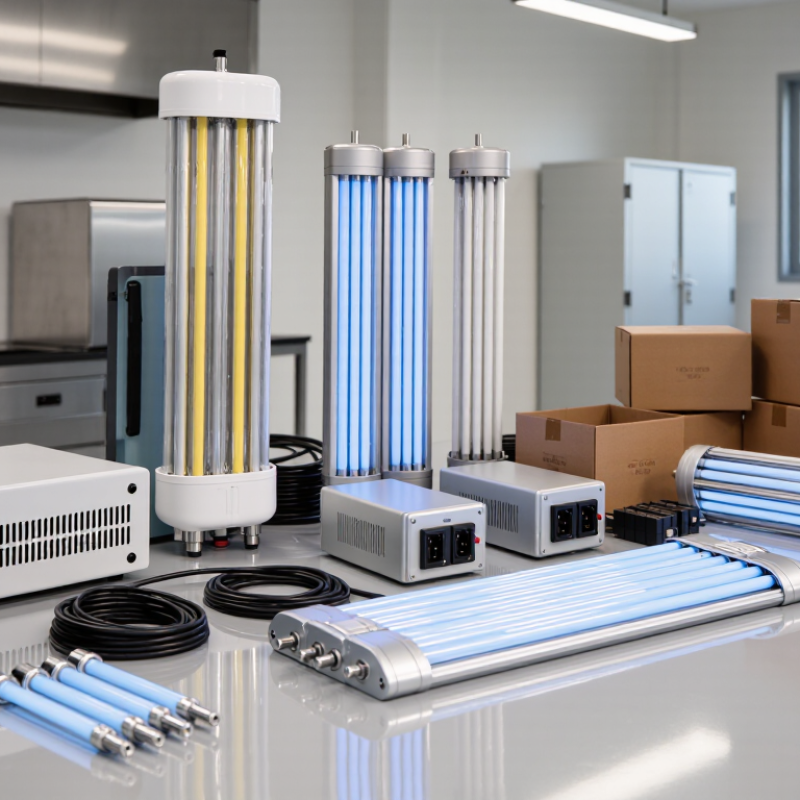
UV-A lamps support adhesive curing, forensic inspection, and fluorescent testing. UV-B lamps serve specialized research, agriculture, and controlled phototherapy equipment. UV-C lamps target microorganisms on exposed surfaces, air, and water. Effectiveness depends on dose, distance, exposure time, and lamp condition.
Low-pressure mercury lamps usually offer strong UV-C output at a competitive purchase price. LED UV systems can provide lower heat, compact designs, and easier switching. However, their higher initial cost may affect a small facility’s budget. Replacement lamps, power requirements, ozone production, certifications, and shipping conditions also change the final price for global buyers. A cheap quote can look attractive, but incomplete specifications create expensive mistakes. I still find wavelength labels alone insufficient.
Tips: Request irradiance data, not only wattage. Confirm the operating voltage and plug standard. Ask for test reports from a qualified laboratory. Check whether protective shields, interlocks, and warning labels are included. Keep a replacement schedule based on measured output, not appearance. UV-C can damage skin and eyes within seconds, so use enclosed equipment or verified protective controls. Some lamps may produce ozone, which requires suitable ventilation. A pre-purchase checklist feels slow, yet it often exposes missing safety details.
2026 Best UV Lamp Price Guide for Global Buyers?
Global UV lamp prices vary sharply by technology and application. Low-pressure mercury UV-C lamps commonly cost USD 20–180 per tube for air, surface, or small water systems. Medium-pressure lamps often range from USD 200–1,500, depending on wattage, quartz quality, and cooling requirements. UV LED modules usually cost USD 100–2,000. Industrial curing systems can exceed USD 10,000.
The application changes the real purchase cost. Water-treatment equipment needs stronger output, sensors, sleeves, and replacement planning. A compact disinfection unit may cost USD 300–2,500, while municipal systems can reach USD 20,000–150,000. UV curing lamps for coatings, printing, and electronics commonly range from USD 500–8,000 per assembly. These ranges reflect recent international supplier quotations and technical procurement records, not fixed retail prices.
Industry reports support continued demand. Grand View Research valued the global UV disinfection equipment market at about USD 5 billion in 2023, with strong growth expected through 2030. MarketsandMarkets also forecasts a growth rate above 7% for UV disinfection equipment during the current decade. Reports differ because they classify lamps, reactors, and complete systems differently. That matters. A cheap lamp may have weak output, short life, or expensive ballast requirements. Buyers should compare irradiance, rated hours, energy use, certification, shipping, and local service. Price alone is an incomplete measurement.
2026 Best UV Lamp Price Guide for Global Buyers
UV lamp prices depend on more than wattage. Low-pressure mercury lamps often cost less than high-output amalgam lamps. UV-C LED systems usually carry higher purchase prices, but they may reduce maintenance and mercury-handling concerns. The International Ultraviolet Association notes that delivered UV dose matters more than electrical wattage. Buyers should request tested output at the target distance.
Market demand also affects pricing. Grand View Research estimates the global UV disinfection equipment market will expand strongly through 2030, with a double-digit annual growth rate. However, published estimates differ. That is worth questioning. A higher market forecast does not guarantee lower lamp prices. Quartz quality, ballast design, cooling, sensor integration, and operating life can add significant costs. IEC safety requirements and local electrical approvals may also increase the final quotation. Shipping, import duties, spare lamps, and regional voltage standards often create hidden expenses.
Tips: Compare cost per operating hour, not only the invoice price. Ask for irradiance data, tested lamp life, replacement intervals, and warranty terms. A supplier claiming 12,000 hours should explain testing conditions. Laboratory figures can disappoint in dusty water-treatment rooms. Check that the lamp fits your chamber, connector, ballast, and local voltage. A cheaper lamp may become expensive after frequent replacements.
Key Factors That Determine UV Lamp Prices
The chart presents indicative industrial planning ranges for common UV lamp technologies in 2026. UV-LED systems generally cost more than basic low-pressure mercury lamps because of semiconductor modules, thermal management and electronic drivers. Medium-pressure mercury and excimer systems typically command higher prices because of their power requirements, specialized materials, cooling systems and application-specific design.
Final prices are also influenced by wavelength, optical output, lamp power, cooling method, housing design, safety certifications, expected service life, replacement-part availability, order quantity and shipping destination.
Regional pricing changes more than many buyers expect. A compact UV curing lamp may cost 80–250 USD from Asian suppliers, while European or North American offers often reach 180–600 USD. The difference can reflect testing, warranty support, packaging, and local distribution. Freight also matters. A small carton moving to a remote island may cost more than the lamp itself. Voltage is another practical issue. Buyers in North America commonly need 110–120V units, while many other markets use 220–240V systems. Wrong specifications create delays and safety concerns.
Tips: Request a complete landed-cost quote. Ask about wattage, wavelength, cooling, plug type, customs documents, and replacement parts. Compare at least three offers from suppliers serving your region. Check whether the quoted price includes taxes and inspection fees. For professional use, confirm applicable electrical and workplace requirements before ordering. Do not rely on product photos alone.
Regional service can influence the real value. Local distributors may charge more, but they can shorten delivery and simplify returns. Direct imports may look cheaper, yet communication gaps can increase risk. A sensible buyer should compare total ownership costs over twelve months. Include energy use, lamp life, maintenance, and technician support. Specifications are sometimes presented unclearly, even by experienced sellers. That deserves a careful question, not an assumption. Prices may also shift during 2026 because of exchange rates, shipping capacity, and component supply. Recheck the quotation before payment.
When comparing UV lamp suppliers, price should begin with wavelength, irradiance, and operating hours. A 254 nm lamp is not interchangeable with a 365 nm curing lamp. The U.S. Department of Energy reports that UV-C effectiveness depends on delivered dose, not electrical wattage alone. Ask for irradiance data at a stated distance, temperature, and lamp age.
Supplier evidence matters more than polished quotations. Request independent test reports, photometric calibration records, and compliance with IEC 62471 for photobiological safety. The International Ultraviolet Association emphasizes dose validation and maintenance records in disinfection applications. A supplier quoting only “high power” gives too little information. Very little confidence.
Compare total ownership cost. Include lamp replacement intervals, ballast compatibility, cooling needs, shipping, and disposal requirements. A 2024 market analysis by Grand View Research estimates strong growth in UV disinfection equipment, with energy efficiency and monitoring driving adoption. That growth also brings inconsistent specifications. My practical mistake was comparing unit prices before checking replacement frequency; the cheaper lamp became more expensive after repeated downtime.
For industrial curing, request test coupons using your actual coating, conveyor speed, and substrate. For water or air systems, examine validated dose, flow rate, sensor accuracy, and pressure loss. Suppliers should provide traceable documents, realistic lead times, and a written warranty. Do not accept impressive laboratory results without field conditions. A small pilot order can reveal unstable output, difficult installation, or weak technical support before a larger purchase.


For those larger-sized parts, or smaller quantity runs, we have 2 independent powder coat booths and ovens. The quality, durability and affordability of today’s powder coating finishes make this the process of choice for world-class companies.
Powder coating advantages over other forms of coating are many. Materials used in the Powder coating process can be metals and non-metals that come in a multitude of thicknesses, textures, colors, etc. Another of Powder coating’s biggest advantages over conventional coatings is its ability to create finishes in many different textures. Powder Coating Booths allow us the ability to apply these advantages to large products.
Tri-State Fabricators runs a full-service conveyor line for painting. Wet painting can provide protection or decoration to many different part styles. From start to finish, every project is easier to undergo random and point-based inspection by our skilled painting team.
Advantages to our Wet Paint Line are these lines start with product prep and ends with a thorough inspection of a high quality finished product. Our ability to complete large and small projects with a superior finish and doing so in a timely and economical fashion. This passes along the savings in production to our customers. When powder coating ins not an option, our Wet Paint Line gets the job done right the first time.
When the parts get big and heavy we roll-out our custom paint racks and oversize booth. By utilizing our partnerships with all the major paint brands, we can match virtually any color with wet paint.
The advantages of having access to a Wet Paint Booth are many. Large projects of many different shapes can be loaded into the booth. The Wet Paint Booth offers an environment that is much more controlled than a typical parts painting operation.
Not only are they used because of their controlled environment, but they’re are also advantageous when it comes to applying paint to parts that are needed in industries that require specialty coatings such as medical, aerospace, etc.
Our military forces have some very high standards when it comes to the finish of their vehicles and equipment. From the first pre-treatment step to final coat, it takes a great deal of knowledge and experience to protect the men and women of our armed forces. They deserve only the best, and Tri-State Fabricators provides it.
All of our processes are closely monitored by our staff and management teams. Both of which are highly trained in the processes of metal fabrication and finishing. Tri-State Fabricators’ goal is to always fully satisfy each and every customer, including the military. We will always put a 110% into what we do.
Abrasive media blasting is an excellent way to remove old paint, rust, and increase the paint/powder adhesion. Glass beads produce a much smoother and brighter finish than angular abrasives; leaving the part clean yet without any dimensional change. Chemically inert and environmentally friendly, we can recycle our beads approximately 30 times; making them a more preferred method of metal cleaning or surface finishing.
Advantages to Glass Bead Blasting are many. Glass bead blast media is used when a project is needing rough surfaces need to become smooth for applications of coatings such as paint. It is typically used to clean paint and rust from a product surface without deforming the surface it is being used on. Overall, compared to many other blasting media, Glass Bead Blasting is a very economical choice and those savings are always passed on to our customers.
Tri-State Fabricators utilize a zinc phosphate wash to clean and etch the material to ensure the best paint adhesion possible. The unique design of our 3-stage wash system does the work like a 5-stage. From Cleaning and rinsing to conversion coating and post-treatment, Our Part Washing process is a complete service and works throughout the fabrication service and the finishing service.
Along with the previously mentioned benefits, Curing is a vital chemical reaction that leaves the product finish hard and relatively safe from mild abrasion and aggressive corrosion. This process can be done in more than one way; ambient air-dry or in curing ovens at temps that exceed 240°.
From fixing paint mistakes (someone else’s of course) to simply cleaning our paint line hooks, our burn-off oven is put to good use. After a quick burn-off, a little clean up, and a fresh coat of paint, your parts will look better than new.
Why does our Burn-Off Oven work so well? Because super heating the air around parts turns the materials into ashes. From paint and powder coatings to rubber and machining oils, high temps do the job without degrading the integrity of the part.
Masking is a vital part of producing high quality products. We have die-cut masking patterns to protect machined surfaces as well as a wide range of plugs and caps to protect threaded holes and bolts. We provide permanent and temporary masking.
Masking allows the selected sections of a product to be protected from a fabrication or finishing service. This can be with both chemicals when etching and tapes, paints when only finishing just a section of the product. Masking is great in aiding the customization process of a project.
Screen printing is a photographic process that transfers artwork onto a porous nylon screen which allows colored ink to flow through the screen and be deposited on an aluminum or plastic component. We can generally have just about any design created onto a screen for your parts.
Some of the advantages of Screen Printing are, brand recognition for your business displaying on your products, assembly instructions, product warnings/hazards, etc. Tri-State Fabricators produces Screen Printing of the highest quality so you know it’s durable.
Metal Finishing is the art of treating the exterior portion of product, often metal but can also be made of other materials, so that the surface is clean and free of any debris. Then the process of applying coats or either paint of powder coat takes place. This coating process improves the quality of the product in both appearance and resistance to wear and corrosion.
Tri-State Fabricators, Inc., understands that a project typically isn’t complete until a high-quality finish has been added to your product. This is why our painting and powder coating teams continuously inspect the products throughout the Metal Finishing process.