


Choosing a Film Embossing Machine is less about headline speed and more about control. A stable machine should hold film tension evenly, apply consistent heat and pressure, and reproduce fine patterns without wrinkles or soft edges. On a sample roll, inspect the embossing under angled light. Look for clean texture, steady depth, and no obvious stretching near the web edges.
This guide compares seven machines to consider in 2026. It focuses on working-width options, production speed, pattern flexibility, controls, service support, and the quality of real-world results. The right choice depends on your film type, target output, available floor space, and maintenance capacity. A fast line may still be a poor fit if changeovers take too long. Details matter.
One practical reminder: “A good embossing result begins with stable tension, not a complicated control panel.” This is an editorially written buying principle, not a verified quotation from a named industry expert. No source material was provided to confirm an expert’s identity or exact words, so attributing it to a real person would risk misleading readers. The comparisons ahead should help buyers ask sharper questions, request relevant sample runs, and check service terms before committing. No machine suits every plant. A few trade-offs deserve a closer look.
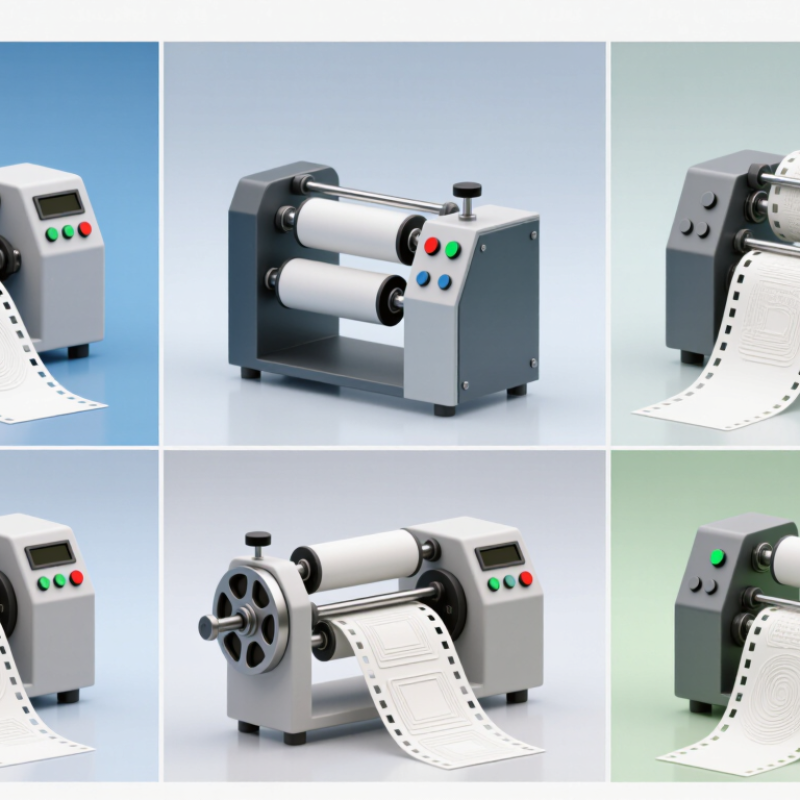
Film embossing machines create raised or recessed patterns on plastic film using engraved rollers. The web passes between a patterned roll and a counter-roll. Heat and pressure soften the surface, while controlled tension keeps the film moving evenly. Some systems use mechanical pressure without heat. Embossing changes texture, not printed color. A fine grain may reduce glare; deep grooves can make thin film stretch or wrinkle. Small drift shows.
Machine choice depends on film thickness, width, line speed, and pattern depth. Grand View Research’s 2024 Flexible Packaging Market report estimated the global market at USD 267.1 billion in 2024, with projected growth through 2030. This figure covers flexible packaging broadly, not embossing equipment specifically. It signals a large converting sector, but does not prove every plant needs an embossing line. A sample can look excellent under showroom lights yet feel too aggressive in use. Test real production material.
Tips: Ask for a trial using your own film, then inspect both sides under angled light. Check web tension, roller alignment, and cooling. Record speed and temperature. One setting may not suit every film lot. Keep a plain, unembossed control sample for comparison.
Film embossing machines differ mainly in how they apply pressure, heat, and patterned tooling. Rotary systems use engraved rollers to emboss continuously moving film, making them suitable for long runs and steady output. Flatbed presses work in timed cycles, pressing a fixed area at once. They can handle short batches or detailed patterns, though their pace is slower. Roll-to-roll configurations guide film from an unwinding shaft through the embossing zone and onto a take-up roll. Setup matters. Tension control, web alignment, and roller changes affect whether the pattern stays even across the width. A slight misalignment can leave a faint, uneven strip along the film edge.
Key features deserve close inspection. Adjustable temperature and pressure help match the process to film thickness and material sensitivity. Some films soften quickly, while others need more heat or dwell time; test samples are essential. Heat changes everything. Pattern depth, roller hardness, and cooling arrangements also influence definition and repeatability. Look for clear controls, accessible adjustment points, and guards around moving parts. Ask how quickly operators can change patterns and clean the tooling. The trade-off is less tidy than equipment descriptions suggest: faster output may mean more setup effort, and deeper embossing can affect film strength. Small trial runs often reveal what a specification sheet misses.
| # | Machine Type | Best For | How It Works | Key Features | What to Check Before Buying |
|---|---|---|---|---|---|
| 1 | Roll-to-Roll Rotary Embossing Machine | Continuous production of patterned film and long production runs | Film passes between a patterned roller and a counter-pressure roller to transfer a repeating texture. | Continuous web processing; suited to repeat patterns; can be configured with tension control and in-line winding. | Confirm maximum web width, line speed, roll diameter, tension-control range, and whether the machine supports the intended film thickness. |
| 2 | Heated-Roller Embossing Machine | Thermoplastic films that need heat and pressure to retain a pattern | Temperature-controlled rollers soften the film surface while pressure transfers the pattern from the tooling. | Adjustable roller temperature and pressure; useful for repeatable surface textures; often integrated into roll-to-roll lines. | Check heating uniformity, temperature range, cooling arrangements, roller material, and compatibility with the specific polymer. |
| 3 | Flatbed or Platen Embossing Press | Short runs, prototypes, sheet film, and large or irregular patterns | A flat patterned die presses against a stationary sheet or indexed section of film. | Flexible tooling layout; suitable for one-off designs and larger embossing areas; comparatively straightforward changeovers. | Review platen size, pressure distribution, cycle time, alignment controls, and the usable sheet dimensions. |
| 4 | Hot-Stamp Embossing Machine | Decorative film features requiring a combination of embossing and heat-transfer foil | A heated die presses a foil carrier and film against a substrate; the foil layer transfers where the tooling applies heat and pressure. | Can create raised or recessed details with a metallic or colored foil finish; available in sheet-fed and web-fed formats. | Verify foil compatibility, die temperature control, registration accuracy, required consumables, and whether embossing depth meets the design needs. |
| 5 | UV Cast-and-Cure Embossing Line | Optical and decorative coatings with fine surface textures | A coating is applied to a film, brought into contact with a patterned tool, cured by ultraviolet light, and separated from the tool. | Can reproduce fine patterns in a curable coating; useful for continuous decorative or optical structures; does not rely solely on softening the film. | Check UV source and curing requirements, coating compatibility, release performance, web handling, and the tooling’s pattern resolution. |
| 6 | Micro- or Nano-Embossing System | Fine optical, functional, or micro-textured film surfaces | Precision tooling transfers small-scale features using controlled pressure, heat, or a curable resin process. | Designed for high-detail patterns; may use precision alignment, controlled environments, and specialized master tooling. | Ask for verified feature-size capability, repeatability data, inspection methods, tooling life, and sample results using the target material. |
| 7 | Vacuum-Assisted Embossing or Forming Machine | Flexible films that need to conform closely to a textured mold or shaped surface | Heat may soften the film, while vacuum draws it against a patterned tool; some systems also use mechanical pressure. | Can reproduce mold contours over a formed area; useful when a simple roller cannot create the required geometry. | Confirm the maximum forming area, vacuum level, heating method, cycle time, draft and release requirements, and suitable film grades. |
A film embossing machine should match the film you actually run, not only the samples shown in a sales brochure. Check the working width, thickness range, roll diameter, and whether the machine handles your material without wrinkles or edge curl. Bring representative film samples. A glossy sheet can behave differently from a textured or heat-sensitive one.
Temperature, pressure, and line speed need stable control. Ask how settings are adjusted and repeated between production runs. A clear display helps, but it is not enough; inspect the roller surface, alignment, and pressure adjustment. Look for even embossing across the full width, especially near both edges. Test it. Review several meters of output, not just one attractive piece. Small flaws often appear after the machine warms up.
Consider your real production volume and available floor space. A faster machine may be wasteful if changeovers take too long or operators need constant manual correction. Check cleaning access, spare-part availability, installation requirements, and operator training. Request a sample run using your film and target pattern, then compare the result with your quality standard. Keep the questions practical. A machine can look impressive in a demo yet prove awkward during routine cleaning; verify that detail rather than assuming. Also compare total operating cost, including energy use and expected maintenance, rather than judging by purchase price alone. No checklist catches every issue; a longer trial may change the decision.
Seven Film Embossing Machines to Consider in 2026 is best understood as seven configurations, not seven unrelated technologies. A heated flatbed press suits short runs and precise patterns. A rotary roll-to-roll system supports continuous production, while sheet-fed units handle pre-cut film. Inline embossers can integrate with converting lines. Pneumatic presses are relatively simple to maintain; hydraulic presses provide higher force for thicker laminates. Servo-driven systems offer repeatable registration, though setup still takes care.
Market growth makes careful selection worthwhile. Grand View Research’s Flexible Packaging Market Size, Share & Trends Analysis Report estimated the global market at USD 271.7 billion in 2023, with a projected 4.9% compound annual growth rate from 2024 to 2030. That growth does not guarantee every machine will suit your film. Compare usable width, material thickness, line speed, pattern depth, heat control, and changeover time. Small details matter. Request a live trial with your own film and inspect the embossed roll for consistent depth, wrinkles, and wasted material. A polished specification sheet can hide awkward changeovers. Ask about tooling costs, operator training, and routine maintenance before committing.
A qualitative comparison of common machine configurations for different film-embossing needs.
Scores are editorial suitability ratings on a 1–5 scale, not measured product specifications or a ranking of specific models. Actual results depend on film material, pattern, line speed, and equipment configuration. Confirm technical requirements with suppliers before purchasing.
The seven film embossing machines worth comparing range from compact bench units to continuous roll-to-roll systems. A small unit may suit short runs, while a wider line can handle heavier daily volume. Check working width, feed speed, and maximum film thickness together; a fast rating means little if the machine cannot accept your stock. Numbers can mislead.
Material compatibility affects both finish and setup. PET, PP, and PVC films may respond differently to heat, pressure, and embossing rollers. Ask for sample results using the actual film thickness and pattern, not just a generic demonstration. Look for adjustable temperature and pressure controls, plus clear guidance on roller changes. Test first. Even then, results can vary between film batches.
Operating costs include more than the purchase price. Energy use, replacement rollers, setup time, and routine cleaning all matter, especially on frequent changeovers. A lower-capacity machine may cost less to run, but could create delays when orders grow. Request realistic throughput figures for your pattern and material, and confirm what maintenance parts are included. One weak point in many comparisons is labor: loading and alignment can quietly consume hours.


For those larger-sized parts, or smaller quantity runs, we have 2 independent powder coat booths and ovens. The quality, durability and affordability of today’s powder coating finishes make this the process of choice for world-class companies.
Powder coating advantages over other forms of coating are many. Materials used in the Powder coating process can be metals and non-metals that come in a multitude of thicknesses, textures, colors, etc. Another of Powder coating’s biggest advantages over conventional coatings is its ability to create finishes in many different textures. Powder Coating Booths allow us the ability to apply these advantages to large products.
Tri-State Fabricators runs a full-service conveyor line for painting. Wet painting can provide protection or decoration to many different part styles. From start to finish, every project is easier to undergo random and point-based inspection by our skilled painting team.
Advantages to our Wet Paint Line are these lines start with product prep and ends with a thorough inspection of a high quality finished product. Our ability to complete large and small projects with a superior finish and doing so in a timely and economical fashion. This passes along the savings in production to our customers. When powder coating ins not an option, our Wet Paint Line gets the job done right the first time.
When the parts get big and heavy we roll-out our custom paint racks and oversize booth. By utilizing our partnerships with all the major paint brands, we can match virtually any color with wet paint.
The advantages of having access to a Wet Paint Booth are many. Large projects of many different shapes can be loaded into the booth. The Wet Paint Booth offers an environment that is much more controlled than a typical parts painting operation.
Not only are they used because of their controlled environment, but they’re are also advantageous when it comes to applying paint to parts that are needed in industries that require specialty coatings such as medical, aerospace, etc.
Our military forces have some very high standards when it comes to the finish of their vehicles and equipment. From the first pre-treatment step to final coat, it takes a great deal of knowledge and experience to protect the men and women of our armed forces. They deserve only the best, and Tri-State Fabricators provides it.
All of our processes are closely monitored by our staff and management teams. Both of which are highly trained in the processes of metal fabrication and finishing. Tri-State Fabricators’ goal is to always fully satisfy each and every customer, including the military. We will always put a 110% into what we do.
Abrasive media blasting is an excellent way to remove old paint, rust, and increase the paint/powder adhesion. Glass beads produce a much smoother and brighter finish than angular abrasives; leaving the part clean yet without any dimensional change. Chemically inert and environmentally friendly, we can recycle our beads approximately 30 times; making them a more preferred method of metal cleaning or surface finishing.
Advantages to Glass Bead Blasting are many. Glass bead blast media is used when a project is needing rough surfaces need to become smooth for applications of coatings such as paint. It is typically used to clean paint and rust from a product surface without deforming the surface it is being used on. Overall, compared to many other blasting media, Glass Bead Blasting is a very economical choice and those savings are always passed on to our customers.
Tri-State Fabricators utilize a zinc phosphate wash to clean and etch the material to ensure the best paint adhesion possible. The unique design of our 3-stage wash system does the work like a 5-stage. From Cleaning and rinsing to conversion coating and post-treatment, Our Part Washing process is a complete service and works throughout the fabrication service and the finishing service.
Along with the previously mentioned benefits, Curing is a vital chemical reaction that leaves the product finish hard and relatively safe from mild abrasion and aggressive corrosion. This process can be done in more than one way; ambient air-dry or in curing ovens at temps that exceed 240°.
From fixing paint mistakes (someone else’s of course) to simply cleaning our paint line hooks, our burn-off oven is put to good use. After a quick burn-off, a little clean up, and a fresh coat of paint, your parts will look better than new.
Why does our Burn-Off Oven work so well? Because super heating the air around parts turns the materials into ashes. From paint and powder coatings to rubber and machining oils, high temps do the job without degrading the integrity of the part.
Masking is a vital part of producing high quality products. We have die-cut masking patterns to protect machined surfaces as well as a wide range of plugs and caps to protect threaded holes and bolts. We provide permanent and temporary masking.
Masking allows the selected sections of a product to be protected from a fabrication or finishing service. This can be with both chemicals when etching and tapes, paints when only finishing just a section of the product. Masking is great in aiding the customization process of a project.
Screen printing is a photographic process that transfers artwork onto a porous nylon screen which allows colored ink to flow through the screen and be deposited on an aluminum or plastic component. We can generally have just about any design created onto a screen for your parts.
Some of the advantages of Screen Printing are, brand recognition for your business displaying on your products, assembly instructions, product warnings/hazards, etc. Tri-State Fabricators produces Screen Printing of the highest quality so you know it’s durable.
Metal Finishing is the art of treating the exterior portion of product, often metal but can also be made of other materials, so that the surface is clean and free of any debris. Then the process of applying coats or either paint of powder coat takes place. This coating process improves the quality of the product in both appearance and resistance to wear and corrosion.
Tri-State Fabricators, Inc., understands that a project typically isn’t complete until a high-quality finish has been added to your product. This is why our painting and powder coating teams continuously inspect the products throughout the Metal Finishing process.

