

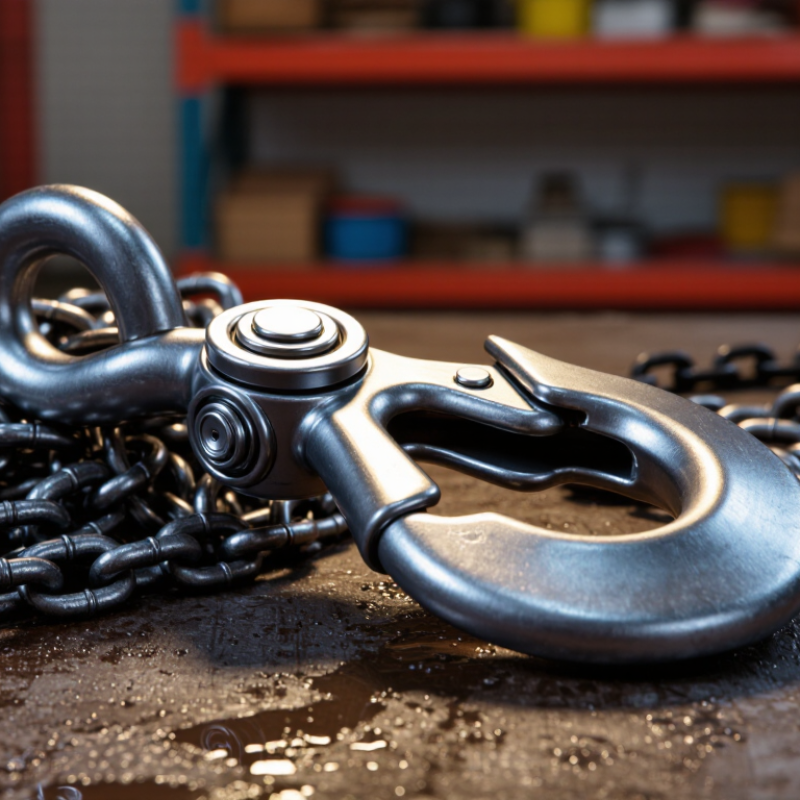
Choosing the right Grab Hook can affect lifting stability, chain performance, and workplace safety. A hook may look simple, yet small differences in throat opening, alloy quality, and latch design matter during daily use. This guide explores seven practical buying tips for selecting a Grab Hook with greater confidence.
The recommendations focus on measurable details rather than attractive packaging. Check the working load limit, chain compatibility, material grade, and manufacturer documentation before ordering. A hook should fit the intended chain size without forcing or excessive movement. Inspect the latch, welds, surface finish, and identification markings carefully. These details can reveal whether quality control was taken seriously.
Real-world use also deserves attention. A hook exposed to rain, mud, or repeated loading may need a suitable protective finish and regular inspection. Ask suppliers for test certificates, traceable specifications, and clear warnings about intended applications. Reliable sellers should explain limitations instead of promising that one hook fits every task.
Some buying decisions remain less obvious. The cheapest option may reduce initial costs, but replacement and downtime can become more expensive. A stronger-looking design is not automatically safer. That assumption needs challenging. Even experienced buyers can overlook chain wear or choose a hook based only on size. Careful comparison helps prevent those mistakes. These seven tips provide a practical framework for reviewing Grab Hook options with experience, technical judgment, and responsible purchasing habits. Safety still depends on correct selection, inspection, and use. Always verify the manufacturer’s instructions.
What Are the 7 Best Grab Hook Buying Tips?
Define the Load and Working Conditions Before Choosing a Grab Hook
Before choosing a grab hook, define the load and the conditions around it. A hook rated for a static load may not suit lifting with sudden starts, swinging, or impact. Record the load’s weight, shape, lifting points, and center of gravity. Then compare these details with the hook’s working load limit, chain grade, and compatible size. Never treat breaking strength as a safe working capacity. It is not.
Working conditions deserve equal attention. Outdoor lifting may expose steel to rain, salt, mud, or abrasive dust. Heat, chemicals, and repeated bending can reduce service life. Check the throat opening against the chain diameter and link shape. A narrow opening can sit badly and create side loading. The hook should pull along its intended axis, not twist against an edge. If the load angle changes, the force can rise quickly.
During inspections, look for cracks, spreading, deep gouges, distorted latches, and unusual wear. Remove damaged hardware from service. I have seen teams focus on capacity while ignoring cramped lifting points. That small oversight can make connection awkward and unstable. A rated latch helps retain the chain, but it does not correct poor rigging. Recheck the selection when the load, weather, or lifting method changes. The right choice can feel slower at the start. It is usually safer than guessing.
Define the load and working conditions before choosing a grab hook.
The chart shows the ideal tension carried by each leg of a two-leg sling at different sling angles, expressed as a multiple of the total load. As the angle becomes flatter, the tension in each leg increases. Actual working load limits must be verified from the hook, sling, and lifting system manufacturer’s rated capacity and applicable regulations.
A grab hook must match the load, chain, and lifting equipment, not merely look heavy-duty. Check its working load limit (WLL), then compare it with the weakest component in the assembly. Never confuse WLL with breaking strength.
For two sling legs, angle changes tension sharply: at 30 degrees from horizontal, each leg carries the full load. Check the chain grade, link diameter, and hook throat opening. A narrow throat may damage links or prevent proper seating.
Measure the connecting pin, clevis width, and attachment geometry before ordering. Compatibility is physical and mechanical.
Inspect the latch, locking action, hook profile, and wear indicators. Choose suitable steel and corrosion protection for the working environment. Heat, chemicals, and repeated shock loading can reduce performance.
OSHA’s rigging guidance stresses inspection and removal of defective components, while ASME B30.10 addresses hook construction, marking, inspection, and use.
The International Labour Organization reported 2.93 million work-related deaths and 395 million nonfatal injuries worldwide in 2023. That broader figure is a serious reminder that small hardware decisions matter.
Request traceable markings, a test certificate, and clear inspection instructions. Verify the manufacturer’s dimensions against your chain and lifting point drawings.
A common field mistake is selecting capacity first and checking fit later. I have seen that shortcut create awkward loading and accelerated wear. It seems minor. It is not.
Leave room for angle error, dynamic loading, and uncertain load weight; a perfect calculation rarely survives a busy worksite.
What Are the 7 Best Grab Hook Buying Tips?
Choosing a grab hook for long-term use requires more than checking its advertised load rating. In practical handling, forged alloy steel usually outlasts softer cast alternatives under repeated pulling. Look for clear steel specifications, heat-treatment details, and a traceable working load limit. If the seller only says “heavy duty,” keep searching. Inspect the hook’s throat, eye, and latch area. Smooth transitions reduce stress concentrations and visible cracking. A thick profile helps, but thickness alone proves little. Poor heat treatment can make a large hook brittle.
Coating matters where moisture, grit, and road salt are common. Zinc plating offers useful corrosion resistance, while powder coating adds a tough, visible barrier. Neither coating repairs weak steel or careless finishing. Check for thin spots, peeling, sharp edges, and rust around stamped markings. Choose a latch that closes firmly without sticking, even with gloves. Match the hook opening to the chain size and connection angle. A tight fit helps prevent sideways loading, which can deform the throat. Read independent test details when available, not only product photographs. I once chose a cheaper hook with impressive paint, then found its latch misaligned after limited use. That mistake changed my buying habit. Now I compare material evidence, coating quality, latch design, and overall build consistency. Small flaws matter.
| Buying Tip | What to Check | Preferred Choice | Why It Matters | Warning Signs |
|---|---|---|---|---|
| 1. Match the Hook to the Load | Confirm the working load limit (WLL), application, and lifting angle. Do not select a hook by size alone. | A clearly marked hook with a WLL suitable for the intended load and operating conditions. | A hook may be overloaded when the load is shock-loaded, angled, or applied outside its rated configuration. | Missing or unreadable WLL markings, vague capacity claims, or use for overhead lifting without appropriate approval. |
| 2. Choose a Suitable Steel Grade | Look for documented material information, heat treatment, and traceability rather than appearance alone. | Forged alloy steel is generally preferred for demanding lifting and recovery applications; stainless steel suits corrosion-sensitive, lower-load uses when properly rated. | Material strength, toughness, and heat treatment affect resistance to deformation, cracking, and fatigue. | Unspecified steel, cast construction for heavy dynamic loads, visible seams, or no supporting test documentation. |
| 3. Compare Protective Coatings | Evaluate the environment: fresh water, salt water, mud, chemicals, outdoor exposure, or indoor storage. | Zinc plating, hot-dip galvanizing, or a durable powder coating can help reduce corrosion; select the coating according to exposure and maintenance needs. | Corrosion reduces cross-sectional strength and can hide pitting, cracking, or other damage. | Blistering, flaking, deep rust, exposed bare steel, or a coating damaged around the hook throat and eye. |
| 4. Inspect the Hook Profile | Check the throat opening, bowl, shank, eye, and tip for smooth transitions and uniform geometry. | A smoothly forged profile with a full, even bowl and no sharp edges that could damage chain, rope, or webbing. | Proper geometry distributes force more effectively and helps prevent point loading or accidental disengagement. | Bent shank, widened throat, twisted eye, sharp burrs, thin sections, or a hook tip that does not align correctly. |
| 5. Select the Right Safety Feature | Determine whether a latch, self-locking mechanism, or open grab design is appropriate for the connection and load movement. | A safety latch that closes fully and is protected from accidental release when the application requires positive retention. | A latch can help keep an unloaded hook from separating, but it does not increase the hook’s rated capacity. | Sticking or bent latch, weak spring, incomplete closure, missing retaining pin, or a latch used as a substitute for correct loading. |
| 6. Verify Build Quality and Markings | Look for permanent markings such as WLL, size, material or grade, manufacturer traceability, and applicable compliance information. | Consistent forging, clean machining, secure hardware, and legible permanent identification supported by inspection or test records. | Traceability supports correct selection, inspection, replacement, and safe use over the product’s service life. | Only a temporary sticker, rough welds, uneven machining, loose components, or conflicting capacity information. |
| 7. Consider Maintenance and Service Life | Check whether the hook can be cleaned, inspected, lubricated where appropriate, and replaced when wear or deformation reaches the applicable limit. | A design with accessible inspection areas, replaceable hardware when specified, corrosion protection, and clear care instructions. | Regular inspection can identify wear, cracks, corrosion, and deformation before they become critical. | No inspection guidance, inaccessible moving parts, excessive throat opening, gouges, cracks, or permanent deformation. |
Safety note: Always follow the applicable lifting, rigging, and workplace-safety requirements. Never exceed the marked working load limit, side-load a hook unless it is specifically rated for that use, or continue using a hook that is cracked, bent, excessively worn, or corroded.
A grab hook should match the chain grade, working load limit, and lifting angle. Check the working load limit stamped on the hook, not only the sales description. Inspect the throat, latch, welds, and seating surface. Seven useful checks include load rating, chain compatibility, safety latch, proof-test records, traceable markings, anti-slip geometry, and resistance to side loading. The U.S. Bureau of Labor Statistics reported 885 fatal workplace injuries involving falls, slips, and trips in 2023. A hook cannot prevent every incident, but poor load control can increase exposure.
Choose a hook with a positive latch and a deep, clearly defined chain seat. The chain should remain captured during movement, without binding at the throat. Shortening hooks need secure engagement, because a loose chain can shift suddenly. Avoid designs that depend on friction alone. Never assume a higher capacity solves a poor angle. Side loading and shock loading can reduce real capacity sharply. ASME B30.26 emphasizes identification, inspection, and proper use of below-the-hook components. Read the standard and the supplier’s technical documents together.
Certification deserves careful attention. Look for permanent markings, batch traceability, material grade, and documented proof testing. EN 1677 guidance can help when evaluating forged lifting components, but certificates must match the exact hook. A certificate alone is not magic. I have seen paperwork look convincing while the stamped rating was unreadable. That detail deserves a second look. Ask for inspection intervals, rejection limits, and loading diagrams before purchasing. Loose documentation is a warning sign.
What Are the 7 Best Grab Hook Buying Tips?
A dependable grab hook starts with the supplier, not the catalogue photo. Check operating history, factory address, production capacity, batch traceability, and recent inspection records. Request load-test reports for the exact hook size and grade. The ISO Survey 2022 recorded 1,265,216 ISO 9001 certificates worldwide, but certification alone does not prove lifting performance. Ask how often inspections occur. Ask for failed-test examples, too. That answer can be revealing.
Warranty terms deserve equal attention. Confirm the coverage period, rated-load exclusions, corrosion limits, and claim response time. Clarify who pays replacement freight and inspection costs. A practical warranty should explain whether one damaged hook receives replacement or an entire batch is reviewed. The World Bank’s 2023 Logistics Performance Index assessed 139 economies across six logistics dimensions, including tracking and timeliness. Use similar evidence when judging delivery reliability. Review three recent delivery records, not just a promise. My own mistake was trusting a perfect sample shipment.
Calculate total purchase cost before approving the order. Include unit price, tooling, testing, packaging, freight, import charges, storage, inspection labor, and possible downtime. A cheaper hook may require more frequent checks or faster replacement. Compare suppliers using the same load rating and service conditions. Keep a written scorecard for quality, lead time, warranty strength, documentation, and landed cost. Leave room for doubt. Supplier data can be incomplete, and a spreadsheet can still hide operational risk.


For those larger-sized parts, or smaller quantity runs, we have 2 independent powder coat booths and ovens. The quality, durability and affordability of today’s powder coating finishes make this the process of choice for world-class companies.
Powder coating advantages over other forms of coating are many. Materials used in the Powder coating process can be metals and non-metals that come in a multitude of thicknesses, textures, colors, etc. Another of Powder coating’s biggest advantages over conventional coatings is its ability to create finishes in many different textures. Powder Coating Booths allow us the ability to apply these advantages to large products.
Tri-State Fabricators runs a full-service conveyor line for painting. Wet painting can provide protection or decoration to many different part styles. From start to finish, every project is easier to undergo random and point-based inspection by our skilled painting team.
Advantages to our Wet Paint Line are these lines start with product prep and ends with a thorough inspection of a high quality finished product. Our ability to complete large and small projects with a superior finish and doing so in a timely and economical fashion. This passes along the savings in production to our customers. When powder coating ins not an option, our Wet Paint Line gets the job done right the first time.
When the parts get big and heavy we roll-out our custom paint racks and oversize booth. By utilizing our partnerships with all the major paint brands, we can match virtually any color with wet paint.
The advantages of having access to a Wet Paint Booth are many. Large projects of many different shapes can be loaded into the booth. The Wet Paint Booth offers an environment that is much more controlled than a typical parts painting operation.
Not only are they used because of their controlled environment, but they’re are also advantageous when it comes to applying paint to parts that are needed in industries that require specialty coatings such as medical, aerospace, etc.
Our military forces have some very high standards when it comes to the finish of their vehicles and equipment. From the first pre-treatment step to final coat, it takes a great deal of knowledge and experience to protect the men and women of our armed forces. They deserve only the best, and Tri-State Fabricators provides it.
All of our processes are closely monitored by our staff and management teams. Both of which are highly trained in the processes of metal fabrication and finishing. Tri-State Fabricators’ goal is to always fully satisfy each and every customer, including the military. We will always put a 110% into what we do.
Abrasive media blasting is an excellent way to remove old paint, rust, and increase the paint/powder adhesion. Glass beads produce a much smoother and brighter finish than angular abrasives; leaving the part clean yet without any dimensional change. Chemically inert and environmentally friendly, we can recycle our beads approximately 30 times; making them a more preferred method of metal cleaning or surface finishing.
Advantages to Glass Bead Blasting are many. Glass bead blast media is used when a project is needing rough surfaces need to become smooth for applications of coatings such as paint. It is typically used to clean paint and rust from a product surface without deforming the surface it is being used on. Overall, compared to many other blasting media, Glass Bead Blasting is a very economical choice and those savings are always passed on to our customers.
Tri-State Fabricators utilize a zinc phosphate wash to clean and etch the material to ensure the best paint adhesion possible. The unique design of our 3-stage wash system does the work like a 5-stage. From Cleaning and rinsing to conversion coating and post-treatment, Our Part Washing process is a complete service and works throughout the fabrication service and the finishing service.
Along with the previously mentioned benefits, Curing is a vital chemical reaction that leaves the product finish hard and relatively safe from mild abrasion and aggressive corrosion. This process can be done in more than one way; ambient air-dry or in curing ovens at temps that exceed 240°.
From fixing paint mistakes (someone else’s of course) to simply cleaning our paint line hooks, our burn-off oven is put to good use. After a quick burn-off, a little clean up, and a fresh coat of paint, your parts will look better than new.
Why does our Burn-Off Oven work so well? Because super heating the air around parts turns the materials into ashes. From paint and powder coatings to rubber and machining oils, high temps do the job without degrading the integrity of the part.
Masking is a vital part of producing high quality products. We have die-cut masking patterns to protect machined surfaces as well as a wide range of plugs and caps to protect threaded holes and bolts. We provide permanent and temporary masking.
Masking allows the selected sections of a product to be protected from a fabrication or finishing service. This can be with both chemicals when etching and tapes, paints when only finishing just a section of the product. Masking is great in aiding the customization process of a project.
Screen printing is a photographic process that transfers artwork onto a porous nylon screen which allows colored ink to flow through the screen and be deposited on an aluminum or plastic component. We can generally have just about any design created onto a screen for your parts.
Some of the advantages of Screen Printing are, brand recognition for your business displaying on your products, assembly instructions, product warnings/hazards, etc. Tri-State Fabricators produces Screen Printing of the highest quality so you know it’s durable.
Metal Finishing is the art of treating the exterior portion of product, often metal but can also be made of other materials, so that the surface is clean and free of any debris. Then the process of applying coats or either paint of powder coat takes place. This coating process improves the quality of the product in both appearance and resistance to wear and corrosion.
Tri-State Fabricators, Inc., understands that a project typically isn’t complete until a high-quality finish has been added to your product. This is why our painting and powder coating teams continuously inspect the products throughout the Metal Finishing process.