7 Best Truck Crane Cylinder Manufacturers for Global Buyers
Choosing a Truck Crane Cylinder supplier is not a simple price comparison. Global buyers must examine load capacity, bore diameter, stroke length, sealing systems, surface treatment, and testing procedures. A cylinder working beside a dusty quarry faces different demands from one operating near a wet port. Small details matter.
Hydraulic specialist Dr. Jan Ivantysyn once stated, “Reliable hydraulic performance begins with correct engineering, not with the lowest purchase price.” This principle remains highly relevant. A dependable manufacturer should provide traceable materials, dimensional drawings, pressure-test records, and practical after-sales support. Certification also matters, but paperwork alone cannot prove field reliability. Ask how the manufacturer controls welding quality, rod straightness, seal installation, and corrosion protection.
This guide reviews seven Truck Crane Cylinder manufacturers serving international buyers. It considers product range, manufacturing capability, customization, quality assurance, delivery experience, and technical communication. The evaluation also looks at replacement support, because a failed cylinder can stop an entire lifting operation. Downtime is expensive.
No ranking is flawless. Buyer priorities differ. A European fleet may value local service, while a remote contractor may prioritize robust coatings and spare-seal availability. Some manufacturers communicate clearly but offer limited customization. Others provide impressive specifications yet explain little about long-term maintenance. That gap deserves attention. Photos can look perfect. Field conditions are not.
The strongest choice should fit the crane, workload, climate, and service plan. Careful buyers should confirm every critical specification before ordering. This introduction provides a practical starting point for that decision.
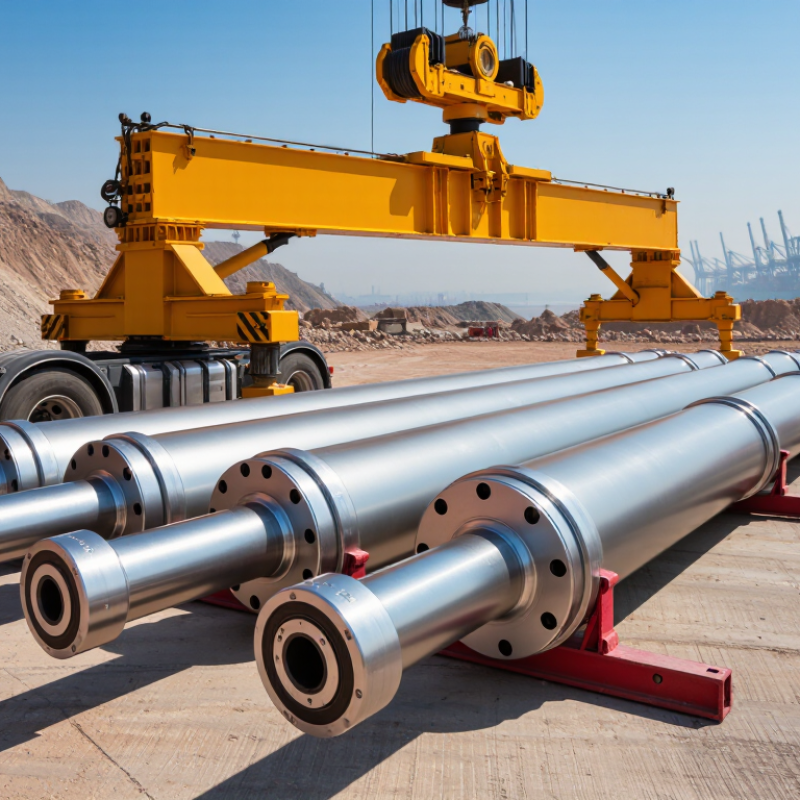
What Is a Truck Crane Cylinder and Why Does It Matter?
A truck crane cylinder is a hydraulic actuator that creates controlled linear movement. It uses pressurized fluid to move a piston inside a steel barrel. On a crane, cylinders may raise the boom, extend telescopic sections, or position stabilizer legs. Their bore, stroke, rod diameter, mounting points, and rated pressure must match the crane’s design.
This component directly affects lifting control and job-site stability. An undersized cylinder may struggle with heavy loads. Excessive pressure can damage seals, fittings, or structural parts. A properly selected cylinder moves smoothly, holds position, and responds predictably during frequent lifting cycles. It also needs a corrosion-resistant rod and dependable sealing system. Small leaks matter. They can worsen quickly in dusty or wet environments.
Experienced buyers should review load charts, operating pressure, cycle frequency, and temperature range before ordering. Field inspections should check rod scoring, oil leakage, unusual vibration, and loose connections. Contaminated hydraulic fluid remains a common cause of premature wear. However, the highest-rated cylinder is not always the best choice. It may add weight, cost, or installation stress. A practical specification should balance safety, service life, compatibility, and local maintenance skills. Measurements deserve a second check. Even a minor mounting error can create side loads and shorten cylinder life.
What Is a Truck Crane Cylinder and Why Does It Matter?
A truck crane cylinder converts hydraulic pressure into linear force for boom lifting, extension, steering, and stabilizer functions. The chart shows the theoretical extension force produced by different cylinder bore diameters at a constant system pressure of 25 MPa. Larger bores generate more force, but they also increase cylinder weight, installation space, and hydraulic oil demand.
Calculation basis: F = P × π × D² ÷ 4. Values represent theoretical push force and exclude friction, seal losses, rod-side area, and mechanical leverage.
Seven Leading Truck Crane Cylinder Manufacturers for Global Buyers
The seven leading truck crane cylinder manufacturers for global buyers typically share strong engineering, testing, and after-sales practices. They include established hydraulic specialists, original-equipment suppliers, custom cylinder manufacturers, and export-focused producers. Each should understand boom loads, uneven terrain, frequent cycling, and restricted installation space.
Experienced buyers inspect more than catalog pressure ratings. They examine chrome thickness, rod straightness, seal design, welding quality, and corrosion protection. A reliable manufacturer provides material certificates, dimensional drawings, pressure-test records, and traceable batch numbers. Factory testing should include leakage checks, rated-load cycling, and extreme-temperature evaluation. Small details matter.
A practical shortlist should also compare response time, replacement-seal availability, packaging, and technical communication. Metric and imperial fittings may require careful confirmation. One overlooked thread can delay an entire crane shipment. No supplier is perfect. Even a polished factory may offer weak documentation or slow field support. Buyers should request samples, review inspection procedures, and clarify warranty limits before signing contracts. The strongest manufacturers adapt bore sizes, stroke lengths, mounting ends, and coating systems to local operating conditions. They also explain limitations honestly, instead of promising unlimited service life. That honesty is useful when cranes work near ports, construction sites, and dusty roads.
Key Specifications, Certifications, and Quality Standards to Compare
7 Best Truck Crane Cylinder Manufacturers for Global Buyers
When comparing seven truck crane cylinder manufacturers, start with working pressure, bore, rod diameter, and stroke length. These figures must match the crane’s rated load, boom geometry, and duty cycle. A cylinder rated at 250 bar may not suit continuous lifting at that pressure. Ask for pressure-test records, fatigue-cycle results, and leakage limits.
Material traceability matters. Require EN 10204 3.1 certificates for barrel steel, rod material, and weld components. Hard-chrome rod thickness, surface roughness, and corrosion resistance deserve close inspection. ISO 4413 provides useful hydraulic safety guidance, while ISO 9001 confirms a controlled quality-management system. Certification alone proves little. Audit the process behind it.
MarketsandMarkets’ 2024 Hydraulic Cylinders Market report identifies construction equipment as a major demand segment, reflecting rising expectations for durable mobile hydraulics. The report also points to efficiency and reliability as key purchasing factors. Compare seal performance across temperature ranges, especially from -30°C to 100°C. Request salt-spray data when cranes operate near coastal sites. Independent inspection helps.
Small details expose weak suppliers. Check weld penetration, rod straightness, coating adhesion, and dimensional inspection records. Ask whether each cylinder receives serial-number traceability. I would also review warranty claims from similar crane applications, not only laboratory results. Some specifications look excellent on paper. Field performance can disagree. That gap deserves honest questioning.
How to Choose the Right Manufacturer for Your Truck Crane Needs
Choosing among the 7 best truck crane cylinder manufacturers requires more than comparing prices. A reliable supplier should show tested designs, traceable steel, and consistent quality records. Grand View Research’s 2024 mobile cranes report projects steady market growth through 2030, increasing pressure on suppliers to improve durability and service support. Ask for cylinder fatigue-test results, seal specifications, and coating standards. Do not accept vague claims.
Field experience matters. Inspect how the manufacturer handles contaminated oil, side loading, and repeated lifting cycles. A cylinder may look excellent on paper, yet fail early when alignment is poor. Request dimensional drawings, maintenance intervals, and failure-rate data from similar truck crane applications. ISO 4413 provides useful guidance for hydraulic system safety and risk reduction. However, certification alone does not prove practical performance. Review independent inspection reports and sample units before signing a large order.
Tips: Compare total operating cost, not only purchase price. Check delivery records for your region. Confirm spare seals are available locally. Test retraction speed under realistic loads. Ask who handles warranty claims. I would also inspect a returned cylinder, if possible. That step feels uncomfortable, but it often reveals more than polished brochures. Manufacturers that explain defects clearly may deserve more trust than those promising perfect results. Keep written records of every technical commitment, because memory becomes unreliable after production begins.





