


7 Tips for Choosing a Manual Ceramic Coffee Grinder

Choosing a Manual Ceramic Coffee Grinder can change the character of every cup. The right model should feel steady, comfortable, and predictable during daily use. Ceramic burrs resist rust and often handle repeated grinding well. However, burr material alone does not guarantee excellent results. Design matters just as much.

I have used compact hand grinders in quiet kitchens and busy travel settings. A narrow handle can slip when grinding light-roast beans. A small hopper may also become frustrating when brewing for several people. These details are easy to overlook. They should not be. This guide shares seven practical tips for comparing burr quality, grind adjustment, capacity, cleaning, and overall comfort. Each point connects with real brewing decisions, not attractive product claims.

Look closely at the grind range. Espresso needs fine, consistent particles, while French press requires a much coarser texture. Check whether the adjustment mechanism moves clearly and stays in place. Examine the body, shaft, bearings, and handle before trusting a low price. Some grinders feel smooth at first but develop wobble later. That possibility deserves honest consideration.

Small choices matter.

A reliable grinder should also be easy to clean and simple to carry. Ceramic burrs can be durable, yet they may chip if dropped or tightened carelessly. User reviews can reveal long-term problems that specifications hide. Still, reviews are personal, so compare repeated patterns rather than one dramatic complaint. These seven tips will help you choose with clearer expectations and fewer expensive surprises.
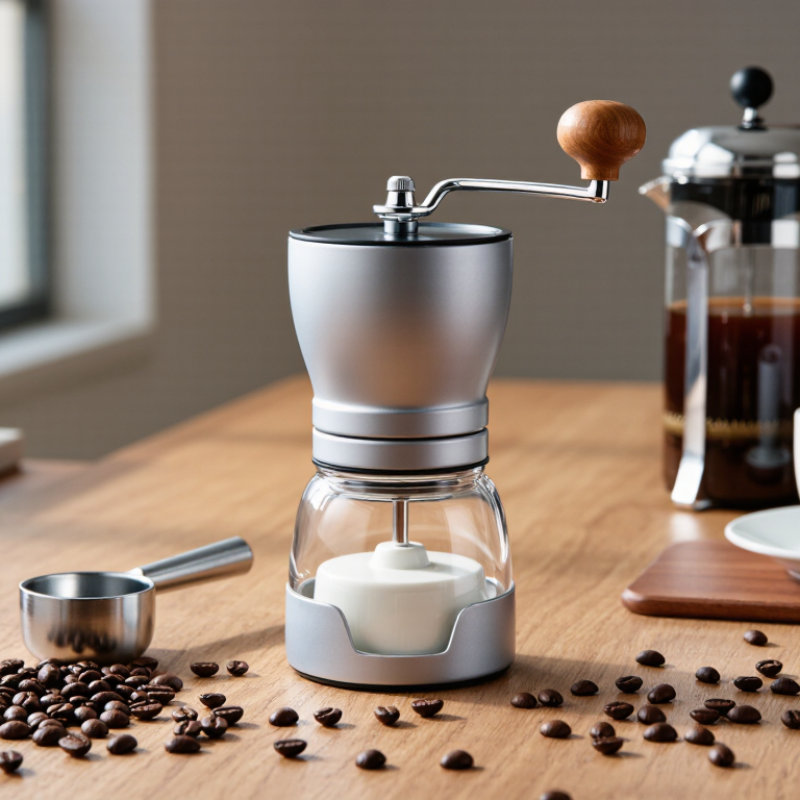
7 Tips for Choosing a Manual Ceramic Coffee Grinder

Define Your Coffee Grinding Needs and Brewing Style

Choosing a manual ceramic coffee grinder starts with your brewing routine, not its appearance. The National Coffee Association’s Spring 2024 report found that 67% of U.S. adults drank coffee the previous day. That habit varies widely. A single morning cup needs different capacity from family brewing or travel use.

Define your preferred method. Pour-over usually rewards a consistent medium grind and careful adjustment. French press needs a coarser setting with fewer fine particles. Espresso demands extremely fine control, which many manual grinders cannot provide comfortably. The Specialty Coffee Association recommends about 55 grams of coffee per liter of water, with a 18–22% extraction range. These figures come from SCA brewing standards, but taste still depends on water, freshness, and technique.

Your hands matter too. Ceramic burrs can resist corrosion and reduce heat during slow grinding. They may also feel slower with dense, light-roasted beans. I once chose a compact grinder for travel and regretted its tiny capacity. My coffee tasted fine, but repeated refills became irritating. Check adjustment steps, grip comfort, burr alignment, and cleaning access before buying. For occasional pour-over, portability may matter most. For daily brewing, smoother adjustment and stable output deserve priority. Convenience is part of flavor.


Compare Ceramic Burr Designs and Grinding Consistency

A manual ceramic coffee grinder should be judged by its burr design, not its appearance. Conical ceramic burrs often guide beans toward the center smoothly. They suit pour-over and filter brewing. Flat burrs can produce a more uniform particle range, but they may demand better alignment. Small alignment errors matter.

Check the burr’s tooth shape and cutting surface. Deep, sharp teeth can process light-roasted beans more efficiently. Rounded teeth may crush beans unevenly. That difference appears as fine dust beside large fragments. I usually compare two grind samples with a simple kitchen sieve. It is not laboratory equipment. Still, it reveals useful patterns. The grinder should produce similar particles after repeated turns. Consistency matters more than speed.

Adjustment control is another practical test. Clear click settings make recipes easier to repeat. A loose dial can shift during grinding. Ceramic burrs resist rust and transfer little heat during slow manual use. However, they can chip if a hard object enters the chamber. Clean the burrs gently, and inspect the edges regularly. My first assumption was that ceramic automatically meant better consistency. It did not. Burr alignment, shaft stability, and bean preparation mattered more. Try grinding the same coffee three times. Record the number of turns, setting, and brewing result. If the cup tastes sharp, hollow, or muddy, reconsider the burr design rather than changing everything at once.

Check Adjustability, Capacity, and Ease of Use

7 Tips for Choosing a Manual Ceramic Coffee Grinder

Check Adjustability, Capacity, and Ease of Use

Tip 1: Examine the adjustment system before buying. A grinder should offer clear, repeatable settings for fine, medium, and coarse coffee. I prefer numbered steps because they make morning adjustments less frustrating. However, markings can vary between models. Test the first few settings with a small dose. Small details matter.

Tip 2: Match the capacity to your routine. A compact grinder suits one or two cups, while a larger chamber helps when serving several people. Do not choose capacity by appearance alone. A wide chamber may hold more beans but feel awkward during grinding. I once underestimated this balance, and the grinder became tiring during weekend brewing.

Tip 3: Consider ease of use from bean storage to cleanup. Look for a comfortable handle, a stable body, and a removable collection cup. Ceramic burrs can produce consistent grounds and resist some heat buildup, but they still need gentle cleaning. Avoid models with complicated parts unless you enjoy maintenance. Honestly, I sometimes value simple design more than extra settings.

Hold the grinder firmly on a dry surface. If the adjustment ring slips, your carefully chosen grind size may change. A quick trial with your preferred beans can reveal problems that product descriptions miss.

7 Tips for Choosing a Manual Ceramic Coffee Grinder — Check Adjustability, Capacity, and Ease of Use

Tip What to Check Practical Target or Reference Why It Matters Quick Test Before Buying
1. Evaluate the Ceramic Burrs Look for burrs that are firmly mounted, evenly aligned, and made from durable ceramic material. The burrs should rotate smoothly without visible wobbling or scraping against the housing. Stable burr alignment helps produce a more consistent grind and reduces unwanted fine particles. Turn the handle with an empty grinder and listen for rubbing, clicking, or uneven resistance.
2. Check Grind Adjustability Confirm that the grind setting can be changed precisely and remains secure during use. Choose a grinder with clearly defined settings covering coarse, medium, and fine ranges. Different brewing methods require different particle sizes; reliable adjustment improves brewing control. Rotate the adjustment mechanism through several positions and verify that each setting clicks or locks positively.
3. Match the Capacity to Your Routine Compare the bean chamber and ground-coffee container with your usual serving size. A capacity of about 20–30 g is suitable for many single-cup brewing routines; larger capacities reduce repeated filling. The right capacity saves time while avoiding unnecessary storage of ground coffee. Measure your normal dose and check that it fits without reaching the chamber’s maximum fill line.
4. Assess Ease of Use Examine the handle length, grip texture, lid design, and effort required to turn the crank. A comfortable grip and a stable body are preferable for repeated grinding, especially at fine settings. Better ergonomics reduce hand fatigue and make the grinder easier to use consistently. Hold the grinder in one hand and rotate the handle with the other; check for slipping or sharp edges.
5. Inspect Grind Consistency Look for a design that keeps the burrs centered and limits movement during grinding. For the selected brewing method, the grounds should contain mostly similar-sized particles with limited dust and large fragments. More uniform grounds support more even extraction and help reduce bitter or weak flavors. Grind a small sample and inspect it on white paper under bright light for excessive variation.
6. Consider Cleaning and Maintenance Check whether the burr assembly, chamber, and catch cup can be separated without special tools. Removable parts and a brush-friendly design make routine cleaning easier; avoid washing parts unless the instructions permit it. Removing old coffee particles helps preserve flavor and keeps the adjustment mechanism working smoothly. Open the grinder and verify that the main parts can be accessed, reassembled, and secured easily.
7. Review Portability and Build Quality Assess the overall weight, body material, lid seal, catch-cup fit, and storage convenience. A compact body with a secure lid and a firmly attached handle is practical for travel and daily storage. Good construction helps prevent spills, protects the adjustment parts, and improves long-term usability. Close the lid, attach the handle, and gently shake the grinder to check for looseness or rattling.

Reference note: Capacity ranges and performance checks are general practical guidelines for manual coffee grinders; actual results depend on burr alignment, coffee beans, grind setting, and brewing method.

Evaluate Durability, Portability, and Maintenance

7 Tips for Choosing a Manual Ceramic Coffee Grinder

Durability starts with the burr and its support structure. Ceramic burrs resist rust and preserve flavor during regular use. However, they can chip if a hard object enters the grinding chamber. Check for a firm shaft, stable bearings, and an adjustment system that does not wobble. Metal parts should feel solid, not thin or loosely fitted. A grinder with fewer fragile pieces is often easier to trust over time. Still, weight alone does not prove quality.

Portability matters when you carry the grinder to work, travel, or a small kitchen. Look for a compact body, a removable handle, and a secure lid. The grinder should fit inside a bag without leaving coffee grounds everywhere. A container with clear measurement marks can reduce guesswork. I once chose a very small grinder that felt convenient, but its narrow grip slowed every morning session. That choice was not ideal. Test the handle movement if possible.

Maintenance should be simple enough for busy days. After grinding, brush away loose particles and let the chamber dry fully. Avoid soaking parts unless the manufacturer clearly permits it. Fine coffee dust can collect around threads and affect adjustment accuracy. Inspect the burrs occasionally for chips or uneven wear. A few minutes of cleaning can prevent stale smells and inconsistent grounds. Ceramic is low-maintenance, not maintenance-free.

Balance Performance, Comfort, and Overall Value

A manual ceramic coffee grinder should balance performance, comfort, and total value. The National Coffee Association’s Spring 2024 report found that 67% of Americans drank coffee the previous day. That habit makes daily comfort important. Tip 1: Check the handle length and grip. A larger handle can reduce wrist strain. Tip 2: Test the adjustment system. Clear, repeatable clicks help when switching between espresso and French press settings. Tip 3: Inspect the burr alignment. Ceramic burrs resist corrosion, but they can chip if dropped.

Tip 4: Judge consistency, not just fineness. Uneven particles create both bitter and weak flavors. SCA brewing guidance commonly uses 55 grams of coffee per liter of water. Consistent grinding helps you approach that ratio reliably. Tip 5: Consider grinding time. A grinder that feels affordable may become frustrating after several slow morning sessions. I once focused too heavily on burr material and ignored handle comfort. That was a poor trade.

Tip 6: Calculate long-term value. Compare durability, replacement parts, cleaning effort, and warranty support. A low purchase price is not always economical. Tip 7: Match capacity to your routine. A compact chamber suits one cup, while larger batches demand more effort. The International Coffee Organization’s market reports show continuing volatility in coffee costs. Reducing waste matters. Weaker cups still happen. Adjust gradually, record your setting, and accept that ceramic burrs are not automatically superior.

7 Tips for Choosing a Manual Ceramic Coffee Grinder: Performance, Comfort, and Value

Compare practical grind-size targets to evaluate adjustment precision, consistency, ease of use, and overall value.

A versatile manual grinder should support a broad range of particle sizes: approximately 200–300 micrometers for espresso, 600–1,000 micrometers for pour-over, and 1,000–1,300 micrometers for French press. When choosing a ceramic-burr grinder, look for stable adjustment steps, comfortable handling, consistent output, easy cleaning, and a durable construction that offers strong long-term value.

Powder Coat Booths

For those larger-sized parts, or smaller quantity runs, we have 2 independent powder coat booths and ovens. The quality, durability and affordability of today’s powder coating finishes make this the process of choice for world-class companies.

Powder coating advantages over other forms of coating are many. Materials used in the Powder coating process can be metals and non-metals that come in a multitude of thicknesses, textures, colors, etc. Another of Powder coating’s biggest advantages over conventional coatings is its ability to create finishes in many different textures. Powder Coating Booths allow us the ability to apply these advantages to large products.

Wet Paint Line

Tri-State Fabricators runs a full-service conveyor line for painting. Wet painting can provide protection or decoration to many different part styles. From start to finish, every project is easier to undergo random and point-based inspection by our skilled painting team.

Advantages to our Wet Paint Line are these lines start with product prep and ends with a thorough inspection of a high quality finished product. Our ability to complete large and small projects with a superior finish and doing so in a timely and economical fashion. This passes along the savings in production to our customers. When powder coating ins not an option, our Wet Paint Line gets the job done right the first time.

Wet Paint Booths

When the parts get big and heavy we roll-out our custom paint racks and oversize booth. By utilizing our partnerships with all the major paint brands, we can match virtually any color with wet paint.

The advantages of having access to a Wet Paint Booth are many. Large projects of many different shapes can be loaded into the booth. The Wet Paint Booth offers an environment that is much more controlled than a typical parts painting operation.

Not only are they used because of their controlled environment, but they’re are also advantageous when it comes to applying paint to parts that are needed in industries that require specialty coatings such as medical, aerospace, etc.

Military CARC

Our military forces have some very high standards when it comes to the finish of their vehicles and equipment. From the first pre-treatment step to final coat, it takes a great deal of knowledge and experience to protect the men and women of our armed forces. They deserve only the best, and Tri-State Fabricators provides it.

All of our processes are closely monitored by our staff and management teams. Both of which are highly trained in the processes of metal fabrication and finishing. Tri-State Fabricators’ goal is to always fully satisfy each and every customer, including the military. We will always put a 110% into what we do.

Glass-Bead Blasting

Abrasive media blasting is an excellent way to remove old paint, rust, and increase the paint/powder adhesion. Glass beads produce a much smoother and brighter finish than angular abrasives; leaving the part clean yet without any dimensional change. Chemically inert and environmentally friendly, we can recycle our beads approximately 30 times; making them a more preferred method of metal cleaning or surface finishing.

Advantages to Glass Bead Blasting are many. Glass bead blast media is used when a project is needing rough surfaces need to become smooth for applications of coatings such as paint. It is typically used to clean paint and rust from a product surface without deforming the surface it is being used on. Overall, compared to many other blasting media, Glass Bead Blasting is a very economical choice and those savings are always passed on to our customers.

Part Washing

Tri-State Fabricators utilize a zinc phosphate wash to clean and etch the material to ensure the best paint adhesion possible. The unique design of our 3-stage wash system does the work like a 5-stage. From Cleaning and rinsing to conversion coating and post-treatment, Our Part Washing process is a complete service and works throughout the fabrication service and the finishing service.

Along with the previously mentioned benefits, Curing is a vital chemical reaction that leaves the product finish hard and relatively safe from mild abrasion and aggressive corrosion. This process can be done in more than one way; ambient air-dry or in curing ovens at temps that exceed 240°.

Burn-Off Oven

From fixing paint mistakes (someone else’s of course) to simply cleaning our paint line hooks, our burn-off oven is put to good use. After a quick burn-off, a little clean up, and a fresh coat of paint, your parts will look better than new.

Why does our Burn-Off Oven work so well? Because super heating the air around parts turns the materials into ashes. From paint and powder coatings to rubber and machining oils, high temps do the job without degrading the integrity of the part.

Masking

Masking is a vital part of producing high quality products. We have die-cut masking patterns to protect machined surfaces as well as a wide range of plugs and caps to protect threaded holes and bolts. We provide permanent and temporary masking.

Masking allows the selected sections of a product to be protected from a fabrication or finishing service. This can be with both chemicals when etching and tapes, paints when only finishing just a section of the product. Masking is great in aiding the customization process of a project.

Screen Printing

Screen printing is a photographic process that transfers artwork onto a porous nylon screen which allows colored ink to flow through the screen and be deposited on an aluminum or plastic component. We can generally have just about any design created onto a screen for your parts.

Some of the advantages of Screen Printing are, brand recognition for your business displaying on your products, assembly instructions, product warnings/hazards, etc. Tri-State Fabricators produces Screen Printing of the highest quality so you know it’s durable.

Metal Finishing

Metal Finishing is the art of treating the exterior portion of product, often metal but can also be made of other materials, so that the surface is clean and free of any debris. Then the process of applying coats or either paint of powder coat takes place. This coating process improves the quality of the product in both appearance and resistance to wear and corrosion.

Tri-State Fabricators, Inc., understands that a project typically isn’t complete until a high-quality finish has been added to your product. This is why our painting and powder coating teams continuously inspect the products throughout the Metal Finishing process.