


A Sealed Micro Switch can look like a small, inexpensive component, yet its selection affects safety, uptime, and maintenance costs. Inside a washing machine, conveyor sensor, or outdoor control box, moisture may reach terminals within weeks. Dust can also change the actuator’s movement. The right switch must therefore match the environment, electrical load, operating force, and expected service life.
Industry research supports this careful approach. Grand View Research’s Micro Switch Market Analysis highlights rising demand from automotive, consumer electronics, and industrial automation applications. MarketsandMarkets’ switch and sensor studies similarly connect market growth with compact design, higher reliability, and increased equipment automation. These reports describe broad trends, not a substitute for product testing. That distinction matters.
This guide presents seven practical tips for choosing a Sealed Micro Switch. It considers IP protection, contact ratings, actuator style, terminal configuration, vibration resistance, and mechanical endurance. IEC 60529 provides the familiar IP classification framework, while IEC 61058-1 helps evaluate switches used in electrical appliances. Still, an IP67 label does not automatically guarantee reliable switching in every installation. Pressure, temperature cycling, cable movement, and chemical exposure may reveal weaknesses. No checklist is perfect.
In field inspections, a switch may operate correctly on a workbench but fail after repeated impacts or condensation. That is why engineers should review datasheets, request test samples, and verify performance under realistic loads. A small error in selection can create a large service problem. These tips aim to make that decision more evidence-based, practical, and easier to audit.
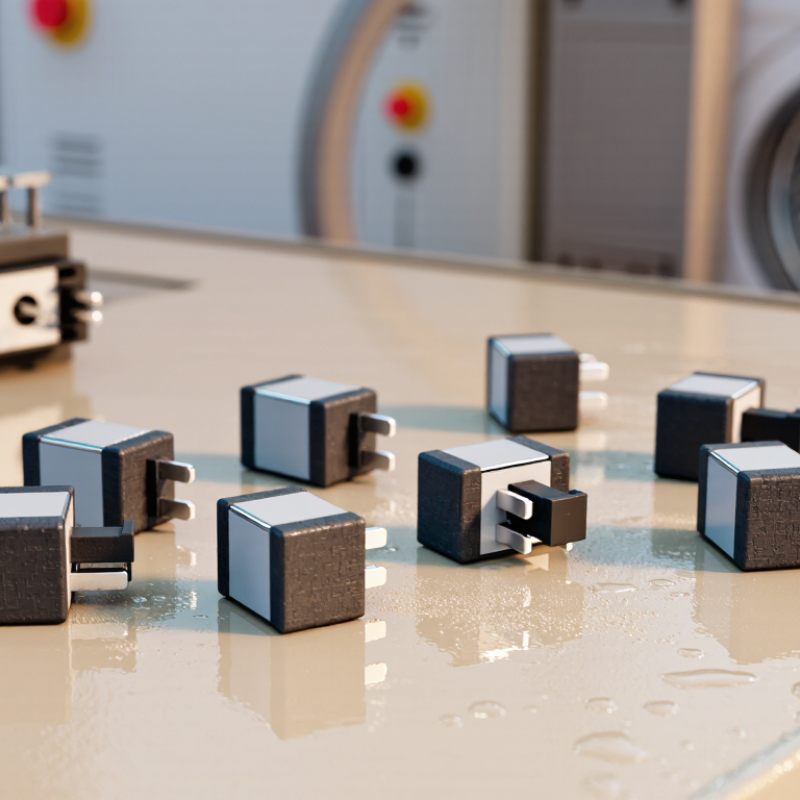
7 Tips for Choosing Sealed Micro Switches
A 10 A/250 VAC rating is not a universal operating promise. It describes a specific electrical condition, usually with a resistive AC load. At that point, apparent power reaches 2,500 VA. Motor, solenoid, lamp, and capacitor loads can create much higher inrush current. IEC 61058-1:2016 treats rated voltage, current, load category, and endurance as separate factors. Check the actual load, not only the housing label. Confirm whether the circuit is AC or DC. DC arcs are harder to extinguish. A switch rated for 250 VAC may require a lower DC rating.
Define the duty cycle before selecting the actuator. Record operating cycles per hour, daily runtime, startup surges, and expected service life. For example, 100 cycles per hour over 10 hours creates 1,000 operations each day. That equals about 365,000 cycles annually. IEC 61058-1 endurance testing uses defined operating sequences, so field conditions should match those sequences as closely as possible. Use a relay, snubber, or arc-suppression network when the load is inductive. Verify suppression components during testing. They can fail too.
Measure peak current with an oscilloscope or suitable current probe. A clamp meter may miss the first few milliseconds. Keep the sealed rating meaningful. Check IP performance after cable bending, vibration, and temperature exposure. ISO 20653:2013 provides widely used IP test classifications for road vehicles, but real installation stress can differ. I once focused too heavily on nominal current and overlooked inrush. That was a poor assumption. Temperature derating, contact material, and actuator force still need review before approval.
Tip 1: Confirm the contact logic before ordering. A normally open (NO) circuit closes when the actuator moves. A normally closed (NC) circuit opens under the same action. This difference affects alarms, interlocks, and fault detection. In practice, I label the switch state beside the wiring diagram. It prevents a surprisingly common installation error.
Tip 2: Treat “up to 1 million mechanical cycles” as a test limit, not a promise. Mechanical endurance can differ from electrical endurance. Load current, voltage, switching speed, vibration, and temperature all reduce service life. IEC 61058-1 provides endurance testing guidance for switches, while IEC 60529 defines IP protection ratings. Ask for test conditions, contact resistance data, and the rated electrical cycle count. A sealed housing may resist dust and water, yet the internal contacts can still wear.
Tip 3: Match the switch to the control architecture. Rockwell Automation’s 2024 State of Smart Manufacturing report states that 95% of surveyed manufacturers are investing in, or planning to invest in, AI and machine-learning technology. That trend increases the value of dependable feedback signals. NC contacts often support fail-aware monitoring because a broken wire can appear as an open circuit. However, this is not automatically safer for every design. Review the complete circuit, expected failure modes, and maintenance access. I would also test several samples under real loads, because laboratory ratings rarely capture every installation detail.
7 Tips for Choosing Sealed Micro Switches
Apply IEC 60529 IP65–IP67 Protection to Dust and Water Exposure
Start with the actual hazard. IEC 60529 defines IP65 as dust-tight protection with resistance to water jets. IP66 withstands stronger water jets. IP67 permits temporary immersion, typically up to one metre for 30 minutes. These ratings are not interchangeable. A switch rated IP67 may still need testing against repeated high-pressure washing.
Check the second digit carefully. Then inspect the housing, actuator seal, cable entry, and mounting surface. A sealed micro switch can fail through an unprotected connector. Select materials that tolerate cleaning chemicals, salt mist, vibration, and temperature changes. Confirm electrical load, contact arrangement, operating force, and mechanical life from test documentation. Do not rely only on a catalogue headline. That shortcut often creates trouble.
The International Federation of Robotics reported 541,302 industrial robot installations in 2023. More automated equipment means more switches working near coolant, dust, and washdown areas. Choose IP65 for controlled exposure, IP66 for forceful cleaning, and IP67 where temporary flooding is realistic. I have seen installations pass initial checks but fail after cable bending. The rating assumes proper installation. It does not excuse poor routing, damaged seals, or incorrect torque. One detail is easy to miss: test the complete assembly, not only the switch. Industry reports provide useful context, but site conditions remain decisive.
| Tip | Selection Dimension | Relevant Requirement | Practical Guidance | Verification Data to Request |
|---|---|---|---|---|
| 1 | Match the IP rating to the exposure | IEC 60529 IP65, IP66, or IP67 | Choose IP65 for dust-tight protection and water jets, IP66 when more powerful water jets are expected, and IP67 when temporary immersion is possible. | Obtain the complete IP code, test report or certificate, test orientation, and confirmation that the rating applies to the assembled switch and not only to an enclosure component. |
| 2 | Understand the IEC 60529 protection levels | First digit: 6; second digit: 5, 6, or 7 | The first digit 6 indicates dust-tight protection. The second digit identifies resistance to water jets or temporary immersion, not permanent underwater operation. | Check that the supplier states the exact tested level and does not describe IP65, IP66, and IP67 as interchangeable protection classes. |
| 3 | Confirm the water exposure conditions | IP65: water jets; IP66: powerful water jets; IP67: temporary immersion | IP67 testing commonly represents temporary immersion up to 1 m for 30 minutes under IEC 60529 conditions. It does not automatically prove resistance to high-pressure jets or repeated submersion. | Compare the product rating with actual cleaning pressure, spray direction, immersion depth, immersion duration, and frequency of exposure. |
| 4 | Select the correct electrical rating | Voltage, current, load type, and circuit category | Verify AC and DC ratings separately. Motor, lamp, solenoid, and capacitive loads can impose higher inrush or arcing stress than resistive loads. | Request rated voltage, continuous current, inrush or load rating, contact arrangement such as SPST or SPDT, dielectric strength, and electrical endurance data. |
| 5 | Check mechanical fit and actuation | Mounting pattern, actuator style, operating force, travel, and overtravel | The switch should reach reliable operating travel without side-loading, bottoming out, or exceeding the permitted overtravel. Sealing can be compromised if the actuator is misaligned. | Confirm body dimensions, mounting-hole spacing, terminal layout, actuator height, operating force, operating position, release position, total travel, and allowable overtravel. |
| 6 | Evaluate the environment beyond water and dust | Temperature, chemicals, vibration, shock, salt spray, and UV exposure | IEC 60529 IP testing does not by itself establish resistance to chemicals, corrosion, vibration, shock, ultraviolet radiation, or temperature cycling. | Request operating and storage temperature ranges, sealing-material information, corrosion-test results where applicable, vibration and shock ratings, and chemical-compatibility guidance. |
| 7 | Validate sealing after installation | Cable entry, terminal sealing, panel interface, and maintenance practice | A sealed switch can lose system-level protection through unsealed wires, incorrect fasteners, damaged gaskets, excessive panel cutout clearance, or improper assembly. | Review installation instructions, gasket requirements, connector or wire-sealing method, tightening torque, approved cable diameter, and an assembled-product validation plan. |
Choosing a sealed micro switch starts with the machine’s real movement, not its catalog label. Operating force must suit the actuator and the user’s touch. Too much force can slow a compact mechanism. Too little force may cause false triggering under vibration. Measure the available force at the actual contact point. Do not rely only on hand testing.
Travel matters just as much. A short pre-travel can detect a position quickly, while adequate over-travel protects the switch from harsh impacts.
In factory equipment, repeated side loading can damage a switch even when the electrical rating looks sufficient. A 2024 industrial automation market report from Fortune Business Insights valued the sector at over USD 200 billion, reflecting the growing need for dependable sensing in automated equipment.
Temperature deserves equal attention. Select a sealed switch above the machine’s measured range, including heat from nearby motors and enclosures. IEC 60529 classifies protection levels by resistance to dust and water, but an IP rating does not guarantee performance at every temperature. That detail is often missed.
A 2024 report from the International Energy Agency also notes rising electricity demand from data centres and industry, making thermal management increasingly important. Review cold starts, hot cycles, condensation, and cable stress before approval.
The first choice may still be wrong. Testing should prove it.
Tip 1: Verify the exact safety standard. UL 61058-1 covers switches for electrical appliances, including safety, insulation, and endurance requirements. Do not accept a generic “UL compliant” claim. Request the certification file, rated voltage, current, and tested operating cycles. IEC 61058-1 also provides useful test references for appliance switches.
Tip 2: Check contact materials against the load. Silver alloys suit many standard circuits, while gold-plated contacts perform better at low currents. Ask for contact resistance data before selecting a part. A few milliohms can matter in sensor circuits. Real applications are less tidy than catalog tables. Inrush current, vibration, and condensation may change results.
Tip 3: Confirm RoHS documentation, not just a logo. The European Commission’s RoHS framework restricts ten substances, including lead, mercury, and hexavalent chromium. Maximum concentration limits are generally 0.1% for most restricted substances and 0.01% for cadmium. Request a current declaration, material disclosure, and test report. Verify the product revision matches the paperwork.
Tip 4: Inspect sealing performance in detail. IP ratings describe defined test conditions, not every field environment. A switch rated IP67 may resist temporary immersion, yet repeated thermal cycling can expose weak seals. Check gasket material, cable entry design, and operating temperature. A small sample test is wise. It may reveal an uncomfortable assumption.


For those larger-sized parts, or smaller quantity runs, we have 2 independent powder coat booths and ovens. The quality, durability and affordability of today’s powder coating finishes make this the process of choice for world-class companies.
Powder coating advantages over other forms of coating are many. Materials used in the Powder coating process can be metals and non-metals that come in a multitude of thicknesses, textures, colors, etc. Another of Powder coating’s biggest advantages over conventional coatings is its ability to create finishes in many different textures. Powder Coating Booths allow us the ability to apply these advantages to large products.
Tri-State Fabricators runs a full-service conveyor line for painting. Wet painting can provide protection or decoration to many different part styles. From start to finish, every project is easier to undergo random and point-based inspection by our skilled painting team.
Advantages to our Wet Paint Line are these lines start with product prep and ends with a thorough inspection of a high quality finished product. Our ability to complete large and small projects with a superior finish and doing so in a timely and economical fashion. This passes along the savings in production to our customers. When powder coating ins not an option, our Wet Paint Line gets the job done right the first time.
When the parts get big and heavy we roll-out our custom paint racks and oversize booth. By utilizing our partnerships with all the major paint brands, we can match virtually any color with wet paint.
The advantages of having access to a Wet Paint Booth are many. Large projects of many different shapes can be loaded into the booth. The Wet Paint Booth offers an environment that is much more controlled than a typical parts painting operation.
Not only are they used because of their controlled environment, but they’re are also advantageous when it comes to applying paint to parts that are needed in industries that require specialty coatings such as medical, aerospace, etc.
Our military forces have some very high standards when it comes to the finish of their vehicles and equipment. From the first pre-treatment step to final coat, it takes a great deal of knowledge and experience to protect the men and women of our armed forces. They deserve only the best, and Tri-State Fabricators provides it.
All of our processes are closely monitored by our staff and management teams. Both of which are highly trained in the processes of metal fabrication and finishing. Tri-State Fabricators’ goal is to always fully satisfy each and every customer, including the military. We will always put a 110% into what we do.
Abrasive media blasting is an excellent way to remove old paint, rust, and increase the paint/powder adhesion. Glass beads produce a much smoother and brighter finish than angular abrasives; leaving the part clean yet without any dimensional change. Chemically inert and environmentally friendly, we can recycle our beads approximately 30 times; making them a more preferred method of metal cleaning or surface finishing.
Advantages to Glass Bead Blasting are many. Glass bead blast media is used when a project is needing rough surfaces need to become smooth for applications of coatings such as paint. It is typically used to clean paint and rust from a product surface without deforming the surface it is being used on. Overall, compared to many other blasting media, Glass Bead Blasting is a very economical choice and those savings are always passed on to our customers.
Tri-State Fabricators utilize a zinc phosphate wash to clean and etch the material to ensure the best paint adhesion possible. The unique design of our 3-stage wash system does the work like a 5-stage. From Cleaning and rinsing to conversion coating and post-treatment, Our Part Washing process is a complete service and works throughout the fabrication service and the finishing service.
Along with the previously mentioned benefits, Curing is a vital chemical reaction that leaves the product finish hard and relatively safe from mild abrasion and aggressive corrosion. This process can be done in more than one way; ambient air-dry or in curing ovens at temps that exceed 240°.
From fixing paint mistakes (someone else’s of course) to simply cleaning our paint line hooks, our burn-off oven is put to good use. After a quick burn-off, a little clean up, and a fresh coat of paint, your parts will look better than new.
Why does our Burn-Off Oven work so well? Because super heating the air around parts turns the materials into ashes. From paint and powder coatings to rubber and machining oils, high temps do the job without degrading the integrity of the part.
Masking is a vital part of producing high quality products. We have die-cut masking patterns to protect machined surfaces as well as a wide range of plugs and caps to protect threaded holes and bolts. We provide permanent and temporary masking.
Masking allows the selected sections of a product to be protected from a fabrication or finishing service. This can be with both chemicals when etching and tapes, paints when only finishing just a section of the product. Masking is great in aiding the customization process of a project.
Screen printing is a photographic process that transfers artwork onto a porous nylon screen which allows colored ink to flow through the screen and be deposited on an aluminum or plastic component. We can generally have just about any design created onto a screen for your parts.
Some of the advantages of Screen Printing are, brand recognition for your business displaying on your products, assembly instructions, product warnings/hazards, etc. Tri-State Fabricators produces Screen Printing of the highest quality so you know it’s durable.
Metal Finishing is the art of treating the exterior portion of product, often metal but can also be made of other materials, so that the surface is clean and free of any debris. Then the process of applying coats or either paint of powder coat takes place. This coating process improves the quality of the product in both appearance and resistance to wear and corrosion.
Tri-State Fabricators, Inc., understands that a project typically isn’t complete until a high-quality finish has been added to your product. This is why our painting and powder coating teams continuously inspect the products throughout the Metal Finishing process.

