

Choosing the best Cable Gland manufacturer in China is not as simple as comparing prices or browsing polished product photos. A gland may look solid on a screen, yet the details matter: thread accuracy, sealing inserts, material consistency, and the fit around a real cable. Small parts carry real responsibility.
A reliable comparison starts with the application. Will the gland be used indoors, outdoors, or in a demanding industrial setting? Check the stated material, temperature range, thread options, and ingress-protection test evidence. Ask how products are inspected, whether samples are available, and if test reports match the exact model you plan to buy. A certificate alone is not the whole story. Its scope matters.
Look closely at communication, too. Clear drawings, traceable product information, and specific answers can tell you a lot before an order is placed. If a supplier cannot explain how a seal fits a cable diameter, that deserves another question. Not a quick assumption. A factory visit or sample inspection may reveal details that a catalogue misses, though neither guarantees every future batch will be identical. That is worth remembering.
There may be no single manufacturer that is best for every buyer. The right choice depends on project conditions, required documentation, order size, and support after delivery. A careful shortlist is more useful than a bold claim. This guide will examine practical ways to compare Chinese manufacturers and identify a suitable partner, while recognizing that even a strong supplier should be checked against your own technical needs.
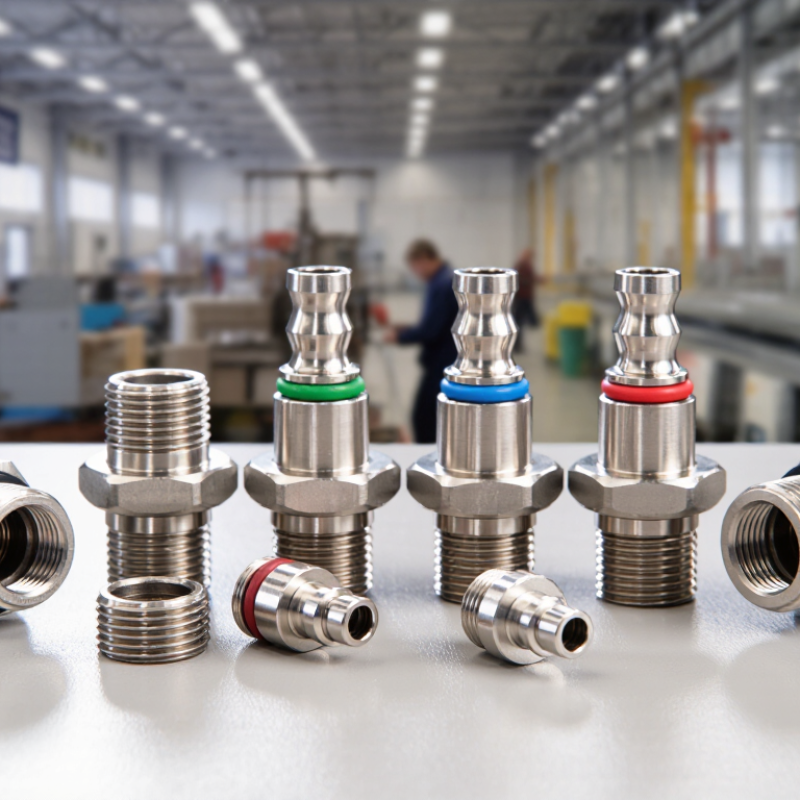
A cable gland is a mechanical fitting that secures a cable where it enters an enclosure. It can provide strain relief, help seal out dust or moisture, and, in suitable designs, maintain electrical continuity for armoured cables. The details matter. A gland’s material, thread, clamping range, and sealing insert must match the cable and enclosure. IEC 62444 covers requirements for cable glands, while IEC 60529 defines the IP code used to describe protection against solid objects and water. An IP rating is not a promise of protection in every installation; the assembled entry must be suitable for its actual conditions.
In practice, installers check the cable’s outer diameter, enclosure entry thread, and exposure before selecting a gland. They tighten the parts to the specified method, keeping the seal aligned and avoiding damage to the cable jacket. Small mistakes can matter. A gland may feel secure yet fail to seal if the cable is undersized or the seal is pinched. The IEA’s Renewables 2023 report forecast nearly 3,700 GW of renewable power capacity additions worldwide during 2023–2028, expanding equipment needs across outdoor energy systems. That growth makes reliable cable entries important in exposed installations, though the gland alone cannot ensure system safety. The weak point is often the installation detail.
| Topic | Type or consideration | What it does | Common applications and selection notes |
|---|---|---|---|
| What a cable gland is | Cable-entry fitting | Secures a cable where it enters an enclosure, panel, or piece of equipment. Depending on its design, it can also provide sealing, strain relief, and a connection for electrical bonding or grounding. | Used on control cabinets, junction boxes, machinery, lighting equipment, and other electrical installations. A gland does not replace an enclosure’s overall protection rating. |
| Basic components | Body, sealing element, and compression parts | The body attaches to the enclosure; a seal compresses around the cable; and a nut or other compression mechanism holds the assembly in place. | Exact components vary by design. Check that the cable diameter falls within the gland’s stated clamping range. |
| Common construction | Brass or nickel-plated brass | Provides a robust metallic fitting and may support electrical continuity when correctly installed with compatible equipment. | Common in industrial installations. Consider corrosion exposure, plating, enclosure material, and any bonding requirements. |
| Common construction | Stainless steel | Offers a metallic option for installations where corrosion resistance is important. | Often considered for demanding or corrosive environments. Confirm the stainless-steel grade and compatibility with the site conditions. |
| Common construction | Polyamide or other engineering plastics | Provides a lightweight, non-metallic cable-entry option; electrical conductivity and mechanical properties differ from metal designs. | Used in many general-purpose applications. Check temperature limits, chemical compatibility, UV exposure, and required mechanical strength. |
| Cable type | Unarmoured cable gland | Clamps and seals the outer sheath of a cable that has no armour requiring termination at the gland. | Select according to the cable’s actual outside diameter, thread type, enclosure opening, and environmental requirements. |
| Cable type | Armoured cable gland | Designed to grip and terminate cable armour as well as secure the cable; some designs can provide an armour-to-equipment earth path when installed correctly. | Choose a design compatible with the cable’s armour construction and installation method. Follow the applicable wiring rules and manufacturer instructions. |
| Environmental sealing | Ingress protection (IP) | An IP rating classifies protection against access to hazardous parts, solid objects, and water under specified test conditions. | The rating applies to a defined product configuration and installation. Confirm the rating for the complete assembly, including the cable, enclosure, thread, and any accessories. |
| Hazardous locations | Certified equipment and installation | Glands intended for explosive atmospheres must meet the relevant protection concept and certification requirements for the specific application. | Verify the required area classification, equipment protection level, gas or dust group, temperature class, certificate scope, and installation instructions. A standard gland is not automatically suitable. |
| Thread selection | Metric, NPT, or other specified thread | Provides the mechanical connection between the gland and the enclosure or accessory. | Match the thread form, size, and pitch to the enclosure entry. Do not assume different thread systems are interchangeable. |
| Temperature and exposure | Operating conditions | Materials and seals determine the conditions in which a gland can maintain its intended performance. | Check the product’s stated temperature range and compatibility with oils, chemicals, weather, vibration, and other site conditions. |
| Choosing a manufacturer | Evidence of product suitability | A suitable supplier should provide clear technical data, dimensional drawings, material information, installation instructions, and applicable test or certification documents. | Compare products against the project specification rather than relying on a general “best” claim. Confirm traceability, quality controls, sample evaluation, lead times, and after-sales technical support. |
Ratings, approvals, dimensions, and material performance are product-specific. Confirm the current datasheet and applicable installation standards before selecting or installing a cable gland.
China’s cable gland industry is a network of material suppliers, component makers, and specialist assemblers. Metal models typically rely on brass or stainless-steel machining; polymer versions need controlled molding and consistent sealing materials. Many factories focus on standard metric or NPT threads, while others handle custom sizes, cable ranges, and project-specific documentation.
Production capability varies widely. A polished catalogue alone tells buyers little about machining tolerances or seal performance.
Mordor Intelligence’s Cable Gland Market report projects roughly 5% annual growth for the global market over 2024–2029. That figure signals wider demand, not China’s share or any single factory’s performance.
In China, suppliers serve domestic equipment makers and export customers, so verification matters: check thread gauges, material certificates, gland dimensions, and test records for the exact model.
Small details matter. A seal that looks sound on a sample may behave differently across a full production run.
Buyers should also ask how suppliers trace batches and manage changes to materials or tooling.
That paperwork can be uneven. It deserves closer scrutiny.
Choosing a cable gland manufacturer requires more than comparing unit prices. A credible supplier should explain how its products are tested, traced, and matched to installation conditions. IEC 62444 sets requirements for cable glands, while IEC 60529 defines enclosure ingress-protection ratings. Ask for test records naming the exact model, thread size, sealing range, and test conditions. ISO’s 2022 Survey recorded more than 1.26 million valid ISO 9001 certificates worldwide. That figure shows the widespread use of quality systems; it does not prove that a specific gland performs well. Small details matter.
During a factory audit, inspect machining consistency and sealing components. A rough thread or uneven seal can complicate installation. Request material declarations, dimensional inspection results, and batch traceability, then compare them with delivered samples. For outdoor use, confirm UV and corrosion suitability instead of relying on vague “weatherproof” claims. For hazardous-area applications, verify the relevant certification and its scope with the issuing body. Ask about lead times, minimum order quantities, and defect handling, too. I would not treat a polished catalogue as evidence; repeatable test data carries more weight. Still, even a tidy inspection report cannot replace checking a real gland against the cable diameter and enclosure entry.
China has a broad cable gland manufacturing base, serving electrical, automation, and equipment markets. Notable manufacturers may specialize in brass, stainless steel, or nylon glands, and their strengths can differ. Some offer extensive thread and sealing options; others focus on repeatable production for common sizes. Details matter.
When comparing suppliers, check more than catalogue photos. Ask for material specifications, dimensional drawings, and recent test reports relevant to the product. Confirm thread types, cable-diameter ranges, sealing materials, and temperature limits. For example, a gland must grip a cable securely without crushing its outer jacket. Request samples when fit is critical. Small gaps matter.
A supplier’s quality process deserves close attention. Ask how incoming materials, machining dimensions, and finished seals are inspected, and whether inspection records can be shared. Clear answers are useful, but they are not proof by themselves. A factory visit or independent sample check may reveal details a polished brochure misses. Even capable manufacturers can have inconsistent batches, so agree on acceptance criteria before placing a large order. The best choice depends on the enclosure, installation environment, and required production volume.
Choosing the best cable gland manufacturer starts with your installation conditions, not its catalogue size. Record the cable’s outer diameter, enclosure material, operating temperature, vibration, and exposure to oil, salt, or water. Ask for material certificates, dimensional drawings, and batch traceability. A polished sample is not enough. Check whether production controls and test records cover the exact gland range you need.
Use recognized technical references to compare claims. IEC 62444 covers cable glands for electrical installations, while IEC 60529 defines enclosure ingress-protection ratings. For example, the IEC 60529 IPX7 test involves temporary immersion under specified conditions, commonly up to 1 metre for 30 minutes. That rating alone does not prove suitability for every site; confirm the test setup and gland-to-enclosure assembly. Request evidence for sealing, mechanical retention, and corrosion resistance, then verify samples against your cable and panel.
Tips: Send the manufacturer a real cable sample and enclosure drawing. Ask for test reports tied to the model number, not generic certificates. Compare lead times and replacement-part support, too. A low quote can hide useful details—or missing tests. Check twice.


For those larger-sized parts, or smaller quantity runs, we have 2 independent powder coat booths and ovens. The quality, durability and affordability of today’s powder coating finishes make this the process of choice for world-class companies.
Powder coating advantages over other forms of coating are many. Materials used in the Powder coating process can be metals and non-metals that come in a multitude of thicknesses, textures, colors, etc. Another of Powder coating’s biggest advantages over conventional coatings is its ability to create finishes in many different textures. Powder Coating Booths allow us the ability to apply these advantages to large products.
Tri-State Fabricators runs a full-service conveyor line for painting. Wet painting can provide protection or decoration to many different part styles. From start to finish, every project is easier to undergo random and point-based inspection by our skilled painting team.
Advantages to our Wet Paint Line are these lines start with product prep and ends with a thorough inspection of a high quality finished product. Our ability to complete large and small projects with a superior finish and doing so in a timely and economical fashion. This passes along the savings in production to our customers. When powder coating ins not an option, our Wet Paint Line gets the job done right the first time.
When the parts get big and heavy we roll-out our custom paint racks and oversize booth. By utilizing our partnerships with all the major paint brands, we can match virtually any color with wet paint.
The advantages of having access to a Wet Paint Booth are many. Large projects of many different shapes can be loaded into the booth. The Wet Paint Booth offers an environment that is much more controlled than a typical parts painting operation.
Not only are they used because of their controlled environment, but they’re are also advantageous when it comes to applying paint to parts that are needed in industries that require specialty coatings such as medical, aerospace, etc.
Our military forces have some very high standards when it comes to the finish of their vehicles and equipment. From the first pre-treatment step to final coat, it takes a great deal of knowledge and experience to protect the men and women of our armed forces. They deserve only the best, and Tri-State Fabricators provides it.
All of our processes are closely monitored by our staff and management teams. Both of which are highly trained in the processes of metal fabrication and finishing. Tri-State Fabricators’ goal is to always fully satisfy each and every customer, including the military. We will always put a 110% into what we do.
Abrasive media blasting is an excellent way to remove old paint, rust, and increase the paint/powder adhesion. Glass beads produce a much smoother and brighter finish than angular abrasives; leaving the part clean yet without any dimensional change. Chemically inert and environmentally friendly, we can recycle our beads approximately 30 times; making them a more preferred method of metal cleaning or surface finishing.
Advantages to Glass Bead Blasting are many. Glass bead blast media is used when a project is needing rough surfaces need to become smooth for applications of coatings such as paint. It is typically used to clean paint and rust from a product surface without deforming the surface it is being used on. Overall, compared to many other blasting media, Glass Bead Blasting is a very economical choice and those savings are always passed on to our customers.
Tri-State Fabricators utilize a zinc phosphate wash to clean and etch the material to ensure the best paint adhesion possible. The unique design of our 3-stage wash system does the work like a 5-stage. From Cleaning and rinsing to conversion coating and post-treatment, Our Part Washing process is a complete service and works throughout the fabrication service and the finishing service.
Along with the previously mentioned benefits, Curing is a vital chemical reaction that leaves the product finish hard and relatively safe from mild abrasion and aggressive corrosion. This process can be done in more than one way; ambient air-dry or in curing ovens at temps that exceed 240°.
From fixing paint mistakes (someone else’s of course) to simply cleaning our paint line hooks, our burn-off oven is put to good use. After a quick burn-off, a little clean up, and a fresh coat of paint, your parts will look better than new.
Why does our Burn-Off Oven work so well? Because super heating the air around parts turns the materials into ashes. From paint and powder coatings to rubber and machining oils, high temps do the job without degrading the integrity of the part.
Masking is a vital part of producing high quality products. We have die-cut masking patterns to protect machined surfaces as well as a wide range of plugs and caps to protect threaded holes and bolts. We provide permanent and temporary masking.
Masking allows the selected sections of a product to be protected from a fabrication or finishing service. This can be with both chemicals when etching and tapes, paints when only finishing just a section of the product. Masking is great in aiding the customization process of a project.
Screen printing is a photographic process that transfers artwork onto a porous nylon screen which allows colored ink to flow through the screen and be deposited on an aluminum or plastic component. We can generally have just about any design created onto a screen for your parts.
Some of the advantages of Screen Printing are, brand recognition for your business displaying on your products, assembly instructions, product warnings/hazards, etc. Tri-State Fabricators produces Screen Printing of the highest quality so you know it’s durable.
Metal Finishing is the art of treating the exterior portion of product, often metal but can also be made of other materials, so that the surface is clean and free of any debris. Then the process of applying coats or either paint of powder coat takes place. This coating process improves the quality of the product in both appearance and resistance to wear and corrosion.
Tri-State Fabricators, Inc., understands that a project typically isn’t complete until a high-quality finish has been added to your product. This is why our painting and powder coating teams continuously inspect the products throughout the Metal Finishing process.