Choosing the best China Tissue Tape for global buyers requires more than comparing price lists. It demands evidence, testing, and practical application knowledge. Smithers’ reports on global nonwovens and adhesive materials identify packaging, hygiene, automotive, and construction as important demand areas. Grand View Research also reports continued growth in pressure-sensitive adhesives, supported by e-commerce packaging and lightweight assembly. These trends create opportunities for Chinese manufacturers. They also increase buyer expectations.
The right Tissue Tape should match the surface, temperature, load, and removal requirement. A carton sealing application may need strong initial tack. A foam mounting application may require high shear resistance. Outdoor use demands better aging and moisture performance. Buyers should request technical data sheets, sample rolls, coating weight details, and batch records. Test results should reference recognized methods, such as ASTM or ISO procedures, where applicable. Look closely at unwind behavior. A clean edge matters on a fast packing line. So does stable adhesion after storage.
No supplier is perfect. A polished brochure cannot replace a production audit. Some specifications may look impressive but lack real-use evidence. I have found that small details often expose larger risks, including uneven coating, telescoped rolls, or inconsistent release force. Responsible sourcing also requires checking factory quality systems, traceability, packaging safety, and export documentation. The best choice is not automatically the cheapest Chinese product. It is the tape that performs reliably across the buyer’s actual conditions. That judgment requires careful comparison, independent testing, and a willingness to question convenient claims.
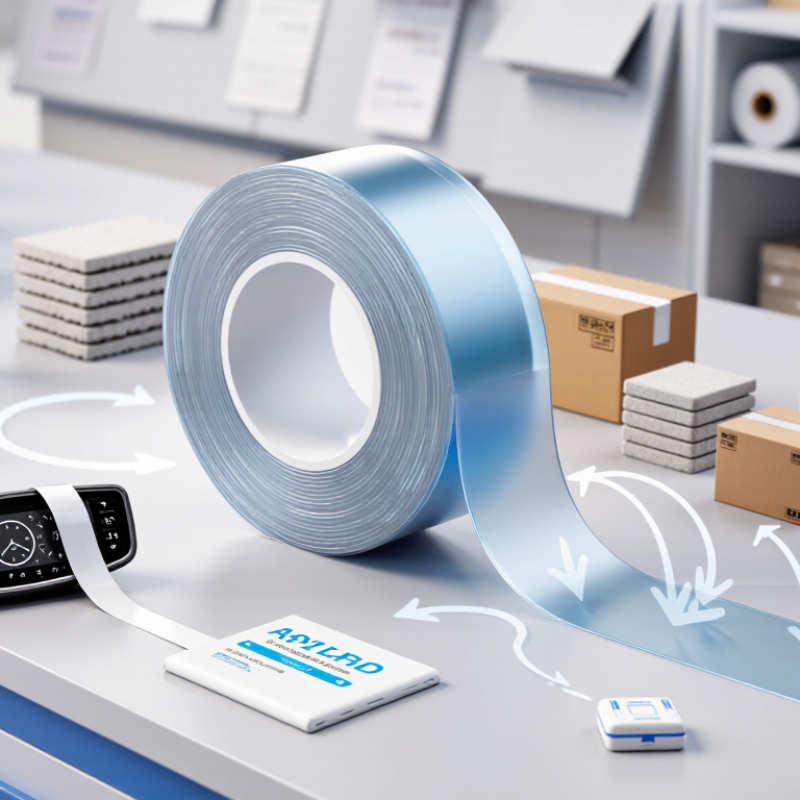
China tissue tape is usually a thin, double-sided adhesive tape built around a nonwoven tissue carrier. The carrier provides dimensional stability while remaining easy to tear and conform. Manufacturers coat both sides with pressure-sensitive adhesive layers. A release liner, often paper or film, protects the adhesive before use. This sounds simple. It is not.
The structure changes with the adhesive system. Acrylic adhesive can offer aging and temperature resistance, while rubber-based adhesive often gives quick tack and easier bonding. Water-based formulas may suit lighter indoor applications, but moisture and storage conditions still matter. Coating weight, carrier thickness, liner release, and winding tension affect performance. A tape may look smooth yet fail on a dusty carton. That detail is easy to miss.
For global buyers, evaluation should begin with the substrates, application temperature, load, and service period. Request technical data, safety information, roll dimensions, tolerance data, and samples from the Chinese supplier. Test peel, holding power, shear, residue, and liner removal under real conditions. Do not judge quality by thickness alone. A common sourcing lesson is that thicker tape can perform worse when its adhesive balance is poorly matched. Supplier claims also need independent verification. Batch consistency deserves attention during climate changes and long transport. A small pilot order can reveal more than a polished catalog.
Choosing the best China tissue tape depends on the application, not only the price.
Different tissue tape types solve different problems. Single-sided tissue tape suits paper sealing, label backing, and light bundling. Double-sided tissue tape works well for mounting signs, photos, textiles, and small interior parts. It offers a clean appearance because no carrier edge remains visible.
For curved surfaces or repeated handling, buyers should examine adhesive strength, flexibility, and liner release. Acrylic adhesive often performs better under heat, aging, and humidity. Rubber-based adhesive may provide faster initial tack on paper and cardboard. Reinforced tissue tape can improve tear resistance during packaging operations. However, it may feel less flexible.
In field evaluations, a tape that looks excellent on dry cardboard can fail on dusty plastic. That detail is easy to miss. Testing should include peel strength, shear holding, aging, and storage temperature. A small sample may not represent a full production batch.
Tips: Match tape width and roll length with your equipment. Check the backing thickness before automated use. Test both smooth and textured surfaces. Request technical data and batch consistency records from the supplier. Store rolls away from direct sunlight and moisture. Do not judge performance from hand feel alone. A practical trial remains necessary.
Global buyers should compare tissue tape by performance, not by a single headline adhesive value. Adhesion includes initial tack, peel strength, and holding power over time. Test it on actual surfaces, such as coated carton, plastic, painted metal, or fabric. Clean, dry surfaces can produce impressive results. Real warehouses are less forgiving. Temperature and humidity can change the outcome. Ask suppliers for test conditions, sample sizes, and aging data. Without this context, numbers may look precise but remain difficult to trust.
Thickness also needs careful comparison. A thinner tape can conform neatly to curved packaging. A thicker grade may absorb surface gaps and resist handling damage. However, extra thickness does not automatically mean better durability. During evaluation, measure edge lifting after application, repeated handling, and storage under heat or cold. Check the liner release too. If it tears unevenly, production speed suffers. In practical sourcing, buyers sometimes overvalue aggressive tack and overlook clean removal. That choice can create residue, rework, or customer complaints. A small mistake. Review failed samples, not only successful ones.
Tips: Use identical roll widths and application pressure. Record surface type, temperature, dwell time, and applied load. Compare results after 24 and 72 hours. Request independent test reports when claims seem unusually high. Small trials are cheaper than a container of unsuitable tape.
For global buyers, the best China tissue tape is not defined by adhesion alone. It must arrive with clear, verifiable quality evidence. A capable supplier should operate under ISO 9001, with documented controls for coating weight, release liner, adhesive aging, and roll dimensions. Ask for the current certificate, issuing body, scope, and expiration date. The scope should cover adhesive tape manufacturing, not an unrelated activity. Small detail. Big risk.
Testing should match the tape’s final use. Request reports for peel adhesion, holding power, tensile strength, thickness, and temperature resistance. ASTM, ISO, or EN methods may be acceptable, but the method and test conditions must be stated. A peel result without substrate, dwell time, or temperature is difficult to compare.
For packaging or assembly, samples should be tested on actual surfaces, including coated cardboard, plastic, or metal. Laboratory data can look excellent while production performance disappoints. I have seen this gap occur when buyers test only clean steel panels.
For international shipments, check chemical compliance relevant to destination markets. REACH and RoHS declarations may be needed, while food-contact applications require specific regulatory evidence. Do not accept a generic “non-toxic” statement. Ask for signed declarations, recent third-party reports, and batch traceability. ISO 14001 can support environmental management, and FSC certification may matter when the tissue carrier uses responsibly sourced paper. These credentials do not replace performance testing. Supplier audits should review incoming materials, coating records, complaint handling, and retained samples. One weakness remains common: certificates may be valid, but outdated test reports can hide formulation changes. Contract terms should require advance notice before material or process changes.
Global buyers should select China tissue tape by performance, not catalogue language. The 2024 Fortune Business Insights report valued the global adhesive tapes market at about USD 83.6 billion in 2023. Tissue tape represents only one segment, yet this figure signals strong demand for reliable bonding solutions.
Ask suppliers for carrier weight, adhesive type, release-paper details, roll width, and storage limits. Request samples from different production batches. Test peel adhesion under ASTM D3330, holding power under ASTM D3654, and unwind behavior on your actual surfaces. Test more than once. One sample can flatter a weak process.
Sourcing also requires factory evidence. Review quality records, calibration reports, batch traceability, and export packaging photographs. Compare laboratory results with your own tests at different temperatures and humidity levels. A low quotation may hide uneven coating, telescoped rolls, or short shelf life. I have seen buyers focus on price and discover waste during converting. That mistake remains expensive. Confirm tolerances in writing, including core size, splice limits, carton strength, and inspection rules. Independent pre-shipment inspection can reduce surprises, although it cannot replace production audits. Suppliers should explain corrective actions clearly, not merely promise better quality.



For those larger-sized parts, or smaller quantity runs, we have 2 independent powder coat booths and ovens. The quality, durability and affordability of today’s powder coating finishes make this the process of choice for world-class companies.
Powder coating advantages over other forms of coating are many. Materials used in the Powder coating process can be metals and non-metals that come in a multitude of thicknesses, textures, colors, etc. Another of Powder coating’s biggest advantages over conventional coatings is its ability to create finishes in many different textures. Powder Coating Booths allow us the ability to apply these advantages to large products.
Tri-State Fabricators runs a full-service conveyor line for painting. Wet painting can provide protection or decoration to many different part styles. From start to finish, every project is easier to undergo random and point-based inspection by our skilled painting team.
Advantages to our Wet Paint Line are these lines start with product prep and ends with a thorough inspection of a high quality finished product. Our ability to complete large and small projects with a superior finish and doing so in a timely and economical fashion. This passes along the savings in production to our customers. When powder coating ins not an option, our Wet Paint Line gets the job done right the first time.
When the parts get big and heavy we roll-out our custom paint racks and oversize booth. By utilizing our partnerships with all the major paint brands, we can match virtually any color with wet paint.
The advantages of having access to a Wet Paint Booth are many. Large projects of many different shapes can be loaded into the booth. The Wet Paint Booth offers an environment that is much more controlled than a typical parts painting operation.
Not only are they used because of their controlled environment, but they’re are also advantageous when it comes to applying paint to parts that are needed in industries that require specialty coatings such as medical, aerospace, etc.
Our military forces have some very high standards when it comes to the finish of their vehicles and equipment. From the first pre-treatment step to final coat, it takes a great deal of knowledge and experience to protect the men and women of our armed forces. They deserve only the best, and Tri-State Fabricators provides it.
All of our processes are closely monitored by our staff and management teams. Both of which are highly trained in the processes of metal fabrication and finishing. Tri-State Fabricators’ goal is to always fully satisfy each and every customer, including the military. We will always put a 110% into what we do.
Abrasive media blasting is an excellent way to remove old paint, rust, and increase the paint/powder adhesion. Glass beads produce a much smoother and brighter finish than angular abrasives; leaving the part clean yet without any dimensional change. Chemically inert and environmentally friendly, we can recycle our beads approximately 30 times; making them a more preferred method of metal cleaning or surface finishing.
Advantages to Glass Bead Blasting are many. Glass bead blast media is used when a project is needing rough surfaces need to become smooth for applications of coatings such as paint. It is typically used to clean paint and rust from a product surface without deforming the surface it is being used on. Overall, compared to many other blasting media, Glass Bead Blasting is a very economical choice and those savings are always passed on to our customers.
Tri-State Fabricators utilize a zinc phosphate wash to clean and etch the material to ensure the best paint adhesion possible. The unique design of our 3-stage wash system does the work like a 5-stage. From Cleaning and rinsing to conversion coating and post-treatment, Our Part Washing process is a complete service and works throughout the fabrication service and the finishing service.
Along with the previously mentioned benefits, Curing is a vital chemical reaction that leaves the product finish hard and relatively safe from mild abrasion and aggressive corrosion. This process can be done in more than one way; ambient air-dry or in curing ovens at temps that exceed 240°.
From fixing paint mistakes (someone else’s of course) to simply cleaning our paint line hooks, our burn-off oven is put to good use. After a quick burn-off, a little clean up, and a fresh coat of paint, your parts will look better than new.
Why does our Burn-Off Oven work so well? Because super heating the air around parts turns the materials into ashes. From paint and powder coatings to rubber and machining oils, high temps do the job without degrading the integrity of the part.
Masking is a vital part of producing high quality products. We have die-cut masking patterns to protect machined surfaces as well as a wide range of plugs and caps to protect threaded holes and bolts. We provide permanent and temporary masking.
Masking allows the selected sections of a product to be protected from a fabrication or finishing service. This can be with both chemicals when etching and tapes, paints when only finishing just a section of the product. Masking is great in aiding the customization process of a project.
Screen printing is a photographic process that transfers artwork onto a porous nylon screen which allows colored ink to flow through the screen and be deposited on an aluminum or plastic component. We can generally have just about any design created onto a screen for your parts.
Some of the advantages of Screen Printing are, brand recognition for your business displaying on your products, assembly instructions, product warnings/hazards, etc. Tri-State Fabricators produces Screen Printing of the highest quality so you know it’s durable.
Metal Finishing is the art of treating the exterior portion of product, often metal but can also be made of other materials, so that the surface is clean and free of any debris. Then the process of applying coats or either paint of powder coat takes place. This coating process improves the quality of the product in both appearance and resistance to wear and corrosion.
Tri-State Fabricators, Inc., understands that a project typically isn’t complete until a high-quality finish has been added to your product. This is why our painting and powder coating teams continuously inspect the products throughout the Metal Finishing process.

