
Choosing the best China Welded Steel Pipe supplier requires more than comparing prices on a spreadsheet. A reliable decision begins with practical questions about quality, production control, and project fit. The right supplier should understand pipe diameter, wall thickness, steel grade, welding method, coating requirements, and service conditions. These details influence performance at the construction site, not just appearance in a catalog.
Experience matters. A capable manufacturer can explain how it controls welding temperature, alignment, surface treatment, and dimensional tolerance. It should also provide traceable mill certificates, inspection records, and test results from qualified laboratories. When possible, buyers should review factory photos, production equipment, and previous export experience. A supplier that welcomes independent inspection often shows stronger confidence in its process.
Look closely.
Price still matters, but an unusually low quotation may hide thinner walls, unclear specifications, or weak packaging. I have found that small omissions can create large delays, especially when pipes arrive with damaged ends or incomplete documents. No supplier is perfect, and one factory visit cannot reveal every risk. Buyers should compare samples, communication speed, correction procedures, and after-sales responsibility. A strong supplier does not simply promise compliance; it explains how compliance is measured. This article examines the key factors behind a dependable choice, helping importers evaluate Chinese Welded Steel Pipe manufacturers with greater clarity, caution, and confidence.
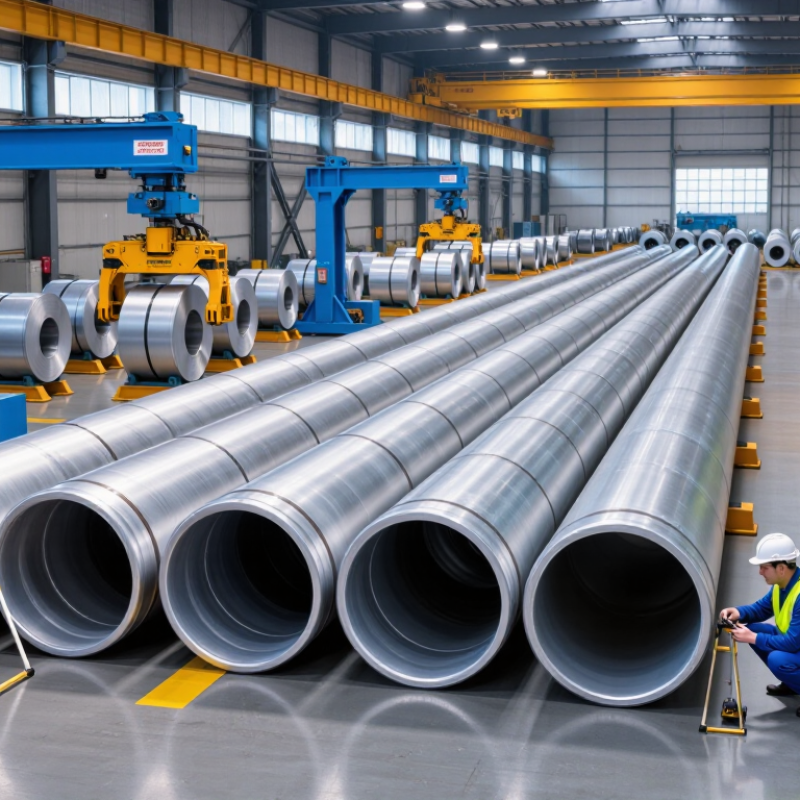
The best China welded steel pipe supplier is defined by evidence, not polished promises. A reliable supplier understands pipe standards, welding methods, coating requirements, and project tolerances. Ask for mill certificates, inspection records, and sample documents before placing a large order. These records should match the actual heat number printed on each pipe bundle.
Experience appears in small details. Skilled teams check weld seams, wall thickness, ovality, and pipe ends during production. They also understand how loading can damage coatings or create dents. A capable supplier can explain its ultrasonic testing, hydrostatic testing, and dimensional inspection procedures in clear language. Vague answers deserve caution.
Look closely at traceability. Each batch should connect to raw material records, production dates, inspection results, and packing information. Independent inspections can add confidence when the application is demanding. Communication matters too. A dependable supplier confirms drawings, tolerances, quantities, and delivery terms before production begins.
No supplier is flawless. That matters. Even experienced factories may face delays, equipment maintenance, or material changes. The real test is their response. Do they report problems early, offer practical solutions, and preserve written records? A factory visit can reveal more than a brochure: organized storage, calibrated instruments, trained inspectors, and clean production areas are useful signals. Price still matters, but an unusually low quotation may hide thinner walls, weaker inspection, or incomplete service.
A practical, evidence-based scorecard for evaluating welded steel pipe suppliers without relying on company names or brand claims.
| Evaluation Dimension | Recommended Weight | Reliable Benchmark or Requirement | Evidence to Request | Priority |
|---|---|---|---|---|
| Applicable Product Standards | 20% | Products should be manufactured and tested against the contractually specified standard, such as ASTM A53 for general-purpose steel pipe, API 5L or ISO 3183 for line pipe, or EN 10217 for pressure-purpose welded steel tubes. | A current technical data sheet, standard edition, product scope, inspection plan, and certificate stating the exact standard and product grade. | Very High |
| Dimensional Capability | 15% | Capability should cover the buyer's required outside diameter, wall thickness, length, end finish, and dimensional tolerances. Tolerances must follow the selected product standard or approved purchase specification. | Mill capability list, dimensional inspection reports, calibration records, and sample measurements for outside diameter, wall thickness, straightness, and length. | Very High |
| Welding Process and Control | 15% | The supplier should use a welding process suitable for the pipe grade and size, such as ERW, HFW, or SAW, with controlled welding parameters and qualified procedures. | Welding procedure specifications, welder or operator qualification records where applicable, process-control logs, and weld-seam inspection results. | Very High |
| Inspection and Testing | 15% | Testing should match the applicable standard and service risk. Common controls include chemical analysis, tensile testing, flattening or bend testing, hydrostatic testing, and non-destructive examination of the weld seam. | Heat analysis, mechanical test reports, hydrostatic test records, ultrasonic or electromagnetic inspection reports, and third-party inspection documents when required. | Very High |
| Material Traceability | 10% | Each production lot should remain traceable from steel coil or plate through forming, welding, testing, coating if applicable, and final shipment. | Heat numbers, coil or plate records, production batch numbers, identification markings, packing lists, and material test certificates linked to each lot. | Very High |
| Quality Management System | 10% | A documented quality system based on ISO 9001 principles can demonstrate controlled purchasing, production, inspection, nonconformance handling, and corrective action. | Valid quality-system certificate, audit report or audit summary, quality manual extract, inspection procedures, and corrective-action records. | High |
| Surface Protection and Finishing | 5% | Packaging and protection should match the transport route and storage conditions. Requirements may include bare pipe protection, bevel protection, anti-corrosion coating, bundling, end caps, or seaworthy packing. | Approved packing specification, coating or surface-treatment procedure, photographs of completed packing, and marking requirements. | High |
| Documentation and Export Readiness | 5% | The supplier should provide complete commercial and technical documents, including invoices, packing lists, certificates of origin when required, inspection records, and shipping documents. | Sample document package, document index, certificate templates, export packing list, and confirmation of document submission timelines. | High |
| Delivery and Production Planning | 3% | A dependable supplier should provide a realistic production schedule, identify raw-material lead times, and communicate milestones from order confirmation through dispatch. | Production schedule, lead-time statement, capacity allocation plan, shipment milestone process, and records of schedule-change communication. | High |
| Commercial Transparency | 2% | The quotation should clearly separate pipe price, testing, coating, packing, inland transport, ocean freight, inspection, taxes, and other applicable charges. | Itemized quotation, payment terms, validity period, delivery term under Incoterms, warranty conditions, and change-order procedure. | Medium |
Suggested decision rule: shortlist suppliers that satisfy every mandatory technical requirement first, then compare their weighted scores. A low commercial price should not compensate for missing traceability, inadequate testing, or failure to meet the specified pipe standard.
Choosing a China welded steel pipe supplier requires more than comparing quotations. Manufacturing quality begins with controlled steel coils, qualified welding procedures, and stable production records. Ask how coils are identified before forming. Heat numbers should follow each pipe through welding, testing, and packing. On a real shop-floor visit, inspect coil storage, weld seams, calibration tools, and rejected products. Clean work areas help, but they do not prove consistent quality. Ask for evidence.
Review the supplier’s quality system and certification scope carefully. ISO 9001 can show documented process control, but it does not guarantee every pipe meets your specification. Check the certificate number, issuing body, expiry date, and covered factory address. For pipeline applications, relevant approvals may include API 5L, while project standards may require ASTM, EN, or other specifications. Confirm that the listed product, grade, size range, and manufacturing method are included. A copied certificate is a warning sign.
Request recent mill test certificates, weld inspection records, dimensional reports, and hydrostatic test results. Ask whether testing is performed in-house or by an independent laboratory. Ultrasonic or radiographic testing should match the agreed inspection plan. Verify wall thickness with calibrated gauges, not visual judgment. One missed detail can become a costly installation problem. Suppliers should welcome pre-shipment inspection and corrective-action reviews. Nothing is perfect. Production batches can vary, and documents may hide weak controls. Use a written checklist, sample testing, and clear acceptance criteria before placing an order.
Choosing the best China welded steel pipe supplier requires more than comparing prices. The right specification prevents costly installation problems. Define outside diameter, wall thickness, length, steel grade, and weld type clearly. Include the required standard, tolerance range, and testing method. For structural work, impact performance and yield strength may matter more than surface appearance. For fluid service, pressure testing, internal cleanliness, and corrosion resistance deserve closer attention.
Small details matter. Ask whether the supplier can provide fixed lengths, square or beveled ends, threaded sections, and custom drilling. Surface options may include black finish, hot-dip galvanizing, epoxy coating, or oil protection. Confirm coating thickness and preparation requirements in writing. Marking can show heat number, size, grade, and batch information. This helps inspectors trace each bundle. Keep it measurable.
A practical supplier should share sample reports, mill certificates, dimensional records, and clear inspection procedures. Request a sample before approving a large order. Check weld uniformity, ovality, end condition, and actual weight. A supplier with documented quality control is easier to evaluate than one using broad promises. Ask how rejected pipes are handled. No process is perfect. I have seen specifications fail because coating thickness was assumed, not measured. That mistake changes both delivery time and project cost. Confirm packaging for lifting, storage, and sea transport, especially when pipes have finished surfaces.
Choosing the best China welded steel pipe supplier requires more than comparing the lowest quotation. The World Steel Association reported that China produced about 1.019 billion tonnes of crude steel in 2023, representing roughly 54% of global output. This capacity is valuable, but production scale does not guarantee consistent pipe quality. Buyers should verify mill test certificates, chemical composition, weld inspection records, dimensional tolerances, and hydrostatic testing procedures. Traceability matters.
Pricing needs a landed-cost comparison. Ask whether the quote includes coating, third-party inspection, export packing, documentation, freight, and insurance. The World Bank’s Commodity Markets Outlook shows that steel-related raw material prices can shift sharply with construction demand and energy costs. A fixed quotation may therefore hide exclusions or expire quickly. Compare at least three detailed offers using identical specifications. Cheap is not always economical. In procurement reviews, small specification changes often create larger costs later.
Delivery performance deserves measurable evidence. The World Bank Logistics Performance Index 2023 placed China 19th globally, with a logistics score of 3.7 out of 5. That supports strong export capability, but port schedules and vessel availability still affect arrival dates. Request production milestones, inspection dates, booking plans, and an agreed on-time delivery target. A supplier should explain its buffer stock and response plan for rejected batches. I would also request recent references and sample shipping records. Some decisions remain uncertain, especially when forecasts are optimistic. That uncertainty should be priced, documented, and reviewed before signing.
Choosing a China welded steel pipe supplier requires sharper questions than “What is your lowest price?” Ask which welding process is used and what pipe standards are followed. Request recent mill certificates, chemical analysis, tensile results, and dimensional inspection records. Can each bundle be traced to a heat number? Ask for photographs of markings, packaging, and finished pipe ends.
Ask how weld quality is checked. Is testing visual, ultrasonic, hydrostatic, or a combination? What are the acceptance criteria? A reliable supplier should explain calibration records and provide sample reports without avoiding technical details. Ask about outside diameter tolerance, wall thickness, length, coating, and end protection. Details matter.
Confirm monthly capacity, lead times, minimum order quantity, and production scheduling. Who performs the final inspection? Can an independent inspector enter before shipment? Ask for references from similar projects, not only a polished brochure. I would also verify payment terms, loading methods, and damage claims in writing. Ask for a clear response time. Slow answers can signal weak coordination, although not always. One question buyers often overlook is, “What happens when the batch fails inspection?” The answer reveals more than a sales promise. A low quotation may hide thinner walls, delayed testing, or weak packaging. Do not guess. Ask for evidence.


For those larger-sized parts, or smaller quantity runs, we have 2 independent powder coat booths and ovens. The quality, durability and affordability of today’s powder coating finishes make this the process of choice for world-class companies.
Powder coating advantages over other forms of coating are many. Materials used in the Powder coating process can be metals and non-metals that come in a multitude of thicknesses, textures, colors, etc. Another of Powder coating’s biggest advantages over conventional coatings is its ability to create finishes in many different textures. Powder Coating Booths allow us the ability to apply these advantages to large products.
Tri-State Fabricators runs a full-service conveyor line for painting. Wet painting can provide protection or decoration to many different part styles. From start to finish, every project is easier to undergo random and point-based inspection by our skilled painting team.
Advantages to our Wet Paint Line are these lines start with product prep and ends with a thorough inspection of a high quality finished product. Our ability to complete large and small projects with a superior finish and doing so in a timely and economical fashion. This passes along the savings in production to our customers. When powder coating ins not an option, our Wet Paint Line gets the job done right the first time.
When the parts get big and heavy we roll-out our custom paint racks and oversize booth. By utilizing our partnerships with all the major paint brands, we can match virtually any color with wet paint.
The advantages of having access to a Wet Paint Booth are many. Large projects of many different shapes can be loaded into the booth. The Wet Paint Booth offers an environment that is much more controlled than a typical parts painting operation.
Not only are they used because of their controlled environment, but they’re are also advantageous when it comes to applying paint to parts that are needed in industries that require specialty coatings such as medical, aerospace, etc.
Our military forces have some very high standards when it comes to the finish of their vehicles and equipment. From the first pre-treatment step to final coat, it takes a great deal of knowledge and experience to protect the men and women of our armed forces. They deserve only the best, and Tri-State Fabricators provides it.
All of our processes are closely monitored by our staff and management teams. Both of which are highly trained in the processes of metal fabrication and finishing. Tri-State Fabricators’ goal is to always fully satisfy each and every customer, including the military. We will always put a 110% into what we do.
Abrasive media blasting is an excellent way to remove old paint, rust, and increase the paint/powder adhesion. Glass beads produce a much smoother and brighter finish than angular abrasives; leaving the part clean yet without any dimensional change. Chemically inert and environmentally friendly, we can recycle our beads approximately 30 times; making them a more preferred method of metal cleaning or surface finishing.
Advantages to Glass Bead Blasting are many. Glass bead blast media is used when a project is needing rough surfaces need to become smooth for applications of coatings such as paint. It is typically used to clean paint and rust from a product surface without deforming the surface it is being used on. Overall, compared to many other blasting media, Glass Bead Blasting is a very economical choice and those savings are always passed on to our customers.
Tri-State Fabricators utilize a zinc phosphate wash to clean and etch the material to ensure the best paint adhesion possible. The unique design of our 3-stage wash system does the work like a 5-stage. From Cleaning and rinsing to conversion coating and post-treatment, Our Part Washing process is a complete service and works throughout the fabrication service and the finishing service.
Along with the previously mentioned benefits, Curing is a vital chemical reaction that leaves the product finish hard and relatively safe from mild abrasion and aggressive corrosion. This process can be done in more than one way; ambient air-dry or in curing ovens at temps that exceed 240°.
From fixing paint mistakes (someone else’s of course) to simply cleaning our paint line hooks, our burn-off oven is put to good use. After a quick burn-off, a little clean up, and a fresh coat of paint, your parts will look better than new.
Why does our Burn-Off Oven work so well? Because super heating the air around parts turns the materials into ashes. From paint and powder coatings to rubber and machining oils, high temps do the job without degrading the integrity of the part.
Masking is a vital part of producing high quality products. We have die-cut masking patterns to protect machined surfaces as well as a wide range of plugs and caps to protect threaded holes and bolts. We provide permanent and temporary masking.
Masking allows the selected sections of a product to be protected from a fabrication or finishing service. This can be with both chemicals when etching and tapes, paints when only finishing just a section of the product. Masking is great in aiding the customization process of a project.
Screen printing is a photographic process that transfers artwork onto a porous nylon screen which allows colored ink to flow through the screen and be deposited on an aluminum or plastic component. We can generally have just about any design created onto a screen for your parts.
Some of the advantages of Screen Printing are, brand recognition for your business displaying on your products, assembly instructions, product warnings/hazards, etc. Tri-State Fabricators produces Screen Printing of the highest quality so you know it’s durable.
Metal Finishing is the art of treating the exterior portion of product, often metal but can also be made of other materials, so that the surface is clean and free of any debris. Then the process of applying coats or either paint of powder coat takes place. This coating process improves the quality of the product in both appearance and resistance to wear and corrosion.
Tri-State Fabricators, Inc., understands that a project typically isn’t complete until a high-quality finish has been added to your product. This is why our painting and powder coating teams continuously inspect the products throughout the Metal Finishing process.