2026 Best Concrete Batching Plants for Sale Worldwide

Concrete Batching plants will remain central to global infrastructure in 2026, from urban rail projects to remote bridge foundations. The Global Cement and Concrete Association estimates that roughly 14 billion cubic metres of concrete are produced worldwide each year. That scale makes plant selection a practical engineering decision, not merely a price comparison.

This guide examines the 2026 best Concrete Batching plants for sale worldwide through measurable criteria. These include output capacity, mixing accuracy, moisture compensation, energy use, mobility, automation, and after-sales support. Industry analyses from Grand View Research and Fortune Business Insights indicate continued demand for concrete equipment, driven by urbanisation, transport investment, and industrial construction. The International Energy Agency also reports that cement production contributes significant global carbon emissions. Therefore, efficient batching, lower material waste, and compatible low-carbon mixes deserve serious attention.

A good plant should perform beside a dusty highway, in winter conditions, or on a crowded city site. It should deliver consistent slump, not impressive figures only in a brochure. Experience shows that a 60 m³/hour mobile plant may suit scattered projects, while a 180 m³/hour stationary system needs reliable aggregates, power, and maintenance planning. No ranking is perfect. Local climate, transport rules, technician availability, and spare-part access can change the final choice. This overview combines published industry data with practical purchasing considerations, helping contractors compare realistic performance rather than marketing promises. Buyers should still verify test results, certifications, warranty terms, and lifecycle costs before signing any order.

2026 Best Concrete Batching Plants for Sale Worldwide

What Is a Concrete Batching Plant?

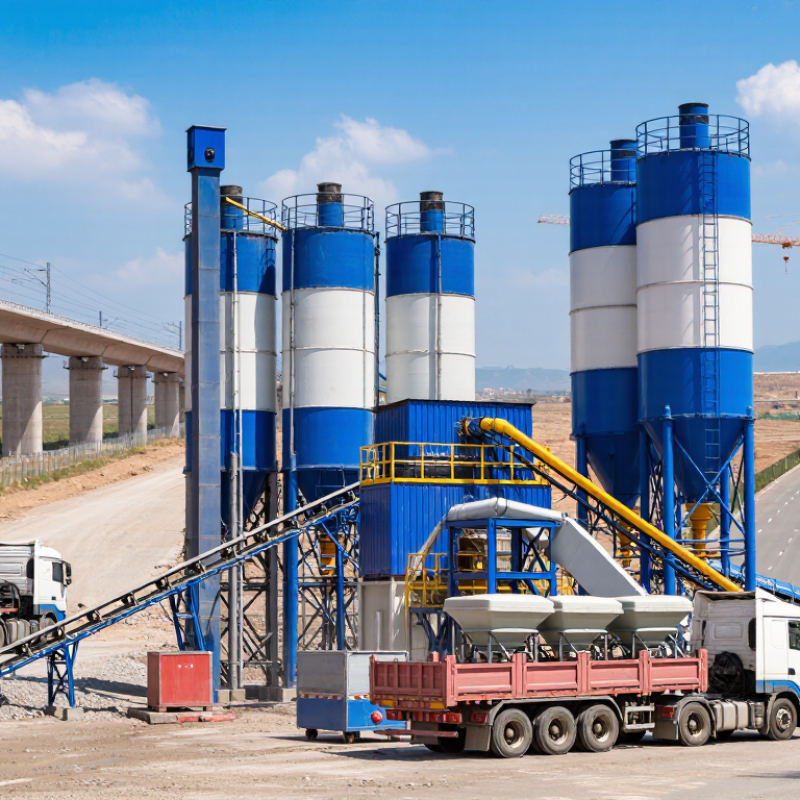
A concrete batching plant is a controlled facility for producing fresh concrete. It stores, measures, mixes, and discharges materials in specific proportions. These materials usually include cement, aggregates, water, and chemical admixtures. Aggregate bins may hold sand, gravel, and crushed stone separately. Conveyors or skip hoists move them into a weighing system. The mixer then combines each batch until the required consistency is reached. Not simply a storage unit.

Modern plants use sensors, calibrated scales, and automated control panels to improve accuracy. A typical operator checks moisture in the sand before adjusting the water dosage. This small correction can prevent weak or overly fluid concrete. The production cycle may take less than two minutes, depending on the mixer and recipe. Batch records can show material quantities, mixing time, and discharge details. These records support quality checks on demanding construction sites.

Site conditions strongly influence the right plant configuration. A stationary plant suits long-term projects with prepared foundations and stable access. A mobile design can serve changing locations, but transport and setup still require careful planning. I have seen schedules suffer when access roads were judged too quickly. That mistake is easy to repeat. Noise, dust control, drainage, electrical capacity, and local operating rules also need review. Even accurate equipment can produce inconsistent concrete when maintenance, calibration, or moisture testing is neglected.

Main Types of Concrete Batching Plants for Sale

For buyers comparing the best concrete batching plants for sale worldwide in 2026, plant type matters more than appearance. Stationary batching plants suit large projects near one jobsite. They offer stable production, larger aggregate bins, and easier maintenance access. A fixed plant may produce 60 to 240 cubic meters per hour, depending on configuration. It needs a prepared foundation and reliable material storage.

Mobile batching plants work well for highways, bridges, and changing construction zones. Their chassis-mounted structure reduces relocation time. However, transport limits can restrict hopper size and output. Compact plants suit urban projects with narrow access and limited space. They usually consume less power, but their smaller bins require more frequent loading. That inconvenience is easy to underestimate.

Wet-mix plants blend cement, water, aggregates, and admixtures before discharge. They provide consistent concrete when moisture conditions change. Dry-batch plants combine materials at the site or in the mixer truck. They often cost less initially and simplify transport, yet moisture control becomes more demanding. Field inspections should check weighing accuracy, mixer wear, dust collection, and emergency shutoffs. Small calibration errors can affect strength.

This is not theoretical. A poorly maintained moisture sensor may cause visible slump variation during one afternoon pour. Buyers should compare verified capacity, service access, spare-part availability, and local aggregate conditions before choosing a plant.

Key Features to Compare Before Buying

Choosing the 2026 best concrete batching plants for sale worldwide requires more than comparing hourly output. Check weighing accuracy, mixer capacity, moisture sensors, automation, and spare-parts access. The plant should match your project’s aggregate sizes and local climate. In humid regions, inaccurate moisture readings can weaken mix consistency.

The International Energy Agency reports that cement production creates about 7% of global energy-related carbon dioxide emissions. Therefore, fuel use, motor efficiency, dust collection, and heat recovery deserve close inspection.

The Global Cement and Concrete Association estimates that more than 14 billion cubic metres of concrete are produced yearly. Even small dosing errors can become expensive across large volumes.

Ask for documented calibration results, not only catalogue claims. Test data matters.

Tips:

Compare actual output, not rated output. Review cleaning time and mixer wear parts. Confirm electrical standards before ordering. Check whether remote monitoring works in your region. A cheaper plant may cost more through downtime. That lesson is easy to miss. Also examine water recycling and reclaimed aggregate compatibility. These features support lower waste and help meet stricter project requirements. I would still request a supervised trial batch, because laboratory performance may not reflect dusty sites, uneven aggregates, or rushed operators. Reliability is proven under pressure.

Top Global Markets and Supplier Considerations

In 2026, concrete batching plant demand will differ sharply by region. Southeast Asia favors compact systems for dense urban projects. Gulf markets often prioritize heat resistance, dust control, and fast aggregate handling. African buyers may value simple maintenance and local technician access. Latin American projects frequently need flexible mobility across changing sites. Europe and North America place stronger weight on emissions, safety, and digital reporting. Start with the site.

Supplier evaluation should begin with verified production data, not attractive brochures. Ask for hourly output under realistic moisture conditions. Check mixer wear, calibration accuracy, loading time, and cleaning access. Request references from projects with similar climate, road access, and concrete grades. Spare-parts availability matters more than a polished control screen. Training should include operators and maintenance staff. Remote support helps, but it cannot repair a failed sensor during a night pour. Delivery schedules also deserve written milestones.

Total cost includes foundations, electrical work, water systems, transport, commissioning, and downtime. A cheaper plant can become expensive when local service is weak. However, premium automation is not always the best answer. Smaller contractors may need rugged controls and manual backup options. Environmental rules and imported equipment requirements should be checked with qualified local advisers. Forecasts can be wrong. Keep it practical. I would reserve funds for weather delays, currency changes, and unfamiliar aggregate behavior. A careful trial batch can reveal problems that a sales presentation will miss.

2026 Best Concrete Batching Plants for Sale Worldwide - Top Global Markets and Supplier Considerations

Market / Region Typical Project Demand Recommended Plant Type Common Nominal Output Mixer Configuration Key Purchasing Considerations Relevant Standards and Requirements
North America Urban infrastructure, bridges, commercial buildings, highways, and ready-mix supply. Stationary wet-batch plant for high-volume production; compact mobile units for remote or short-term work. 60–180 m³/h for commercial operations; 25–60 m³/h for smaller projects. Twin-shaft or planetary mixer for consistent structural concrete; pan mixer for specialty applications. Verify local electrical requirements, winterization, dust control, truck-loading height, aggregate-bin volume, and availability of replacement parts. ASTM C94/C94M, applicable ACI requirements, local air-quality permits, and electrical safety codes.
Western Europe Dense urban construction, rail systems, precast production, residential development, and renovation. Compact stationary or semi-mobile plant with closed aggregate storage and advanced batching controls. 45–120 m³/h, depending on site restrictions and delivery requirements. Twin-shaft mixer for general ready-mix; planetary mixer for precast and low-slump concrete. Prioritize low noise, enclosed conveyors, recycled-water systems, space efficiency, automation, and accurate moisture compensation. EN 206, CE-marked machinery where applicable, local environmental permits, and workplace safety requirements.
Eastern Europe and Central Asia Roads, bridges, residential projects, industrial parks, and seasonal infrastructure programs. Mobile or modular stationary plant designed for relocation and variable site conditions. 30–100 m³/h; higher output may be selected for major transport projects. Twin-shaft mixer for durable general-purpose production; planetary mixer for precast work. Check cold-weather packages, insulated water systems, foundation requirements, transport dimensions, and local technical documentation. Applicable national concrete standards, EN-based specifications where adopted, and local construction permits.
Middle East Large residential developments, airports, highways, ports, energy facilities, and high-temperature concrete work. High-capacity stationary plant with twin aggregate lines, chilled-water capability, and robust dust protection. 90–240 m³/h for major projects; 30–75 m³/h for local contractors. Twin-shaft mixer for high throughput and demanding mixes; planetary mixer for specialized precast elements. Evaluate heat management, water chilling, ice dosing, sealed cement handling, abrasion resistance, and continuous-duty service support. Project-specific specifications, ASTM or EN concrete requirements, dust-emission controls, and local civil-defense regulations.
North Africa Housing, public works, highways, water infrastructure, ports, and industrial construction. Mobile wet-batch plant for flexible deployment or stationary plant for established ready-mix operations. 30–120 m³/h, depending on aggregate logistics and project scale. Twin-shaft mixer for general construction; pan or planetary mixer for block and precast production. Confirm aggregate moisture-control options, generator compatibility, corrosion protection, water storage, and operator training. Contract specifications, locally adopted EN or ASTM provisions, environmental permits, and electrical regulations.
Sub-Saharan Africa Roads, bridges, dams, mining infrastructure, urban expansion, and remote construction sites. Containerized or mobile plant with independent power options and simplified maintenance access. 20–75 m³/h for remote projects; 60–150 m³/h for large urban programs. Twin-shaft mixer for durable production and difficult aggregates; planetary mixer for precast yards. Assess road transportability, generator load, fuel consumption, local aggregate grading, spare-parts stock, and remote technical support. Employer specifications, national standards, project quality plans, dust controls, and site-specific electrical requirements.
South Asia Urban housing, metro systems, highways, bridges, industrial buildings, and precast components. Stationary or compact modular wet-batch plant with automated proportioning and multiple aggregate bins. 45–180 m³/h; compact 20–45 m³/h systems suit constrained urban sites. Twin-shaft mixer for ready-mix and infrastructure; planetary mixer for precast and dry, stiff mixes. Check monsoon protection, high-cycle wear parts, moisture sensors, traffic access, installation time, and after-sales response. Applicable national concrete codes, project specifications, weighing-equipment calibration, and local pollution-control requirements.
Southeast Asia Expressways, ports, airports, industrial parks, high-rise buildings, and disaster-resilient infrastructure. Compact stationary or mobile plant with weatherproof controls and high humidity protection. 30–150 m³/h, based on urban density, transport distance, and project schedule. Twin-shaft mixer for high-volume concrete; planetary mixer for precast and specialty products. Consider tropicalized electrical cabinets, corrosion protection, rain shelters, washout recycling, and reliable aggregate moisture measurement. Local building codes, ASTM or EN-based project specifications, environmental rules, and electrical certification.
East Asia High-speed rail, urban redevelopment, bridges, precast production, ports, and large civil works. High-automation stationary plant or advanced precast batching system with redundant weighing and control systems. 90–300 m³/h for major infrastructure; 45–120 m³/h for commercial projects. Twin-shaft mixer for general production; planetary mixer for high-consistency precast concrete. Prioritize automation integration, batch-data traceability, fast cycle times, emissions control, and compatibility with local PLC and weighing systems. National standards, ISO 9001-based quality systems where required, project specifications, and environmental permits.
Latin America Housing, roads, mining, hydropower, ports, commercial buildings, and regional infrastructure. Mobile plant for dispersed projects; stationary plant for metropolitan ready-mix markets. 30–120 m³/h for most contractors; up to 180 m³/h for major infrastructure. Twin-shaft mixer for general concrete; planetary mixer for precast and high-strength mixes. Review aggregate variability, seismic design requirements, installation access, local service capability, and protection against dust and humidity. Country-specific concrete standards, project engineering specifications, weighing calibration, and environmental regulations.
Oceania Transport infrastructure, mining, commercial construction, housing, remote communities, and coastal projects. Stationary plant for metropolitan supply and rugged mobile plant for remote or mining applications. 30–150 m³/h, with smaller modular plants used for isolated sites. Twin-shaft mixer for ready-mix and infrastructure; planetary mixer for precast and controlled low-slump production. Check cyclone or high-wind design, corrosion resistance, remote monitoring, transport permits, water recycling, and long-distance parts logistics. AS 1379 and related Australian/New Zealand requirements where applicable, workplace safety rules, and environmental approvals.
Data notes: Output figures are indicative nominal plant capacities commonly used for equipment selection; actual production depends on mix design, aggregate moisture, weighing accuracy, mixer cycle time, loading efficiency, traffic conditions, and operator performance. Standards and permits must be confirmed with the project engineer and the relevant authority in the destination country.

How to Choose the Best Plant for Your Project

2026 Best Concrete Batching Plants for Sale Worldwide

How to Choose the Best Plant for Your Project

Choosing a batching plant starts with your real production demand, not the advertised maximum. The Global Cement and Concrete Association reports that more than 14 billion cubic meters of concrete are produced globally each year. Your project may need only 40 cubic meters per hour, not an oversized system that remains idle.

Check the mix design, aggregate size, moisture variation, and delivery distance. A plant near a high-rise site needs rapid discharge and accurate weighing. A remote road project may value mobility, compact storage, and simple maintenance. ASTM C94/C94M highlights consistent batching, delivery, and quality control for ready-mixed concrete. Ask for verified weighing accuracy, mixer cycle time, spare-part access, and dust-control performance.

Energy use also deserves attention. The International Energy Agency estimates that cement production creates about 7% of global CO2 emissions. Select equipment that supports recycled aggregates, supplementary cementitious materials, and lower-water mixes. Automation can improve records, but it cannot repair poor calibration.

That part is often overlooked.

Inspect a working plant before purchase. Watch the loading sequence, washout area, control response, and operator workflow. Request production logs, not only brochures. I would also test several batches under wet aggregate conditions, because laboratory assumptions can fail on site. A smaller plant with dependable service may outperform a larger plant with weak technical support. Mistakes happen. Your selection process should expose them early.

Powder Coat Booths

For those larger-sized parts, or smaller quantity runs, we have 2 independent powder coat booths and ovens. The quality, durability and affordability of today’s powder coating finishes make this the process of choice for world-class companies.

Powder coating advantages over other forms of coating are many. Materials used in the Powder coating process can be metals and non-metals that come in a multitude of thicknesses, textures, colors, etc. Another of Powder coating’s biggest advantages over conventional coatings is its ability to create finishes in many different textures. Powder Coating Booths allow us the ability to apply these advantages to large products.

Wet Paint Line

Tri-State Fabricators runs a full-service conveyor line for painting. Wet painting can provide protection or decoration to many different part styles. From start to finish, every project is easier to undergo random and point-based inspection by our skilled painting team.

Advantages to our Wet Paint Line are these lines start with product prep and ends with a thorough inspection of a high quality finished product. Our ability to complete large and small projects with a superior finish and doing so in a timely and economical fashion. This passes along the savings in production to our customers. When powder coating ins not an option, our Wet Paint Line gets the job done right the first time.

Wet Paint Booths

When the parts get big and heavy we roll-out our custom paint racks and oversize booth. By utilizing our partnerships with all the major paint brands, we can match virtually any color with wet paint.

The advantages of having access to a Wet Paint Booth are many. Large projects of many different shapes can be loaded into the booth. The Wet Paint Booth offers an environment that is much more controlled than a typical parts painting operation.

Not only are they used because of their controlled environment, but they’re are also advantageous when it comes to applying paint to parts that are needed in industries that require specialty coatings such as medical, aerospace, etc.

Military CARC

Our military forces have some very high standards when it comes to the finish of their vehicles and equipment. From the first pre-treatment step to final coat, it takes a great deal of knowledge and experience to protect the men and women of our armed forces. They deserve only the best, and Tri-State Fabricators provides it.

All of our processes are closely monitored by our staff and management teams. Both of which are highly trained in the processes of metal fabrication and finishing. Tri-State Fabricators’ goal is to always fully satisfy each and every customer, including the military. We will always put a 110% into what we do.

Glass-Bead Blasting

Abrasive media blasting is an excellent way to remove old paint, rust, and increase the paint/powder adhesion. Glass beads produce a much smoother and brighter finish than angular abrasives; leaving the part clean yet without any dimensional change. Chemically inert and environmentally friendly, we can recycle our beads approximately 30 times; making them a more preferred method of metal cleaning or surface finishing.

Advantages to Glass Bead Blasting are many. Glass bead blast media is used when a project is needing rough surfaces need to become smooth for applications of coatings such as paint. It is typically used to clean paint and rust from a product surface without deforming the surface it is being used on. Overall, compared to many other blasting media, Glass Bead Blasting is a very economical choice and those savings are always passed on to our customers.

Part Washing

Tri-State Fabricators utilize a zinc phosphate wash to clean and etch the material to ensure the best paint adhesion possible. The unique design of our 3-stage wash system does the work like a 5-stage. From Cleaning and rinsing to conversion coating and post-treatment, Our Part Washing process is a complete service and works throughout the fabrication service and the finishing service.

Along with the previously mentioned benefits, Curing is a vital chemical reaction that leaves the product finish hard and relatively safe from mild abrasion and aggressive corrosion. This process can be done in more than one way; ambient air-dry or in curing ovens at temps that exceed 240°.

Burn-Off Oven

From fixing paint mistakes (someone else’s of course) to simply cleaning our paint line hooks, our burn-off oven is put to good use. After a quick burn-off, a little clean up, and a fresh coat of paint, your parts will look better than new.

Why does our Burn-Off Oven work so well? Because super heating the air around parts turns the materials into ashes. From paint and powder coatings to rubber and machining oils, high temps do the job without degrading the integrity of the part.

Masking

Masking is a vital part of producing high quality products. We have die-cut masking patterns to protect machined surfaces as well as a wide range of plugs and caps to protect threaded holes and bolts. We provide permanent and temporary masking.

Masking allows the selected sections of a product to be protected from a fabrication or finishing service. This can be with both chemicals when etching and tapes, paints when only finishing just a section of the product. Masking is great in aiding the customization process of a project.

Screen Printing

Screen printing is a photographic process that transfers artwork onto a porous nylon screen which allows colored ink to flow through the screen and be deposited on an aluminum or plastic component. We can generally have just about any design created onto a screen for your parts.

Some of the advantages of Screen Printing are, brand recognition for your business displaying on your products, assembly instructions, product warnings/hazards, etc. Tri-State Fabricators produces Screen Printing of the highest quality so you know it’s durable.

Metal Finishing

Metal Finishing is the art of treating the exterior portion of product, often metal but can also be made of other materials, so that the surface is clean and free of any debris. Then the process of applying coats or either paint of powder coat takes place. This coating process improves the quality of the product in both appearance and resistance to wear and corrosion.

Tri-State Fabricators, Inc., understands that a project typically isn’t complete until a high-quality finish has been added to your product. This is why our painting and powder coating teams continuously inspect the products throughout the Metal Finishing process.