


7 Best Electronic Shisha Suppliers for Global Buyers

Choosing an Electronic Shisha supplier involves more than comparing unit prices. Buyers need dependable specifications, consistent quality, and clear answers about manufacturing and support. A polished catalogue is not proof. Ask for product samples, component details, warranty terms, and documentation relevant to your destination market.

Researcher Dr. Konstantinos Farsalinos has emphasized the importance of evidence when assessing electronic nicotine products. That principle is useful here: supplier claims should be supported by verifiable product information, not persuasive wording alone. Look for clear descriptions of materials, battery specifications, quality-control checks, and any applicable testing records. Confirm that the supplier can explain how models are inspected and how defects are handled. Small details matter.

This guide compares seven suppliers for global buyers, focusing on communication, product range, documentation, and order support. It does not assume that one supplier suits every market or business. Ask direct questions. Check the answers. A sample order can reveal more than a sales call, though it cannot guarantee future consistency. Buyers should independently confirm that products and documentation meet requirements where they intend to sell. Supplier rankings can also become outdated, so treat them as a starting point—not a substitute for due diligence.
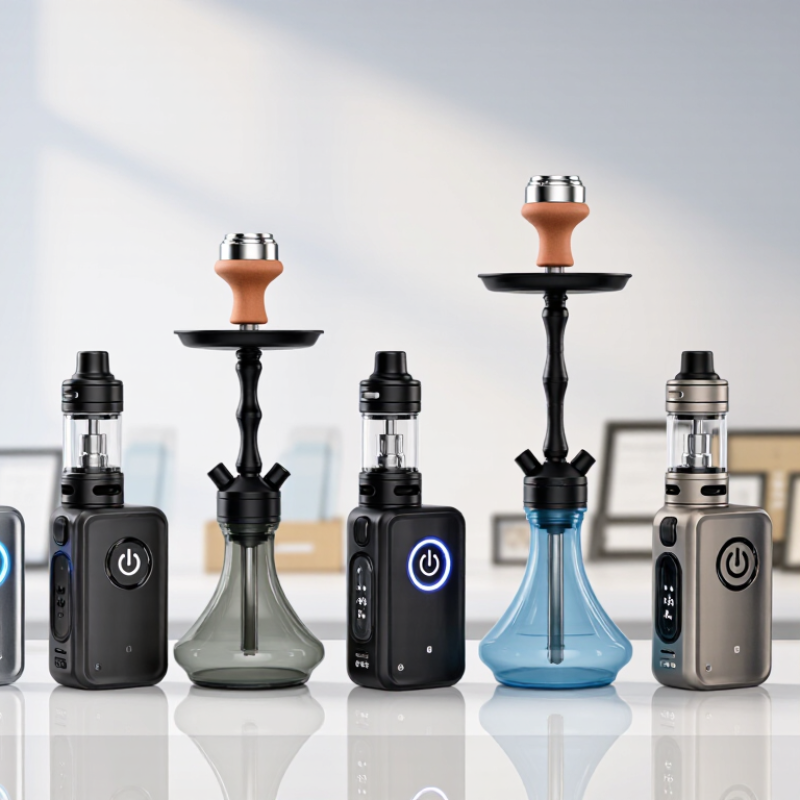
7 Best Electronic Shisha Suppliers for Global Buyers

Understanding Electronic Shisha Products and the Global Supply Chain

Electronic shisha products combine several parts: a battery, heating components, airflow channels, a mouthpiece, and a liquid chamber or cartridge. Specifications can vary in small but important ways. Ask suppliers for clear information on materials, battery capacity, charging requirements, and quality checks. A sample can reveal details a product sheet misses, such as a loose connector or uneven airflow. Small faults matter.

The supply chain may include component makers, assembly sites, testing laboratories, freight providers, and local distributors. Each handoff adds time and risk. Buyers should request batch records, relevant safety documentation, and written details about inspection procedures. Check that packaging protects devices from impact and moisture, especially when shipments cross several climate zones. Paperwork is not proof by itself.

Requirements differ by destination and can change. Before ordering, verify applicable product, labeling, battery-transport, and import rules with qualified local professionals. Confirm production lead times, minimum order quantities, spare-part availability, and the process for handling defects. A low unit price can look attractive, yet delays or unclear warranty terms may raise the real cost. Even careful planning leaves uncertainty; supply forecasts are estimates, not promises.


Criteria for Evaluating Electronic Shisha Suppliers

Criteria for Evaluating Electronic Shisha Suppliers

A dependable supplier should provide clear specifications, consistent production records, and traceable component information. Ask for sample units, inspection reports, and documented quality checks before placing a large order. Check the power rating, charging interface, materials, packaging, and user instructions against your market’s requirements. Details matter. A polished catalogue is not proof of dependable production. One limitation: a sample may not reveal how quality varies across a full production run.

Logistics deserve equal scrutiny. UNCTAD’s Review of Maritime Transport 2024 reported that global maritime trade grew 2.4% in 2023, while disruptions continued to pressure routes and shipping schedules. Ask suppliers for realistic lead times, shipment tracking procedures, and a clear plan for delays or damaged goods. The World Bank’s 2023 Logistics Performance Index assessed 139 economies across areas including customs, infrastructure, tracking, and timeliness. Use those measures to compare shipping options, not as a guarantee of delivery. Request references, confirm response times, and test how quickly the supplier resolves a specific quality concern. Small checks help. Even so, no checklist can replace ongoing review.

Seven Electronic Shisha Suppliers Serving Global Buyers

Seven Electronic Shisha Suppliers Serving Global Buyers

For global buyers, “best” depends on product consistency, documentation, and dependable delivery. A practical shortlist can include seven supplier types: direct manufacturers, original-design producers, wholesale exporters, regional distributors, private-label producers, component specialists, and fulfillment partners. Each serves a different purchasing need. Details matter.

The World Bank’s 2023 Logistics Performance Index assesses customs, infrastructure, shipment arrangements, logistics competence, tracking, and timeliness. These measures offer buyers a useful framework for comparing suppliers beyond price. UNCTAD’s Review of Maritime Transport 2024 reports that shipping carries over 80% of world merchandise trade by volume. That makes clear freight terms, protective packaging, and shipment tracking essential.

Ask for evidence. Request recent product specifications, quality-control records, sample units, and written production and dispatch timelines. Check whether the supplier can explain how it handles defects and replacement requests. For large orders, compare sample performance with the final production batch; small finish differences can matter. A polished catalogue is not proof of reliable service. Buyers should also confirm that product documents and labeling fit the destination market’s requirements, since these can differ.

7 Best Electronic Shisha Suppliers for Global Buyers - Seven Electronic Shisha Suppliers Serving Global Buyers

Supplier profiles below are anonymized procurement categories, not verified company listings. MOQ and lead-time figures are indicative planning ranges only; confirm current terms, product legality, and compliance documentation directly with each supplier.

Supplier Profile Typical Product Scope Best Suited For Indicative MOQ Indicative Production Lead Time Key Buyer Checks
1. Large-scale OEM manufacturer High-volume disposable or rechargeable electronic shisha devices; private-label production may be available. Established importers with repeat orders and defined product specifications. About 1,000–5,000 units per model About 30–60 days after specification and packaging approval Production capacity, quality-control records, battery documentation, and destination-market requirements.
2. Flexible private-label supplier Existing device platforms with customizable colors, packaging, and selected product specifications. New market entrants testing a product range before larger commitments. About 300–1,000 units per model About 20–45 days, depending on customization and component availability What changes are included in the quoted price, artwork approval process, and sample-to-bulk consistency.
3. Product-development-focused supplier Custom device design, prototypes, enclosure development, and engineering support. Buyers seeking differentiated hardware or a product developed to a specific brief. Often 1,000+ units for production; development fees may apply before production About 45–90 days or more when new tooling or design validation is required Ownership of designs and tooling, prototype milestones, change-control terms, and test plans.
4. Rechargeable-device specialist Electronic shisha devices with rechargeable batteries, charging circuits, and replaceable or refillable components where offered. Retailers prioritizing reusable hardware and documented battery handling. About 500–2,000 units per model About 30–60 days, subject to component supply and testing Battery specifications, applicable transport test documentation, charging safety, and warranty process.
5. Regional distributor or wholesaler Ready-stock products sourced from manufacturers; customization is usually more limited than with direct OEM production. Buyers needing smaller test orders, consolidated shipments, or shorter replenishment cycles. About 50–500 units, depending on stock and assortment About 3–15 business days for available stock, excluding transit Proof of authorized sourcing, stock status, product traceability, and local resale requirements.
6. Contract-manufacturing partner Assembly and manufacturing against buyer-provided specifications, components, or quality requirements. Brands with engineering resources and established supplier-management processes. About 1,000+ units, subject to the production setup About 30–75 days after materials and specifications are ready Incoming-material controls, inspection criteria, defect handling, and written manufacturing responsibilities.
7. Export-oriented sourcing supplier A range of device formats with export coordination and support for shipping documentation. Importers coordinating shipments to multiple markets or working with freight forwarders. About 500–2,000 units per order About 25–60 days, plus international transit time Commercial invoice and packing-list accuracy, shipping terms, restricted-goods handling, and destination-country rules.

Note: Electronic shisha products may be subject to different tobacco, nicotine, age-sale, product-safety, labeling, and import rules in each destination market. Buyers should independently verify applicable legal requirements and request relevant test reports and shipping documents before placing an order.

Comparing Supplier Quality, Compliance, and Export Capabilities

Choosing among electronic shisha suppliers means checking evidence, not polished brochures. Ask for batch-level inspection records, component traceability, and clear defect procedures. For electronic parts, request applicable safety and electromagnetic-compatibility test documents, then verify that they match the exact model and destination requirements. A certificate for a similar product is not enough. Small details matter. Confirm who handles document updates when components change, and ask for a sample export file before placing a large order. That step can expose mismatched product descriptions or missing packing details early.

Export ability matters as much as factory quality. UNCTAD’s Review of Maritime Transport 2024 reports that shipping carries over 80% of world trade by volume, so packaging, shipping plans, and reliable handoffs deserve close review. The World Bank’s Logistics Performance Index 2023 assessed 139 economies across six areas, including customs, tracking, and timeliness. It measures national logistics, not an individual supplier, but it can help buyers assess route conditions. Ask suppliers for recent shipment records, realistic lead times, and written answers about damaged or delayed cargo. Paperwork can still be incomplete. I would treat a fast quotation as a starting point, not proof of export readiness.

How to Choose a Supplier for Your Target Market

Choosing an electronic shisha supplier starts with the customers you plan to serve. A product suited to one region may not fit another’s preferred formats, price range, or retail expectations. Ask for clear specifications, including dimensions, materials, battery capacity, charging method, and expected service life. Then compare these details with your market’s product standards and customer needs.

Request sample units before placing a large order. Check how the device feels in hand, how clearly its instructions are written, and whether packaging can withstand a long journey. Small details matter. Confirm which conformity documents and test reports are available for your destination market, and verify them with an appropriate local specialist. Ask about minimum order quantities, lead times, spare parts, and response times for warranty claims. These answers reveal more than a polished catalogue.

A supplier should also explain how it handles quality checks between production runs. Request dated inspection records or a written process, rather than relying only on verbal assurances. Compare landed costs, not just unit prices; freight, duties, and packaging changes can shift the final figure. One detail is easy to overlook: translated instructions may still sound awkward. Ask a fluent reviewer to check them before printing.

Article Source:

Powder Coat Booths

For those larger-sized parts, or smaller quantity runs, we have 2 independent powder coat booths and ovens. The quality, durability and affordability of today’s powder coating finishes make this the process of choice for world-class companies.

Powder coating advantages over other forms of coating are many. Materials used in the Powder coating process can be metals and non-metals that come in a multitude of thicknesses, textures, colors, etc. Another of Powder coating’s biggest advantages over conventional coatings is its ability to create finishes in many different textures. Powder Coating Booths allow us the ability to apply these advantages to large products.

Wet Paint Line

Tri-State Fabricators runs a full-service conveyor line for painting. Wet painting can provide protection or decoration to many different part styles. From start to finish, every project is easier to undergo random and point-based inspection by our skilled painting team.

Advantages to our Wet Paint Line are these lines start with product prep and ends with a thorough inspection of a high quality finished product. Our ability to complete large and small projects with a superior finish and doing so in a timely and economical fashion. This passes along the savings in production to our customers. When powder coating ins not an option, our Wet Paint Line gets the job done right the first time.

Wet Paint Booths

When the parts get big and heavy we roll-out our custom paint racks and oversize booth. By utilizing our partnerships with all the major paint brands, we can match virtually any color with wet paint.

The advantages of having access to a Wet Paint Booth are many. Large projects of many different shapes can be loaded into the booth. The Wet Paint Booth offers an environment that is much more controlled than a typical parts painting operation.

Not only are they used because of their controlled environment, but they’re are also advantageous when it comes to applying paint to parts that are needed in industries that require specialty coatings such as medical, aerospace, etc.

Military CARC

Our military forces have some very high standards when it comes to the finish of their vehicles and equipment. From the first pre-treatment step to final coat, it takes a great deal of knowledge and experience to protect the men and women of our armed forces. They deserve only the best, and Tri-State Fabricators provides it.

All of our processes are closely monitored by our staff and management teams. Both of which are highly trained in the processes of metal fabrication and finishing. Tri-State Fabricators’ goal is to always fully satisfy each and every customer, including the military. We will always put a 110% into what we do.

Glass-Bead Blasting

Abrasive media blasting is an excellent way to remove old paint, rust, and increase the paint/powder adhesion. Glass beads produce a much smoother and brighter finish than angular abrasives; leaving the part clean yet without any dimensional change. Chemically inert and environmentally friendly, we can recycle our beads approximately 30 times; making them a more preferred method of metal cleaning or surface finishing.

Advantages to Glass Bead Blasting are many. Glass bead blast media is used when a project is needing rough surfaces need to become smooth for applications of coatings such as paint. It is typically used to clean paint and rust from a product surface without deforming the surface it is being used on. Overall, compared to many other blasting media, Glass Bead Blasting is a very economical choice and those savings are always passed on to our customers.

Part Washing

Tri-State Fabricators utilize a zinc phosphate wash to clean and etch the material to ensure the best paint adhesion possible. The unique design of our 3-stage wash system does the work like a 5-stage. From Cleaning and rinsing to conversion coating and post-treatment, Our Part Washing process is a complete service and works throughout the fabrication service and the finishing service.

Along with the previously mentioned benefits, Curing is a vital chemical reaction that leaves the product finish hard and relatively safe from mild abrasion and aggressive corrosion. This process can be done in more than one way; ambient air-dry or in curing ovens at temps that exceed 240°.

Burn-Off Oven

From fixing paint mistakes (someone else’s of course) to simply cleaning our paint line hooks, our burn-off oven is put to good use. After a quick burn-off, a little clean up, and a fresh coat of paint, your parts will look better than new.

Why does our Burn-Off Oven work so well? Because super heating the air around parts turns the materials into ashes. From paint and powder coatings to rubber and machining oils, high temps do the job without degrading the integrity of the part.

Masking

Masking is a vital part of producing high quality products. We have die-cut masking patterns to protect machined surfaces as well as a wide range of plugs and caps to protect threaded holes and bolts. We provide permanent and temporary masking.

Masking allows the selected sections of a product to be protected from a fabrication or finishing service. This can be with both chemicals when etching and tapes, paints when only finishing just a section of the product. Masking is great in aiding the customization process of a project.

Screen Printing

Screen printing is a photographic process that transfers artwork onto a porous nylon screen which allows colored ink to flow through the screen and be deposited on an aluminum or plastic component. We can generally have just about any design created onto a screen for your parts.

Some of the advantages of Screen Printing are, brand recognition for your business displaying on your products, assembly instructions, product warnings/hazards, etc. Tri-State Fabricators produces Screen Printing of the highest quality so you know it’s durable.

Metal Finishing

Metal Finishing is the art of treating the exterior portion of product, often metal but can also be made of other materials, so that the surface is clean and free of any debris. Then the process of applying coats or either paint of powder coat takes place. This coating process improves the quality of the product in both appearance and resistance to wear and corrosion.

Tri-State Fabricators, Inc., understands that a project typically isn’t complete until a high-quality finish has been added to your product. This is why our painting and powder coating teams continuously inspect the products throughout the Metal Finishing process.
