


10 Best Energy Storage Batteries for Home and Business?

Choosing among the 10 Best Energy Storage Batteries for Home and Business requires more than comparing capacity and price. A battery may look powerful on paper, yet perform poorly in a hot garage or a busy warehouse. Usable capacity, cycle life, round-trip efficiency, warranty terms, thermal management, and software support deserve equal attention. Small details matter. A clear warranty can protect a major investment.

Industry data shows why this decision matters. The International Energy Agency reported in Batteries and Secure Energy Transitions that global battery storage additions reached about 42 gigawatts in 2023. That figure increased by more than 130% in one year. BloombergNEF reported that average lithium-ion battery pack prices fell to $115 per kilowatt-hour in 2024. Lower prices help buyers. They do not remove installation risks or maintenance costs. The best system still depends on local tariffs, load patterns, climate, and available grid services.

“Energy storage is essential for integrating renewable energy into the grid,” says Dr. Haresh Kamath, an energy storage expert at the Electric Power Research Institute. His point is practical. Storage turns surplus solar power into evening electricity, or keeps essential equipment running during an outage. However, no single battery wins every category. Some systems favor long warranties. Others offer stronger peak output or easier expansion. This guide compares leading options for homes and businesses using documented specifications, manufacturer support, independent industry reports, and real operating needs. The ranking is useful, but not perfect. Battery performance can change with installation quality, user behavior, and time.
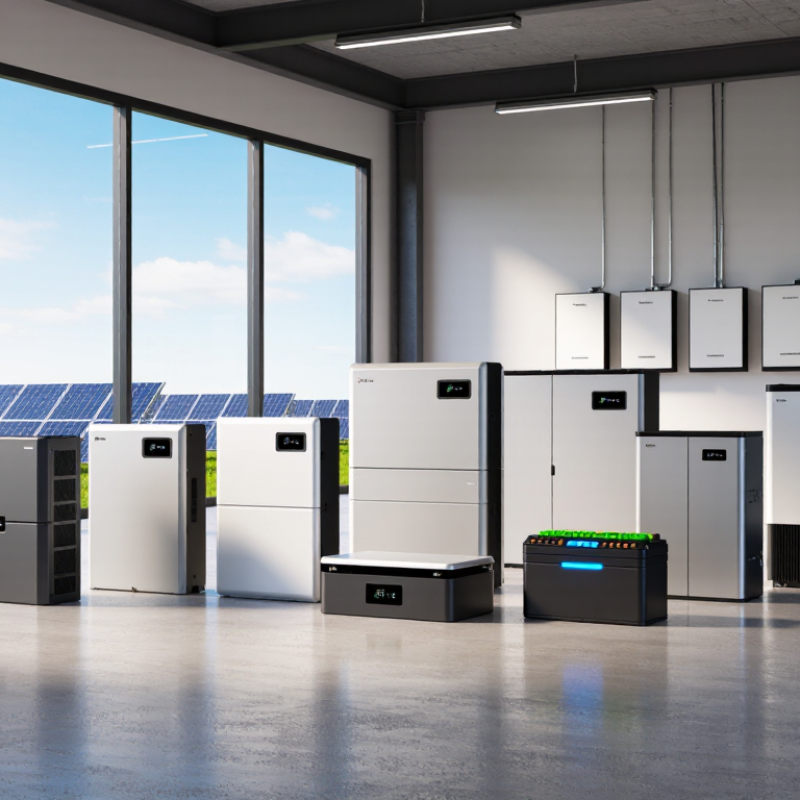
10 Best Energy Storage Batteries for Home and Business?

What Are Home and Business Energy Storage Batteries?

What Are Home and Business Energy Storage Batteries?

Home and business energy storage batteries store electricity for later use. They can charge from solar panels or the utility grid. During an outage, they may power selected circuits, such as lights, refrigerators, or internet equipment. Some systems also reduce electricity costs by discharging during expensive peak hours. A battery is not a generator. It stores available energy and cannot create more electricity.

Residential systems usually focus on comfort and backup protection. A typical installation may sit in a garage, utility room, or weatherproof enclosure. Business systems are larger and must match real operating loads. A shop may need refrigeration, while an office may prioritize servers and lighting. Capacity measures stored energy, while power rating shows how much electricity the battery can deliver at once. These numbers are different. I have seen buyers confuse them, then choose systems that cannot start heavy equipment.

Tips: Review twelve months of electricity bills before selecting a battery. Record outage priorities and peak loads. Ask a qualified electrician to check wiring, ventilation, fire protection, and local installation requirements. Compare usable capacity, efficiency, operating temperature, warranty terms, and maintenance needs. No battery is perfect. Performance can decline with age, heat, and frequent deep cycling. A professional load assessment is often more useful than a large capacity figure. Even small details matter.

10 Best Energy Storage Batteries for Home and Business? - What Are Home and Business Energy Storage Batteries?

Comparison of widely used battery configurations for residential and commercial energy storage. Specifications are typical industry ranges and may vary according to system design, inverter selection, temperature, and installation conditions.

Rank Battery Configuration Typical Application Nominal Capacity Usable Energy Common System Voltage Recommended Depth of Discharge Round-Trip Efficiency Expected Cycle Life Typical Continuous Power Key Strength Main Limitation
1 Lithium Iron Phosphate Home Battery Daily solar self-consumption and backup 10–15 kWh 8–13.5 kWh 48–51.2 V DC 80–90% 90–95% 4,000–8,000 cycles 5–10 kW High safety, long service life, and strong thermal stability Higher initial cost than lead-acid systems
2 Modular Lithium Iron Phosphate Battery Expandable homes, small offices, and multi-phase properties 15–30 kWh 12–27 kWh 48–51.2 V DC or high-voltage stack 80–90% 90–95% 4,000–8,000 cycles 8–20 kW Capacity can be expanded as energy demand increases Requires compatible battery-management and inverter systems
3 High-Voltage Lithium Iron Phosphate Battery Large homes, agricultural sites, and high-power backup 20–50 kWh 16–45 kWh 150–600 V DC 80–90% 92–97% 4,000–8,000 cycles 10–30 kW Lower current at higher power and efficient inverter integration Installation and servicing require qualified professionals
4 All-in-One Solar Storage System Residential solar, backup, and energy management 10–30 kWh 8–27 kWh 48–450 V DC 80–90% 88–95% 4,000–7,000 cycles 5–15 kW Battery, inverter, controls, and protection in one coordinated package Less flexible when individual components need replacement
5 Lithium-Nickel-Manganese-Cobalt Battery Space-constrained homes and high-energy-density installations 10–30 kWh 8–27 kWh 48–400 V DC 80–90% 90–96% 2,000–5,000 cycles 5–20 kW High energy density and compact physical footprint Generally needs stronger thermal management than LFP chemistry
6 Lead-Acid AGM Battery Bank Occasional backup, cabins, and budget-conscious installations 5–20 kWh 2.5–10 kWh 12, 24, or 48 V DC 40–50% 70–85% 500–1,200 cycles 2–10 kW Simple technology with broad availability and low upfront cost Heavy, less efficient, and shorter-lived than lithium batteries
7 Lead-Acid Gel Battery Bank Small off-grid systems and low-maintenance backup 5–20 kWh 2.5–10 kWh 12, 24, or 48 V DC 40–50% 70–85% 600–1,500 cycles 2–10 kW Sealed construction and low routine maintenance requirements Charging must be carefully controlled to prevent reduced service life
8 Commercial Lithium Iron Phosphate Rack System Retail stores, offices, workshops, and peak-demand reduction 50–200 kWh 40–180 kWh 400–800 V DC 80–90% 90–95% 4,000–8,000 cycles 25–100 kW Scalable rack architecture with strong safety characteristics Needs space, fire-safety planning, and professional commissioning
9 Containerized Lithium Battery Energy Storage System Factories, logistics facilities, microgrids, and renewable integration 500 kWh–5 MWh 400 kWh–4.5 MWh 600–1,500 V DC 80–90% 85–95% 4,000–8,000 cycles 250 kW–2.5 MW Large capacity, integrated monitoring, and rapid deployment Requires engineered site infrastructure and substantial capital investment
10 Flow Battery System Long-duration commercial storage and renewable firming 100 kWh–10 MWh+ 80–95% of nominal capacity System-dependent DC voltage 80–100% 65–85% 10,000–20,000+ cycles 50 kW–5 MW+ Very long cycle life and independent power-to-energy sizing Larger footprint and lower efficiency than most lithium systems

Note: Usable energy is estimated from nominal capacity and recommended depth of discharge. Actual performance depends on ambient temperature, inverter efficiency, charge and discharge rates, maintenance, and battery-management settings.

How to Compare Battery Capacity, Power, and Efficiency

10 Best Energy Storage Batteries for Home and Business?

Comparing storage batteries requires more than reading the largest capacity number. Capacity, measured in kilowatt-hours, shows how much energy the battery can store. A 20 kWh battery may support evening lighting, refrigeration, and office equipment. However, usable capacity is often lower than the advertised figure. Check the manufacturer’s depth-of-discharge rating and warranty conditions.

Power, measured in kilowatts, describes how quickly the battery can deliver energy. High capacity does not always mean high power. A battery might store plenty of electricity but struggle with pumps, compressors, or workshop tools. Efficiency also matters. Round-trip efficiency shows how much energy remains after charging and discharging. Independent test results are more useful than promotional claims. Real household loads can be surprisingly uneven.

Tips: List your appliances and their starting wattage. Separate daily energy use from peak demand. Compare usable capacity, continuous power, surge power, and round-trip efficiency. Ask for test conditions, because efficiency can change with temperature and charge rate. Leave room for future demand. Oversizing can waste money, but choosing too little capacity creates daily frustration. A qualified installer should check wiring, ventilation, protection equipment, and local requirements. My own comparison would also record seasonal use, because winter heating can distort a simple monthly estimate.

Which Battery Chemistries Suit Different Energy Storage Needs?

Choosing among the 10 best energy storage batteries starts with chemistry, not marketing. Lithium iron phosphate batteries suit many homes because they offer long cycle life, stable thermal behavior, and useful daily performance. They are often practical for rooftop solar and evening loads. Nickel-manganese-cobalt batteries can provide high energy density where space is limited, but they require stricter thermal management and careful installation.

Lead-acid batteries remain familiar and affordable for backup systems. However, they usually need more space, tolerate fewer deep cycles, and require ventilation in some designs. Sodium-ion batteries may become attractive for cost-sensitive projects and colder regions, though their market maturity and real-world data still vary. Flow batteries can fit larger commercial sites needing long-duration storage, but their tanks, pumps, and installation footprint increase complexity. No chemistry wins every project. A cheaper battery can become expensive if replacement, cooling, or maintenance is overlooked.

Tips: Match the battery to the load profile, not only its advertised capacity. Check usable capacity, round-trip efficiency, cycle rating, temperature range, and warranty terms. Ask for independent safety certification and documented testing. For homes, measure evening consumption over several weeks. For businesses, review peak demand, outage duration, and expansion plans. I would also leave extra capacity for aging; real usage rarely follows a perfect spreadsheet. During site planning, installers should verify ventilation, clearances, fire protection, and electrical compatibility before commissioning.

What Are the 10 Best Energy Storage Batteries Available Today?

The ten best energy storage batteries available today are lithium iron phosphate, nickel-manganese-cobalt, sodium-ion, lithium-titanate, flooded lead-acid, AGM lead-acid, gel lead-acid, lead-carbon, nickel-iron, and vanadium flow batteries. “Best” depends on the job. LFP suits most homes because it offers strong thermal stability, long cycle life, and predictable maintenance. NMC provides high energy density, but tighter temperature control is essential. Sodium-ion is promising for lower-cost installations, though its commercial track record remains shorter. LTO handles frequent cycling and cold conditions well, but its price is usually higher. Flow batteries fit larger businesses needing long-duration discharge.

Independent market data supports careful selection. The International Energy Agency reported that global battery storage additions reached about 42 GW in 2023, nearly doubling in one year. BloombergNEF reported average lithium-ion pack prices of 115 dollars per kWh in 2024, a 20 percent annual decrease. These figures show rapid progress, not universal suitability. The U.S. Department of Energy also emphasizes system-level factors, including round-trip efficiency, degradation, safety, warranty terms, and installation conditions.

A practical buyer should compare usable capacity, not only the advertised size. A 10 kWh battery may provide less after reserve limits and conversion losses. For a home, check daily load, outage duration, ventilation, and winter temperatures. For a business, examine peak-demand charges and fire-code requirements. Lead-acid systems can still work for modest backup needs, but their shorter usable depth deserves honest scrutiny. Battery forecasts can be imperfect. Local installer quality may matter more than a small efficiency difference.

How to Choose, Install, and Maintain the Right Storage Battery

Choosing a home or business storage battery starts with measured demand, not advertised capacity. Record hourly consumption for at least two weeks, including evening peaks and outages. A 10 kWh nameplate battery may deliver less after reserve limits and conversion losses. Compare usable capacity, round-trip efficiency, continuous power, surge power, temperature range, cycle life, and warranty terms. The International Energy Agency’s Batteries and Secure Energy Transitions report says global battery-storage additions reached 42 GW in 2023, nearly triple the previous year. More choice can also encourage rushed decisions. For a shop, calculate demand-charge savings separately from backup requirements.

Installation should match the building, not the brochure. A qualified electrician should verify panel capacity, grounding, disconnects, transfer equipment, fire clearances, and local permits. Indoor units need a dry, stable location with suitable ventilation. Outdoor units require protection from flooding and extreme heat. Use equipment tested to recognized safety standards, with documented shutdown procedures. NREL’s cost-projection research shows that storage economics depend strongly on duration and utilization. An oversized system used only during rare outages can be poor value. It sounds obvious. It is often missed.

Maintenance is simple but measurable. Check alarms monthly, keep vents clear, inspect cables for heat damage, and test backup operation safely. Review software settings after electrical work or tariff changes. Keep records of energy delivered, outage performance, and unusual temperature readings. Do not rely on the displayed percentage alone. Battery aging, cold weather, and reserve settings reduce real-world output. A careful design should leave contingency capacity rather than promise every appliance will run. That assumption may fail with pumps, compressors, or workshop tools. An annual professional inspection can reveal problems before a quiet failure becomes expensive.

Powder Coat Booths

For those larger-sized parts, or smaller quantity runs, we have 2 independent powder coat booths and ovens. The quality, durability and affordability of today’s powder coating finishes make this the process of choice for world-class companies.

Powder coating advantages over other forms of coating are many. Materials used in the Powder coating process can be metals and non-metals that come in a multitude of thicknesses, textures, colors, etc. Another of Powder coating’s biggest advantages over conventional coatings is its ability to create finishes in many different textures. Powder Coating Booths allow us the ability to apply these advantages to large products.

Wet Paint Line

Tri-State Fabricators runs a full-service conveyor line for painting. Wet painting can provide protection or decoration to many different part styles. From start to finish, every project is easier to undergo random and point-based inspection by our skilled painting team.

Advantages to our Wet Paint Line are these lines start with product prep and ends with a thorough inspection of a high quality finished product. Our ability to complete large and small projects with a superior finish and doing so in a timely and economical fashion. This passes along the savings in production to our customers. When powder coating ins not an option, our Wet Paint Line gets the job done right the first time.

Wet Paint Booths

When the parts get big and heavy we roll-out our custom paint racks and oversize booth. By utilizing our partnerships with all the major paint brands, we can match virtually any color with wet paint.

The advantages of having access to a Wet Paint Booth are many. Large projects of many different shapes can be loaded into the booth. The Wet Paint Booth offers an environment that is much more controlled than a typical parts painting operation.

Not only are they used because of their controlled environment, but they’re are also advantageous when it comes to applying paint to parts that are needed in industries that require specialty coatings such as medical, aerospace, etc.

Military CARC

Our military forces have some very high standards when it comes to the finish of their vehicles and equipment. From the first pre-treatment step to final coat, it takes a great deal of knowledge and experience to protect the men and women of our armed forces. They deserve only the best, and Tri-State Fabricators provides it.

All of our processes are closely monitored by our staff and management teams. Both of which are highly trained in the processes of metal fabrication and finishing. Tri-State Fabricators’ goal is to always fully satisfy each and every customer, including the military. We will always put a 110% into what we do.

Glass-Bead Blasting

Abrasive media blasting is an excellent way to remove old paint, rust, and increase the paint/powder adhesion. Glass beads produce a much smoother and brighter finish than angular abrasives; leaving the part clean yet without any dimensional change. Chemically inert and environmentally friendly, we can recycle our beads approximately 30 times; making them a more preferred method of metal cleaning or surface finishing.

Advantages to Glass Bead Blasting are many. Glass bead blast media is used when a project is needing rough surfaces need to become smooth for applications of coatings such as paint. It is typically used to clean paint and rust from a product surface without deforming the surface it is being used on. Overall, compared to many other blasting media, Glass Bead Blasting is a very economical choice and those savings are always passed on to our customers.

Part Washing

Tri-State Fabricators utilize a zinc phosphate wash to clean and etch the material to ensure the best paint adhesion possible. The unique design of our 3-stage wash system does the work like a 5-stage. From Cleaning and rinsing to conversion coating and post-treatment, Our Part Washing process is a complete service and works throughout the fabrication service and the finishing service.

Along with the previously mentioned benefits, Curing is a vital chemical reaction that leaves the product finish hard and relatively safe from mild abrasion and aggressive corrosion. This process can be done in more than one way; ambient air-dry or in curing ovens at temps that exceed 240°.

Burn-Off Oven

From fixing paint mistakes (someone else’s of course) to simply cleaning our paint line hooks, our burn-off oven is put to good use. After a quick burn-off, a little clean up, and a fresh coat of paint, your parts will look better than new.

Why does our Burn-Off Oven work so well? Because super heating the air around parts turns the materials into ashes. From paint and powder coatings to rubber and machining oils, high temps do the job without degrading the integrity of the part.

Masking

Masking is a vital part of producing high quality products. We have die-cut masking patterns to protect machined surfaces as well as a wide range of plugs and caps to protect threaded holes and bolts. We provide permanent and temporary masking.

Masking allows the selected sections of a product to be protected from a fabrication or finishing service. This can be with both chemicals when etching and tapes, paints when only finishing just a section of the product. Masking is great in aiding the customization process of a project.

Screen Printing

Screen printing is a photographic process that transfers artwork onto a porous nylon screen which allows colored ink to flow through the screen and be deposited on an aluminum or plastic component. We can generally have just about any design created onto a screen for your parts.

Some of the advantages of Screen Printing are, brand recognition for your business displaying on your products, assembly instructions, product warnings/hazards, etc. Tri-State Fabricators produces Screen Printing of the highest quality so you know it’s durable.

Metal Finishing

Metal Finishing is the art of treating the exterior portion of product, often metal but can also be made of other materials, so that the surface is clean and free of any debris. Then the process of applying coats or either paint of powder coat takes place. This coating process improves the quality of the product in both appearance and resistance to wear and corrosion.

Tri-State Fabricators, Inc., understands that a project typically isn’t complete until a high-quality finish has been added to your product. This is why our painting and powder coating teams continuously inspect the products throughout the Metal Finishing process.