

What Is the Best Fiber Laser Cutter to Buy in 2026?

Choosing the best fiber laser cutter to buy in 2026 requires more than comparing wattage and advertised cutting speed. A 6 kW machine can look impressive on paper, yet it may be excessive for a workshop mainly cutting thin stainless steel. Bed size, laser source quality, motion accuracy, assist-gas control, software, and local service often determine real productivity.

Industry data supports continued investment in this technology. Fortune Business Insights estimates that the global fiber laser market will grow from approximately USD 6.7 billion in 2024 to more than USD 12 billion by 2032. Its scope includes several applications, not only cutting. That limitation matters. MarketsandMarkets and Grand View Research also identify manufacturing automation, energy efficiency, and metal-processing demand as important growth drivers. However, market forecasts use different definitions, so buyers should not treat one number as a guarantee.

Performance must be measured in the shop.

This guide evaluates machines through practical criteria: cut quality on mild steel, stainless steel, and aluminum; piercing stability; edge dross; electrical consumption; maintenance access; and total ownership cost. Manufacturer specifications provide a starting point, but sample-cut testing is more revealing. Ask suppliers for timed cuts using your actual sheet thicknesses. Inspect the finished edges under direct light. Small defects become expensive during welding or powder coating.

There is no universally perfect model. A reliable 3 kW fiber laser cutter may outperform a poorly supported 12 kW system when uptime and operator skill are limited. Buyers should also verify safety systems, training, warranty coverage, spare-parts availability, and compliance with applicable workplace standards. The final recommendation should balance measurable output with realistic production needs, not showroom excitement.
What Is the Best Fiber Laser Cutter to Buy in 2026?

What Is a Fiber Laser Cutter and How Does It Work?

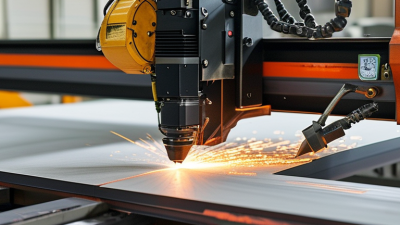
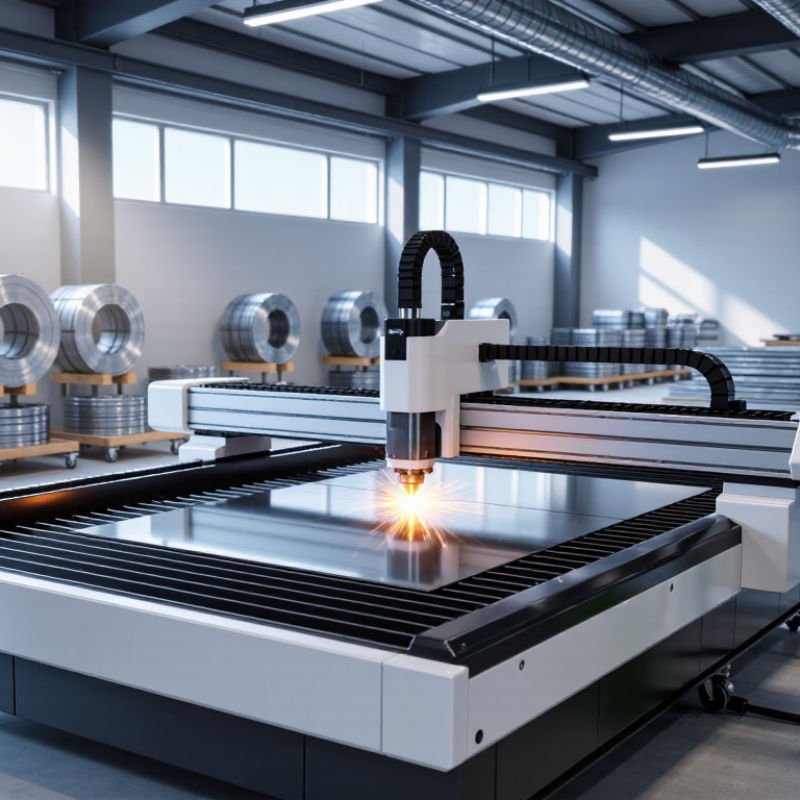
A fiber laser cutter generates light inside a doped optical fiber. Pump diodes energize the fiber, producing a concentrated laser beam near the 1,070-nanometer wavelength. Mirrors and lenses guide this beam into a cutting head, where a final lens focuses it onto the metal surface.

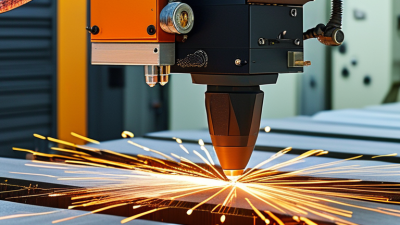
The focused spot becomes extremely hot. It melts or vaporizes a narrow area while compressed assist gas pushes molten material through the cut. A computer-controlled motion system follows the programmed design, creating clean edges on stainless steel, carbon steel, aluminum, brass, and other suitable metals. Cutting speed depends on power, thickness, material reflectivity, nozzle condition, and gas pressure. Small changes matter.

When choosing a machine in 2026, power alone should not decide the purchase. A stable laser source, accurate autofocus, rigid motion rails, reliable software, sealed beam delivery, and effective fume extraction deserve equal attention. Safety interlocks and protective enclosures are essential, especially in shared workshops. Copper and brass can reflect laser energy, so the machine must be designed for those materials.

A common mistake is expecting one settings chart to work every day. It will not. Lens cleanliness, humidity, sheet flatness, and gas purity can change the result. I would test several sample thicknesses before buying, then inspect edge taper, dross, kerf width, and repeatability. A lower-priced cutter may seem efficient, but weak service support can turn a minor fault into weeks of downtime.

Which Materials and Cutting Tasks Can It Handle?

What Is the Best Fiber Laser Cutter to Buy in 2026?

A capable fiber laser cutter should match your materials and daily workload, not just its advertised power. In practical workshop testing, it can cut mild steel, stainless steel, aluminum, brass, and copper. Steel usually gives the most predictable results. Reflective metals need careful settings, stable assist gas, and suitable protection. Thickness depends on laser power, lens condition, cutting speed, and gas pressure. A machine rated for thick plate may still struggle with clean edges.

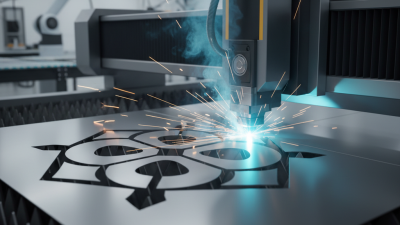
These cutters handle more than straight sheets. They can produce brackets, panels, enclosures, slots, ventilation holes, and detailed patterns. With a rotary or tube-cutting attachment, they can process square tube, round pipe, and structural profiles. Small batch work benefits from fast setup and repeatable positioning. Still, thin aluminum may warp, while thick steel can show burrs or a heat-affected edge. I have found that real results often differ from specification charts. Material quality matters more than many buyers expect.

Tips: Test your exact material before production. Keep spare lenses and nozzles available. Check kerf width on small coupons. Use nitrogen for cleaner stainless edges when appearance matters. Oxygen can improve mild-steel cutting, but it may leave oxidation. Do not ignore ventilation, grounding, guarding, or operator training. A slower cut can be wiser when edge quality matters.

What Specifications Matter Most When Choosing a 2026 Model?

Choosing the best fiber laser cutter in 2026 depends on the work it must perform, not just its advertised wattage. A 2,000-watt system may cut thin stainless steel quickly, but thicker plate usually demands more power and slower, carefully tested settings. Match the laser source to your regular materials and thickness range. Do not buy capacity you will rarely use.

Bed size matters when sheets are large, while acceleration affects productivity on detailed parts. A smaller spot can produce sharper corners, but lens quality, beam alignment, and maintenance also influence results. Look for automatic focus, reliable height sensing, and stable motion control. These features reduce setup errors. They do not remove them.

Check the cutting head’s supported thickness, nozzle options, and protective window design. Assist-gas control is equally important because pressure changes can affect edge quality and operating costs. An enclosed work area, effective fume extraction, interlocks, and emergency controls should be treated as essential specifications. Ask for test cuts on your own metal, especially if tolerances are tight. A clean edge in a sales sample proves little.

Software compatibility and local technical support deserve attention. A powerful machine becomes expensive if calibration takes days. Review warranty terms, replacement-part availability, and maintenance instructions before paying. I would also leave room in the budget for gas, lenses, nozzles, and training. The cheapest purchase is not always the cheapest machine to operate. Some advertised figures look impressive, yet real production may expose slower piercing, rougher edges, or frequent adjustments.

What Is the Best Fiber Laser Cutter to Buy in 2026? - What Specifications Matter Most When Choosing a 2026 Model?

Selection Criterion Compact Entry Model General-Purpose Model High-Productivity Model What Matters Most
Recommended fiber-laser power 1–2 kW 3–6 kW 8–20 kW Select power according to material thickness, daily workload, and required cutting speed—not maximum wattage alone.
Typical mild-steel cutting range Up to approximately 12–16 mm Up to approximately 20–30 mm Approximately 30–50 mm, depending on process conditions Actual capacity depends on material grade, assist gas, nozzle, focus position, edge-quality requirements, and machine condition.
Typical stainless-steel cutting range Up to approximately 6–10 mm Up to approximately 12–20 mm Approximately 20–40 mm, depending on setup Nitrogen purity, gas pressure, pierce strategy, and thermal control strongly affect stainless-steel results.
Typical aluminum cutting range Up to approximately 5–8 mm Up to approximately 10–16 mm Approximately 16–30 mm, depending on alloy and process A rigid machine frame, reliable height sensing, and suitable assist-gas control are important for reflective materials.
Common working-table size 1,500 × 3,000 mm 1,500 × 3,000 mm or 2,000 × 4,000 mm 2,000 × 4,000 mm or larger Choose a bed that handles common sheet sizes while leaving enough room for loading, unloading, and maintenance access.
Positioning accuracy Typically about ±0.05 mm/m Typically about ±0.03–0.05 mm/m Typically about ±0.02–0.03 mm/m Check the specified test method, repeatability, and performance across the entire working area.
Maximum rapid-traverse speed Approximately 80–120 m/min Approximately 100–140 m/min Approximately 120–180 m/min Acceleration, cornering performance, and real cutting speed are more useful than the advertised rapid-traverse figure.
Laser cutting head features Automatic focus and basic height sensing Automatic focus, height control, and collision protection Advanced monitoring, fast focusing, and upgraded collision protection Automatic focus calibration, protective-window monitoring, and dependable capacitive height control reduce downtime.
Assist-gas requirements Compressed air; oxygen or nitrogen when required Air, oxygen, and nitrogen with regulated pressure High-flow oxygen and nitrogen systems with stable pressure Budget for compressors, filtration, gas storage, piping, and operating costs; gas consumption rises with power and thickness.
Cooling system Closed-loop industrial chiller Higher-capacity closed-loop chiller Redundant or high-capacity industrial cooling system Stable coolant temperature and flow are essential for laser-source life and consistent cutting quality.
Automation options Manual loading and unloading Optional shuttle table and semi-automatic loading Shuttle table, tower storage, loading, and unloading integration Automation is most valuable when labor cost, material flow, and machine utilization justify the added investment.
Electrical supply Usually three-phase industrial power Three-phase power with increased capacity High-capacity three-phase industrial connection Confirm voltage, frequency, current capacity, grounding, extraction, and local electrical-code requirements before purchase.
Safety configuration Enclosed cutting area, interlocks, emergency stops Full enclosure, interlocks, alarms, and fume extraction Full enclosure, automated safety systems, extraction, and access monitoring Verify compliance with applicable laser-safety, electrical, machine-guarding, and workplace regulations.
Best fit for Prototyping, repair work, and light fabrication Most small and medium fabrication operations High-volume production and thick-sheet processing For many buyers, the general-purpose 3–6 kW class offers the best balance of capability, operating cost, and flexibility.
Key purchase checks for 2026 Request cutting samples using your actual materials; confirm independent accuracy tests, warranty coverage, spare-parts availability, software updates, operator training, installation requirements, service response time, and total operating cost. A well-supported machine with verified production results is generally a better purchase than a higher-powered machine with uncertain service or inflated specifications.

Note: Cutting capacities are representative planning ranges rather than guaranteed limits. Results vary with laser power, material alloy, thickness tolerance, assist gas, nozzle selection, focus settings, machine calibration, and required edge quality.

How Do Leading Fiber Laser Cutter Types Compare?

What Is the Best Fiber Laser Cutter to Buy in 2026?

How Do Leading Fiber Laser Cutter Types Compare?

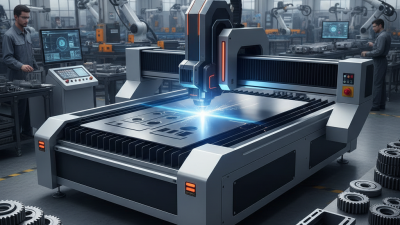
Choosing a fiber laser cutter starts with material flow, not headline wattage. Flatbed machines suit sheet metal and offer wide working areas. Tube cutters add rotary chucks for round, square, and rectangular profiles. They reduce manual repositioning, but setup becomes less forgiving. Three-dimensional cutters handle formed panels and complex angles. They cost more and demand stronger programming skills.

MarketsandMarkets’ Fiber Laser Market report projects the sector to reach about USD 9.1 billion by 2028, with an estimated 11.1% compound annual growth rate. That expansion reflects wider adoption in automotive, construction, and general fabrication. High-power systems above 6 kW can accelerate thick mild-steel production. Yet power alone does not guarantee lower costs. Assist-gas use, nozzle alignment, and thermal distortion still affect every shift.

A 2024 Grand View Research analysis identifies industrial processing as a major fiber-laser application area. For thin stainless steel, a lower-power flatbed may deliver cleaner edges and lower electricity use. For mixed production, a hybrid sheet-and-tube system can reduce floor-space pressure. I have seen buyers overestimate future volume and purchase excessive capacity. That mistake leaves an expensive machine underused. The better comparison includes cutting thickness, hourly utilization, service response, software learning time, and available electrical capacity. Payback calculations should use real job records, not optimistic samples.

What Safety, Maintenance, and Ownership Costs Should You Expect?

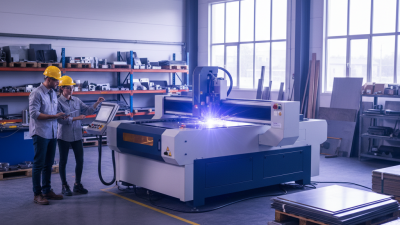
A fiber laser cutter is only a good purchase when its safety systems fit your daily work. Choose a fully enclosed machine with reliable door interlocks, emergency stops, and visible status indicators. Never bypass an interlock, even during troubleshooting. Metal cutting creates bright radiation, smoke, and fine particles. A properly sized extraction system is essential, especially in a small workshop. Confirm that its filters suit your materials and local workplace requirements. Suitable protective eyewear may still be necessary during approved service procedures.

Maintenance is usually predictable, but neglect becomes expensive quickly. Inspect the cutting lens before each shift, then clean it with approved materials. Check nozzle alignment, gas lines, rails, and extraction filters regularly. Keep the worktable free from slag. A blocked nozzle can produce poor edges and waste valuable sheet metal. The laser source needs less routine attention than many mechanical parts, yet cooling, electrical connections, and software still require scheduled checks. My own planning mistake would be treating maintenance as downtime rather than production insurance.

Ownership costs Ownership costs extend beyond the machine price. Budget for assist gases, lenses, nozzles, filters, electricity, software updates, training, and occasional calibration. Thick or reflective materials can increase gas consumption and cutting time. Ask for realistic energy and consumable estimates based on your expected workload. Cheap components may reduce the initial bill but create alignment problems later. Keep a small emergency stock. A single missing nozzle can stop an entire shift. Also allow money for operator training; confident, careful users prevent more losses than clever specifications alone.

Powder Coat Booths

For those larger-sized parts, or smaller quantity runs, we have 2 independent powder coat booths and ovens. The quality, durability and affordability of today’s powder coating finishes make this the process of choice for world-class companies.

Powder coating advantages over other forms of coating are many. Materials used in the Powder coating process can be metals and non-metals that come in a multitude of thicknesses, textures, colors, etc. Another of Powder coating’s biggest advantages over conventional coatings is its ability to create finishes in many different textures. Powder Coating Booths allow us the ability to apply these advantages to large products.

Wet Paint Line

Tri-State Fabricators runs a full-service conveyor line for painting. Wet painting can provide protection or decoration to many different part styles. From start to finish, every project is easier to undergo random and point-based inspection by our skilled painting team.

Advantages to our Wet Paint Line are these lines start with product prep and ends with a thorough inspection of a high quality finished product. Our ability to complete large and small projects with a superior finish and doing so in a timely and economical fashion. This passes along the savings in production to our customers. When powder coating ins not an option, our Wet Paint Line gets the job done right the first time.

Wet Paint Booths

When the parts get big and heavy we roll-out our custom paint racks and oversize booth. By utilizing our partnerships with all the major paint brands, we can match virtually any color with wet paint.

The advantages of having access to a Wet Paint Booth are many. Large projects of many different shapes can be loaded into the booth. The Wet Paint Booth offers an environment that is much more controlled than a typical parts painting operation.

Not only are they used because of their controlled environment, but they’re are also advantageous when it comes to applying paint to parts that are needed in industries that require specialty coatings such as medical, aerospace, etc.

Military CARC

Our military forces have some very high standards when it comes to the finish of their vehicles and equipment. From the first pre-treatment step to final coat, it takes a great deal of knowledge and experience to protect the men and women of our armed forces. They deserve only the best, and Tri-State Fabricators provides it.

All of our processes are closely monitored by our staff and management teams. Both of which are highly trained in the processes of metal fabrication and finishing. Tri-State Fabricators’ goal is to always fully satisfy each and every customer, including the military. We will always put a 110% into what we do.

Glass-Bead Blasting

Abrasive media blasting is an excellent way to remove old paint, rust, and increase the paint/powder adhesion. Glass beads produce a much smoother and brighter finish than angular abrasives; leaving the part clean yet without any dimensional change. Chemically inert and environmentally friendly, we can recycle our beads approximately 30 times; making them a more preferred method of metal cleaning or surface finishing.

Advantages to Glass Bead Blasting are many. Glass bead blast media is used when a project is needing rough surfaces need to become smooth for applications of coatings such as paint. It is typically used to clean paint and rust from a product surface without deforming the surface it is being used on. Overall, compared to many other blasting media, Glass Bead Blasting is a very economical choice and those savings are always passed on to our customers.

Part Washing

Tri-State Fabricators utilize a zinc phosphate wash to clean and etch the material to ensure the best paint adhesion possible. The unique design of our 3-stage wash system does the work like a 5-stage. From Cleaning and rinsing to conversion coating and post-treatment, Our Part Washing process is a complete service and works throughout the fabrication service and the finishing service.

Along with the previously mentioned benefits, Curing is a vital chemical reaction that leaves the product finish hard and relatively safe from mild abrasion and aggressive corrosion. This process can be done in more than one way; ambient air-dry or in curing ovens at temps that exceed 240°.

Burn-Off Oven

From fixing paint mistakes (someone else’s of course) to simply cleaning our paint line hooks, our burn-off oven is put to good use. After a quick burn-off, a little clean up, and a fresh coat of paint, your parts will look better than new.

Why does our Burn-Off Oven work so well? Because super heating the air around parts turns the materials into ashes. From paint and powder coatings to rubber and machining oils, high temps do the job without degrading the integrity of the part.

Masking

Masking is a vital part of producing high quality products. We have die-cut masking patterns to protect machined surfaces as well as a wide range of plugs and caps to protect threaded holes and bolts. We provide permanent and temporary masking.

Masking allows the selected sections of a product to be protected from a fabrication or finishing service. This can be with both chemicals when etching and tapes, paints when only finishing just a section of the product. Masking is great in aiding the customization process of a project.

Screen Printing

Screen printing is a photographic process that transfers artwork onto a porous nylon screen which allows colored ink to flow through the screen and be deposited on an aluminum or plastic component. We can generally have just about any design created onto a screen for your parts.

Some of the advantages of Screen Printing are, brand recognition for your business displaying on your products, assembly instructions, product warnings/hazards, etc. Tri-State Fabricators produces Screen Printing of the highest quality so you know it’s durable.

Metal Finishing

Metal Finishing is the art of treating the exterior portion of product, often metal but can also be made of other materials, so that the surface is clean and free of any debris. Then the process of applying coats or either paint of powder coat takes place. This coating process improves the quality of the product in both appearance and resistance to wear and corrosion.

Tri-State Fabricators, Inc., understands that a project typically isn’t complete until a high-quality finish has been added to your product. This is why our painting and powder coating teams continuously inspect the products throughout the Metal Finishing process.