


10 Best Foil Roll Suppliers for Global Buyers

Choosing the right Foil Roll supplier can influence product quality, production speed, and long-term costs. Global buyers face many variables. Material grade, thickness tolerance, roll width, core size, and surface finish all require careful review. A polished website is not enough.

This guide introduces 10 Best Foil Roll Suppliers for Global Buyers, using practical purchasing criteria. These include manufacturing experience, quality control systems, export capability, certifications, minimum order quantities, and response speed. Packaging also matters. Strong edge protection and moisture-resistant wrapping can prevent damage during a long sea journey. Requesting samples remains wise. Small differences in hardness or winding can affect filling, printing, sealing, or forming processes.

No ranking fits every buyer. A large supplier may offer stable volume but less flexibility. A smaller manufacturer may respond faster, yet struggle with urgent demand. That trade-off deserves attention. Prices can also change with alloy costs, energy expenses, freight rates, and currency movements. Buyers should verify current details directly, rather than relying on old listings or attractive promises. This overview aims to support informed comparison, not replace technical testing or contract review. Some details may need further checking. That is part of responsible sourcing.
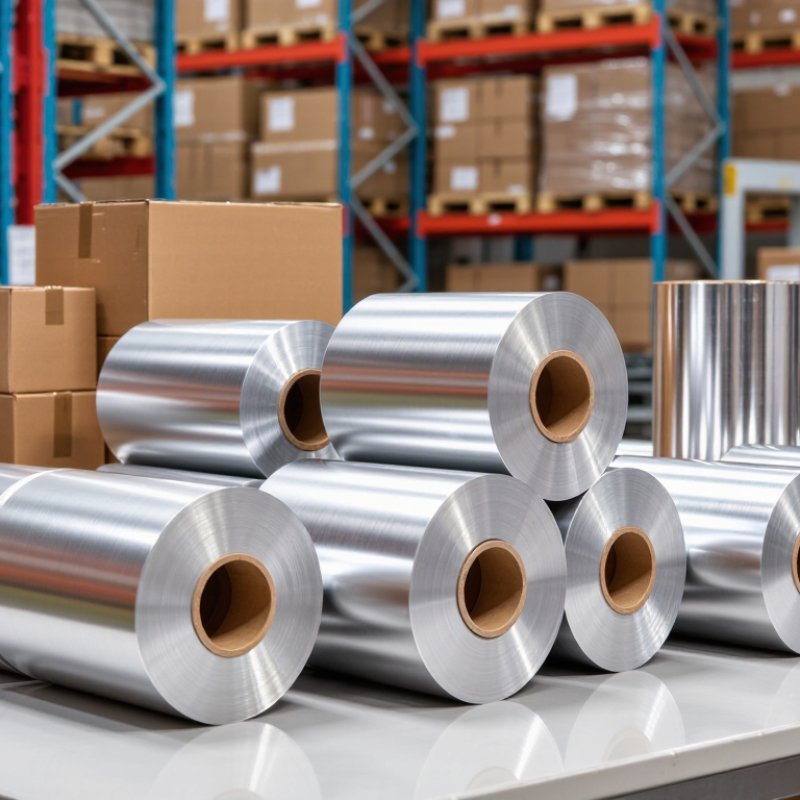
10 Best Foil Roll Suppliers for Global Buyers

What to Consider When Choosing a Foil Roll Supplier

Choosing among the 10 best foil roll suppliers requires more than comparing prices. Start with alloy, temper, thickness, width, core size, and tolerance. These details affect sealing, forming, printing, and machine performance. Request a recent certificate of analysis, inspection report, and batch traceability record. A reliable supplier should explain testing methods clearly, not hide behind vague specifications.

Lead time matters, especially for overseas buyers. Ask about production capacity, minimum order quantity, safety stock, packaging protection, and shipment schedules. The International Aluminium Institute reports that recycled aluminium uses about 5% of the energy required for primary aluminium production. Therefore, request recycled-content data and credible environmental documentation. Sustainability claims need evidence. A certificate alone is not always enough. I have seen attractive quotations become costly after inconsistent thickness caused production waste.

Tips:

Test a small roll before signing a long-term contract. Measure thickness at several points, inspect pinholes under light, and check unwind tension on your equipment. Ask how complaints are handled and how quickly corrective actions are issued. Also compare payment terms, insurance, port arrangements, and currency risks. The Smithers report on flexible packaging highlights continuing demand for lightweight barrier materials, but market growth does not guarantee every supplier has stable quality. A practical audit, sample trial, and written specification remain safer than polished sales language. Something may still go wrong. That possibility deserves planning.


How the Top Foil Roll Suppliers Compare

How the Top Foil Roll Suppliers Compare

Global buyers should compare foil roll suppliers beyond quoted price. The United States Geological Survey reported about 70 million metric tons of primary aluminum production in 2023. That scale creates choice, but not consistent quality. Experienced purchasing teams check alloy, temper, thickness tolerance, roll width, core size, and maximum joint frequency. A supplier offering 0.006-millimeter foil should provide inspection records, not only a specification sheet. Small deviations can cause wrinkles, sealing failures, or sudden line stoppages.

Documentation separates capable suppliers from convenient sellers. The International Aluminium Institute states that recycled aluminum uses roughly 5% of the energy required for primary production. Buyers should therefore examine recycled content claims, chain-of-custody evidence, and environmental reporting. Food-contact, pharmaceutical, and industrial applications also require suitable declarations and traceability. Strong suppliers explain testing methods, calibration intervals, packaging protection, and corrective-action procedures. Ask for samples from multiple production lots. One perfect roll proves little.

Commercial performance matters just as much. Compare minimum order quantities, lead-time guarantees, payment terms, export packaging, and communication across time zones. The World Bank’s commodity research shows that aluminum prices remain exposed to energy and supply conditions, so fixed pricing deserves careful review. A low offer may hide thinner material, higher waste, or weak after-sales support. I would score suppliers with a weighted table, then challenge the assumptions. My own comparison method is not flawless. Freight damage and seasonal delays can still escape a spreadsheet. Reliable suppliers welcome those questions.

Supplier Profiles and Product Specialties

10 Best Foil Roll Suppliers for Global Buyers

Supplier profiles should reveal more than catalog photos. A reliable foil roll supplier explains alloy grade, temper, thickness range, roll width, and core dimensions. These details affect sealing, forming, printing, and machine performance. Some suppliers specialize in household foil for cooking and storage. Others focus on industrial wrapping, insulation, or container production. Food-contact applications require documented material controls and suitable testing records.

The strongest profiles describe production capacity without hiding limitations. One supplier may offer narrow rolls for retail packing. Another may handle jumbo rolls for converting plants. Several focus on laminated foil, coated foil, or pre-cut sheets. Buyers should check minimum order quantities, winding quality, edge condition, and packaging for humid transport. Ask for samples. Small tests can expose telescoping rolls, uneven thickness, or weak cores.

Experience also changes the evaluation. A supplier with export records may understand pallet loading and customs documents. Yet experience alone is not proof of consistent quality. Request batch records, inspection methods, and clear responses to complaints. I would also compare lead times during peak seasons. Promises can look impressive. Production evidence matters more. One practical weakness remains: some profiles provide technical terms but omit actual tolerance data. That gap deserves a direct question before signing a purchase agreement.

Quality Standards, Certifications, and Production Capacity

Choosing among the 10 best foil roll suppliers requires more than comparing prices. In my purchasing experience, consistent thickness, clean edges, and stable temper matter during high-speed converting. A reliable supplier should provide ISO 9001-based quality controls, current test reports, and clear batch traceability. Ask for material composition, tensile strength, pinhole results, and coating details when applicable.

Certifications must match the final application. Food-contact foil needs relevant migration documentation, while industrial products may require compliance with REACH, RoHS, ASTM, or equivalent standards.

Certificates alone are not enough. Request a recent Certificate of Analysis, inspection records, and sample rolls from different production batches. Small details reveal weaknesses.

Production capacity also deserves careful review. Check monthly output, rolling mill width, available alloys, minimum order quantities, and typical lead times.

A supplier may quote impressive capacity but lack flexible scheduling during peak periods. Ask how they handle urgent orders, rejected batches, equipment maintenance, and corrective actions.

I would also review packaging: reinforced cores, moisture protection, readable labels, and loading photographs reduce transit surprises.

Look beyond polished brochures. On-site audits or live video inspections can confirm storage conditions and process discipline. No supplier is perfect. A missed tolerance or delayed shipment may happen, but transparent reporting shows whether the problem is controlled. Choose evidence over promises, and record every specification before approving regular orders.

Ordering, Shipping, and Support for Global Buyers

10 Best Foil Roll Suppliers for Global Buyers

Global buyers need more than a low quotation when selecting foil roll suppliers. Consistent thickness, clean winding, and accurate roll length affect production results. In practical sourcing, I compare technical sheets, factory capacity, export experience, and response speed. Ask for samples before placing a large order. A small sample can reveal wrinkles, uneven edges, or weak packaging. Do not trust photographs alone.

Ordering details should be confirmed in writing. The purchase document should list alloy or material grade, width, thickness, tolerance, core size, roll weight, and inspection requirements. I also check whether the supplier can support trial orders. That flexibility matters when demand is uncertain. One mistake I made was overlooking pallet dimensions, which later increased warehouse handling costs.

Shipping needs equal attention. Request photos of packed rolls, moisture protection details, shipping marks, and loading records. Confirm the delivery term, port, estimated transit time, and document responsibilities before payment. Reliable suppliers provide commercial invoices, packing lists, and quality certificates without repeated reminders. Support should continue after dispatch. A responsive contact can help with customs questions, shortage claims, or replacement discussions. Still, response promises should be tested during a small order. Perfect service is rarely guaranteed; clear records and realistic expectations make problems easier to manage.

10 Best Foil Roll Suppliers for Global Buyers - Ordering, Shipping, and Support for Global Buyers
Supplier Profile Primary Supply Region Typical Foil Roll Products Common Thickness Range Typical Minimum Order Standard Lead Time Export & Shipping Options Quality & Documentation Buyer Support Best Fit
Supplier 01 East Asia Household foil, food-service foil, embossed foil 9–30 microns 500 kg per specification 20–35 days after artwork approval FCL, LCL, air freight; major seaports available Mill test report, thickness report, food-contact declaration upon request English export team
Pre-shipment inspection available
High-volume food and catering distributors
Supplier 02 South Asia Pharmaceutical foil stock, blister foil, laminated foil 20–50 microns 300 kg per size 25–40 days Container loading, consolidated cargo, courier samples Batch traceability, certificate of analysis, coating-weight records Technical specification review
Sampling before production
Pharmaceutical packaging converters
Supplier 03 Western Europe Industrial foil, converter foil, coated foil 12–100 microns 1,000 kg per order 30–50 days Road, short-sea, rail, and air freight through approved forwarders ISO-based quality system, dimensional inspection, compliance statements Dedicated account support
Formal change-control process
Automotive, HVAC, and industrial applications
Supplier 04 Southeast Asia Flexible-packaging foil, laminated foil, printed foil 7–30 microns 300–500 kg per artwork 25–40 days, including printing setup FCL and LCL; export cartons or wooden pallets Color approval, bond-strength testing, food-contact documents Artwork assistance
Digital proof before production
Snack, confectionery, and sachet packaging
Supplier 05 North America Converter foil, insulation foil, industrial slit rolls 15–75 microns 1,000–2,000 kg per specification 15–30 days for stocked grades Domestic trucking, rail, air freight, and ocean export Coil identification, dimensional certificates, pallet-loading records Fast quotation service
Slitting and rewinding consultation
Regional converters needing short replenishment cycles
Supplier 06 Middle East Household foil, institutional rolls, catering foil 9–25 microns 500 kg or one export pallet 20–35 days FCL, LCL, and cross-border trucking; export pallets available Product specification sheet, weight tolerance report, packing list Multilingual order support
Container consolidation options
Importers serving hospitality and retail channels
Supplier 07 Eastern Europe Cold-form foil, laminated foil, medical packaging foil 30–120 microns 750 kg per size 30–45 days Road and rail across Europe; ocean export via regional ports Formability testing, pinhole inspection, material traceability Application engineering
Trial-roll evaluation support
Medical, diagnostic, and specialty packaging
Supplier 08 South America Household foil, food-service foil, retail-ready rolls 9–25 microns 300–500 kg per size 25–45 days Container export, regional trucking, and palletized shipments Weight, width, core-size, and packaging inspection reports Private-label packing support
Sample dispatch by courier
Retailers and regional food-service wholesalers
Supplier 09 East Asia Ultra-thin foil, battery foil, electronic-grade foil 6–25 microns 1,000 kg per alloy and temper 35–60 days FCL and air freight for samples; moisture-controlled packing Alloy and temper certificate, surface inspection, burr and pinhole data Engineering-grade support
Pre-production trial approval
Battery, electronics, and precision component manufacturers
Supplier 10 South Asia Embossed foil, colored foil, decorative foil rolls 10–40 microns 250–500 kg per pattern or color 25–45 days FCL, LCL, and courier samples; export cartons or pallets Color sample approval, embossing-depth report, roll-diameter records Customization support
Pattern and finish sampling
Decorative packaging and specialty converters
Lead times, minimum order quantities, freight methods, and documentation requirements are typical international-trade ranges and should be confirmed against the final specification, destination, incoterm, and production schedule.

Article Source:

Powder Coat Booths

For those larger-sized parts, or smaller quantity runs, we have 2 independent powder coat booths and ovens. The quality, durability and affordability of today’s powder coating finishes make this the process of choice for world-class companies.

Powder coating advantages over other forms of coating are many. Materials used in the Powder coating process can be metals and non-metals that come in a multitude of thicknesses, textures, colors, etc. Another of Powder coating’s biggest advantages over conventional coatings is its ability to create finishes in many different textures. Powder Coating Booths allow us the ability to apply these advantages to large products.

Wet Paint Line

Tri-State Fabricators runs a full-service conveyor line for painting. Wet painting can provide protection or decoration to many different part styles. From start to finish, every project is easier to undergo random and point-based inspection by our skilled painting team.

Advantages to our Wet Paint Line are these lines start with product prep and ends with a thorough inspection of a high quality finished product. Our ability to complete large and small projects with a superior finish and doing so in a timely and economical fashion. This passes along the savings in production to our customers. When powder coating ins not an option, our Wet Paint Line gets the job done right the first time.

Wet Paint Booths

When the parts get big and heavy we roll-out our custom paint racks and oversize booth. By utilizing our partnerships with all the major paint brands, we can match virtually any color with wet paint.

The advantages of having access to a Wet Paint Booth are many. Large projects of many different shapes can be loaded into the booth. The Wet Paint Booth offers an environment that is much more controlled than a typical parts painting operation.

Not only are they used because of their controlled environment, but they’re are also advantageous when it comes to applying paint to parts that are needed in industries that require specialty coatings such as medical, aerospace, etc.

Military CARC

Our military forces have some very high standards when it comes to the finish of their vehicles and equipment. From the first pre-treatment step to final coat, it takes a great deal of knowledge and experience to protect the men and women of our armed forces. They deserve only the best, and Tri-State Fabricators provides it.

All of our processes are closely monitored by our staff and management teams. Both of which are highly trained in the processes of metal fabrication and finishing. Tri-State Fabricators’ goal is to always fully satisfy each and every customer, including the military. We will always put a 110% into what we do.

Glass-Bead Blasting

Abrasive media blasting is an excellent way to remove old paint, rust, and increase the paint/powder adhesion. Glass beads produce a much smoother and brighter finish than angular abrasives; leaving the part clean yet without any dimensional change. Chemically inert and environmentally friendly, we can recycle our beads approximately 30 times; making them a more preferred method of metal cleaning or surface finishing.

Advantages to Glass Bead Blasting are many. Glass bead blast media is used when a project is needing rough surfaces need to become smooth for applications of coatings such as paint. It is typically used to clean paint and rust from a product surface without deforming the surface it is being used on. Overall, compared to many other blasting media, Glass Bead Blasting is a very economical choice and those savings are always passed on to our customers.

Part Washing

Tri-State Fabricators utilize a zinc phosphate wash to clean and etch the material to ensure the best paint adhesion possible. The unique design of our 3-stage wash system does the work like a 5-stage. From Cleaning and rinsing to conversion coating and post-treatment, Our Part Washing process is a complete service and works throughout the fabrication service and the finishing service.

Along with the previously mentioned benefits, Curing is a vital chemical reaction that leaves the product finish hard and relatively safe from mild abrasion and aggressive corrosion. This process can be done in more than one way; ambient air-dry or in curing ovens at temps that exceed 240°.

Burn-Off Oven

From fixing paint mistakes (someone else’s of course) to simply cleaning our paint line hooks, our burn-off oven is put to good use. After a quick burn-off, a little clean up, and a fresh coat of paint, your parts will look better than new.

Why does our Burn-Off Oven work so well? Because super heating the air around parts turns the materials into ashes. From paint and powder coatings to rubber and machining oils, high temps do the job without degrading the integrity of the part.

Masking

Masking is a vital part of producing high quality products. We have die-cut masking patterns to protect machined surfaces as well as a wide range of plugs and caps to protect threaded holes and bolts. We provide permanent and temporary masking.

Masking allows the selected sections of a product to be protected from a fabrication or finishing service. This can be with both chemicals when etching and tapes, paints when only finishing just a section of the product. Masking is great in aiding the customization process of a project.

Screen Printing

Screen printing is a photographic process that transfers artwork onto a porous nylon screen which allows colored ink to flow through the screen and be deposited on an aluminum or plastic component. We can generally have just about any design created onto a screen for your parts.

Some of the advantages of Screen Printing are, brand recognition for your business displaying on your products, assembly instructions, product warnings/hazards, etc. Tri-State Fabricators produces Screen Printing of the highest quality so you know it’s durable.

Metal Finishing

Metal Finishing is the art of treating the exterior portion of product, often metal but can also be made of other materials, so that the surface is clean and free of any debris. Then the process of applying coats or either paint of powder coat takes place. This coating process improves the quality of the product in both appearance and resistance to wear and corrosion.

Tri-State Fabricators, Inc., understands that a project typically isn’t complete until a high-quality finish has been added to your product. This is why our painting and powder coating teams continuously inspect the products throughout the Metal Finishing process.
