Best Heavy Duty Rollers for Your Industrial Needs?
When it comes to heavy duty rollers, selecting the right equipment is crucial for industrial efficiency. Jason Smith, a leading expert in material handling, states, "The right heavy duty rollers can vastly improve operational workflows." This highlights the importance of choosing the best equipment for your specific needs.
Heavy duty rollers are essential in various industrial scenarios. They support heavy loads and facilitate smooth movement across production lines. Industries ranging from manufacturing to logistics rely on these tools every day. However, not all heavy duty rollers are created equal. It’s essential to evaluate the materials and load capacities before making a decision.
In the quest for optimal performance, it’s important to consider the specific requirements of your project. Quality and durability should guide your choices. Finding a reliable supplier can make a significant difference. The right advice can save you from costly mistakes. These decisions should not be taken lightly.
Types of Heavy Duty Rollers for Industrial Applications
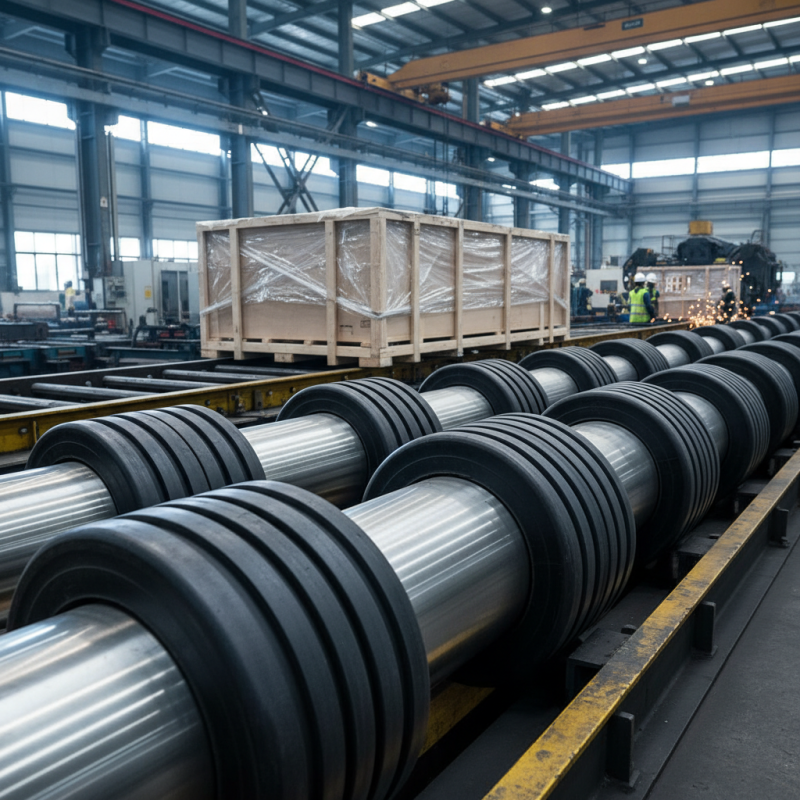
When it comes to heavy-duty rollers for industrial applications, various types cater to specific needs. The most common types are polyurethane, rubber, and steel rollers. Polyurethane rollers offer excellent wear resistance. They are ideal for transporting materials in environments with heavy abrasion risks. Rubber rollers are versatile and provide strong grip and shock absorption. In contrast, steel rollers excel in high-load situations, providing durability and strength.
Recent industry reports suggest that the global heavy-duty rollers market is expected to grow at a CAGR of around 5% in the next five years. This growth reflects the increasing demand for efficient material handling in industries like manufacturing and logistics. Despite their robust features, choosing the wrong type can lead to maintenance issues or even accidents. It's crucial to evaluate your specific needs before making a purchase.
Tips:
- Always assess the weight load and environmental conditions where the rollers will be used.
- Regular inspections can prevent unexpected breakdowns.
- Investing in quality heavy-duty rollers can save costs in the long run.
- Keep in mind that while high-load rollers may seem ideal, they may complicate maneuverability in tight spaces.
Key Features to Consider When Choosing Heavy Duty Rollers
When selecting heavy-duty rollers for industrial applications, consider several key features. The load capacity is paramount. Heavy-duty rollers typically support weights ranging from 1,000 to 10,000 pounds. Choosing a roller that accommodates your specific load ensures safety and efficiency.
Material is another critical aspect. Rollers made from steel or high-quality polyurethane offer durability. According to industry reports, polyurethane rollers can last up to five times longer than traditional materials. This longevity can significantly reduce maintenance costs over time.
**Tip:** Always check the roller’s coefficient of friction. A lower coefficient means smoother movement and less wear.
Next, consider the roller design. For instance, tapered rollers can help distribute weight more evenly, reducing pressure on individual contact points. An uneven pressure distribution can lead to premature failure—something to keep in mind.
**Tip:** Conduct routine checks on your rollers. Regular inspection can help identify wear and tear early.
Finally, consider the environment where the rollers will be used. If the area has high moisture or extreme temperatures, choose rollers designed to withstand these conditions. The right heavy-duty rollers can enhance productivity while minimizing downtime.
Best Heavy Duty Rollers for Your Industrial Needs
| Roller Type | Load Capacity (lbs) | Roller Material | Diameter (inches) | Surface Type |
| Steel Roller | 2000 | Steel | 4 | Smooth |
| Polyurethane Roller | 1500 | Polyurethane | 5 | Textured |
| Nylon Roller | 1000 | Nylon | 3 | Smooth |
| Aluminum Roller | 1800 | Aluminum | 6 | Textured |
| Rubber Roller | 1200 | Rubber | 4.5 | Textured |
Popular Brands and Models of Heavy Duty Rollers on the Market
When it comes to heavy-duty rollers, choosing the right equipment is vital for industrial efficiency. There are several popular brands and models available that cater to various industrial needs. These rollers are typically designed to withstand extreme conditions. They often feature robust materials and advanced engineering. Their durability is crucial for long-term investment.
Common types include drum rollers, padfoot rollers, and static rollers. Each model offers unique benefits. For example, drum rollers excel in compacting asphalt and soil. Padfoot rollers are perfect for cohesive soil. Selecting the wrong type can lead to ineffective compaction. It may cause delays in projects, resulting in financial losses.
While many brands offer high-quality options, pricing and support vary. Some models may not hold up in specific environments. Before buying, research to ensure compatibility with your projects. Always consider the manufacturer's history and customer feedback. This step can save frustration and time in the long run. Heavy-duty rollers are an important investment. Make informed decisions to maximize efficiency.
Maintenance Tips for Maximizing Roller Longevity
Rollers play a crucial role in various industrial applications. To ensure longevity, proper maintenance is essential. Regular inspections help identify wear and tear early. Check for any signs of damage or misalignment. Addressing these issues promptly can save costs and prevent downtime.
Lubrication is another vital aspect of roller maintenance. Use the recommended lubricants for optimal performance. Avoid over-lubricating, as it can attract dust and dirt. Cleaning rollers regularly is just as important. Dirt and debris can cause friction, leading to faster wear. Ensure your rollers are free from contaminants to enhance their lifespan.
Monitor the load capacity of your rollers. Overloading can lead to premature failure. It might be tempting to push limits, but the consequences can be costly. Additionally, keep an eye on operating conditions. Extreme temperatures and humidity levels can impact roller performance. Adjustments may be required based on environmental factors.
Best Heavy Duty Rollers for Your Industrial Needs
This bar chart illustrates the average weight capacity of different types of heavy-duty rollers available for industrial applications. Proper maintenance of these rollers can significantly increase their lifespan and efficiency.
Applications of Heavy Duty Rollers in Various Industries
Heavy duty rollers play a critical role in various industries. They are essential for material handling, transportation, and machinery support. Factories often use them to move heavy products across the floor. Their robust construction ensures they can withstand intense pressure and weight.
In the construction sector, heavy duty rollers assist in compacting soil and asphalt. They are vital for road building and landscaping. These rollers ensure a solid foundation, which is crucial for safety. However, improper use can lead to uneven surfaces, causing future structural issues.
In warehouses, heavy duty rollers help transport goods efficiently. They enable easy movement of pallets and containers. Without them, logistical operations would face delays. Yet, over-reliance on these rollers may lead to decreased manual handling skills among workers. Balancing technology with human input is key for efficiency.