


10 Best Lockout Padlocks for Workplace Safety?

Choosing the right Lockout Padlock is a practical decision, not a branding exercise. In a quiet maintenance room, one misplaced key or faded red body can create serious confusion. A dependable padlock should identify the authorized worker, resist harsh conditions, and remain easy to inspect.

Safety trainer and lockout/tagout author Jeffrey Dalto captures the central principle clearly: “Lockout/tagout is about controlling hazardous energy before work begins.” This idea guides our selection of the ten best Lockout Padlock options for workplace safety. We examine body strength, shackle design, key control, corrosion resistance, color visibility, and compatibility with written energy-control procedures. Small details matter. A textured surface can improve grip with gloves. A visible label can prevent the wrong lock from being removed.

No single padlock fits every workplace. A food-processing area may require different materials than a dusty fabrication shop. Outdoor maintenance creates another challenge. Weather wins eventually. Our recommendations therefore consider real working conditions, not just product claims. We also look at whether each Lockout Padlock supports consistent worker identification and routine inspections.

There is room for doubt. Product specifications do not always reflect years of daily handling. A lock may look excellent online but feel awkward beside a machine. That is why this guide balances manufacturer information, safety principles, user experience, and practical limitations. The best choice is the one workers will use correctly, every time. Reliability starts there.
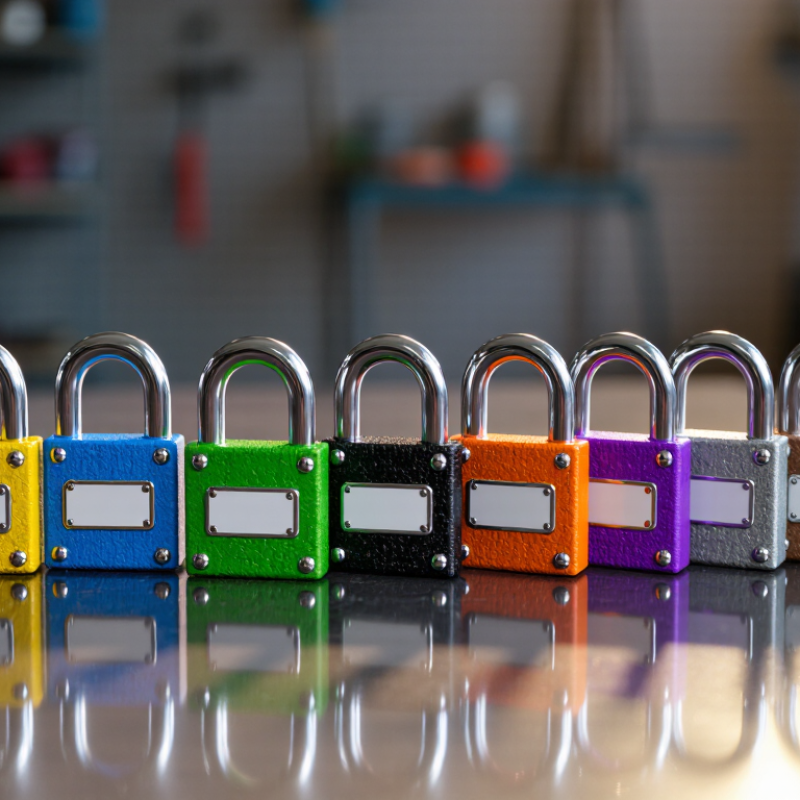
10 Best Lockout Padlocks for Workplace Safety?

Why OSHA Estimates Lockout/Tagout Prevents 120 Deaths and 50,000 Injuries

A reliable lockout padlock is more than a bright piece of hardware. It helps show that a machine’s energy source has been isolated and must remain untouched. OSHA estimates that effective lockout/tagout procedures prevent about 120 deaths and 50,000 injuries each year. These figures explain why padlock selection deserves careful attention.

The best workplace padlocks usually have a unique key, strong corrosion resistance, and a body that remains visible in dust or poor lighting. A nonconductive shackle can reduce electrical contact risks, while a durable label supports clear worker identification. During a maintenance check, test whether the lock fits the isolation device securely. It should not hang loosely or block verification.

Training matters just as much. A high-quality lock cannot correct an incomplete shutdown procedure. Authorized workers should confirm every energy source, release stored pressure, and verify zero energy before work begins. Then they should keep the key under personal control. Simple steps.

It is easy to overrate color and underestimate recordkeeping. A red lock may look official, yet unclear ownership can create dangerous confusion. Supervisors should inspect damaged locks, replace unreadable labels, and review procedures after equipment changes. No system is perfect. Workers may still rush, misunderstand a valve, or trust an old diagram. That uncomfortable possibility deserves regular discussion.


Which ANSI/ASSP Z244.1 Criteria Define a Reliable Lockout Padlock

10 Best Lockout Padlocks for Workplace Safety?

Which ANSI/ASSP Z244.1 Criteria Define a Reliable Lockout Padlock

A reliable lockout padlock begins with control, not color. ANSI/ASSP Z244.1 emphasizes durable, standardized, substantial, and identifiable energy-control devices. The padlock should resist heat, moisture, dust, and routine impacts. Its key system must prevent accidental duplication or unauthorized release. Keep each key under the control of its assigned worker. One person, one personal lock.

Look closely at the body, shackle, and identification area. A shackle should fit the energy-isolating device without forcing it. The body needs enough strength for the workplace environment. Labels should remain readable after oil, cleaning, and repeated handling. A bright color helps recognition. It is not enough. A damaged lock is not reliable, even when its label looks clear.

Z244.1 also supports written procedures, employee training, and verification of zero-energy conditions. The padlock is only one part of that system. During a group lockout, each authorized worker should maintain personal control through an approved process. Inspect locks before every use, but this step is often rushed. That is a weakness worth admitting. The standard provides performance-based guidance, not a product approval stamp. Employers should evaluate the padlock against actual hazards, environmental conditions, and site procedures before placing it into service.

How to Compare 10 Lockout Padlocks by Security, Visibility, and Durability

Comparing ten lockout padlocks requires more than counting keys or choosing the brightest color. OSHA’s FY 2024 enforcement data recorded 2,443 lockout/tagout violations. OSHA also estimates that proper hazardous-energy control prevents about 120 deaths and 50,000 injuries annually. Security deserves careful attention.

Check whether each padlock supports a controlled key system, resists unauthorized duplication, and remains functional after repeated use. ASTM F883 provides recognized padlock testing methods, including operational and environmental performance. Look for corrosion-resistant shackles, smooth mechanisms, and bodies that tolerate oil, dust, and temperature changes. A heavy lock is not automatically a safer lock.

Visibility should work across a noisy plant floor. Select distinct colors, clear identification areas, and consistent worker assignments. A small label can become unreadable after solvent exposure or abrasion. Durability also includes the shackle’s resistance to cutting and the lock’s ability to open reliably with gloves. OSHA’s Control of Hazardous Energy guidance emphasizes durable, standardized devices that identify the authorized employee. Bright color helps. It does not prove control.

During an audit, score every model against security, visibility, and service life. Do not rely only on a supplier’s test claim. Request documented test conditions and inspect sample locks after simulated wear. This comparison may feel imperfect, because real sites expose hardware differently. Still, a repeatable checklist is better than guesswork. Safety hardware should remain obvious, personal, and dependable when maintenance work becomes hurried.

10 Best Lockout Padlocks for Workplace Safety? - How to Compare 10 Lockout Padlocks by Security, Visibility, and Durability

Profile Security Score Visibility Score Durability Score Body Material Shackle Material Shackle Diameter Key Retention Typical Visibility Recommended Use
Profile 1 5/5 4/5 5/5 Reinforced nylon Hardened steel 6 mm Yes High-contrast red Heavy industrial equipment and outdoor cabinets
Profile 2 4/5 5/5 4/5 UV-stabilized nylon Nylon-coated steel 6 mm Yes Bright yellow General factory lockout stations
Profile 3 4/5 4/5 5/5 Glass-filled nylon Stainless steel 5 mm Yes High-contrast blue Humid, corrosive, or washdown environments
Profile 4 4/5 4/5 4/5 Non-conductive nylon Nylon 6 mm Yes Bright orange Electrical isolation and low-voltage panels
Profile 5 5/5 3/5 5/5 Impact-resistant nylon Hardened boron steel 6.3 mm Yes Red with engraved label area High-abuse areas and maintenance workshops
Profile 6 4/5 5/5 4/5 Composite nylon Nylon-coated steel 5 mm Yes Fluorescent green Fast visual identification in large facilities
Profile 7 3/5 4/5 4/5 Nylon with protective cover Stainless steel 5 mm Yes White body with red label Cleanrooms and controlled maintenance areas
Profile 8 4/5 3/5 5/5 Glass-filled polyamide Stainless steel 6 mm Yes Yellow with laser-marking panel Outdoor utilities and variable weather conditions
Profile 9 3/5 5/5 3/5 Lightweight nylon Nylon 4.5 mm Yes Fluorescent red Light-duty indoor lockout points and training areas
Profile 10 5/5 4/5 4/5 Reinforced polymer Hardened steel 6 mm Yes Bright blue Multi-shift maintenance and group lockout procedures
Comparison note: Scores are comparative ratings based on common lockout padlock design factors. Actual performance depends on the lock specification, installation environment, maintenance practices, and applicable workplace safety requirements. Confirm electrical insulation, corrosion resistance, keying, and certification details with the supplier before purchase.

How OSHA 29 CFR 1910.147 Shapes Padlock Selection and Workplace Use

Choosing among the 10 best lockout padlocks starts with OSHA 29 CFR 1910.147, not a shopping list. The rule governs hazardous energy control during servicing and maintenance. A suitable padlock must be durable, standardized, substantial, and clearly identifiable. It should withstand oil, dust, impact, and temperature changes near machinery. Color helps workers recognize the device quickly. Color alone does not prove compliance.

Authorized employees should receive individually assigned locks for personal protection. Each lock needs a unique key, and its identification should match the worker and written procedure. Never use one for ordinary security. The device must serve only lockout purposes. For group work, a lockbox or equivalent arrangement should preserve every worker’s personal control. An authorized employee normally removes only their own lock. If unavailable, the employer must follow a documented procedure, verification, and notice. Small details matter.

Selection also depends on the energy-isolation procedure, not padlock appearance. Review electrical, hydraulic, pneumatic, thermal, and stored mechanical energy sources. Verify zero-energy conditions before work begins. OSHA requires periodic inspections at least annually. Retraining can expose weak practices, such as shared keys or missing identification. A practical review may reveal an uncomfortable flaw: an expensive-looking lock is useless if workers bypass it. I would also question oversized shackles near cramped equipment. They may obstruct hasps and encourage shortcuts. Test fit, visibility, and removal procedures at the actual machine. Records should identify each lock, worker, isolation point, and restoration step.

OSHA 29 CFR 1910.147 Padlock Selection Checklist

This checklist summarizes five lockout-device characteristics addressed by OSHA 29 CFR 1910.147(c)(5)(ii). Each value of 1 means the characteristic is explicitly addressed by the standard; it is not a product score or ranking. Workplace procedures should also define authorized employees, energy-isolation steps, verification, and periodic inspections.

Source: OSHA 29 CFR 1910.147, The Control of Hazardous Energy

How to Match Padlock Features to Electrical, Mechanical, and Group LOTO Risks

Choosing one padlock for every lockout situation is a common mistake. Electrical, mechanical, and group LOTO hazards demand different features. For electrical isolation, select a nonconductive body and shackle when contact with energized parts is possible. Verify the material’s limits, because “nonconductive” does not mean safe in every environment. Use a lock that remains identifiable under poor lighting and heavy dust.

Mechanical equipment creates different pressures. A strong shackle, corrosion resistance, and enough clearance for hasps matter around valves, conveyors, and compressed-air systems. Test the lock with gloves. A design that feels convenient in an office may be difficult beside oily machinery. For group LOTO, each authorized worker should have individual control through a group hasp or lockbox. Key control must be clear, and duplicate keys should not weaken accountability.

Tips: Identify every energy source before choosing padlocks. Check temperature, chemicals, moisture, shackle diameter, and available clearance. Keep colors or labels consistent, but never rely on color alone. During inspections, examine bent shackles, worn bodies, and unreadable identification. Replace questionable locks. A bright lock can still fail. I would also review the procedure after near misses, because the original selection may have looked correct but ignored real working conditions. Train workers to apply, remove, and report locks consistently. Document the decision, including why a specific feature matched the hazard.

Powder Coat Booths

For those larger-sized parts, or smaller quantity runs, we have 2 independent powder coat booths and ovens. The quality, durability and affordability of today’s powder coating finishes make this the process of choice for world-class companies.

Powder coating advantages over other forms of coating are many. Materials used in the Powder coating process can be metals and non-metals that come in a multitude of thicknesses, textures, colors, etc. Another of Powder coating’s biggest advantages over conventional coatings is its ability to create finishes in many different textures. Powder Coating Booths allow us the ability to apply these advantages to large products.

Wet Paint Line

Tri-State Fabricators runs a full-service conveyor line for painting. Wet painting can provide protection or decoration to many different part styles. From start to finish, every project is easier to undergo random and point-based inspection by our skilled painting team.

Advantages to our Wet Paint Line are these lines start with product prep and ends with a thorough inspection of a high quality finished product. Our ability to complete large and small projects with a superior finish and doing so in a timely and economical fashion. This passes along the savings in production to our customers. When powder coating ins not an option, our Wet Paint Line gets the job done right the first time.

Wet Paint Booths

When the parts get big and heavy we roll-out our custom paint racks and oversize booth. By utilizing our partnerships with all the major paint brands, we can match virtually any color with wet paint.

The advantages of having access to a Wet Paint Booth are many. Large projects of many different shapes can be loaded into the booth. The Wet Paint Booth offers an environment that is much more controlled than a typical parts painting operation.

Not only are they used because of their controlled environment, but they’re are also advantageous when it comes to applying paint to parts that are needed in industries that require specialty coatings such as medical, aerospace, etc.

Military CARC

Our military forces have some very high standards when it comes to the finish of their vehicles and equipment. From the first pre-treatment step to final coat, it takes a great deal of knowledge and experience to protect the men and women of our armed forces. They deserve only the best, and Tri-State Fabricators provides it.

All of our processes are closely monitored by our staff and management teams. Both of which are highly trained in the processes of metal fabrication and finishing. Tri-State Fabricators’ goal is to always fully satisfy each and every customer, including the military. We will always put a 110% into what we do.

Glass-Bead Blasting

Abrasive media blasting is an excellent way to remove old paint, rust, and increase the paint/powder adhesion. Glass beads produce a much smoother and brighter finish than angular abrasives; leaving the part clean yet without any dimensional change. Chemically inert and environmentally friendly, we can recycle our beads approximately 30 times; making them a more preferred method of metal cleaning or surface finishing.

Advantages to Glass Bead Blasting are many. Glass bead blast media is used when a project is needing rough surfaces need to become smooth for applications of coatings such as paint. It is typically used to clean paint and rust from a product surface without deforming the surface it is being used on. Overall, compared to many other blasting media, Glass Bead Blasting is a very economical choice and those savings are always passed on to our customers.

Part Washing

Tri-State Fabricators utilize a zinc phosphate wash to clean and etch the material to ensure the best paint adhesion possible. The unique design of our 3-stage wash system does the work like a 5-stage. From Cleaning and rinsing to conversion coating and post-treatment, Our Part Washing process is a complete service and works throughout the fabrication service and the finishing service.

Along with the previously mentioned benefits, Curing is a vital chemical reaction that leaves the product finish hard and relatively safe from mild abrasion and aggressive corrosion. This process can be done in more than one way; ambient air-dry or in curing ovens at temps that exceed 240°.

Burn-Off Oven

From fixing paint mistakes (someone else’s of course) to simply cleaning our paint line hooks, our burn-off oven is put to good use. After a quick burn-off, a little clean up, and a fresh coat of paint, your parts will look better than new.

Why does our Burn-Off Oven work so well? Because super heating the air around parts turns the materials into ashes. From paint and powder coatings to rubber and machining oils, high temps do the job without degrading the integrity of the part.

Masking

Masking is a vital part of producing high quality products. We have die-cut masking patterns to protect machined surfaces as well as a wide range of plugs and caps to protect threaded holes and bolts. We provide permanent and temporary masking.

Masking allows the selected sections of a product to be protected from a fabrication or finishing service. This can be with both chemicals when etching and tapes, paints when only finishing just a section of the product. Masking is great in aiding the customization process of a project.

Screen Printing

Screen printing is a photographic process that transfers artwork onto a porous nylon screen which allows colored ink to flow through the screen and be deposited on an aluminum or plastic component. We can generally have just about any design created onto a screen for your parts.

Some of the advantages of Screen Printing are, brand recognition for your business displaying on your products, assembly instructions, product warnings/hazards, etc. Tri-State Fabricators produces Screen Printing of the highest quality so you know it’s durable.

Metal Finishing

Metal Finishing is the art of treating the exterior portion of product, often metal but can also be made of other materials, so that the surface is clean and free of any debris. Then the process of applying coats or either paint of powder coat takes place. This coating process improves the quality of the product in both appearance and resistance to wear and corrosion.

Tri-State Fabricators, Inc., understands that a project typically isn’t complete until a high-quality finish has been added to your product. This is why our painting and powder coating teams continuously inspect the products throughout the Metal Finishing process.
