

Choosing the China best Vertical Concrete Mixer for sale requires more than comparing prices. It demands careful attention to mixing quality, machine design, and supplier reliability. A suitable mixer should produce consistent concrete with cement, sand, aggregate, and water distributed evenly. It should also handle the required batch size without excessive vibration or overheating.
Professor Pierre-Claude Aïtcin, a respected concrete technology expert, wrote, “Concrete is a material that is easy to make, but difficult to make well.” His observation remains important when evaluating vertical mixing equipment. A strong Vertical Concrete Mixer should offer durable blades, a practical discharge system, stable power transmission, and accessible maintenance points. It should perform reliably on construction sites, in precast workshops, and during small infrastructure projects.
Real experience matters here. A machine may look impressive in photographs, yet perform poorly with damp aggregate or irregular loading. That mistake can become expensive. Buyers should request test videos, technical drawings, motor details, and evidence of factory quality control. Ask about spare parts, warranty coverage, delivery protection, and after-sales support. Do not trust the lowest quotation automatically.
The best choice depends on working conditions, not advertising language. Consider local voltage, available operators, material moisture, and daily production targets. A thoughtful comparison may reveal that a slightly higher purchase cost reduces downtime later. Even this approach is not perfect. Supplier claims still require verification. Careful inspection remains essential before ordering any China Vertical Concrete Mixer.
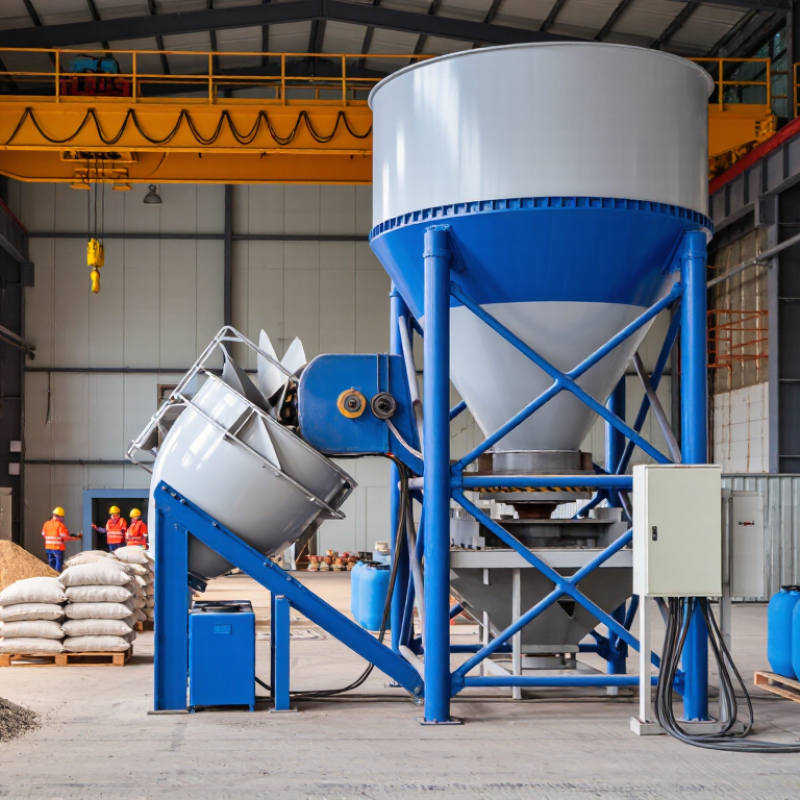
A vertical concrete mixer is a machine that blends cement, aggregates, water, and additives inside a standing drum. Its mixing action usually combines rotation with gravity, lifting materials upward before they fall through the batch. This design suits small construction sites, repair work, precast production, and projects with limited space.
The drum commonly uses fixed or rotating blades to improve material circulation. Operators should check aggregate size, moisture, and batch volume before loading. Excessive water may make concrete easier to place, but it can reduce strength and durability.
The American Concrete Institute stresses that mix proportions and uniform mixing strongly influence concrete performance. Field checks still matter. A batch can look smooth while remaining poorly blended inside.
According to the International Energy Agency, cement production creates about 7% of global energy-related and process carbon dioxide emissions. Efficient batching can reduce rejected material, although mixer efficiency alone cannot solve this wider issue.
A suitable vertical mixer should offer stable blade clearance, accessible maintenance points, and a drum size matched to daily output. The Global Cement and Concrete Association also highlights material efficiency as an important route toward lower-impact construction. In practice, selecting a mixer only by motor power is a mistake. Noise, cleaning time, discharge control, and operator skill deserve equal attention. Specifications may appear precise, yet site conditions often expose their limits.
China Best Vertical Concrete Mixer for Sale?
How Does a Vertical Concrete Mixer Work?
A vertical concrete mixer blends cement, sand, aggregate, water, and additives inside an upright drum. A motor drives the mixing shaft from below or above. Paddles then move through the materials in repeated circular paths. The blades lift heavier aggregate and push wetter cement paste across the drum. This creates a more even mixture than simple gravity mixing.
The process is visible through the inspection cover. Dry powder first coats the aggregate. Water gradually changes the texture from dusty to sticky. Operators should add water in controlled amounts, because excess water can weaken the finished concrete. A timer helps, but visual inspection still matters. The mix should look consistent, without dry pockets or large cement lumps.
Vertical mixers usually need less floor space than horizontal models. Their upright design also supports practical discharge through a lower outlet. From field experience, loading order affects performance more than many buyers expect. Large stones added too early may slow the first mixing cycle. I would also avoid judging quality by motor power alone. Paddle shape, drum clearance, shaft speed, and maintenance influence the result. The design is efficient, but not flawless. Worn paddles can leave unmixed material near the wall. Regular checks should include bolts, bearings, electrical controls, and the discharge gate. A trial batch reveals problems before full production begins.
A vertical concrete mixer uses a central mixing shaft and vertical blades to lift, fold, and circulate materials inside the drum. The typical cycle shown below represents common operating stages for a small to medium batch: loading, dry blending, water addition, wet mixing, and discharge. Actual times vary with batch size, material moisture, mix design, and equipment capacity.
When evaluating a vertical concrete mixer for sale in China, focus on mixing quality rather than appearance. A strong vertical shaft should distribute cement, sand, gravel, and water evenly. The blade design matters greatly. Properly angled blades reduce dead zones near the tank wall. The mixer should produce a consistent batch within a practical cycle time. That saves labor on busy sites.
Check the motor and gearbox carefully. The motor needs enough torque for wet, heavy mixtures without frequent overheating. A sealed gearbox helps protect internal parts from dust and moisture. Adjustable mixing speed can improve control for different concrete recipes. A reinforced steel frame also limits vibration during operation. Small details matter. Ask for rated capacity, actual output, and recommended batch size.
Cleaning access is another defining feature. A wide discharge opening allows operators to remove buildup before it hardens. Replaceable blades can reduce long-term maintenance costs. Emergency stops, protective guards, and clear operating instructions support safer work. Reliable suppliers should provide test records, spare-parts information, and service guidance. I have found that advertised capacity may not match daily production. Moisture, aggregate size, and operator habits can change results. A careful trial batch is still necessary. The best mixer is the one that remains stable, serviceable, and predictable after repeated use.
China Best Vertical Concrete Mixer for Sale?
How to Compare Vertical Concrete Mixers for Sale in China?
A serious comparison starts with your mix, not the catalogue. Record batch size, aggregate diameter, moisture, target slump, and cycle time. Then request a witnessed trial using the same recipe. Check uniformity at three points: top, center, and discharge. A clean batch matters. GB/T 9142-2021 offers a useful reference for concrete mixer performance testing, but test conditions still require careful questioning.
Compare effective volume, motor power, mixing speed, discharge height, liner thickness, and residual material. Do not judge power alone. A larger motor may hide poor transmission efficiency. Measure energy per batch with a meter. The IEA reports that cement production creates about 7% of global carbon dioxide emissions (IEA, Cement, 2023). Wasted mixing time deserves attention. Ask for noise, dust-control, guarding, and emergency-stop evidence.
The GCCA 2021 roadmap cites roughly 14 billion cubic metres of concrete used worldwide each year. That scale makes repeatability more valuable than dramatic brochure claims. Compare weld quality, bearing access, spare-part lead times, warranty terms, and remote support. Ask for two recent operating references using similar aggregates. I once trusted rated capacity too quickly. It was a poor shortcut. Actual filling level and discharge residue changed the result. Retest before signing.
| Comparison Dimension | Compact Vertical Mixer | Standard Vertical Mixer | High-Output Vertical Mixer | Heavy-Duty Vertical Mixer |
|---|---|---|---|---|
| Typical Nominal Capacity | 350 L | 500 L | 750 L | 1,000 L |
| Approximate Practical Output per Batch | 250–280 L | 350–400 L | 525–600 L | 700–800 L |
| Recommended Motor Power | 7.5–11 kW | 11–15 kW | 15–18.5 kW | 18.5–22 kW |
| Typical Mixing Speed | 20–30 rpm | 20–30 rpm | 18–28 rpm | 18–25 rpm |
| Suggested Concrete Strength Range | General-purpose concrete up to approximately C30/37 | General-purpose concrete up to approximately C35/45 | General-purpose concrete up to approximately C40/50 | Heavy-duty concrete and semi-dry mixes up to approximately C40/50 |
| Suitable Aggregate Size | Up to approximately 20 mm | Up to approximately 25 mm | Up to approximately 30 mm | Up to approximately 30 mm |
| Typical Mixing Time per Batch | 3–5 minutes | 3–5 minutes | 4–6 minutes | 4–7 minutes |
| Estimated Theoretical Output | 3–5 m³/h | 4–7 m³/h | 6–9 m³/h | 8–12 m³/h |
| Typical Discharge Method | Manual or pneumatic discharge gate | Manual or pneumatic discharge gate | Pneumatic or hydraulic discharge gate | Hydraulic discharge gate |
| Approximate Machine Weight | 1,000–1,500 kg | 1,400–2,000 kg | 2,000–2,800 kg | 2,600–3,800 kg |
| Approximate Footprint | 1.8 × 1.8 m | 2.1 × 2.1 m | 2.4 × 2.4 m | 2.8 × 2.8 m |
| Power Supply Options | 380–415 V, 3-phase, 50 Hz; other voltages may be available | 380–415 V, 3-phase, 50 Hz; other voltages may be available | 380–415 V, 3-phase, 50 Hz; other voltages may be available | 380–415 V, 3-phase, 50 Hz; other voltages may be available |
| Recommended Application | Small construction sites, repair work, farms and paving projects | Residential construction, small contractors and precast components | Road works, block production and medium-sized construction projects | Large construction sites, precast plants and continuous production |
| Key Advantage | Lower initial investment and easier relocation | Good balance between capacity, power use and operating cost | Higher productivity for regular commercial use | Large batch size and strong performance with demanding mixes |
| Important Buying Check | Confirm loading height, aggregate size and transport access | Check motor efficiency, spare parts and discharge configuration | Verify foundation requirements, cycle time and electrical capacity | Verify structural load, lifting method, hydraulic system and maintenance access |
| The figures above are typical specification ranges for vertical concrete mixers commonly offered in the Chinese market. Actual capacity, output, dimensions, motor power and configuration can vary according to the mixing design, material moisture, aggregate size, concrete recipe, voltage and optional equipment. Practical output is normally lower than nominal drum capacity because the mixer should not be filled to its maximum physical volume. | ||||
China Best Vertical Concrete Mixer for Sale?
How to Choose and Operate the Right Mixer for Your Project?
Choosing a vertical concrete mixer starts with your project’s real workload, not its advertised capacity. Check the required batch size, mixing time, available power, and working space. A mixer that holds 500 liters may not produce 500 liters of usable concrete. Aggregate size also matters because oversized stones can reduce mixing quality and strain the motor. Ask for verified specifications, load-test records, and clear maintenance instructions before purchasing.
During operation, measure cement, sand, stone, and water consistently. Add materials in a controlled order, then watch the mixture through the inspection opening. The concrete should appear evenly blended, without dry pockets or excess water. Keep hands, tools, and loose clothing away from moving parts. Stop the machine before clearing blockages. I once underestimated moisture in stored sand, and the mixture became too wet. That mistake reminded me to adjust water daily.
Tips: Place the mixer on firm, level ground. Test a small batch first. Record mixing time and material ratios. Clean the drum after each shift, especially around the blades and discharge gate. Inspect belts, guards, bolts, and electrical connections before use. Never exceed the rated load, even when the schedule feels tight. A slower batch is cheaper than damaged equipment or inconsistent concrete.


For those larger-sized parts, or smaller quantity runs, we have 2 independent powder coat booths and ovens. The quality, durability and affordability of today’s powder coating finishes make this the process of choice for world-class companies.
Powder coating advantages over other forms of coating are many. Materials used in the Powder coating process can be metals and non-metals that come in a multitude of thicknesses, textures, colors, etc. Another of Powder coating’s biggest advantages over conventional coatings is its ability to create finishes in many different textures. Powder Coating Booths allow us the ability to apply these advantages to large products.
Tri-State Fabricators runs a full-service conveyor line for painting. Wet painting can provide protection or decoration to many different part styles. From start to finish, every project is easier to undergo random and point-based inspection by our skilled painting team.
Advantages to our Wet Paint Line are these lines start with product prep and ends with a thorough inspection of a high quality finished product. Our ability to complete large and small projects with a superior finish and doing so in a timely and economical fashion. This passes along the savings in production to our customers. When powder coating ins not an option, our Wet Paint Line gets the job done right the first time.
When the parts get big and heavy we roll-out our custom paint racks and oversize booth. By utilizing our partnerships with all the major paint brands, we can match virtually any color with wet paint.
The advantages of having access to a Wet Paint Booth are many. Large projects of many different shapes can be loaded into the booth. The Wet Paint Booth offers an environment that is much more controlled than a typical parts painting operation.
Not only are they used because of their controlled environment, but they’re are also advantageous when it comes to applying paint to parts that are needed in industries that require specialty coatings such as medical, aerospace, etc.
Our military forces have some very high standards when it comes to the finish of their vehicles and equipment. From the first pre-treatment step to final coat, it takes a great deal of knowledge and experience to protect the men and women of our armed forces. They deserve only the best, and Tri-State Fabricators provides it.
All of our processes are closely monitored by our staff and management teams. Both of which are highly trained in the processes of metal fabrication and finishing. Tri-State Fabricators’ goal is to always fully satisfy each and every customer, including the military. We will always put a 110% into what we do.
Abrasive media blasting is an excellent way to remove old paint, rust, and increase the paint/powder adhesion. Glass beads produce a much smoother and brighter finish than angular abrasives; leaving the part clean yet without any dimensional change. Chemically inert and environmentally friendly, we can recycle our beads approximately 30 times; making them a more preferred method of metal cleaning or surface finishing.
Advantages to Glass Bead Blasting are many. Glass bead blast media is used when a project is needing rough surfaces need to become smooth for applications of coatings such as paint. It is typically used to clean paint and rust from a product surface without deforming the surface it is being used on. Overall, compared to many other blasting media, Glass Bead Blasting is a very economical choice and those savings are always passed on to our customers.
Tri-State Fabricators utilize a zinc phosphate wash to clean and etch the material to ensure the best paint adhesion possible. The unique design of our 3-stage wash system does the work like a 5-stage. From Cleaning and rinsing to conversion coating and post-treatment, Our Part Washing process is a complete service and works throughout the fabrication service and the finishing service.
Along with the previously mentioned benefits, Curing is a vital chemical reaction that leaves the product finish hard and relatively safe from mild abrasion and aggressive corrosion. This process can be done in more than one way; ambient air-dry or in curing ovens at temps that exceed 240°.
From fixing paint mistakes (someone else’s of course) to simply cleaning our paint line hooks, our burn-off oven is put to good use. After a quick burn-off, a little clean up, and a fresh coat of paint, your parts will look better than new.
Why does our Burn-Off Oven work so well? Because super heating the air around parts turns the materials into ashes. From paint and powder coatings to rubber and machining oils, high temps do the job without degrading the integrity of the part.
Masking is a vital part of producing high quality products. We have die-cut masking patterns to protect machined surfaces as well as a wide range of plugs and caps to protect threaded holes and bolts. We provide permanent and temporary masking.
Masking allows the selected sections of a product to be protected from a fabrication or finishing service. This can be with both chemicals when etching and tapes, paints when only finishing just a section of the product. Masking is great in aiding the customization process of a project.
Screen printing is a photographic process that transfers artwork onto a porous nylon screen which allows colored ink to flow through the screen and be deposited on an aluminum or plastic component. We can generally have just about any design created onto a screen for your parts.
Some of the advantages of Screen Printing are, brand recognition for your business displaying on your products, assembly instructions, product warnings/hazards, etc. Tri-State Fabricators produces Screen Printing of the highest quality so you know it’s durable.
Metal Finishing is the art of treating the exterior portion of product, often metal but can also be made of other materials, so that the surface is clean and free of any debris. Then the process of applying coats or either paint of powder coat takes place. This coating process improves the quality of the product in both appearance and resistance to wear and corrosion.
Tri-State Fabricators, Inc., understands that a project typically isn’t complete until a high-quality finish has been added to your product. This is why our painting and powder coating teams continuously inspect the products throughout the Metal Finishing process.