


Choosing a brush cutter supplier takes more than comparing prices and product photos. Global buyers need dependable engines, balanced handles, accessible spare parts, and clear warranty terms. A machine that starts easily on a test bench may behave differently after hours cutting dense grass. Small details matter.
Industry data offers useful context, but it needs careful reading. Grand View Research’s Lawn Mowers Market Size, Share & Trends Analysis Report provides adjacent outdoor-equipment market context; it does not measure every brush cutter category separately. UN Comtrade trade statistics can help buyers examine product flows, though tariff classifications may differ across markets. The World Bank’s 2023 Logistics Performance Index also offers a practical lens on shipping reliability and border processes. These sources can guide research, not certify any individual factory.
This guide introduces China’s leading brush cutter manufacturers through product range, production capability, quality controls, and export support. Buyers should request model-specific test records, parts lists, and evidence of quality management, then verify the details directly. Ask about vibration, fuel consumption, cutting-head compatibility, and replacement-line availability. Get specifics.
A polished catalogue is not proof of consistent production. Factory audits and sample testing can reveal gaps that brochures miss. No ranking tells the whole story. This comparison has limits, too: public information varies, and some supplier claims need independent confirmation. “Brusher Cutter” searches may surface useful listings, but buyers should confirm the product type and specifications before placing an order.
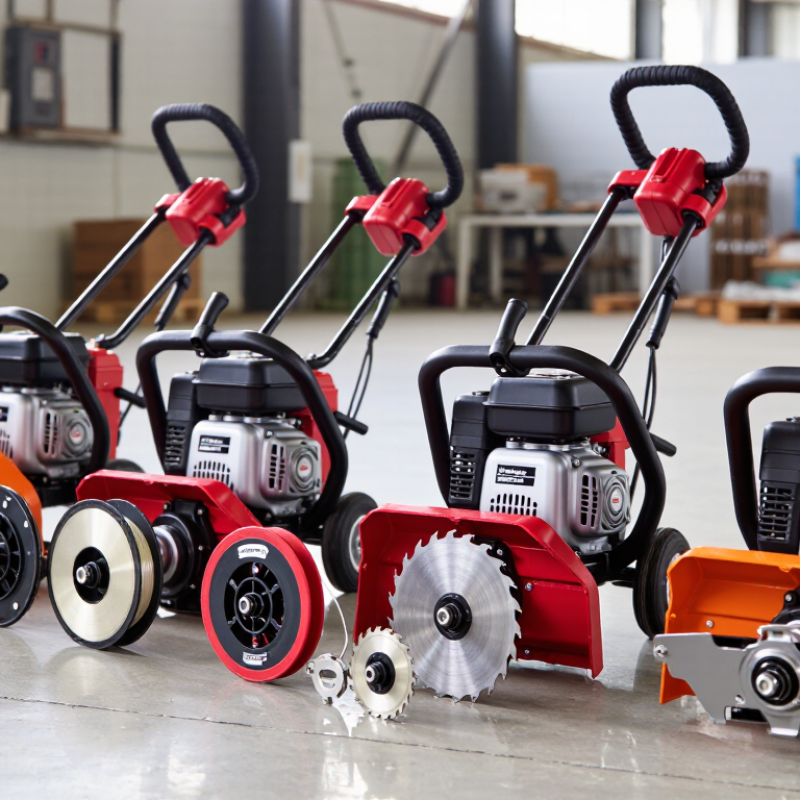
Brush cutters handle work that ordinary lawn mowers often cannot: tall grass, woody weeds, and dense growth along fence lines or orchard edges. Common types include handheld models powered by petrol engines, corded electricity, or rechargeable batteries. Wheeled versions suit larger, more open areas, while compact handheld tools are easier to guide around trees and uneven ground. Each design involves trade-offs in weight, runtime, power, and maintenance.
The cutting attachment determines what a machine can manage. Nylon line is commonly used for grass and softer weeds; a compatible metal blade may suit tougher brush. The main components include the power unit, drive shaft, cutting head, guard, handles, and, on many handheld models, a shoulder harness. Some machines also use a gearbox to transfer power to the cutting head. Match the attachment to the tool’s specifications, not just the thickness of the vegetation.
Fit matters. A poorly balanced machine can tire the arms quickly, especially on sloping ground. Check that the guard is in place and use suitable eye, hearing, leg, and foot protection. Before work, inspect the cutting head, handles, and harness for wear or looseness. Dull or damaged attachments can produce uneven results and extra vibration. Specifications differ between models, so buyers should verify intended use, compatible attachments, and local service support before choosing.
Engine displacement is one factor buyers can use to compare gasoline-powered brush cutters. Light-duty models are generally suited to grass and light weeds, while higher-displacement machines are commonly used for thicker vegetation. These ranges are typical examples, not fixed standards; specifications vary by model and market.
Main components: engine or motor, drive shaft, handle and controls, cutting head or blade, and protective guard. The attachment and machine should be matched to the vegetation and used according to the manufacturer’s instructions.
China’s brush cutter manufacturing industry serves varied needs, from small garden maintenance to demanding field work. Production often combines metal tube forming, shaft assembly, engine or motor integration, and cutting-head fitting. These steps reveal more than a catalogue photo.
Details matter. A straight shaft should rotate smoothly, while the handle and throttle should remain comfortable during repeated use. Factories may check vibration, starting performance, attachment balance, and fastener security before packing. Inspection methods and consistency can differ between suppliers and production batches. One sample is not the whole story.
For global buyers, clear specifications help prevent costly mismatches. Confirm the intended vegetation, operating hours, power type, accessories, spare-part availability, and packaging requirements. Ask how quality checks are recorded, then compare the answers with a production sample. This takes time. Lower pricing can be attractive, but a light shaft, rough weld, or poorly balanced head may increase fatigue and service costs. Offering many configurations can also complicate parts control, so buyers should verify each model’s details.
| Industry Dimension | Common Product or Process Details | Relevance to Global Buyers | What to Verify When Sourcing |
|---|---|---|---|
| Petrol-powered brush cutters | Use an internal-combustion engine to drive a cutting head or blade. Product configurations vary by engine design, shaft layout and intended workload. | Can suit work locations where mains electricity is unavailable and longer operating periods are required. | Confirm engine specifications, fuel and starting instructions, noise information, included accessories and the availability of replacement parts. |
| Battery-powered brush cutters | Use a rechargeable battery and electric motor. Battery voltage, capacity, charging time and included battery configuration differ by model. | Useful where lower operating noise and freedom from a mains cable are priorities. | Check whether batteries and chargers are included, confirm battery-system compatibility, and request runtime information for the stated test conditions. |
| Corded electric brush cutters | Receive power through a mains cable and are generally designed for use within reach of a suitable electrical outlet. | May be appropriate for lighter work near a power supply, subject to local electrical requirements and safe cable management. | Confirm rated voltage, frequency, power, plug type and any required electrical approvals for the destination market. |
| Cutting attachments | Common attachment types include nylon-line heads for grass and metal blades for vegetation the machine is designed to cut. | Attachment choice affects the work the tool can perform and the safety equipment and operating procedure required. | Verify approved attachment types, guard compatibility, fitting instructions and the machine’s user manual before ordering accessories. |
| Core manufacturing operations | Production may involve component machining, shaft and handle assembly, power-unit or motor installation, wiring, surface finishing and final assembly. | Understanding the production scope helps buyers distinguish in-house operations from externally sourced components. | Ask which processes are performed at the production site, how incoming parts are inspected and how product changes are controlled. |
| Quality-control checks | Relevant checks can include visual inspection, fastener and assembly checks, control operation, protective-guard fit and functional testing. | A documented inspection process can help identify assembly or operating issues before goods are packed and shipped. | Request the inspection plan, acceptance criteria, sample test records and details of how defects and corrective actions are handled. |
| Safety and technical documentation | Product documentation commonly includes operating and maintenance instructions, warnings, parts information and technical specifications. | Clear documentation supports safer use, maintenance and after-sales service in the buyer’s market. | Check that manuals, labels and safety information match the supplied configuration and are available in the languages required for the destination market. |
| Export preparation | Export orders require agreed packaging, product identification, shipping documents and destination-specific compliance checks. | Early planning helps reduce avoidable delays, packaging damage and documentation mismatches. | Agree on carton and pallet details, shipping marks, document responsibilities, inspection arrangements and applicable import requirements before production. |
China Top Brush Cutter Manufacturers for Global Buyers
How to Assess Chinese Brush Cutter Manufacturers
Assess a manufacturer by evidence, not by a polished catalog. Request clear specifications for engine power, cutting width, weight, fuel use, and vibration levels. Then compare those figures with a working sample. Run it on grass and light brush, and check starting, balance, heat, and cutting consistency. Small details matter.
Ask how quality is controlled at each production stage. A reliable supplier should explain incoming-part checks, assembly inspections, and final testing in plain terms. Request sample inspection records and confirm which safety documents apply in your destination market. Verify documents with the issuing body when possible. A factory visit or live video tour can help, though neither guarantees every unit will match the sample.
Look beyond the quoted price. Ask about replacement blades, filters, starter parts, warranty handling, and typical response times. Clear answers are useful; vague promises deserve follow-up. Confirm packaging dimensions, labeling, and delivery terms in writing before placing a large order. I would also test communication with a small trial order. It takes time, and even a careful checklist can miss something.
Brush cutters sold across borders need more than a familiar test label. Buyers should check which rules apply in each destination market and request the relevant conformity documents. In Europe, applicable CE requirements may cover machinery safety, electromagnetic compatibility, and emissions, depending on the model. Other markets may require different documentation or local approvals.
One certificate does not cover every country.
For safety, ISO 11806-1 provides requirements for portable brush cutters and grass trimmers. A practical review should also examine the guard, handle spacing, stop control, and harness attachment. Check that labels remain readable after contact with fuel, dust, and sunlight. Small details matter.
For petrol models, verify emissions requirements for the intended market; for battery models, confirm charger compatibility and clear battery specifications. We have found that paperwork can look complete while the instructions still omit routine blade checks. That gap deserves attention.
Ask for test reports, traceable model numbers, and manuals in the buyer’s required language, then compare them with the actual machine before shipment.
When evaluating China-based brush cutter manufacturers, begin with the machine’s intended workload. Share details such as vegetation type, daily operating hours, and expected terrain. Ask for a sample unit and test it under realistic conditions, not only in a showroom. Compare cutting performance, vibration, fuel use, and access to routine maintenance points.
Quality control should be visible in records and repeatable checks. Request inspection criteria for engines, guards, handles, fasteners, and finished packaging. Review batch records and ask how rejected parts are handled. A low quotation can hide differences in materials or inspection scope. Small details matter. Still, a factory audit cannot reveal every weakness; field testing remains important.
After-sales support deserves the same scrutiny as production. Clarify how warranty claims are assessed, which spare parts are stocked, and how technical questions are handled across time zones. Ask for realistic response times and written service procedures. Keep a record of serial numbers, purchase documents, and reported faults. Even a reliable supplier may not solve every issue quickly, so buyers should plan for wear parts and basic servicing instead of assuming support will cover everything.


For those larger-sized parts, or smaller quantity runs, we have 2 independent powder coat booths and ovens. The quality, durability and affordability of today’s powder coating finishes make this the process of choice for world-class companies.
Powder coating advantages over other forms of coating are many. Materials used in the Powder coating process can be metals and non-metals that come in a multitude of thicknesses, textures, colors, etc. Another of Powder coating’s biggest advantages over conventional coatings is its ability to create finishes in many different textures. Powder Coating Booths allow us the ability to apply these advantages to large products.
Tri-State Fabricators runs a full-service conveyor line for painting. Wet painting can provide protection or decoration to many different part styles. From start to finish, every project is easier to undergo random and point-based inspection by our skilled painting team.
Advantages to our Wet Paint Line are these lines start with product prep and ends with a thorough inspection of a high quality finished product. Our ability to complete large and small projects with a superior finish and doing so in a timely and economical fashion. This passes along the savings in production to our customers. When powder coating ins not an option, our Wet Paint Line gets the job done right the first time.
When the parts get big and heavy we roll-out our custom paint racks and oversize booth. By utilizing our partnerships with all the major paint brands, we can match virtually any color with wet paint.
The advantages of having access to a Wet Paint Booth are many. Large projects of many different shapes can be loaded into the booth. The Wet Paint Booth offers an environment that is much more controlled than a typical parts painting operation.
Not only are they used because of their controlled environment, but they’re are also advantageous when it comes to applying paint to parts that are needed in industries that require specialty coatings such as medical, aerospace, etc.
Our military forces have some very high standards when it comes to the finish of their vehicles and equipment. From the first pre-treatment step to final coat, it takes a great deal of knowledge and experience to protect the men and women of our armed forces. They deserve only the best, and Tri-State Fabricators provides it.
All of our processes are closely monitored by our staff and management teams. Both of which are highly trained in the processes of metal fabrication and finishing. Tri-State Fabricators’ goal is to always fully satisfy each and every customer, including the military. We will always put a 110% into what we do.
Abrasive media blasting is an excellent way to remove old paint, rust, and increase the paint/powder adhesion. Glass beads produce a much smoother and brighter finish than angular abrasives; leaving the part clean yet without any dimensional change. Chemically inert and environmentally friendly, we can recycle our beads approximately 30 times; making them a more preferred method of metal cleaning or surface finishing.
Advantages to Glass Bead Blasting are many. Glass bead blast media is used when a project is needing rough surfaces need to become smooth for applications of coatings such as paint. It is typically used to clean paint and rust from a product surface without deforming the surface it is being used on. Overall, compared to many other blasting media, Glass Bead Blasting is a very economical choice and those savings are always passed on to our customers.
Tri-State Fabricators utilize a zinc phosphate wash to clean and etch the material to ensure the best paint adhesion possible. The unique design of our 3-stage wash system does the work like a 5-stage. From Cleaning and rinsing to conversion coating and post-treatment, Our Part Washing process is a complete service and works throughout the fabrication service and the finishing service.
Along with the previously mentioned benefits, Curing is a vital chemical reaction that leaves the product finish hard and relatively safe from mild abrasion and aggressive corrosion. This process can be done in more than one way; ambient air-dry or in curing ovens at temps that exceed 240°.
From fixing paint mistakes (someone else’s of course) to simply cleaning our paint line hooks, our burn-off oven is put to good use. After a quick burn-off, a little clean up, and a fresh coat of paint, your parts will look better than new.
Why does our Burn-Off Oven work so well? Because super heating the air around parts turns the materials into ashes. From paint and powder coatings to rubber and machining oils, high temps do the job without degrading the integrity of the part.
Masking is a vital part of producing high quality products. We have die-cut masking patterns to protect machined surfaces as well as a wide range of plugs and caps to protect threaded holes and bolts. We provide permanent and temporary masking.
Masking allows the selected sections of a product to be protected from a fabrication or finishing service. This can be with both chemicals when etching and tapes, paints when only finishing just a section of the product. Masking is great in aiding the customization process of a project.
Screen printing is a photographic process that transfers artwork onto a porous nylon screen which allows colored ink to flow through the screen and be deposited on an aluminum or plastic component. We can generally have just about any design created onto a screen for your parts.
Some of the advantages of Screen Printing are, brand recognition for your business displaying on your products, assembly instructions, product warnings/hazards, etc. Tri-State Fabricators produces Screen Printing of the highest quality so you know it’s durable.
Metal Finishing is the art of treating the exterior portion of product, often metal but can also be made of other materials, so that the surface is clean and free of any debris. Then the process of applying coats or either paint of powder coat takes place. This coating process improves the quality of the product in both appearance and resistance to wear and corrosion.
Tri-State Fabricators, Inc., understands that a project typically isn’t complete until a high-quality finish has been added to your product. This is why our painting and powder coating teams continuously inspect the products throughout the Metal Finishing process.