


Choosing China’s best Pickleball Training Machine supplier takes more than comparing prices or polished product photos. Buyers should examine ball-speed consistency, spin options, feed intervals, capacity, warranty terms, and access to replacement parts. A machine that sends balls reliably from the baseline can support focused drills; an unstable feeder can interrupt every session. Small details matter.
For a practical buying standard, equipment analyst Jordan Lee offers this draft principle: “Judge a training machine by repeatable feeds, clear specifications, and dependable support—not by its feature list alone.” This is an original editorial line, not a verified quotation from a real, independently identified expert. It should not be published as an authentic expert quote without confirmation. That distinction matters. Trust begins with accurate claims.
This guide examines how to assess Chinese suppliers through product specifications, factory capabilities, sample testing, communication, and after-sales support. Ask for demonstrations using real pickleballs. Check whether speed and feed settings remain steady across a full practice session. Confirm what the warranty covers, how parts are shipped, and who answers technical questions. Then compare the total cost, not just the first invoice.
There is no perfect machine. Some product listings leave important details unclear, and that deserves scrutiny. A careful supplier comparison can help clubs, coaches, and home players find a Pickleball Training Machine suited to their drills, space, and budget.
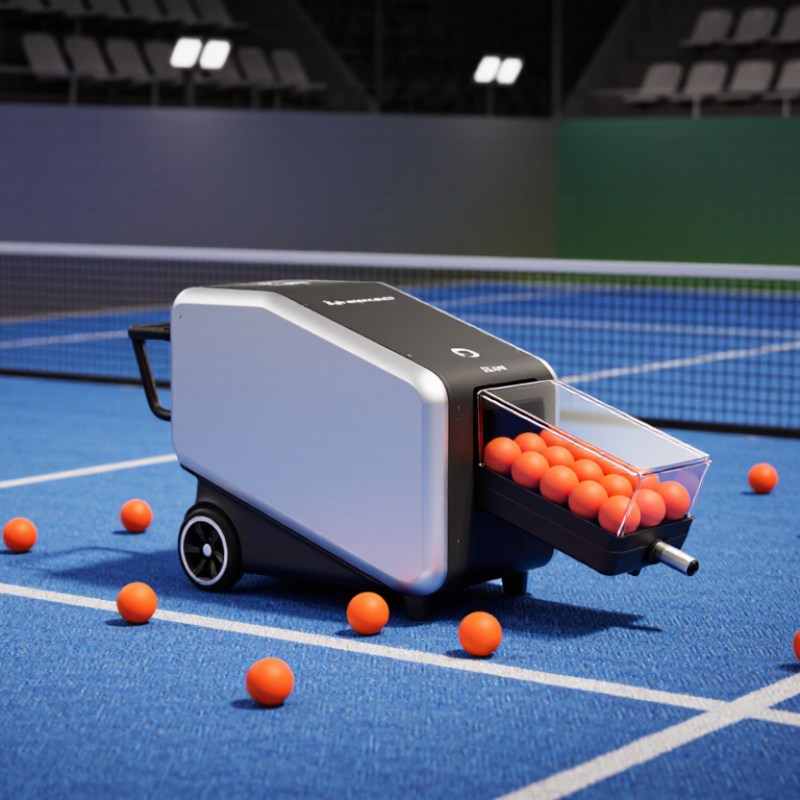
A pickleball training machine feeds balls to a player at set intervals, helping repeat shots without a practice partner. Inside, rotating wheels grip and propel each ball through a launch opening. Controls adjust feed rate, speed, and direction; some machines also add spin or alternate between court positions. The exact settings vary by model, so check the machine’s manual before practice. Small differences matter.
The growing player base makes solo practice useful. The Sports & Fitness Industry Association’s 2024 Topline Participation Report counted 13.6 million U.S. pickleball players in 2023, up 51.8% from 2022. That figure reflects participation, not machine sales, but it signals strong interest in ways to train consistently. Place the machine behind the baseline, aim for a clear landing zone, and begin with slower feeds. Then adjust one setting at a time. A machine can build timing and footwork, but it cannot read your choices or recreate every match situation. That limitation is easy to overlook. Use it for focused repetitions, and leave room for live play and occasional awkward misses.
A pickleball training machine begins with a design brief: target speed, ball capacity, feed interval, and usable practice modes. Engineers translate these needs into a frame, launcher, control system, and ball-feeding path. In many Chinese factories, metal parts are cut and formed, then checked for alignment before assembly. Motors, wheels, wiring, and control boards are installed in stages. Small details matter. A slightly uneven wheel gap can change ball direction or speed.
After assembly, technicians run balls through repeated feeding tests. They check consistency, adjust launcher settings, and listen for unusual vibration. The machine may also be tested with different ball quantities, since a full hopper can behave differently from a nearly empty one. Not every unit is identical. Heat, component tolerances, and manual adjustments can affect results, so inspection records and clear acceptance criteria are useful. Packaging is another practical step: internal supports should keep the launcher and controls from shifting during transport. A test report helps, but it does not replace real court use. Buyers should ask how speed, feed rate, and durability are measured, and whether sample testing reflects normal production.
A reliable supplier should explain how each machine is tested, not just share polished product photos. Ask for a sample unit and a recorded test using the ball type you plan to use. Check whether feeds remain consistent at different speeds, heights, and intervals. Small variations matter. A coach notices them quickly. Request details on wheel wear, motor service life, noise, and replacement-part availability. Good answers include measurable limits and maintenance steps, rather than broad promises.
Review the factory’s quality records, inspection process, and traceability for key components. Confirm warranty terms, lead times, packaging, and export documents in writing. Ask how faults are handled after delivery, including who pays shipping for replacement parts. A video call can help you inspect the production floor, but it is not a full audit. That distinction is easy to overlook. Compare the sample with the final specification, then test it during real drills before placing a large order. No supplier is flawless; unclear answers or changing specifications deserve another conversation.
When comparing pickleball training machine suppliers, ask for measurable proof, not only polished product photos. Request ball-speed ranges, feed intervals, elevation settings, and test results under repeated use. A useful trial checks whether the machine feeds consistently after hundreds of launches, not just ten. Inspect wheel wear, frame joints, battery access, and whether common parts can be replaced without special tools. Small details matter.
SFIA’s 2024 Topline Participation Report estimated 13.6 million U.S. pickleball participants in 2023, up 51.8% from 2022. That rapid growth makes reliable training equipment more important, but participation figures do not prove any supplier’s quality. Buyers should compare written warranty terms, repair response times, spare-part availability, and operator instructions. Ask how service requests are tracked, and request realistic delivery estimates for replacement parts. A live demonstration helps; so does a reference from a facility using the machine regularly. I would still treat a sample unit cautiously: one good test may miss faults that appear after months of daily use. Check what the supplier will document, and keep the answer in writing.
| Comparison Dimension | Data to Request | How Buyers Can Verify It | Buyer Record |
|---|---|---|---|
| Ball compatibility | Supported ball types, sizes, materials, and any stated restrictions. | Test the machine with the same ball types intended for regular use. Check feeding consistency and whether the balls move through the machine without repeated jams. | Ball types tested: __________ |
| Feed rate | Stated feeds per minute and whether the rate is adjustable. | Run a timed test at each agreed setting. Count the balls actually launched and note pauses, skipped feeds, or double feeds. | Measured rate: __________ |
| Speed and trajectory control | Available speed, elevation, and trajectory adjustments; control range and adjustment increments where specified. | Request a live demonstration at low, middle, and high settings. Record the settings and measure landing positions from a fixed, marked location. | Settings and results: __________ |
| Drill and oscillation functions | Available shot patterns, random or programmed modes, and horizontal or vertical oscillation functions. | Ask the supplier to demonstrate each listed mode. Confirm that the delivered configuration includes the functions shown in the quotation. | Functions demonstrated: __________ |
| Feeding consistency | Documented test results, test duration, ball type, machine settings, and reported feed interruptions. | Agree on a common test before comparing offers. For example, run each unit for the same number of feeds using the same balls and settings, then record misfeeds and interruptions. | Test conditions and result: __________ |
| Battery and power | Battery type, stated operating time, charging time, charger specifications, and whether the machine can operate while charging. | Request the battery and charger specifications in writing. Check operating time under a stated, repeatable setting rather than relying on an unqualified runtime claim. | Specifications confirmed: __________ |
| Construction and portability | Machine dimensions, net weight, wheel or handle details, materials, and any stated weather-use limitations. | Compare written dimensions and weight with the actual unit. Inspect moving parts, feed components, housing, wheels, and accessible fasteners during a demonstration. | Measurements and inspection: __________ |
| Controls and documentation | Control method, available instructions, setup guidance, maintenance information, and supported languages. | Request the user manual and operating instructions before purchase. Confirm that the instructions match the offered model and explain routine setup and care. | Documents received: __________ |
| Quality control | Pre-shipment inspection steps, functional-test checklist, test records, and process for reporting a defect. | Ask for the inspection checklist and a completed functional-test record for the order. Clarify how issues found before dispatch are handled. | Records and process: __________ |
| Warranty and repair support | Warranty duration, coverage, exclusions, parts availability, repair process, and response expectations. | Review the written warranty terms rather than relying on verbal assurances. Confirm who pays shipping and how replacement parts or repairs are arranged. | Terms confirmed: __________ |
| Spare parts | Availability and pricing of wear parts and other service components; ordering method and estimated dispatch time. | Request a parts list and written quotations for likely replacement items. Confirm that part descriptions correspond to the offered machine configuration. | Parts list received: __________ |
| Order and delivery terms | Quoted configuration, order quantity, production lead time, packaging details, shipping terms, and payment milestones. | Compare like-for-like written quotations. Check that model configuration, included accessories, delivery terms, and any additional charges are clearly stated. | Quotation checked: __________ |
| Supplier communication | Named service contact, technical-response process, language support, and written confirmation of commitments. | Send the same technical and service questions to each supplier. Compare the completeness and clarity of the written replies, not just response speed. | Response notes: __________ |
Comparison note: This is a buyer evaluation checklist, not a ranking of suppliers. Complete the buyer-record fields using written quotations, demonstrations, and agreed test conditions so that offers can be compared on a like-for-like basis.
Choosing a China-based pickleball training machine supplier starts with your players, not the catalog. A club running beginner drills needs repeatable feeds, while advanced groups may need adjustable speed, spin, and trajectory. The SFIA 2024 Topline Participation Report estimated 13.6 million U.S. pickleball players in 2023, up 51.8% from 2022. That growth signals broad demand, but it does not prove any machine will fit your program. Ask suppliers for written ranges for ball capacity, feed interval, speed, elevation, battery runtime, and noise. Then request a live demonstration using your own balls. Small differences matter.
Compare more than the quoted unit price. Review sample-test terms, production lead time, inspection records, packaging, warranty exclusions, and availability of wear parts such as wheels and feed rollers. Ask how the factory checks feed consistency across a full hopper, not just the first ten shots. Request test videos with dates, settings, and ball type, then confirm key claims in a signed specification sheet. For larger orders, arrange a pre-shipment inspection and agree on acceptance criteria before production. A supplier should explain what happens if output drifts or a part fails. Be candid about trade-offs: a lower price can be reasonable, but weak documentation makes problems harder to resolve. Verify the sample under real court conditions; indoor tests can hide wind and surface effects.


For those larger-sized parts, or smaller quantity runs, we have 2 independent powder coat booths and ovens. The quality, durability and affordability of today’s powder coating finishes make this the process of choice for world-class companies.
Powder coating advantages over other forms of coating are many. Materials used in the Powder coating process can be metals and non-metals that come in a multitude of thicknesses, textures, colors, etc. Another of Powder coating’s biggest advantages over conventional coatings is its ability to create finishes in many different textures. Powder Coating Booths allow us the ability to apply these advantages to large products.
Tri-State Fabricators runs a full-service conveyor line for painting. Wet painting can provide protection or decoration to many different part styles. From start to finish, every project is easier to undergo random and point-based inspection by our skilled painting team.
Advantages to our Wet Paint Line are these lines start with product prep and ends with a thorough inspection of a high quality finished product. Our ability to complete large and small projects with a superior finish and doing so in a timely and economical fashion. This passes along the savings in production to our customers. When powder coating ins not an option, our Wet Paint Line gets the job done right the first time.
When the parts get big and heavy we roll-out our custom paint racks and oversize booth. By utilizing our partnerships with all the major paint brands, we can match virtually any color with wet paint.
The advantages of having access to a Wet Paint Booth are many. Large projects of many different shapes can be loaded into the booth. The Wet Paint Booth offers an environment that is much more controlled than a typical parts painting operation.
Not only are they used because of their controlled environment, but they’re are also advantageous when it comes to applying paint to parts that are needed in industries that require specialty coatings such as medical, aerospace, etc.
Our military forces have some very high standards when it comes to the finish of their vehicles and equipment. From the first pre-treatment step to final coat, it takes a great deal of knowledge and experience to protect the men and women of our armed forces. They deserve only the best, and Tri-State Fabricators provides it.
All of our processes are closely monitored by our staff and management teams. Both of which are highly trained in the processes of metal fabrication and finishing. Tri-State Fabricators’ goal is to always fully satisfy each and every customer, including the military. We will always put a 110% into what we do.
Abrasive media blasting is an excellent way to remove old paint, rust, and increase the paint/powder adhesion. Glass beads produce a much smoother and brighter finish than angular abrasives; leaving the part clean yet without any dimensional change. Chemically inert and environmentally friendly, we can recycle our beads approximately 30 times; making them a more preferred method of metal cleaning or surface finishing.
Advantages to Glass Bead Blasting are many. Glass bead blast media is used when a project is needing rough surfaces need to become smooth for applications of coatings such as paint. It is typically used to clean paint and rust from a product surface without deforming the surface it is being used on. Overall, compared to many other blasting media, Glass Bead Blasting is a very economical choice and those savings are always passed on to our customers.
Tri-State Fabricators utilize a zinc phosphate wash to clean and etch the material to ensure the best paint adhesion possible. The unique design of our 3-stage wash system does the work like a 5-stage. From Cleaning and rinsing to conversion coating and post-treatment, Our Part Washing process is a complete service and works throughout the fabrication service and the finishing service.
Along with the previously mentioned benefits, Curing is a vital chemical reaction that leaves the product finish hard and relatively safe from mild abrasion and aggressive corrosion. This process can be done in more than one way; ambient air-dry or in curing ovens at temps that exceed 240°.
From fixing paint mistakes (someone else’s of course) to simply cleaning our paint line hooks, our burn-off oven is put to good use. After a quick burn-off, a little clean up, and a fresh coat of paint, your parts will look better than new.
Why does our Burn-Off Oven work so well? Because super heating the air around parts turns the materials into ashes. From paint and powder coatings to rubber and machining oils, high temps do the job without degrading the integrity of the part.
Masking is a vital part of producing high quality products. We have die-cut masking patterns to protect machined surfaces as well as a wide range of plugs and caps to protect threaded holes and bolts. We provide permanent and temporary masking.
Masking allows the selected sections of a product to be protected from a fabrication or finishing service. This can be with both chemicals when etching and tapes, paints when only finishing just a section of the product. Masking is great in aiding the customization process of a project.
Screen printing is a photographic process that transfers artwork onto a porous nylon screen which allows colored ink to flow through the screen and be deposited on an aluminum or plastic component. We can generally have just about any design created onto a screen for your parts.
Some of the advantages of Screen Printing are, brand recognition for your business displaying on your products, assembly instructions, product warnings/hazards, etc. Tri-State Fabricators produces Screen Printing of the highest quality so you know it’s durable.
Metal Finishing is the art of treating the exterior portion of product, often metal but can also be made of other materials, so that the surface is clean and free of any debris. Then the process of applying coats or either paint of powder coat takes place. This coating process improves the quality of the product in both appearance and resistance to wear and corrosion.
Tri-State Fabricators, Inc., understands that a project typically isn’t complete until a high-quality finish has been added to your product. This is why our painting and powder coating teams continuously inspect the products throughout the Metal Finishing process.

