China Best Robot Capacitor Manufacturers and Suppliers?
China has become a major sourcing base for capacitors used in robotic arms, automated guided vehicles, sensors, and industrial controllers. However, choosing the right Robot Capacitor manufacturer requires more than comparing unit prices. A reliable supplier should demonstrate material control, stable production, electrical testing, and consistent delivery performance.
Dr. W. Edwards Deming, a renowned quality-management expert, said, “Quality comes not from inspection, but from the improvement of the production process.” This principle applies directly to Robot Capacitor manufacturing. Strong suppliers build reliability into film selection, winding precision, sealing methods, and final inspection. They also understand demanding conditions, including vibration, heat, humidity, frequent acceleration, and rapid charge-discharge cycles.
Specifications matter. So does evidence.
This guide examines China’s leading Robot Capacitor manufacturers and suppliers through practical criteria. These include capacitance stability, voltage tolerance, ripple-current capability, insulation resistance, thermal endurance, customization support, and after-sales communication. Certifications can help, but they should not replace factory audits, sample testing, and application-based verification.
A datasheet may look complete. It can still hide weaknesses.
Buyers should request batch records, test methods, failure-rate information, and samples tested under realistic robotic loads. Packaging and export experience also deserve attention, especially when capacitors travel through changing temperatures and long logistics routes. The comparison is not perfect, because supplier performance can change over time. Therefore, independent validation remains necessary before large-volume purchasing. The best partner is not always the cheapest. It is the manufacturer that can repeatedly deliver safe, stable, and application-matched Robot Capacitor products.
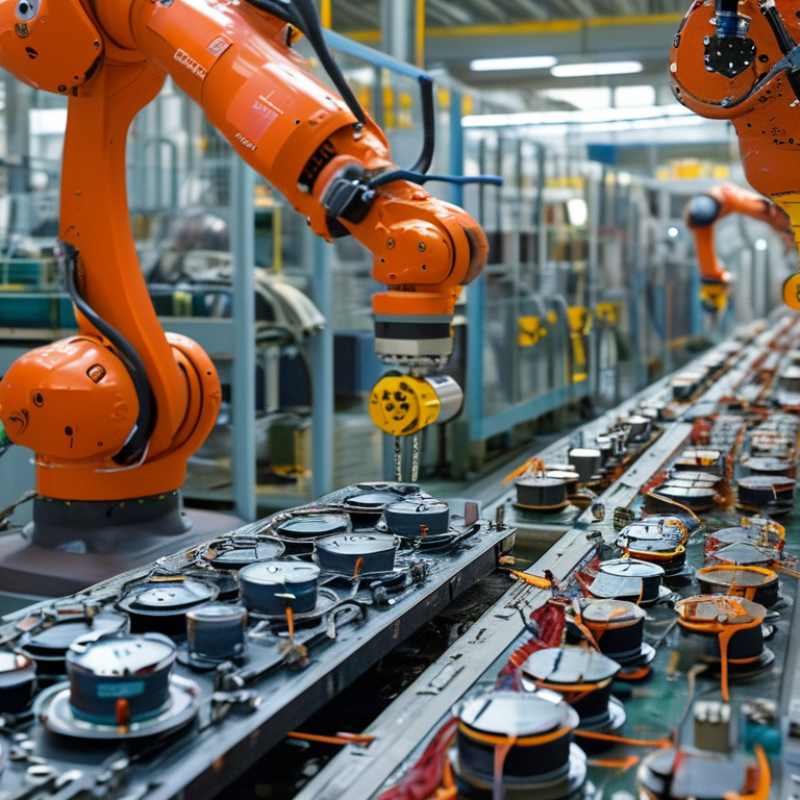
China’s Robot Market: 276,288 Installations in 2023 (IFR)
China’s robot market reached 276,288 installations in 2023, according to the International Federation of Robotics’ World Robotics 2024 report. That represented about 51% of global industrial robot installations. The figure shows strong demand for reliable motion-control components, including capacitors used in servo drives, inverters, and control cabinets.
Robot capacitors must manage ripple current, heat, vibration, and frequent acceleration cycles. A weak capacitor can increase voltage instability and shorten drive-system life. Engineering evaluations should examine capacitance tolerance, rated voltage, ESR, ripple-current capacity, and endurance at elevated temperatures. Supplier quality records matter too. Factory audits, batch traceability, and independent testing provide stronger evidence than catalog claims.
China’s robot density reached 470 units per 10,000 manufacturing employees in 2023, based on IFR data. This growing automation base creates a wider need for capacitors with stable performance and predictable supply. The Ministry of Industry and Information Technology has also identified intelligent manufacturing as a continuing development priority. However, installation volume does not automatically prove component quality. That assumption needs review.
For buyers comparing Chinese capacitor manufacturers and suppliers, practical testing remains essential. Check thermal cycling results, lifetime calculations, and samples from regular production batches. Some specifications look excellent on paper. Real production conditions can be less forgiving. Consistent documentation, engineering support, and controlled materials should guide the final decision.
Robot Capacitor Functions: DC-Link, Servo Drive, and Energy Recovery
Robot capacitors support three critical tasks: DC-link stabilization, servo-drive control, and energy recovery. In a robot controller, the DC-link capacitor smooths rectified power and absorbs high-frequency switching ripple. This reduces voltage fluctuation before the inverter stage. According to the International Federation of Robotics’ World Robotics 2024 report, 541,302 industrial robots were installed globally in 2023. That scale increases demand for reliable, compact power components.
Servo drives need capacitors with low equivalent series resistance, high ripple-current capability, and stable performance during rapid acceleration. A six-axis robot may reverse direction within milliseconds. The capacitor must then handle repeated current pulses without excessive heating. During braking, the motor can return energy to the DC link. A suitable capacitor temporarily absorbs this energy and limits voltage spikes. Yet capacitance alone is not enough. Thermal design, discharge resistance, bus voltage, and lifetime calculations must match the drive architecture.
The U.S. Department of Energy’s Industrial Decarbonization Roadmap identifies motor-driven systems as major industrial electricity users, making regenerative control increasingly valuable. When evaluating Chinese manufacturers and suppliers, request ripple-current curves, endurance-test records, ESR data, and traceable inspection reports. Ask for performance at the robot’s actual ambient temperature. A higher voltage rating is not automatically safer; excessive size can reduce dynamic response and raise costs. One practical weakness remains: many catalogs publish nominal capacitance but omit real high-frequency behavior. That gap deserves careful verification before procurement.
Robot Capacitor Functions: Typical DC-Link Voltage Ranges
Industrial robot capacitor systems commonly operate across these voltage ranges. DC-link capacitors smooth rectified power, servo-drive capacitors support rapid load changes, and energy-recovery capacitors absorb regenerated braking energy. Actual ratings depend on the drive topology, motor power, safety margin, and duty cycle.
IEC 60384 Testing for Robot Capacitor Safety and Reliability
China Best Robot Capacitor Manufacturers and Suppliers?
Industrial robots are becoming more common in factories. The International Federation of Robotics reported 541,302 new industrial robots were installed worldwide in 2023. Its World Robotics 2024 report also recorded about 4.28 million robots in operation. Each robot depends on capacitors for filtering, motor drives, control power, and electromagnetic interference protection.
IEC 60384 testing helps verify capacitor safety and reliability. For suitable fixed capacitors, IEC 60384-14 evaluates insulation resistance, voltage proof, impulse withstand, climatic exposure, and endurance performance. A reliable supplier should provide traceable test records, rated-voltage data, temperature limits, and batch identification. Production samples should also be checked for capacitance, dissipation factor, leakage current, and visible defects.
A clean certificate is not enough.
In practical supplier audits, I would examine test conditions carefully. Was the capacitor tested at its rated temperature? Were lead spacing, enclosure quality, and flame behavior recorded? Robot cabinets may face vibration, heat cycling, dust, and repeated switching. IEC 60384 compliance supports safety evaluation, but it does not replace application-specific validation. Engineers should test the capacitor inside the actual robot circuit, especially near inverters and braking systems. Some supplier documents look complete but lack raw data. That deserves questions. Reliable manufacturers and suppliers should accept this scrutiny and maintain consistent quality across production batches.
Supplier Metrics: Ripple Current, ESR, Lifetime, and Traceability
China Best Robot Capacitor Manufacturers and Suppliers?
China’s robot industry demands more than attractive capacitance values. World Robotics 2024 reported 541,302 industrial robots installed worldwide in 2023, increasing pressure on component reliability. For capacitor suppliers, ripple current should be verified at the application’s actual switching frequency and temperature. A catalog rating alone can mislead. Ask for test curves, not only a headline number.
ESR affects inverter heat, DC-link stability, and braking performance. Suppliers should provide ESR results at defined temperatures, frequencies, and aging points. IEC 60384-1 supports consistent qualification practices, but factory conditions still matter. A useful audit checks sample units after thermal cycling, vibration, and rated-load operation. Small ESR drift may become a large thermal problem inside a sealed robot cabinet. This is where many comparisons remain too optimistic.
Lifetime data also needs context. The common 10°C temperature rule is a practical estimate, not a universal guarantee. Request the calculation model, endurance test duration, failure limits, and confidence level. Traceability should connect each capacitor to its production lot, raw-material records, inspection results, and shipment date. QR or laser codes help, but readable records matter more. In my experience, suppliers often show excellent first samples but incomplete batch history. That gap deserves attention. (Sources: International Federation of Robotics, World Robotics 2024; IEC 60384-1.)
China’s Leading Capacitor Suppliers Compared by Robot Application Fit
China Best Robot Capacitor Manufacturers and Suppliers?
China’s leading capacitor suppliers should be compared by robot application fit, not catalog size. Servo robots need stable DC-link capacitors during rapid acceleration and braking. Welding robots demand strong pulse handling, low equivalent series resistance, and reliable heat control. Compact collaborative robots often prioritize size, weight, and long service life.
A capable supplier should provide ripple-current data at realistic temperatures. Ask for test results at 55°C or higher, not only room-temperature figures. Check vibration resistance, insulation performance, terminal strength, and capacitance stability after repeated load cycles. Suppliers with traceable materials and documented production controls are easier to audit. Certification helps, but it does not replace application testing.
For evaluation, use samples in the actual drive cabinet. Monitor case temperature, voltage ripple, and abnormal noise during repeated motion. Review failure analysis procedures before placing a large order. A supplier may offer an attractive price, yet weaker cooling performance can increase maintenance costs. This point is easy to miss. Some specifications also look impressive until tested under regenerative braking. The comparison is not perfectly simple. Robot speed, duty cycle, cabinet airflow, and ambient dust can change capacitor life significantly. Technical support should explain these limits clearly, without promising unrealistic lifetimes. Suppliers that adjust capacitance, terminals, or mounting formats for the robot design usually provide a better practical fit.





