


China’s passenger elevator industry is no longer judged by production volume alone. Buyers now examine ride comfort, energy use, safety records, digital monitoring, and after-sales response. Fortune Business Insights projects continued global elevator market growth through 2032, while Grand View Research identifies modernization and smart-building integration as major demand drivers. Their figures differ because each report uses different market definitions. That detail matters.
China remains a critical manufacturing and supply hub. Its factories serve residential towers, hospitals, hotels, airports, and complex commercial projects. The best suppliers combine certified components with disciplined installation teams. They also provide clear maintenance schedules, spare-part access, and documented testing procedures. A polished showroom is not enough. Site performance matters more.
Elevator historian Dr. Lee Gray has described the elevator as “the most frequently used form of transportation in the world.” That simple observation changes how buyers should compare a Passenger Elevator supplier. A lift carries people every day, often in crowded buildings, under demanding operating conditions. Reliability must be visible in service data, not only in brochures. Buyers should request independent certifications, factory audit results, warranty terms, and references from comparable projects. Small gaps can become expensive.
This guide examines China’s top Passenger Elevator manufacturers and suppliers through practical criteria, including technology, manufacturing experience, customization, export capability, and lifecycle support. It also recognizes an uncomfortable point: the largest company may not be the best fit. Local service capacity, communication quality, and honest technical advice can matter more than impressive rankings. Reported market numbers are useful, but they never replace a careful supplier evaluation.
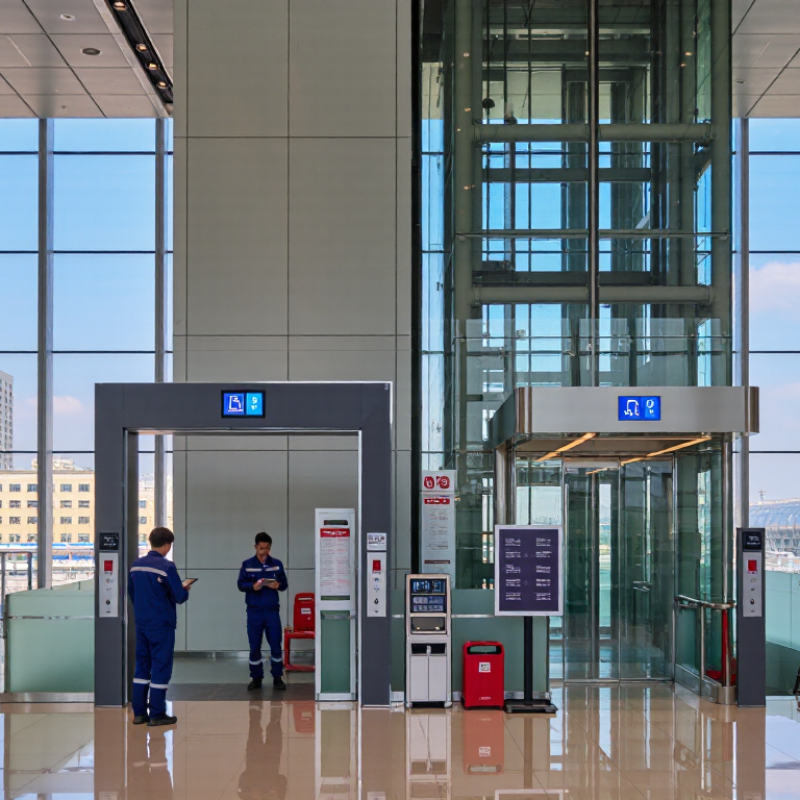
China’s passenger elevator industry serves residential towers, offices, hotels, hospitals, transport hubs, and public buildings. Its product range includes machine-room-less elevators, high-speed systems, panoramic cabins, and accessible models. Suppliers also provide controllers, doors, safety gear, monitoring systems, and replacement parts.
Manufacturers usually support projects from early design to installation and maintenance. Experienced buyers examine load capacity, travel height, traffic flow, energy use, and local climate conditions. A busy metro-linked building may need shorter waiting times and stronger door cycles. A residential project may value quiet operation, compact layouts, and dependable service access. Testing records, factory quality controls, and compliance with applicable Chinese and international standards help verify technical claims.
The market plays a major role in China’s urban construction and building-renovation programs. Domestic suppliers increasingly serve overseas projects through engineering teams, documentation, and spare-parts networks. Yet the industry is not flawless. A low quotation can hide limited maintenance coverage or unclear component origins. Delivery promises may also change when customization becomes complex. Buyers should compare warranty terms, inspection procedures, response times, and lifecycle costs rather than focusing only on the equipment price. Some project decisions still rely too heavily on brochures. That deserves a closer review.
Evaluating Chinese passenger elevator manufacturers requires more than comparing prices. Start with technical capability, production control, and experience with similar buildings. Review factory capacity, engineering staff, testing equipment, and completed projects. Ask for evidence. A reliable supplier should provide clear load calculations, speed ratings, drawings, test records, and maintenance instructions. These documents reveal whether the team understands real installation conditions.
Check compliance with the destination market’s elevator codes and safety requirements. Certifications should match the actual model, not only the company profile.
During a factory visit, inspect guide rails, door systems, controllers, and safety components. Look for traceable material records and documented quality checks.
Details matter. A polished showroom cannot replace consistent production data.
Supplier reliability also depends on communication after shipment. Confirm installation support, spare-parts availability, warranty terms, response times, and technician training. Request references from projects with similar traffic levels, climate, and building height. Speak with those customers directly when possible. I would also assess packaging, delivery planning, and site coordination, because small delays can affect several trades.
Do not guess. One weakness in documentation may signal larger project risks. However, even a careful audit has limits; factory conditions can change, and promised service may not match field performance. Keep written records, define acceptance tests, and use independent inspections for critical milestones.
China’s passenger elevator sector combines large-scale production with increasingly specialized engineering. Leading China-based manufacturers often support residential, commercial, hospital, and transport projects. Their strengths include broad product ranges, flexible cabin design, and competitive manufacturing capacity.
Many suppliers operate integrated factories with machining, assembly, testing, and quality-control teams. This structure can shorten delivery times and improve component consistency. Experienced manufacturers also adjust door systems, cabin sizes, control settings, and finishes for different buildings. Accessibility features, smooth acceleration, and emergency communication deserve careful attention. Not every project needs the most expensive configuration.
Strong suppliers use load calculations, traffic analysis, and site measurements before recommending equipment. They check shaft dimensions, power conditions, fire requirements, and local installation rules. Some provide remote monitoring and energy-saving drives. Factory testing can reveal vibration, door noise, and leveling problems before shipment. Yet technical brochures rarely show every weakness. A polished showroom is not proof of field reliability.
Buyers should request test records, installation references, warranty terms, and maintenance procedures. Ask which components are produced in-house and which come from external partners. Site visits can reveal workmanship, storage practices, and safety discipline. After-sales capacity matters, especially when spare parts must cross borders. I would not choose solely by price. A low quotation may exclude commissioning, training, or long-term service. Reliable cooperation depends on clear documents, responsive engineers, and honest discussion about limitations. Even a strong supplier may need closer supervision during the first installation.
Passenger elevators differ by building height, traffic demand, and available space. Low-rise projects often use compact machine-room-less systems. High-rise buildings may require geared or gearless traction technology. Hydraulic elevators suit some low-rise applications, but their speed and energy use need careful evaluation.
Passenger Elevator Product Types, Technologies, and Customization Options
Modern elevator suppliers commonly offer standard, panoramic, hospital, and service-oriented passenger models. Each type requires different cabin dimensions, door widths, and control settings. Intelligent group control can reduce waiting times during morning peaks. Regenerative drives may return braking energy to the building. Emergency communication, overspeed protection, door sensors, and backup lighting are essential features. Appearance matters too, but safety documentation matters more.
Customization can include stainless-steel cabins, glass panels, tactile buttons, voice announcements, and tailored lighting. Accessibility may require wider doors, handrails, low-mounted controls, and accurate floor leveling. Suppliers should provide load calculations, installation drawings, maintenance schedules, and testing records. Site conditions can change the best choice. A quiet motor may still create vibration if the shaft or guide rails are poorly aligned. This detail is easy to miss. Cost comparisons also need long-term energy and service estimates, not only the initial quotation.
| Product Type | Typical Application | Typical Capacity | Typical Speed Range | Main Drive or System | Key Features | Common Customization Options |
|---|---|---|---|---|---|---|
| Standard Passenger Elevator | Residential buildings, offices, schools, hotels, and public facilities | 630–1,600 kg | 1.0–2.5 m/s | Traction drive, usually with a variable-frequency drive | General-purpose passenger transportation, automatic doors, programmable landing control, and emergency lighting | Cabin dimensions, door configuration, finishes, lighting, handrails, mirrors, floor indicators, and control-panel layout |
| Machine-Room-Less Passenger Elevator | Modern residential and commercial buildings where roof or machine-room space is limited | 450–1,600 kg | 1.0–2.5 m/s | Compact gearless or geared traction machine installed within the hoistway | Reduced building space requirements, efficient motor control, and flexible architectural integration | Hoistway layout, cabin size, landing-door finishes, control system, energy-saving settings, and destination control compatibility |
| High-Speed Passenger Elevator | High-rise offices, hotels, residential towers, and mixed-use skyscrapers | 1,000–2,000 kg | 2.5–8.0 m/s | High-performance gearless traction system with advanced motion control | High acceleration control, improved ride comfort, aerodynamic cabin design, and multi-zone service planning | Speed zoning, destination dispatch, cabin pressure control, door speed, noise reduction, and high-rise traffic configuration |
| Panoramic Passenger Elevator | Shopping centers, hotels, museums, atriums, and buildings requiring visual appeal | 630–1,600 kg | 0.63–2.5 m/s | Traction drive with a glazed or partially glazed cabin and hoistway | Enhanced visibility, architectural presentation, natural-light integration, and optional exterior-facing travel | Glass type, cabin shape, stainless-steel finishes, lighting color, frame design, panoramic wall arrangement, and custom interior materials |
| Hospital Bed Elevator | Hospitals, clinics, medical centers, and healthcare campuses | 1,600–2,500 kg | 0.63–2.0 m/s | Traction drive designed for smooth starting, stopping, and frequent operation | Wide cabin, large door opening, stretcher clearance, durable surfaces, and precise leveling | Cabin length and width, rear or through-opening doors, impact-resistant wall panels, handrails, corner guards, and antimicrobial finishes |
| Firefighter or Fire-Service Elevator | Buildings requiring dedicated emergency-response access under applicable local regulations | 1,000–2,000 kg | 1.0–4.0 m/s | Traction system with protected controls and emergency operating functions | Emergency recall, protected landing access, water-resistant features where required, and firefighter operation mode | Fire-rated landing doors, emergency communication, protected lobbies, backup power interface, and local code-specific controls |
| Service-Compatible Passenger Elevator | Hotels, apartment buildings, offices, and facilities that move both people and light goods | 1,000–2,000 kg | 1.0–2.5 m/s | Heavy-duty traction drive with reinforced cabin components | Higher duty cycle, durable flooring, strengthened doors, and greater resistance to interior wear | Protective wall panels, rubber flooring, ventilation, larger doors, rear opening, loading protection, and service-control settings |
| Gearless Traction Elevator | Medium- and high-rise buildings prioritizing efficiency, comfort, and reduced maintenance requirements | 630–2,000 kg | 1.0–8.0 m/s | Permanent-magnet synchronous gearless motor with variable-frequency control | High efficiency, smooth ride quality, compact machine arrangement, and suitability for higher speeds | Motor rating, roping arrangement, regenerative drive, braking system, speed profile, and traffic-management software |
| Energy-Efficient Passenger Elevator | Green buildings, commercial developments, residential projects, and facilities with high operating hours | 630–1,600 kg | 1.0–4.0 m/s | High-efficiency traction machine with variable-frequency regenerative or non-regenerative drive | LED lighting, standby mode, efficient motor control, low-energy ventilation, and reduced idle consumption | Regenerative drive, sleep-mode settings, solar-power interface, energy monitoring, LED systems, and building-management-system integration |
| Accessibility-Focused Passenger Elevator | Public buildings, transit facilities, schools, offices, residential projects, and barrier-free developments | 630–1,600 kg | 0.63–2.5 m/s | Traction drive configured for accessible dimensions and control requirements | Level boarding, adequate wheelchair turning space, tactile controls, audible announcements, and visual indicators | Cabin size, door width, handrail height, Braille buttons, voice announcements, induction-loop systems, and low-mounted controls |
| Destination-Controlled Elevator Group | High-rise offices, hotels, mixed-use towers, and buildings with concentrated passenger traffic | 630–2,000 kg per car | 1.6–8.0 m/s | Multiple traction elevators coordinated by group supervisory control | Passenger grouping by destination, reduced unnecessary stops, improved peak-period handling, and traffic analytics | Number of cars, zoning strategy, dispatch algorithms, touchscreen or keypad interfaces, access control, and integration with security systems |
| Outdoor or Semi-Outdoor Passenger Elevator | Transport hubs, tourist attractions, parking structures, campuses, and external building extensions | 630–1,600 kg | 0.63–2.5 m/s | Traction drive with weather-protection measures for exposed components | Corrosion-resistant materials, weatherproof landing arrangements, drainage provisions, and temperature protection | Enclosure design, anti-corrosion finishes, heating or ventilation, waterproof controls, glass panels, and local climate protection |
Note: Capacity and speed figures are typical project ranges rather than universal limits. Final specifications depend on building height, traffic analysis, shaft dimensions, duty cycle, local codes, accessibility requirements, and site conditions.
Selecting a Chinese passenger elevator supplier requires more than comparing quotations. Fortune Business Insights valued the global elevator market at about USD 88.5 billion in 2023. Growth increases supplier choices, but also increases verification pressure.
Ask for drawings, load calculations, shaft dimensions, control specifications, and a complete bill of materials. The U.S. Department of Energy notes that elevators may consume 2–10% of a building’s electricity. Efficient motors, standby controls, and regenerative drives can affect lifetime costs.
Request measured energy data under defined operating conditions. Marketing claims are not test results. I learned this the hard way: a lower purchase price may hide installation changes, spare-part limits, or unclear warranty duties.
A practical audit includes a live video tour and sample inspection. Check welding quality, door alignment, insulation, emergency communication, and serial-number traceability.
Chinese suppliers can provide strong engineering value, yet communication gaps remain possible. Translate technical terms carefully. Keep payment stages linked to approved drawings, production inspection, and final testing. Never rely on a polished factory visit alone.


For those larger-sized parts, or smaller quantity runs, we have 2 independent powder coat booths and ovens. The quality, durability and affordability of today’s powder coating finishes make this the process of choice for world-class companies.
Powder coating advantages over other forms of coating are many. Materials used in the Powder coating process can be metals and non-metals that come in a multitude of thicknesses, textures, colors, etc. Another of Powder coating’s biggest advantages over conventional coatings is its ability to create finishes in many different textures. Powder Coating Booths allow us the ability to apply these advantages to large products.
Tri-State Fabricators runs a full-service conveyor line for painting. Wet painting can provide protection or decoration to many different part styles. From start to finish, every project is easier to undergo random and point-based inspection by our skilled painting team.
Advantages to our Wet Paint Line are these lines start with product prep and ends with a thorough inspection of a high quality finished product. Our ability to complete large and small projects with a superior finish and doing so in a timely and economical fashion. This passes along the savings in production to our customers. When powder coating ins not an option, our Wet Paint Line gets the job done right the first time.
When the parts get big and heavy we roll-out our custom paint racks and oversize booth. By utilizing our partnerships with all the major paint brands, we can match virtually any color with wet paint.
The advantages of having access to a Wet Paint Booth are many. Large projects of many different shapes can be loaded into the booth. The Wet Paint Booth offers an environment that is much more controlled than a typical parts painting operation.
Not only are they used because of their controlled environment, but they’re are also advantageous when it comes to applying paint to parts that are needed in industries that require specialty coatings such as medical, aerospace, etc.
Our military forces have some very high standards when it comes to the finish of their vehicles and equipment. From the first pre-treatment step to final coat, it takes a great deal of knowledge and experience to protect the men and women of our armed forces. They deserve only the best, and Tri-State Fabricators provides it.
All of our processes are closely monitored by our staff and management teams. Both of which are highly trained in the processes of metal fabrication and finishing. Tri-State Fabricators’ goal is to always fully satisfy each and every customer, including the military. We will always put a 110% into what we do.
Abrasive media blasting is an excellent way to remove old paint, rust, and increase the paint/powder adhesion. Glass beads produce a much smoother and brighter finish than angular abrasives; leaving the part clean yet without any dimensional change. Chemically inert and environmentally friendly, we can recycle our beads approximately 30 times; making them a more preferred method of metal cleaning or surface finishing.
Advantages to Glass Bead Blasting are many. Glass bead blast media is used when a project is needing rough surfaces need to become smooth for applications of coatings such as paint. It is typically used to clean paint and rust from a product surface without deforming the surface it is being used on. Overall, compared to many other blasting media, Glass Bead Blasting is a very economical choice and those savings are always passed on to our customers.
Tri-State Fabricators utilize a zinc phosphate wash to clean and etch the material to ensure the best paint adhesion possible. The unique design of our 3-stage wash system does the work like a 5-stage. From Cleaning and rinsing to conversion coating and post-treatment, Our Part Washing process is a complete service and works throughout the fabrication service and the finishing service.
Along with the previously mentioned benefits, Curing is a vital chemical reaction that leaves the product finish hard and relatively safe from mild abrasion and aggressive corrosion. This process can be done in more than one way; ambient air-dry or in curing ovens at temps that exceed 240°.
From fixing paint mistakes (someone else’s of course) to simply cleaning our paint line hooks, our burn-off oven is put to good use. After a quick burn-off, a little clean up, and a fresh coat of paint, your parts will look better than new.
Why does our Burn-Off Oven work so well? Because super heating the air around parts turns the materials into ashes. From paint and powder coatings to rubber and machining oils, high temps do the job without degrading the integrity of the part.
Masking is a vital part of producing high quality products. We have die-cut masking patterns to protect machined surfaces as well as a wide range of plugs and caps to protect threaded holes and bolts. We provide permanent and temporary masking.
Masking allows the selected sections of a product to be protected from a fabrication or finishing service. This can be with both chemicals when etching and tapes, paints when only finishing just a section of the product. Masking is great in aiding the customization process of a project.
Screen printing is a photographic process that transfers artwork onto a porous nylon screen which allows colored ink to flow through the screen and be deposited on an aluminum or plastic component. We can generally have just about any design created onto a screen for your parts.
Some of the advantages of Screen Printing are, brand recognition for your business displaying on your products, assembly instructions, product warnings/hazards, etc. Tri-State Fabricators produces Screen Printing of the highest quality so you know it’s durable.
Metal Finishing is the art of treating the exterior portion of product, often metal but can also be made of other materials, so that the surface is clean and free of any debris. Then the process of applying coats or either paint of powder coat takes place. This coating process improves the quality of the product in both appearance and resistance to wear and corrosion.
Tri-State Fabricators, Inc., understands that a project typically isn’t complete until a high-quality finish has been added to your product. This is why our painting and powder coating teams continuously inspect the products throughout the Metal Finishing process.

