


China Top 10 Light Bar Brackets Manufacturers 2026

China Top 10 Light Bar Brackets Manufacturers 2026 presents a practical guide to suppliers shaping the vehicle lighting hardware market. This introduction focuses on manufacturers with visible production capabilities, consistent engineering practices, and dependable customer support. Light Bar Brackets may look simple, yet their performance depends on material strength, mounting accuracy, vibration resistance, and corrosion protection.

Our review considers factory experience, product range, welding quality, surface treatment, and customization capacity. We also examine how suppliers manage drawings, prototypes, inspections, packaging, and delivery communication. Stainless steel, aluminum, and coated steel each offer different benefits. The right choice depends on vehicle type, light bar weight, road conditions, and installation position. Fit matters.

Where possible, buyers should verify load ratings, hole patterns, metal thickness, fastener quality, and finish durability through technical documents or samples. Factory photographs can help, but they should not replace direct evidence. Independent certifications, testing records, and customer references may strengthen supplier credibility. However, not every published claim is equally reliable. That deserves attention.

This 2026 selection is intended as a research starting point, not an absolute ranking. Market positions can change with equipment upgrades, export performance, material costs, and after-sales results. Some manufacturers may excel at custom brackets but offer limited standard inventory. Others may provide attractive pricing while requiring closer quality supervision. Careful comparison remains essential. Buyers should request current specifications, confirm production capacity, and assess communication before placing an order. Practical experience shows that small bracket details often create major installation problems.
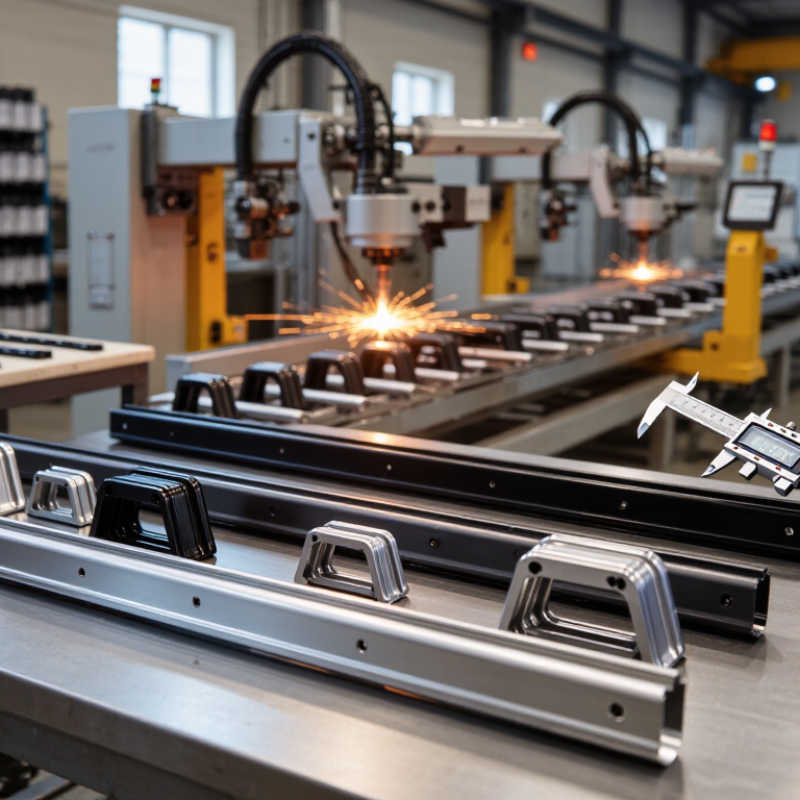
China Top 10 Light Bar Brackets Manufacturers 2026

What Are Light Bar Brackets and Why Do They Matter?

Light bar brackets are mounting components that secure auxiliary LED lights to vehicles, racks, or protective frames. They connect the light bar to a stable surface without blocking its beam. Common materials include powder-coated steel, aluminum, and stainless steel. A useful bracket must fit accurately and resist corrosion. In real installations, it carries vibration, wind pressure, and repeated impacts from rough roads. That sounds simple.

Good design begins with vehicle-specific measurements. Hole spacing, roof curvature, bar diameter, and available clearance all affect fit. Experienced installers check these details before drilling or tightening hardware. A few millimeters can decide whether the bracket sits firmly or shifts during driving. Brackets also control light alignment. If the bar tilts, the beam may illuminate the wrong area or create distracting glare for other road users. This is where testing matters more than attractive product photos.

For buyers comparing Chinese manufacturers in 2026, inspect load ratings, weld quality, coating thickness, and corrosion testing. Ask for dimensional drawings and material specifications. Reliable suppliers should explain their testing methods and provide consistent samples. Installation on a real vehicle is even better. Still, no bracket is universally perfect. A strong design may add weight, while a lighter one may flex under vibration. I have seen fitment assumptions fail when roof rails differed by one model year. Rechecking torque after initial driving remains a practical step.


Key Factors for Evaluating Chinese Light Bar Bracket Manufacturers

Choosing among China’s top light bar bracket manufacturers in 2026 requires more than comparing catalog photos. The evaluation should begin with material traceability, load testing, corrosion resistance, and dimensional consistency. The Grand View Research automotive lighting report estimates continued growth in vehicle lighting demand, increasing pressure on supporting hardware. A bracket must survive vibration, dust, water, and repeated tightening. Ask for test records, not promises.

Production control matters. Inspect laser-cut edges, weld penetration, coating thickness, and hole alignment. A practical audit should include calipers, coating gauges, and sample-based pull tests. ISO 9001 certification supports process consistency, but it does not prove every batch is reliable. The International Organization for Standardization stresses documented quality controls, while IATF-oriented methods encourage stronger automotive traceability. Request material certificates and corrective-action reports.

Supply capability also deserves close attention. Deloitte’s global manufacturing studies repeatedly identify supply-chain visibility as a major resilience factor. Check mold ownership, backup suppliers, lead times, packaging protection, and export documentation. A supplier offering ten finishes may lack stable control over one coating system. That matters.

Field experience can expose weaknesses quickly. Test brackets on rough roads, inspect fasteners after several cycles, and photograph deformation. A polished sample can mislead. No factory is flawless. My own assessment would reserve points for transparent failures and verified improvements, not only impressive samples. Price should remain secondary to repeatable performance, traceability, and responsive engineering support.

China’s Top 10 Light Bar Bracket Manufacturers in 2026

China’s top 10 light bar bracket manufacturers in 2026 are judged by more than production volume. A practical review should examine steel or aluminum grades, weld consistency, coating thickness, and installation accuracy. Factory experience matters when brackets face vibration, mud, water, and repeated temperature changes. Strong suppliers usually provide dimensional drawings, load data, and traceable batch records. These details make comparison more reliable.

Many of these manufacturers serve off-road, commercial, agricultural, and utility-vehicle applications. Their workshops commonly use laser cutting, CNC forming, controlled welding, and salt-spray testing. Buyers should inspect slot spacing, bolt quality, edge finishing, and drainage points. A bracket can look strong yet fail around a sharp corner. Ask for sample testing, not only catalog claims. Check whether the load rating includes movement and impact, rather than static weight alone.

The ranking is not perfect. Export support, inspection depth, and response speed can change between factories. Some suppliers offer excellent fabrication but weaker documentation. Others communicate well but need tighter quality control. I would compare ten samples under the same light bar, fasteners, and torque setting. Record fitment time, visible deformation, and coating damage after testing. Small inconsistencies deserve attention. They often reveal larger process problems.

Product Strengths, Manufacturing Capabilities, and Market Applications

China’s top 10 light bar bracket manufacturers in 2026 are judged by more than catalog width. Product strength begins with fit, load control, and corrosion resistance. High-strength steel, aluminum alloys, and reinforced mounting plates support roof, bumper, grille, and utility-vehicle applications. Laser cutting keeps hole alignment consistent. Robotic welding improves repeatability, although manual finishing still affects appearance.

Manufacturing depth matters.

According to Grand View Research, the global automotive aftermarket reached about USD 427 billion in 2023, with steady growth expected through 2030. This demand encourages suppliers to offer rapid tooling, CNC bending, powder coating, and small-batch customization. Strong factories usually maintain ISO 9001 systems and use salt-spray testing before shipment. Some also provide load testing, vibration checks, and traceable inspection records. These details help distributors serve off-road fleets, agricultural vehicles, construction equipment, and commercial service trucks.

Market application changes the bracket design. A roof-mounted light bar needs low wind resistance and controlled vibration. A bumper bracket needs impact tolerance and easier installation. Buyers should examine material thickness, fastener quality, drainage design, and installation instructions. A clean prototype can still hide weak weld penetration. I would not judge capability from photographs alone. Factory audits, sample testing, and repeated installation trials reveal more. Grand View Research also identifies vehicle customization and aftermarket upgrades as important demand drivers, but product data remains uneven across suppliers. That gap deserves careful checking.

China Light Bar Brackets 2026: Product Strengths and Manufacturing Material Reference

Typical mechanical properties of materials commonly used for light bar brackets. Values are representative minimum or nominal values from widely used material standards and are not company-specific.

Steel grades generally provide higher stiffness and load-bearing capacity, while 6061-T6 aluminum offers lower weight and good corrosion resistance. Stainless steel is commonly selected for exposed, marine, and outdoor applications.

How to Choose the Right Chinese Light Bar Bracket Manufacturer

Choosing the right Chinese light bar bracket manufacturer requires more than comparing quoted prices. Start with the vehicle, light bar length, mounting points, and expected vibration. Ask for drawings showing hole spacing, steel or aluminum grade, coating thickness, and tested load capacity. A bracket that feels strong in a warehouse may loosen after months on rough roads. Request material certificates, dimensional inspection records, and photos from actual production batches. Short samples matter.

During supplier audits, I look at welding consistency, edge finishing, fixture control, and traceability. Clean weld beads are useful evidence, but they do not prove fatigue resistance. Ask how the factory tests vibration, salt spray exposure, torque retention, and fitment repeatability. A practical sample should match your vehicle without forced drilling or uneven gaps. Check whether the manufacturer can revise a bend angle quickly. Small changes often prevent installation problems. Communication matters, too. Technical replies should include measurements, tolerances, and corrective actions, not vague promises.

Cost can mislead. A low quote may exclude tooling, packaging, surface treatment, or replacement support. Confirm production lead time, minimum order quantity, inspection standards, and shipment protection in writing. I once accepted a polished sample too quickly; the production batch had a slightly different hole position. That mistake was avoidable. Approve a controlled sample and compare it against signed drawings before mass production. Manufacturers willing to show weaknesses usually deserve closer consideration. Not always, but often.

China Top 10 Light Bar Brackets Manufacturers 2026 - How to Choose the Right Chinese Light Bar Bracket Manufacturer
Rank Anonymous Supplier Profile Common Manufacturing Region Main Product Capability Typical Material Manufacturing Process Typical Load Range Typical MOQ Sample Lead Time Quality and Compliance Checks Best Fit For
01 Profile A Guangdong Universal roof, grille, bumper, and A-pillar brackets 304 stainless steel; mild steel options Laser cutting, CNC bending, stamping, TIG welding 50–150 kg per set 100 sets 7–12 days Dimensional inspection, weld inspection, salt-spray report, material certificate Automotive distributors needing flexible mounting solutions
02 Profile B Zhejiang Stamped steel brackets for off-road and utility vehicles Q235 or equivalent carbon steel Progressive stamping, spot welding, powder coating 40–120 kg per set 300 sets 10–18 days Coating-thickness test, dimensional report, load test, batch traceability High-volume standard bracket programs
03 Profile C Jiangsu Heavy-duty brackets for commercial vehicles and work trucks High-strength low-alloy steel CNC plasma cutting, robotic welding, shot blasting 100–300 kg per set 50 sets 12–20 days Weld penetration, static load test, fatigue test, coating adhesion Fleet, construction, and heavy-equipment applications
04 Profile D Fujian Compact brackets for motorcycles, ATVs, and recreational vehicles Aluminum alloy and stainless steel CNC machining, bending, TIG welding, anodizing 15–60 kg per set 100 sets 8–15 days Surface-finish inspection, vibration test, fitment check, corrosion review Lightweight powersports lighting projects
05 Profile E Shandong Roof-rack and cab-mounted light bar support systems Galvanized steel and aluminum profiles Roll forming, drilling, riveting, powder coating 60–180 kg per set 200 sets 10–16 days Fastener torque verification, roof-load simulation, coating inspection Fleet upfitters and utility-vehicle integrators
06 Profile F Hebei Cost-focused universal brackets for aftermarket distribution Carbon steel with black powder coating Stamping, bending, manual welding, batch coating 30–100 kg per set 500 sets 7–14 days Incoming-material checks, random load testing, packaging inspection Price-sensitive standard-product orders
07 Profile G Guangxi Customized brackets for agricultural and specialty vehicles Mild steel, stainless steel, and aluminum CAD development, laser cutting, CNC bending, welding 50–200 kg per set 50 sets 15–25 days Prototype approval, drawing revision control, weld and fitment testing Low-volume, vehicle-specific projects
08 Profile H Anhui Integrated brackets with cable-routing and auxiliary-accessory mounts 304 stainless steel and coated steel CNC machining, tube bending, laser welding, assembly 40–140 kg per set 100 sets 12–20 days Assembly audit, cable-clearance check, vibration testing, packaging validation Complete mounting kits and accessory integration
09 Profile I Hunan Precision brackets for private-label and export programs High-strength steel and aluminum alloy CNC forming, robotic welding, e-coating, final assembly 50–160 kg per set 300 sets 18–28 days ISO 9001 evidence, first-article inspection, process-control records Exporters requiring consistent repeat production
10 Profile J Jiangxi Small-batch custom brackets and rapid prototypes Aluminum, stainless steel, and carbon steel 3D CAD, laser cutting, CNC bending, rapid welding 20–100 kg per set 20 sets 5–10 days Prototype fit check, drawing confirmation, material verification, visual inspection Start-ups, testing programs, and pilot orders
Selection note: The figures shown are practical screening ranges for comparable Chinese light bar bracket manufacturing profiles. Confirm current material certificates, load-test results, coating specifications, production capacity, MOQ, and delivery terms before placing an order.

Powder Coat Booths

For those larger-sized parts, or smaller quantity runs, we have 2 independent powder coat booths and ovens. The quality, durability and affordability of today’s powder coating finishes make this the process of choice for world-class companies.

Powder coating advantages over other forms of coating are many. Materials used in the Powder coating process can be metals and non-metals that come in a multitude of thicknesses, textures, colors, etc. Another of Powder coating’s biggest advantages over conventional coatings is its ability to create finishes in many different textures. Powder Coating Booths allow us the ability to apply these advantages to large products.

Wet Paint Line

Tri-State Fabricators runs a full-service conveyor line for painting. Wet painting can provide protection or decoration to many different part styles. From start to finish, every project is easier to undergo random and point-based inspection by our skilled painting team.

Advantages to our Wet Paint Line are these lines start with product prep and ends with a thorough inspection of a high quality finished product. Our ability to complete large and small projects with a superior finish and doing so in a timely and economical fashion. This passes along the savings in production to our customers. When powder coating ins not an option, our Wet Paint Line gets the job done right the first time.

Wet Paint Booths

When the parts get big and heavy we roll-out our custom paint racks and oversize booth. By utilizing our partnerships with all the major paint brands, we can match virtually any color with wet paint.

The advantages of having access to a Wet Paint Booth are many. Large projects of many different shapes can be loaded into the booth. The Wet Paint Booth offers an environment that is much more controlled than a typical parts painting operation.

Not only are they used because of their controlled environment, but they’re are also advantageous when it comes to applying paint to parts that are needed in industries that require specialty coatings such as medical, aerospace, etc.

Military CARC

Our military forces have some very high standards when it comes to the finish of their vehicles and equipment. From the first pre-treatment step to final coat, it takes a great deal of knowledge and experience to protect the men and women of our armed forces. They deserve only the best, and Tri-State Fabricators provides it.

All of our processes are closely monitored by our staff and management teams. Both of which are highly trained in the processes of metal fabrication and finishing. Tri-State Fabricators’ goal is to always fully satisfy each and every customer, including the military. We will always put a 110% into what we do.

Glass-Bead Blasting

Abrasive media blasting is an excellent way to remove old paint, rust, and increase the paint/powder adhesion. Glass beads produce a much smoother and brighter finish than angular abrasives; leaving the part clean yet without any dimensional change. Chemically inert and environmentally friendly, we can recycle our beads approximately 30 times; making them a more preferred method of metal cleaning or surface finishing.

Advantages to Glass Bead Blasting are many. Glass bead blast media is used when a project is needing rough surfaces need to become smooth for applications of coatings such as paint. It is typically used to clean paint and rust from a product surface without deforming the surface it is being used on. Overall, compared to many other blasting media, Glass Bead Blasting is a very economical choice and those savings are always passed on to our customers.

Part Washing

Tri-State Fabricators utilize a zinc phosphate wash to clean and etch the material to ensure the best paint adhesion possible. The unique design of our 3-stage wash system does the work like a 5-stage. From Cleaning and rinsing to conversion coating and post-treatment, Our Part Washing process is a complete service and works throughout the fabrication service and the finishing service.

Along with the previously mentioned benefits, Curing is a vital chemical reaction that leaves the product finish hard and relatively safe from mild abrasion and aggressive corrosion. This process can be done in more than one way; ambient air-dry or in curing ovens at temps that exceed 240°.

Burn-Off Oven

From fixing paint mistakes (someone else’s of course) to simply cleaning our paint line hooks, our burn-off oven is put to good use. After a quick burn-off, a little clean up, and a fresh coat of paint, your parts will look better than new.

Why does our Burn-Off Oven work so well? Because super heating the air around parts turns the materials into ashes. From paint and powder coatings to rubber and machining oils, high temps do the job without degrading the integrity of the part.

Masking

Masking is a vital part of producing high quality products. We have die-cut masking patterns to protect machined surfaces as well as a wide range of plugs and caps to protect threaded holes and bolts. We provide permanent and temporary masking.

Masking allows the selected sections of a product to be protected from a fabrication or finishing service. This can be with both chemicals when etching and tapes, paints when only finishing just a section of the product. Masking is great in aiding the customization process of a project.

Screen Printing

Screen printing is a photographic process that transfers artwork onto a porous nylon screen which allows colored ink to flow through the screen and be deposited on an aluminum or plastic component. We can generally have just about any design created onto a screen for your parts.

Some of the advantages of Screen Printing are, brand recognition for your business displaying on your products, assembly instructions, product warnings/hazards, etc. Tri-State Fabricators produces Screen Printing of the highest quality so you know it’s durable.

Metal Finishing

Metal Finishing is the art of treating the exterior portion of product, often metal but can also be made of other materials, so that the surface is clean and free of any debris. Then the process of applying coats or either paint of powder coat takes place. This coating process improves the quality of the product in both appearance and resistance to wear and corrosion.

Tri-State Fabricators, Inc., understands that a project typically isn’t complete until a high-quality finish has been added to your product. This is why our painting and powder coating teams continuously inspect the products throughout the Metal Finishing process.
