


China Top 10 Power Pressing Machine Manufacturers?

Choosing the right Power Pressing Machine manufacturer requires more than comparing advertised tonnage or attractive catalog images. A reliable supplier should demonstrate engineering experience, consistent production quality, responsive technical support, and clear safety documentation. This guide introduces ten leading manufacturers in China and explains the practical factors behind their market reputation.

The evaluation considers machine structure, pressing force, frame stability, control systems, energy efficiency, spare-part availability, and after-sales service. Factory experience matters. A well-built machine should operate steadily during repeated stamping, with limited vibration and predictable alignment. Buyers should also review certifications, testing procedures, warranty terms, and installation support before making a decision.

These manufacturers may serve different needs. One may specialize in compact workshop equipment, while another focuses on high-speed automotive production lines. There is no universal winner. A 25-ton machine for sheet-metal maintenance cannot be judged by the same standards as a 500-ton industrial press. This comparison uses publicly available information and common purchasing criteria, but supplier capabilities can change over time. Some details may require direct verification.

Pay attention to the small details. Ask about die compatibility, emergency-stop response, oil leakage prevention, and operator training. Request recent customer references when possible. A lower purchase price can become expensive if components are difficult to replace. This overview aims to help engineers, distributors, and factory managers shortlist dependable Chinese manufacturers with greater confidence. Better decisions begin with careful questions.
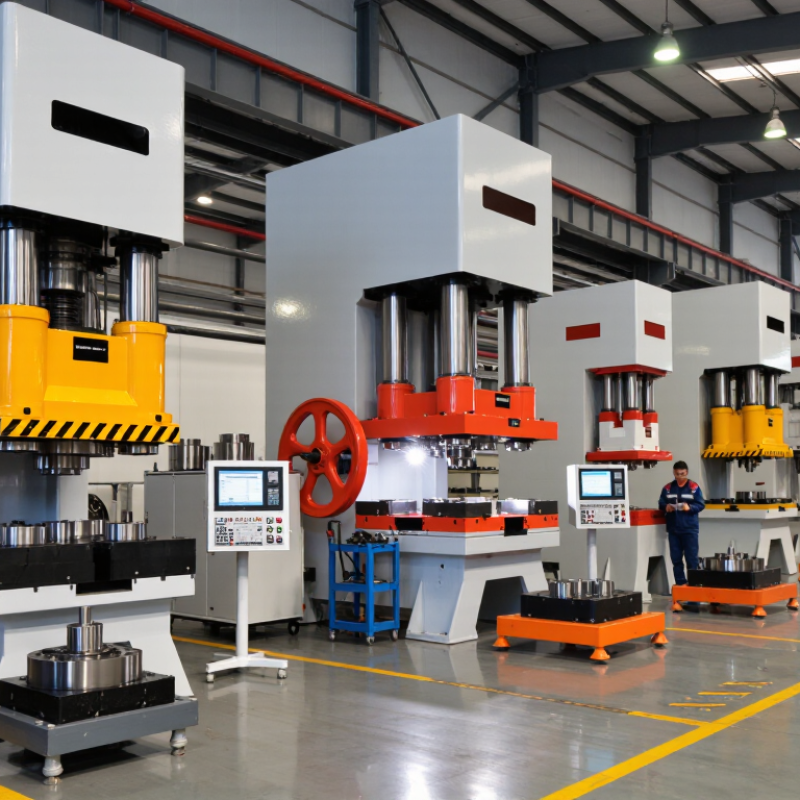
China Top 10 Power Pressing Machine Manufacturers?

Definition and Applications of Power Pressing Machines

Definition and Applications of Power Pressing Machines

A power pressing machine is industrial equipment that shapes material through controlled force. Mechanical models use a motor, flywheel, crank, and slide. Hydraulic models use fluid pressure and a cylinder. Both types can form metal accurately when tooling, pressure, and timing are properly matched.

These machines support blanking, punching, bending, embossing, and deep drawing. A sheet metal workshop may use one press to create brackets, panels, electrical enclosures, or small appliance parts. Heavier presses can form thicker steel components. The correct choice depends on material thickness, required force, stroke length, production speed, and part size. An experienced operator also checks die alignment before each run. Small alignment errors can damage tooling or create uneven edges.

Tips: Inspect guards, dies, lubrication points, and emergency controls before operation. Keep hands away from the forming area. Use measured test pieces, not assumptions. Record unusual vibration or noise immediately. Maintenance records improve reliability, although they cannot replace skilled judgment. A press may appear simple, but setup mistakes can cause costly defects. Even accurate calculations sometimes miss material springback. Engineers should review samples and adjust the process carefully.


Power Press Machine Capacity Range and Applications

Power presses are mechanical or hydraulic machines that apply controlled force to cut, punch, bend, blank, coin, or deep-draw metal. The chart shows commonly specified nominal force capacities, from light-duty sheet-metal work to heavy-duty forming and coining applications. Actual press selection depends on material strength, sheet thickness, die design, stroke, and production requirements.

How China’s Power Pressing Machine Industry Has Developed

China’s power pressing machine industry has changed from basic mechanical production into a more integrated manufacturing sector. Earlier machines often focused on simple stamping tasks, with limited control over speed and accuracy. Today, many factories combine CNC machining, servo technology, digital monitoring, and improved hydraulic systems. These upgrades help operators manage sheet metal, automotive parts, appliances, and industrial components more precisely.

The development has been supported by China’s broad supply chain. Local access to steel, motors, control systems, and machining services has shortened production cycles. Engineering teams now study energy use, vibration, die alignment, and operator safety during machine design. Modern workshops also use load testing, trial stamping, and inspection records before delivery. Practical experience still matters. A machine may appear advanced, yet poor calibration can create uneven pressure or damaged materials.

Progress is not perfectly balanced. Some manufacturers offer excellent documentation and stable quality, while others still rely heavily on manual inspection. This difference can affect maintenance, replacement parts, and long-term reliability. Buyers should examine test reports, safety functions, control-system training, and after-sales response instead of judging by appearance alone. Transparent specifications are valuable, but they are sometimes incomplete. That remains an area for improvement. Engineers are also exploring lower energy consumption, remote diagnostics, and safer human-machine interaction as production requirements become more demanding.

China Top 10 Power Pressing Machine Manufacturers? - How China’s Power Pressing Machine Industry Has Developed

Industry development and manufacturer-evaluation data table without company or brand names

No. Data Dimension Industry Data or Typical Market Benchmark How the Industry Has Developed Practical Meaning for Buyers
1 Product Classification Power presses are metal-forming machine tools used for shearing, punching, blanking, bending, and forming sheet or strip metal. Chinese manufacturers have expanded from conventional mechanical presses to integrated forming lines and digitally controlled equipment. Confirm the required forming process before comparing machine suppliers.
2 International Trade Category Metal-forming machine tools are generally classified under HS heading 8462, which covers machine tools for working metal by forging, hammering, or pressing. Use of internationally recognized customs classifications has supported cross-border sourcing and export documentation. Check the exact HS subheading with the customs broker because classification depends on machine design and function.
3 Machine Force Range Commercial mechanical power presses are commonly offered from approximately 25 tonnes to more than 1,000 tonnes; the available range varies by machine series. Domestic production has developed from general-purpose presses toward high-capacity equipment for automotive and heavy-component forming. Select nominal capacity with an engineering safety margin rather than choosing only by maximum tonnage.
4 Drive Technologies Common technologies include eccentric mechanical drives, crankshaft presses, servo presses, and hydraulic forming systems. Servo-driven systems have introduced more flexible slide motion, while mechanical presses remain widely used for high-speed repetitive production. Compare speed, energy use, forming accuracy, maintenance, and tooling requirements together.
5 Electrical and Control Standards Electrical equipment for machinery supplied to the Chinese market is commonly designed with reference to GB/T 5226.1-2019, which is aligned with IEC 60204-1 principles. Control systems have progressed from relay-based operation to PLC, HMI, servo, and network-connected production control. Request the electrical schematic, control-component list, software backup, and language options before ordering.
6 Machine Safety Press safety evaluation commonly considers guarding, emergency stops, two-hand controls, light curtains, die protection, and safe stopping performance. ISO 16092-1:2017 is a relevant international press-safety reference. Safety design has become more important as factories move toward automated lines and international compliance requirements. Safety functions should be verified through documentation, testing, and risk assessment rather than by appearance alone.
7 Automation Compatibility Typical press-line accessories include decoilers, straighteners, servo feeders, transfer systems, conveyors, sensors, and die-change equipment. Manufacturers increasingly supply complete press lines instead of standalone machines, improving material flow and reducing manual handling. Evaluate interface protocols, line synchronization, tooling access, and after-sales support for the complete line.
8 Main Application Sectors Major applications include automotive components, household appliances, electrical enclosures, electronics hardware, construction hardware, and general metal fabrication. Demand has shifted from basic fabrication toward higher repeatability, faster changeovers, and automated production for large-volume industries. Ask for application references using similar materials, part sizes, tooling, and production rates.
9 Manufacturing Development China’s machine-tool industry expanded significantly after the country joined the World Trade Organization in 2001, while industrial modernization policies later encouraged automation and advanced manufacturing. The supply chain has become broader, covering castings, transmissions, electrical controls, tooling, automation, and export services. Assess the supplier’s engineering depth and component traceability, not only the machine’s purchase price.
10 Key Supplier-Selection Metrics Important comparison factors include verified force accuracy, repeatability, cycle speed, energy consumption, safety compliance, spare-parts availability, installation capability, and warranty terms. The market has become more competitive, making measurable performance and lifecycle service more useful than broad claims about production scale. Use factory audits, sample-part trials, acceptance tests, and total-cost-of-ownership calculations when ranking manufacturers.
Reference note The capacity figures are typical market ranges rather than limits applying to every machine. Standards, customs classifications, and technical specifications should be confirmed against the latest official documents and the final machine configuration.

Criteria for Selecting the Top Chinese Manufacturers

China Top 10 Power Pressing Machine Manufacturers?

Selecting leading Chinese power press machine manufacturers requires more than comparing prices. Start with verified production experience, engineering capability, and documented quality controls. A reliable supplier should explain frame construction, motor capacity, clutch design, stroke accuracy, and safety systems clearly. Ask for factory videos, inspection records, and recent customer references. A serious manufacturer should not avoid technical questions.

Check whether the factory performs load testing on each machine. Request evidence of weld inspections, electrical testing, and dimensional checks. Certifications matter, but their scope and validity require careful verification. Review spare-parts availability, installation support, operator training, and response times. A low quotation can become expensive when technical support is weak. Delivery history also deserves attention. Delays can disrupt an entire production schedule.

Tips: Compare three quotations using the same specifications. Ask for a live machine demonstration. Inspect sample parts for burrs, deformation, and consistency. Confirm warranty terms in writing. Speak with an engineer, not only a sales representative. No checklist is perfect. Factory visits can still miss hidden weaknesses, especially during busy production periods. I would also request a trial run using material similar to yours, because brochure performance may not match daily operation. Reliable selection depends on evidence, honest communication, and a willingness to question attractive promises.

China’s Top 10 Power Pressing Machine Manufacturers

China’s Top 10 Power Pressing Machine Manufacturers should be assessed through evidence, not factory size alone. The global metal-forming machine market was valued at approximately USD 15 billion in 2023, according to Fortune Business Insights, with steady industrial demand projected through 2030. China’s manufacturing base benefits from extensive steel processing, automotive production, and appliance assembly. These sectors require presses with stable tonnage, repeatable stroke control, and practical energy management.

Production data matters. Reports from the China Machine Tool Industry Association consistently place China among the largest machine-tool manufacturing centers worldwide. For a credible top-ten review, buyers should examine rated capacity, frame deflection, cycle speed, servo efficiency, and documented safety testing. Export records also help. So do service coverage and spare-part response times. A reliable supplier should provide load charts, inspection records, installation guidance, and operator training. Numbers can mislead.

In real workshops, small details often decide performance. A rigid frame reduces vibration during deep drawing. A transparent guarding system improves daily visibility. One overlooked weakness is after-sales support; impressive brochures cannot repair a damaged clutch. Another concern is inconsistent reporting of accuracy and productivity figures. Independent acceptance tests are therefore valuable. No ranking is perfect. It should be reviewed as new production data, customer feedback, and compliance records become available.

Comparing Products, Certifications, Services, and Market Strengths

China Top 10 Power Pressing Machine Manufacturers?

A credible top-ten comparison should begin with machine capability, not advertising. Check C-frame, H-frame, mechanical, hydraulic, and servo press ranges. Record tonnage, stroke length, table size, speed, and repeatability. A production sample reveals more than a brochure. Ask for measured test results using your actual material and tooling.

Certifications also need careful checking. ISO 9001 may indicate controlled processes, but it does not prove machine performance. Request valid safety documents, electrical schematics, risk assessments, and conformity evidence for your destination market. Inspect guarding, emergency stops, light curtains, and control-panel quality. Small details matter. Some documents look complete but lack traceable model numbers.

Service separates strong manufacturers from ordinary suppliers. Compare installation support, operator training, spare-part availability, response times, and remote diagnostics. Ask whether technicians can commission the machine on site. Review export references with similar workloads, not only large customer logos. China’s dense manufacturing supply chain can support customization and competitive lead times. However, quality may vary between suppliers. I would personally inspect welds, oil-leak protection, calibration records, and final factory testing before ranking any company. No ranking is perfect. A cheaper quotation can become expensive after delayed parts, unclear manuals, or weak after-sales support. Market strength should mean dependable delivery, transparent communication, and stable performance over years.

Powder Coat Booths

For those larger-sized parts, or smaller quantity runs, we have 2 independent powder coat booths and ovens. The quality, durability and affordability of today’s powder coating finishes make this the process of choice for world-class companies.

Powder coating advantages over other forms of coating are many. Materials used in the Powder coating process can be metals and non-metals that come in a multitude of thicknesses, textures, colors, etc. Another of Powder coating’s biggest advantages over conventional coatings is its ability to create finishes in many different textures. Powder Coating Booths allow us the ability to apply these advantages to large products.

Wet Paint Line

Tri-State Fabricators runs a full-service conveyor line for painting. Wet painting can provide protection or decoration to many different part styles. From start to finish, every project is easier to undergo random and point-based inspection by our skilled painting team.

Advantages to our Wet Paint Line are these lines start with product prep and ends with a thorough inspection of a high quality finished product. Our ability to complete large and small projects with a superior finish and doing so in a timely and economical fashion. This passes along the savings in production to our customers. When powder coating ins not an option, our Wet Paint Line gets the job done right the first time.

Wet Paint Booths

When the parts get big and heavy we roll-out our custom paint racks and oversize booth. By utilizing our partnerships with all the major paint brands, we can match virtually any color with wet paint.

The advantages of having access to a Wet Paint Booth are many. Large projects of many different shapes can be loaded into the booth. The Wet Paint Booth offers an environment that is much more controlled than a typical parts painting operation.

Not only are they used because of their controlled environment, but they’re are also advantageous when it comes to applying paint to parts that are needed in industries that require specialty coatings such as medical, aerospace, etc.

Military CARC

Our military forces have some very high standards when it comes to the finish of their vehicles and equipment. From the first pre-treatment step to final coat, it takes a great deal of knowledge and experience to protect the men and women of our armed forces. They deserve only the best, and Tri-State Fabricators provides it.

All of our processes are closely monitored by our staff and management teams. Both of which are highly trained in the processes of metal fabrication and finishing. Tri-State Fabricators’ goal is to always fully satisfy each and every customer, including the military. We will always put a 110% into what we do.

Glass-Bead Blasting

Abrasive media blasting is an excellent way to remove old paint, rust, and increase the paint/powder adhesion. Glass beads produce a much smoother and brighter finish than angular abrasives; leaving the part clean yet without any dimensional change. Chemically inert and environmentally friendly, we can recycle our beads approximately 30 times; making them a more preferred method of metal cleaning or surface finishing.

Advantages to Glass Bead Blasting are many. Glass bead blast media is used when a project is needing rough surfaces need to become smooth for applications of coatings such as paint. It is typically used to clean paint and rust from a product surface without deforming the surface it is being used on. Overall, compared to many other blasting media, Glass Bead Blasting is a very economical choice and those savings are always passed on to our customers.

Part Washing

Tri-State Fabricators utilize a zinc phosphate wash to clean and etch the material to ensure the best paint adhesion possible. The unique design of our 3-stage wash system does the work like a 5-stage. From Cleaning and rinsing to conversion coating and post-treatment, Our Part Washing process is a complete service and works throughout the fabrication service and the finishing service.

Along with the previously mentioned benefits, Curing is a vital chemical reaction that leaves the product finish hard and relatively safe from mild abrasion and aggressive corrosion. This process can be done in more than one way; ambient air-dry or in curing ovens at temps that exceed 240°.

Burn-Off Oven

From fixing paint mistakes (someone else’s of course) to simply cleaning our paint line hooks, our burn-off oven is put to good use. After a quick burn-off, a little clean up, and a fresh coat of paint, your parts will look better than new.

Why does our Burn-Off Oven work so well? Because super heating the air around parts turns the materials into ashes. From paint and powder coatings to rubber and machining oils, high temps do the job without degrading the integrity of the part.

Masking

Masking is a vital part of producing high quality products. We have die-cut masking patterns to protect machined surfaces as well as a wide range of plugs and caps to protect threaded holes and bolts. We provide permanent and temporary masking.

Masking allows the selected sections of a product to be protected from a fabrication or finishing service. This can be with both chemicals when etching and tapes, paints when only finishing just a section of the product. Masking is great in aiding the customization process of a project.

Screen Printing

Screen printing is a photographic process that transfers artwork onto a porous nylon screen which allows colored ink to flow through the screen and be deposited on an aluminum or plastic component. We can generally have just about any design created onto a screen for your parts.

Some of the advantages of Screen Printing are, brand recognition for your business displaying on your products, assembly instructions, product warnings/hazards, etc. Tri-State Fabricators produces Screen Printing of the highest quality so you know it’s durable.

Metal Finishing

Metal Finishing is the art of treating the exterior portion of product, often metal but can also be made of other materials, so that the surface is clean and free of any debris. Then the process of applying coats or either paint of powder coat takes place. This coating process improves the quality of the product in both appearance and resistance to wear and corrosion.

Tri-State Fabricators, Inc., understands that a project typically isn’t complete until a high-quality finish has been added to your product. This is why our painting and powder coating teams continuously inspect the products throughout the Metal Finishing process.
