How to Choose the Best Electric Drive for Your Business Needs?
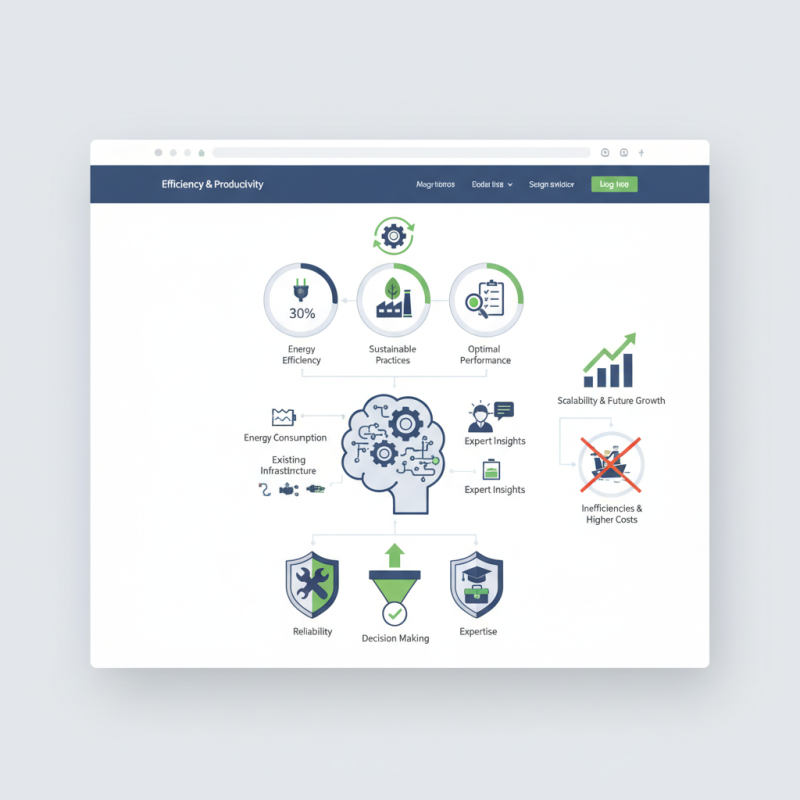
Choosing the right Electric Drive for your business can significantly impact efficiency and productivity. According to the International Energy Agency, electric drives can enhance energy efficiency by up to 30% in industrial applications. As the industry shifts towards more sustainable practices, understanding your options is essential for optimal performance.
Expert David Thomson, a leading figure in electric motor technology, stated, “The right electric drive isn't just about the technology; it’s about aligning with your specific operational needs.” His insights highlight the importance of evaluating your unique requirements. Factors like load types, energy consumption, and compatibility with existing infrastructure are crucial for informed decision-making.
Businesses often overlook the importance of scalability. An Electric Drive system should not only serve immediate needs but also adapt to future growth. Choosing incorrectly can lead to inefficiencies and higher operational costs. With the market evolving, staying informed about the latest technologies is vital for success. Prioritize reliability and expertise in your selection process to avoid potential setbacks.
Understanding Electric Drive Types: AC vs. DC Drives
When selecting an electric drive, understanding the differences between AC and DC drives is vital. AC drives are commonly used in industrial applications. They are efficient and can control variable speeds effectively. AC drives typically require less maintenance due to fewer moving parts. However, they may not perform well at very low speeds, creating challenges in specific scenarios.
On the other hand, DC drives offer better torque at low speeds. This makes them suitable for applications like servo motors. They can be easier to control in certain setups. Yet, they often require more maintenance, which can increase operational costs over time. Relying solely on one type may not be the best approach. Each application presents unique needs, prompting a reevaluation of goals.
Take time to assess both options based on your business requirements. Real-world testing can yield insights that theoretical comparisons cannot. Understanding feedback from operators can also uncover aspects of performance that numbers alone might miss. Balancing both types could lead to a more resilient system, fostering adaptability in a changing environment.
Electric Drive Types Comparison: AC vs. DC Drives
This chart compares AC and DC drives based on four key metrics: efficiency, cost, maintenance frequency, and control complexity. AC drives generally offer higher efficiency and greater maintenance intervals, while DC drives have a lower initial cost and simpler control systems.
Assessing Power Requirements: Calculating Torque and Speed Needs
When selecting an electric drive, it’s crucial to assess the power requirements accurately. Torque and speed are the two key factors that determine how effectively a drive will perform in your business. Calculate the torque needed based on the load and desired acceleration. Speed requirements are dictated by the application itself. For instance, a conveyor system may necessitate high speeds, while a press might focus on high torque.
Tips: Understand the load type. Is it dynamic or static? Each has different torque needs. This clarity helps in making informed decisions. Also, avoid overrating your system. An overly powerful drive can lead to higher energy costs and unnecessary complexity.
It’s vital to reflect on your current and future needs. Is your production likely to expand? Consider a drive that can handle increased demands without regular replacements. This saves time and resources in the long run. A careful assessment of torque and speed can significantly enhance operational efficiency, improve productivity, and reduce maintenance costs.
Evaluating Control Strategies: Open Loop vs. Closed Loop Systems
When considering electric drives, understanding control strategies is crucial. Open loop systems operate without feedback. They execute commands based on preset parameters. This simplicity often leads to lower costs. However, without feedback, they may not adapt to dynamic conditions. A study by the International Society of Automation found that open loop systems can result in a 15% efficiency loss in variable load scenarios.
Closed loop systems engage in continuous feedback. They monitor output and adjust inputs accordingly. This adaptive response enhances precision. Research indicates that closed loop systems can improve energy efficiency by 20-30%. These systems help maintain consistent performance, especially in applications with fluctuating demands. However, they also introduce complexity. Installation and maintenance requirements increase, which can be a drawback for some businesses.
The choice between open and closed loop systems often reflects a company's specific needs. A detailed cost-benefit analysis should account for workload variability. While open loop might be an economical choice for stable environments, closed loops offer greater long-term savings in volatile settings. Making the right decision requires evaluating operational demands and future scalability.
Determining Efficiency Levels: Standards and Energy Consumption Metrics
When selecting an electric drive for your business, understanding efficiency levels is crucial. Efficiency metrics guide businesses in making informed decisions. The International Energy Agency (IEA) indicates that energy efficiency improvements could lead to a 30% reduction in energy consumption by 2030. This staggering potential emphasizes the need to evaluate not just operational costs but also how much energy will be used effectively.
Different electric drives have varying efficiency ratings, often classified under distinct standards. The NEMA Premium efficiency standard shows that high-efficiency motors can offer savings of 2-8% compared to standard motors. Yet these ratings can be misleading if not assessed in the context of specific operational conditions. For example, a drive that is efficient under certain loads may underperform in a real-world application.
Therefore, analyzing actual energy consumption metrics alongside theoretical efficiencies becomes vital for true business optimization. Real-world application often reveals discrepancies between expected and actual performance. Many companies find their drives consume more energy as they age or due to wear and tear. Regular maintenance and monitoring become essential for maintaining performance levels. Additionally, the initial investment in high-quality drives might not always guarantee increased savings if they are not regularly evaluated. Understanding these nuances is key to selecting the best solution tailored to specific business needs.
Budgeting for Electric Drives: Initial Costs vs. Long-Term Savings
When budgeting for electric drives, balancing initial costs and long-term savings is crucial. According to recent industry reports, businesses can expect to save up to 30% on energy costs through the use of efficient electric drives. However, the initial investment can be substantial, often ranging from $5,000 to $50,000, depending on the system size and complexity. Understanding the total cost of ownership is vital. It includes installation, maintenance, and energy consumption over the system’s lifespan.
Tip: Assess your energy consumption patterns. This helps identify which electric drive fits your operational needs best. A mismatch can lead to overspending or excessive energy usage, counteracting potential savings.
Long-term savings can be impacted by various factors, including maintenance costs and efficiency gains. Reports indicate that properly maintained electric drives can deliver efficiency rates as high as 98%. However, neglecting maintenance often results in a drop in efficiency and higher operational costs. It's worth noting that some businesses underestimate these recurring costs.
Tip: Regularly review and recalibrate your electric drive systems. This small step helps maintain optimal performance and realize the savings you anticipated. With the right approach, investing in electric drives can lead to significant financial benefits over time.
How to Choose the Best Electric Drive for Your Business Needs? - Budgeting for Electric Drives: Initial Costs vs. Long-Term Savings
| Drive Type | Initial Cost (USD) | Energy Efficiency (%) | Maintenance Cost/Year (USD) | Estimated Lifespan (Years) | Total Cost Over 10 Years (USD) |
| AC Drive | 2,500 | 90 | 200 | 15 | 3,000 |
| DC Drive | 3,000 | 85 | 250 | 10 | 5,500 |
| Servo Drive | 4,000 | 92 | 300 | 12 | 6,600 |
| Variable Frequency Drive (VFD) | 2,000 | 88 | 150 | 20 | 2,500 |





