Why Choose a Forestry Excavator for Efficient Timber Management?
In recent years, the timber industry has faced increasing pressure to adopt more efficient management practices. According to a report by the Food and Agriculture Organization (FAO), approximately 30% of global forests have been degraded, leading to a push for better resource management. A Forestry Excavator plays a crucial role in reversing this trend. Equipped with specialized attachments, these machines can streamline harvesting and minimize damage to surrounding trees.
The International Society of Arboriculture states that efficient timber operations can enhance productivity by up to 25%. Forestry Excavators contribute to this efficiency, making them invaluable tools. They facilitate selective logging practices, which aid in maintaining ecosystem balance. However, the initial investment for such machinery can be substantial, which may deter smaller operators from making a transition.
This reluctance highlights the need for education on the long-term benefits of Forestry Excavators. Owners must weigh the costs against the potential for improved sustainability and profitability. As the demand for sustainable timber products grows, investing in advanced technology may not be a choice but a necessity for future success.
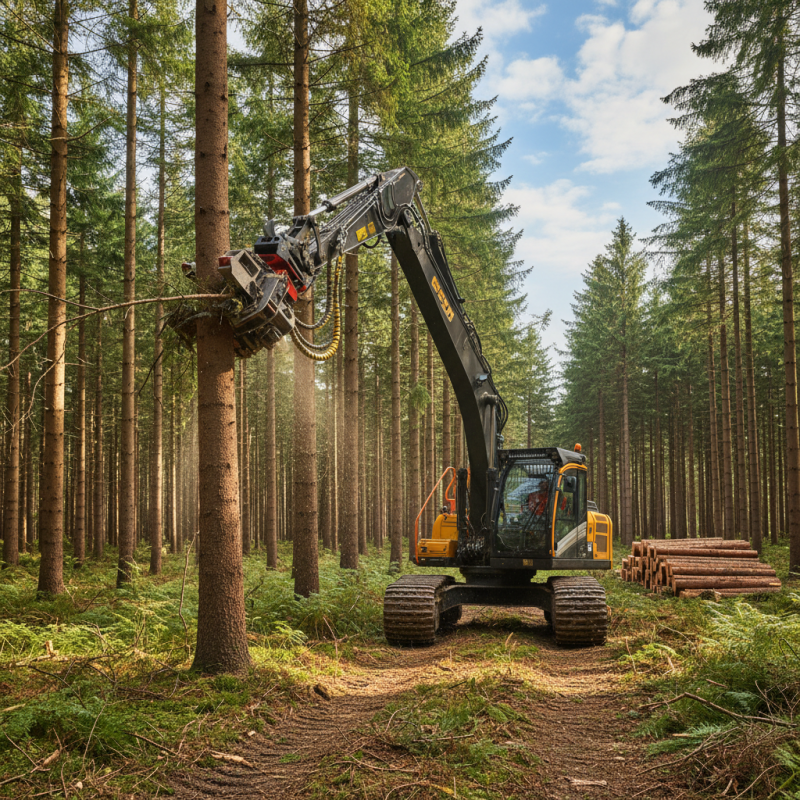
Understanding Forestry Excavators and Their Unique Features
Forestry excavators are specialized machines designed for timber management. They stand out due to their unique features tailored for challenging environments. A typical forestry excavator is equipped with a reinforced frame and a high reach. This ensures durability while handling heavy logs and navigating rough terrains. Their tracks provide stability on uneven ground, which is essential for forest work.
Tips: Always check the attachments. Using the right tools can enhance efficiency in timber handling. Tooth configurations on grapples can make a significant difference in productivity.
Hydraulic systems in these excavators offer powerful movements. They allow for precise manipulation of heavy loads, which is vital in ensuring safety and accuracy. Operators need to understand the machine's capabilities fully. It is crucial to assess the terrain before starting work. Misjudging the ground can lead to accidents or equipment damage.
Tips: Regular maintenance is key. Inspect the hydraulic systems and tracks frequently to prevent unexpected breakdowns. A well-maintained machine will perform better and last longer.
Investing in a forestry excavator can significantly improve timber management. But selecting the right model requires thoughtful consideration of specific tasks and environment. Operators should reflect on their requirements. Each forest is unique, and so are its challenges.
The Role of Forestry Excavators in Timber Harvesting Efficiency
Forestry excavators play a crucial role in modern timber harvesting. They combine power and precision, making them vital for efficient timber management. These machines can reach tight spaces where traditional equipment might struggle. Their ability to lift heavy logs with ease reduces the risk of damage to the surrounding environment.
One of the significant advantages of using forestry excavators is their versatility. They can be equipped with various attachments to suit different tasks. For instance, grapples make it easier to handle logs safely. Some operators have shared experiences of using these tools, noting an improvement in productivity. However, not every operator is fully trained, which can lead to inefficiencies.
While forestry excavators enhance harvesting speed, it’s essential to use them responsibly. Over-reliance on machinery might neglect traditional skills. Ensuring a balance between technology and human expertise is key to sustainable timber management. Operators should continuously seek training to improve their efficiency and adapt to changing forestry practices.
Timber Harvesting Efficiency with Forestry Excavators
Benefits of Using Forestry Excavators for Sustainable Forest Management
Forestry excavators play a vital role in sustainable forest management. These machines are designed to handle demanding tasks such as tree felling, site preparation, and timber harvesting efficiently. Their versatility enables better control over logging activities, reducing damage to surrounding vegetation. This precision is crucial for maintaining biodiversity and ecosystem health.
Using forestry excavators can also minimize soil disturbance. Less soil compaction leads to healthier root systems and improved water retention. Consider implementing regular maintenance checks for these machines. Keeping them in optimal condition ensures efficiency and extends their lifespan.
Another advantage is their ability to navigate challenging terrains. Many forestry excavators come equipped with specialized tracks, making them suitable for steep slopes and muddy environments. However, operators should be trained adequately to handle these situations. Skilled operators can avoid common pitfalls, ensuring safety and effectiveness in timber management. Prioritize ongoing training for your team to enhance their skills.
Why Choose a Forestry Excavator for Efficient Timber Management? - Benefits of Using Forestry Excavators for Sustainable Forest Management
| Feature | Description | Benefit |
| Environmental Impact | Minimized soil disturbance and protection of surrounding vegetation. | Promotes sustainable forestry practices and maintains ecosystem health. |
| Versatility | Able to handle various attachments for different forestry tasks. | Increases operational efficiency by enabling a single machine for multiple applications. |
| Precision | Enhanced control for cutting and processing timber. | Results in reduced waste and maximizes the value of harvested timber. |
| Operator Safety | Features like high visibility and ergonomic controls. | Improves safety for operators while handling heavy machinery in dense forest areas. |
| Efficiency | High-speed operation allows for quicker job completion. | Saves time and reduces labor costs associated with timber management. |
Comparing Forestry Excavators to Traditional Logging Equipment
Forestry excavators offer distinct advantages over traditional logging equipment. Their design focuses on efficiency, enabling precise and rapid timber management. Unlike conventional machinery, these excavators are equipped with specialized attachments. This versatility allows operators to perform various tasks, from tree felling to debris removal.
Traditional logging equipment often struggles with uneven terrain. This can lead to inefficiencies and increased operating costs. In contrast, forestry excavators excel in rugged environments. They have superior stability and mobility. Operators can navigate challenging landscapes with ease. However, proper training is crucial. Mismanagement can lead to accidents and costly repairs.
Cost is a key consideration. Forestry excavators may come with higher initial expenses. Yet, their long-term benefits often outweigh these costs. They reduce labor hours and minimize waste. This can enhance overall profitability. Careful evaluation of each project is necessary. Not every operation may benefit equally from this investment.
Best Practices for Operating Forestry Excavators in Timber Operations
Operating a forestry excavator requires specific practices to ensure efficiency in timber management. Understanding the machine’s capabilities is crucial. For instance, a well-maintained forestry excavator can enhance productivity by up to 30%, according to industry reports. This is significant for forest operations that depend on maximizing output while preserving resources.
When operating these excavators, precision matters. Keep the work area clear of obstacles. Ensuring stability during operations helps prevent accidents. Regularly inspect the excavator’s hydraulic systems; neglecting this can lead to costly downtimes. Training operators on proper usage is essential. Data suggest that skilled operators can improve output by 25%.
Consider these Tips:
- Always check the ground conditions before operation.
- Use the correct attachments for your tasks.
- Practice regular maintenance to extend equipment life.
Mistakes are part of the learning curve. Sometimes, operators rush tasks, leading to errors. Reflecting on these moments can improve safety and efficiency in future projects. Industry data highlights that projects with
thorough planning succeed
40% more often.





