


Choosing the right Muffle Furnace begins with the sample, not the largest temperature printed on a product page. A ceramic crucible, a small metal coupon, and a batch of ash place different demands on heating capacity, chamber size, and temperature control. The best choice fits the work you actually perform.
Before comparing models, define the target temperature, hold time, sample dimensions, and required atmosphere. Check the furnace’s usable chamber space, heating uniformity, ramp-rate controls, and sensor type. A readable display matters, but it cannot compensate for poor temperature stability. Ask for performance data under conditions similar to your process. Small details count: a heavy door may slow repeated loading, while an oversized chamber can waste energy and bench space.
As [verified muffle-furnace expert name] puts it, “[Insert a verified quotation about matching furnace performance to the application].” The quotation should be checked against a reliable source before publication. That step may feel fussy. It protects the article’s credibility. No single specification makes a furnace “best” for every laboratory or workshop. A unit that performs well for routine ashing may be unsuitable for delicate heat treatment. Compare the full operating range, safety features, service support, and total cost—not just the maximum temperature. A careful selection starts with clear requirements, then tests whether the specifications match them.
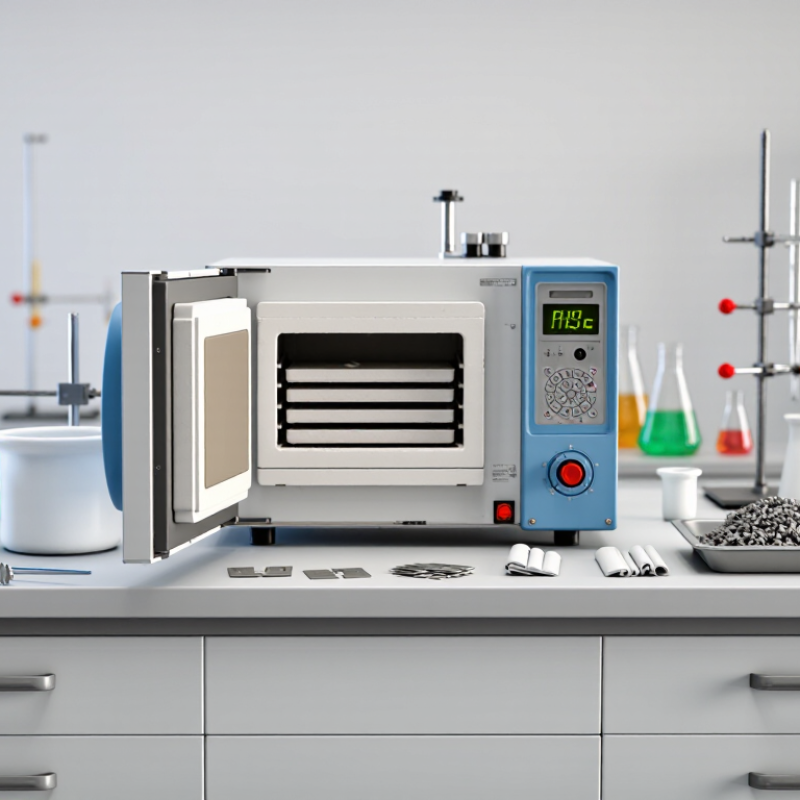
A muffle furnace heats a sample inside an insulated chamber, keeping it apart from the heating elements. In fuel-fired designs, the chamber can also separate the load from combustion gases. Electrical elements warm the chamber walls, which then transfer heat to the sample by radiation and convection. A thermocouple measures chamber temperature, and the controller adjusts power to approach the setpoint. Heat stays inside. Yet the displayed temperature is not necessarily the sample’s temperature. A large ceramic crucible, a crowded chamber, or opening the door can change how quickly a sample heats.
This describes the sensor, not the furnace’s temperature uniformity or the sample’s actual temperature. For a useful comparison, check the stated uniformity, working-chamber dimensions, maximum operating temperature, and ramp-rate control. Place a test crucible near the center, then compare its measured temperature with the display. It is a simple check, but easy to skip. Consider how often the door will open and whether loads will vary; real operating conditions may be less tidy than a specification sheet suggests.
Start with the sample, not the furnace’s maximum temperature. Record the required setpoint, ramp rate, hold time, and number of samples per run. A powder in a shallow crucible heats differently from a dense ceramic piece. Allow space around each vessel; crowded shelves can slow heating and create uneven results. Small details matter.
Check the whole temperature range, not just one target. NIST’s ITS-90 reference data place gold’s freezing point at 1,064.18°C, a useful calibration point near many laboratory operating temperatures.
For Type K thermocouples, ASTM E230/E230M gives a standard tolerance of ±2.2°C or ±0.75% of reading, whichever is greater, at temperatures above 0°C. The sensor’s tolerance is not the same as the furnace’s temperature uniformity. Ask for both, and compare the stated uniformity with your sample’s acceptable variation.
Then consider the container and atmosphere. Confirm that crucibles tolerate the peak temperature and sample chemistry, and check whether fumes require compatible exhaust. Match chamber size to the largest planned load, but avoid choosing an oversized unit for occasional work. It can waste energy and space.
Do not guess. I would also test a representative load before routine use; empty-chamber specifications may not predict performance with real samples.
Temperature range is only useful when it matches the material and process. Check the required operating temperature, not just the furnace’s maximum rating. Frequent work near the upper limit can shorten component life, so leave a practical margin. Also consider temperature uniformity: samples placed near the chamber door may heat differently from those at the center. Small details matter.
Capacity and heating performance affect daily use. Estimate the space needed for your largest batch, then allow room for airflow around trays and samples. A chamber packed to the edge may heat unevenly. Compare heating rate and temperature recovery after loading; faster is not always better, especially for heat-sensitive materials. I would double-check the typical batch size, since choosing only for occasional large loads can mean heating unused space every day.
Tips: Ask for the stated uniformity and recovery conditions, and compare them with your actual loading pattern. Keep a simple temperature log during initial runs. It may reveal a mismatch you did not expect. Also check whether the controls allow stable settings for your routine cycle.
A muffle furnace should match the samples, temperature range, and workload you actually have. Check the chamber lining and its rated temperature, then consider whether your samples may react with or contaminate that material. Alumina linings can suit many high-temperature applications, but compatibility depends on the process. Ask for documented temperature uniformity, not just a maximum rating. Heat matters. A larger chamber may be useful, yet it can take longer to heat and recover.
Controls affect repeatability. Look for clear temperature displays, programmable ramps, and stable hold settings. A timer alone does not confirm that the sample reached the target temperature. Ask how calibration is checked and whether the controller records or displays errors. A higher maximum temperature can seem reassuring, but it may add cost without improving your results. I would compare specifications with your actual procedures before deciding.
Tips: Check for an over-temperature cutoff, insulated exterior surfaces, and a door design that reduces accidental contact with hot parts. Confirm that the furnace has suitable ventilation and enough clearance around it, following the installation guidance. If staff share the equipment, simple controls and visible status indicators can prevent confusion. Small details matter. Read the manual before comparing models; safety features and operating limits can vary.
Choose a muffle furnace around the work you actually run, not the largest model your budget can stretch to. Record peak temperature, ramp rate, sample mass, crucible size, and cycles per day. A few small ash tests rarely justify a large chamber. Capacity matters. Leave room for airflow around the unit, safe door access, and routine maintenance. Check the laboratory’s voltage, circuit capacity, bench strength, and exhaust arrangements before comparing purchase prices.
Running costs deserve attention too. The U.S. Department of Energy’s process-heating guidance estimates that heating processes account for about 51% of energy use in U.S. manufacturing. That figure is not specific to laboratory furnaces, but it shows why electrical demand and operating hours belong in the budget. The U.S. EPA’s Labs21 materials report that laboratories can use roughly five times the energy per square foot of typical office buildings. A furnace is only one part of that load, yet a long daily hold can add up.
Ask suppliers for chamber dimensions, power requirements, temperature uniformity data, and service needs, then compare them with your actual workspace. A small chamber may heat faster, but it can feel cramped when sample batches grow. That estimate is imperfect. Keep a little capacity in reserve, not an entire empty furnace. A simple log of test schedules and energy use after installation can reveal whether the original choice suited the lab.


For those larger-sized parts, or smaller quantity runs, we have 2 independent powder coat booths and ovens. The quality, durability and affordability of today’s powder coating finishes make this the process of choice for world-class companies.
Powder coating advantages over other forms of coating are many. Materials used in the Powder coating process can be metals and non-metals that come in a multitude of thicknesses, textures, colors, etc. Another of Powder coating’s biggest advantages over conventional coatings is its ability to create finishes in many different textures. Powder Coating Booths allow us the ability to apply these advantages to large products.
Tri-State Fabricators runs a full-service conveyor line for painting. Wet painting can provide protection or decoration to many different part styles. From start to finish, every project is easier to undergo random and point-based inspection by our skilled painting team.
Advantages to our Wet Paint Line are these lines start with product prep and ends with a thorough inspection of a high quality finished product. Our ability to complete large and small projects with a superior finish and doing so in a timely and economical fashion. This passes along the savings in production to our customers. When powder coating ins not an option, our Wet Paint Line gets the job done right the first time.
When the parts get big and heavy we roll-out our custom paint racks and oversize booth. By utilizing our partnerships with all the major paint brands, we can match virtually any color with wet paint.
The advantages of having access to a Wet Paint Booth are many. Large projects of many different shapes can be loaded into the booth. The Wet Paint Booth offers an environment that is much more controlled than a typical parts painting operation.
Not only are they used because of their controlled environment, but they’re are also advantageous when it comes to applying paint to parts that are needed in industries that require specialty coatings such as medical, aerospace, etc.
Our military forces have some very high standards when it comes to the finish of their vehicles and equipment. From the first pre-treatment step to final coat, it takes a great deal of knowledge and experience to protect the men and women of our armed forces. They deserve only the best, and Tri-State Fabricators provides it.
All of our processes are closely monitored by our staff and management teams. Both of which are highly trained in the processes of metal fabrication and finishing. Tri-State Fabricators’ goal is to always fully satisfy each and every customer, including the military. We will always put a 110% into what we do.
Abrasive media blasting is an excellent way to remove old paint, rust, and increase the paint/powder adhesion. Glass beads produce a much smoother and brighter finish than angular abrasives; leaving the part clean yet without any dimensional change. Chemically inert and environmentally friendly, we can recycle our beads approximately 30 times; making them a more preferred method of metal cleaning or surface finishing.
Advantages to Glass Bead Blasting are many. Glass bead blast media is used when a project is needing rough surfaces need to become smooth for applications of coatings such as paint. It is typically used to clean paint and rust from a product surface without deforming the surface it is being used on. Overall, compared to many other blasting media, Glass Bead Blasting is a very economical choice and those savings are always passed on to our customers.
Tri-State Fabricators utilize a zinc phosphate wash to clean and etch the material to ensure the best paint adhesion possible. The unique design of our 3-stage wash system does the work like a 5-stage. From Cleaning and rinsing to conversion coating and post-treatment, Our Part Washing process is a complete service and works throughout the fabrication service and the finishing service.
Along with the previously mentioned benefits, Curing is a vital chemical reaction that leaves the product finish hard and relatively safe from mild abrasion and aggressive corrosion. This process can be done in more than one way; ambient air-dry or in curing ovens at temps that exceed 240°.
From fixing paint mistakes (someone else’s of course) to simply cleaning our paint line hooks, our burn-off oven is put to good use. After a quick burn-off, a little clean up, and a fresh coat of paint, your parts will look better than new.
Why does our Burn-Off Oven work so well? Because super heating the air around parts turns the materials into ashes. From paint and powder coatings to rubber and machining oils, high temps do the job without degrading the integrity of the part.
Masking is a vital part of producing high quality products. We have die-cut masking patterns to protect machined surfaces as well as a wide range of plugs and caps to protect threaded holes and bolts. We provide permanent and temporary masking.
Masking allows the selected sections of a product to be protected from a fabrication or finishing service. This can be with both chemicals when etching and tapes, paints when only finishing just a section of the product. Masking is great in aiding the customization process of a project.
Screen printing is a photographic process that transfers artwork onto a porous nylon screen which allows colored ink to flow through the screen and be deposited on an aluminum or plastic component. We can generally have just about any design created onto a screen for your parts.
Some of the advantages of Screen Printing are, brand recognition for your business displaying on your products, assembly instructions, product warnings/hazards, etc. Tri-State Fabricators produces Screen Printing of the highest quality so you know it’s durable.
Metal Finishing is the art of treating the exterior portion of product, often metal but can also be made of other materials, so that the surface is clean and free of any debris. Then the process of applying coats or either paint of powder coat takes place. This coating process improves the quality of the product in both appearance and resistance to wear and corrosion.
Tri-State Fabricators, Inc., understands that a project typically isn’t complete until a high-quality finish has been added to your product. This is why our painting and powder coating teams continuously inspect the products throughout the Metal Finishing process.

