

Choosing a Copper Wire Recycling Machine in 2026 requires more than comparing prices and motor power. The right equipment should match your wire types, daily volume, labor capacity, and facility layout. A small workshop may need a compact granulator for insulated cables. A large processor may require a complete line with feeding, separation, dust control, and quality monitoring. Real operating conditions matter.
Experienced recyclers often inspect output purity before reviewing impressive production claims. Ask for test results using cables similar to yours, including thin wires, mixed insulation, and oily materials. Check the machine’s recovery rate, power consumption, noise level, maintenance access, and spare-parts availability. A reliable supplier should explain limitations clearly, not promise perfect separation in every situation. That matters.
Safety and compliance should guide every purchasing decision. Look for guarded moving parts, emergency stops, clear operating instructions, and suitable electrical protection. Confirm that the machine supports responsible material handling and meets applicable local standards. Supplier training, installation support, warranty terms, and documented service records can reveal more than a polished brochure. References from comparable facilities are valuable evidence.
There is no universal best machine. A costly model can still perform poorly when poorly matched to your feedstock. I would request a material trial before committing, although trials may delay the purchase. That delay is often worthwhile. Measure actual throughput, copper purity, residue, and operator workload. Review those figures with an experienced technician. In 2026, careful selection should balance efficiency, durability, compliance, and long-term operating reality. The best choice is not always the fastest one.
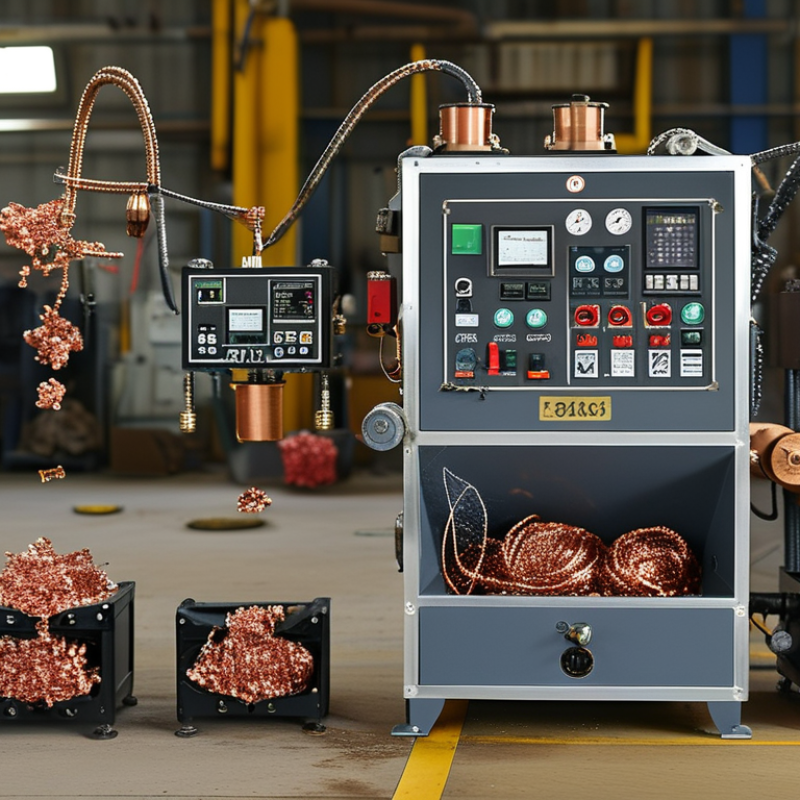
Before comparing machine specifications, define what your copper wire stream actually contains.
A clear goal prevents an expensive mismatch later. Are you processing clean, bare copper, insulated household cable, fine-stranded wire, or mixed scrap? Each type behaves differently during feeding, stripping, granulating, and separation. Measure daily input, peak loads, target recovery, and acceptable residue levels. Write these figures down. Guesswork weakens the decision.
Clean, thick cable may suit a stripping-focused process. Small insulated wires often need controlled granulation and reliable air or vibration separation. If aluminum, steel, plastic, oil, or moisture appears in the feed, record its approximate percentage. Contamination affects cutting speed, separation accuracy, maintenance intervals, and the value of recovered copper. Fine strands can also challenge screens and airflow settings. Do not judge capacity by motor power alone. Ask how the machine performs with your actual wire sizes.
An experienced evaluation uses a representative sample, not a showroom handful. Run several batches and inspect copper purity, insulation residue, dust, noise, and temperature. Request recovery data under similar conditions, then compare it with your own weighing records. Controls should be understandable to operators, and guarding should support safe routine work. Maintenance access matters. Belts, blades, screens, and bearings need practical inspection points. Ideally, choose a machine that can be adjusted as your feed changes. That flexibility costs attention, though. Overlooking it can create downtime.
Copper wire recycling machine selection should begin with throughput, not advertised motor power. The International Copper Study Group reported global refined copper usage above 26 million tonnes in 2024. That demand makes efficient secondary recovery increasingly important. However, a small workshop and a cable-processing plant need different designs.
Dry stripping machines suit thick, clean cables and usually create fewer mixed residues. Granulators handle varied cable sizes, but they need controlled feeding, dust collection, and effective air separation. Recovery rate depends on more than the machine. Cable insulation, moisture, copper diameter, and operator settings all matter. The U.S. Geological Survey’s Mineral Commodity Summaries 2025 reported global mined copper production near 22 million tonnes in 2024. This comparison shows why recovery losses deserve attention. A one-percent loss becomes significant at high volumes. Perfect recovery is rarely realistic.
Tips: Test at least three real cable samples before buying. Record kilograms per hour, copper purity, power use, and visible copper in the plastic fraction. Ask for measured results, not laboratory claims. The International Copper Association has reported that recycled copper supplies a substantial share of global copper use, but local feedstock can perform differently. I would also inspect blade access and screen replacement time. These details are easy to ignore. They later decide operating costs. Choose capacity with a buffer, perhaps 20% above your normal load. Oversizing can waste electricity, while undersizing may overheat during peak batches.
Compare machine designs, processing capacity, and copper recovery rates using indicative midpoints from commonly published equipment specification ranges. Actual performance depends on wire diameter, insulation type, feed consistency, and operating conditions.
Key insight: Compact wire strippers are suitable for low-volume, high-value cable streams, while granulator-based systems provide higher throughput. Advanced dry separation and wet separation lines generally achieve the highest recovery rates but require more space, utilities, and maintenance.
When evaluating a copper wire recycling machine, inspect its separation technology closely. Airflow, blade design, and screening accuracy directly affect copper recovery. A reliable separator should remove insulation without damaging fine copper strands. Ask for test results using your actual cable types. Thick cables and flexible wires behave differently. I have seen machines perform well with clean feedstock but struggle with mixed insulation. That limitation matters. Check whether the system allows practical adjustments during daily operation.
Tips: Request a live material test. Weigh the input and recovered copper. Check dust control, noise, cleaning access, and maintenance time. Do not trust appearance alone.
Output quality should be measured, not guessed. Examine copper purity, remaining plastic, strand breakage, and moisture after processing. A shiny product may still contain hidden insulation. Operating efficiency includes more than hourly capacity. Track electricity use, labor requirements, stoppages, and blade replacement intervals. A machine with higher output can become expensive when cleaning takes too long. Ask operators to record actual performance for several shifts. Short demonstrations can hide irregular feeding problems. I would also leave room for uncertainty, because real production rarely matches brochure figures. Safety features and clear operating instructions support consistent results. Evaluate the whole workflow, from feeding to final collection.
How to Choose a Copper Wire Recycling Machine in 2026?
Safety should be checked before processing capacity. Look for enclosed cutting areas, emergency-stop buttons, and accessible isolation switches. Guards must stay closed during operation. Interlock systems are valuable when operators remove covers for cleaning. Overload protection can prevent motor damage when thick wire enters unexpectedly. Ask whether the machine produces excessive noise or airborne dust. A safer model protects workers and reduces hidden operating costs.
Maintenance needs become obvious after several weeks of use. Choose a machine with reachable blades, screens, bearings, and collection containers. Daily cleaning should not require complicated tools. Check how quickly worn parts can be replaced, and confirm that service instructions are clear. In practical evaluations, small access problems often become major delays. I have seen operators postpone cleaning because panels were awkward to remove. That is not ideal. A simple maintenance log can reveal unusual vibration, rising temperatures, or declining separation quality.
Environmental compliance requires more than claiming high recovery rates. Examine dust-control arrangements, noise levels, waste collection, and energy consumption. The machine should support accurate records for incoming wire, recovered copper, and residual insulation. Confirm that its operation fits local environmental permits and workplace requirements. Ask for test data, technical documents, and inspection support rather than relying on sales language. Requirements can change. Recheck them. A machine may perform well technically, yet still create problems through poor ventilation, unmanaged waste, or excessive electricity use.
| Evaluation Dimension | Compact Wire Stripper | Dry Copper Granulator | Industrial Cable Recycling Line | What to Verify Before Purchase |
|---|---|---|---|---|
| Best application | Clean, uniform cables with known diameters | Mixed insulated copper wire and small cable | High-volume, mixed cable streams and continuous operation | Input material range, insulation types, contamination level, and required output purity |
| Typical throughput | Approximately 20–150 kg/h | Approximately 100–1,000 kg/h | Approximately 500–3,000+ kg/h | Confirm tested capacity for the actual cable mix rather than relying only on maximum rated capacity |
| Copper recovery target | Up to about 98% when cable size and feed rate are consistent | Commonly about 95–99% with correctly adjusted air separation | Commonly about 97–99% after coordinated shredding, separation, and screening | Request a material test report defining recovery rate, copper purity, and test conditions |
| Key safety features | Fixed guards, emergency-stop button, protected feed opening, and overload protection | Interlocked access doors, emergency stops, overload protection, guarded belts, and enclosed rotating parts | Safety-rated interlocks, lockout points, emergency-stop circuit, guarded conveyors, access platforms, and dust-control safeguards | Check the risk assessment, emergency-stop validation, guarding design, and lockout/tagout provisions |
| Noise and dust control | Usually limited dust; noise depends on motor and stripping speed | Requires enclosed transfer points and may require local exhaust ventilation | Typically requires a designed dust-collection system, ducting, filters, and noise-control measures | Ask for measured sound pressure levels, dust-emission data, filter specifications, and workplace exposure controls |
| Routine maintenance | Daily cleaning; frequent blade, roller, and cable-diameter adjustments | Daily cleaning; regular blade inspection; lubrication and filter inspection according to operating hours | Daily inspection plus scheduled servicing of cutters, bearings, screens, conveyors, magnets, fans, and filters | Obtain the preventive-maintenance schedule, spare-parts list, lubrication chart, and expected wear-part life |
| Energy considerations | Generally the lowest installed power; suitable for intermittent processing | Often about 30–100 kW for a complete compact system, depending on capacity | Often above 100 kW because of shredding, conveying, separation, and dust collection | Compare kWh per tonne at the same feed composition and include standby and dust-collection loads |
| Environmental compliance | Low process complexity; still requires compliant electrical equipment and waste handling | Requires control of airborne dust, noise, residual insulation, and electrical consumption | Requires documented controls for dust, noise, waste residues, stormwater, energy use, and occupational exposure | Confirm applicable local permits, waste codes, air-emission limits, noise limits, and electrical requirements |
| Electrical and conformity documentation | Electrical schematic, motor data, operating manual, and conformity declaration | Complete wiring documentation, control-panel details, conformity declaration, and test records | System risk assessment, electrical drawings, safety-circuit validation, manuals, and commissioning records | Select documentation appropriate to the installation country; do not treat a generic certificate as full compliance |
| Recommended buyer profile | Small processors prioritizing low cost, simple operation, and manual sorting | Recyclers needing flexible processing with moderate capital and floor-space requirements | Facilities with stable feed volume, trained maintenance staff, and sufficient utility capacity | Match the machine to annual tonnes, available labor, floor space, budget, and permit conditions |
Note: Throughput, recovery, power consumption, noise, and maintenance intervals are typical industry planning ranges. Actual performance depends on cable composition, feed preparation, machine configuration, operating conditions, and local regulatory requirements. Require a documented performance test using representative feedstock before purchase.
Choose the machine by total cost, not its purchase price. A reliable calculation includes electricity, labor, blades, dust control, maintenance, downtime, installation, and freight. The International Copper Association reports that recycled copper supplies about 30% of global copper demand. It also uses up to 85% less energy than primary production. These figures support long-term recycling investment, but they do not guarantee fast payback.
Tips: Request a 30-day production test using your actual wire. Measure kilograms per hour, copper recovery, noise, and power consumption. Ask for spare-part prices and technician response times. A supplier should provide wiring diagrams, operator training, and preventive-maintenance schedules. Check whether critical parts are locally available. Delays can quietly damage ROI.
Calculate monthly net return as recovered copper value minus labor, energy, maintenance, and disposal costs. Then compare that figure with the complete installed cost. Add conservative assumptions for copper prices and feedstock volume. A three-year model is more useful than a payback claim based on perfect conditions. The weak point is often inconsistent input material. Mixed insulation, thin wire, and moisture can reduce output sharply. USGS Mineral Commodity Summaries 2025 highlights scrap recovery as an important source of U.S. copper supply, but market conditions still change. No forecast is perfect. Leave room for repairs, training, and lower-than-promised throughput. A cheaper machine may become expensive when support is slow. Ask for documented test results, warranty limits, and customer references before signing.


For those larger-sized parts, or smaller quantity runs, we have 2 independent powder coat booths and ovens. The quality, durability and affordability of today’s powder coating finishes make this the process of choice for world-class companies.
Powder coating advantages over other forms of coating are many. Materials used in the Powder coating process can be metals and non-metals that come in a multitude of thicknesses, textures, colors, etc. Another of Powder coating’s biggest advantages over conventional coatings is its ability to create finishes in many different textures. Powder Coating Booths allow us the ability to apply these advantages to large products.
Tri-State Fabricators runs a full-service conveyor line for painting. Wet painting can provide protection or decoration to many different part styles. From start to finish, every project is easier to undergo random and point-based inspection by our skilled painting team.
Advantages to our Wet Paint Line are these lines start with product prep and ends with a thorough inspection of a high quality finished product. Our ability to complete large and small projects with a superior finish and doing so in a timely and economical fashion. This passes along the savings in production to our customers. When powder coating ins not an option, our Wet Paint Line gets the job done right the first time.
When the parts get big and heavy we roll-out our custom paint racks and oversize booth. By utilizing our partnerships with all the major paint brands, we can match virtually any color with wet paint.
The advantages of having access to a Wet Paint Booth are many. Large projects of many different shapes can be loaded into the booth. The Wet Paint Booth offers an environment that is much more controlled than a typical parts painting operation.
Not only are they used because of their controlled environment, but they’re are also advantageous when it comes to applying paint to parts that are needed in industries that require specialty coatings such as medical, aerospace, etc.
Our military forces have some very high standards when it comes to the finish of their vehicles and equipment. From the first pre-treatment step to final coat, it takes a great deal of knowledge and experience to protect the men and women of our armed forces. They deserve only the best, and Tri-State Fabricators provides it.
All of our processes are closely monitored by our staff and management teams. Both of which are highly trained in the processes of metal fabrication and finishing. Tri-State Fabricators’ goal is to always fully satisfy each and every customer, including the military. We will always put a 110% into what we do.
Abrasive media blasting is an excellent way to remove old paint, rust, and increase the paint/powder adhesion. Glass beads produce a much smoother and brighter finish than angular abrasives; leaving the part clean yet without any dimensional change. Chemically inert and environmentally friendly, we can recycle our beads approximately 30 times; making them a more preferred method of metal cleaning or surface finishing.
Advantages to Glass Bead Blasting are many. Glass bead blast media is used when a project is needing rough surfaces need to become smooth for applications of coatings such as paint. It is typically used to clean paint and rust from a product surface without deforming the surface it is being used on. Overall, compared to many other blasting media, Glass Bead Blasting is a very economical choice and those savings are always passed on to our customers.
Tri-State Fabricators utilize a zinc phosphate wash to clean and etch the material to ensure the best paint adhesion possible. The unique design of our 3-stage wash system does the work like a 5-stage. From Cleaning and rinsing to conversion coating and post-treatment, Our Part Washing process is a complete service and works throughout the fabrication service and the finishing service.
Along with the previously mentioned benefits, Curing is a vital chemical reaction that leaves the product finish hard and relatively safe from mild abrasion and aggressive corrosion. This process can be done in more than one way; ambient air-dry or in curing ovens at temps that exceed 240°.
From fixing paint mistakes (someone else’s of course) to simply cleaning our paint line hooks, our burn-off oven is put to good use. After a quick burn-off, a little clean up, and a fresh coat of paint, your parts will look better than new.
Why does our Burn-Off Oven work so well? Because super heating the air around parts turns the materials into ashes. From paint and powder coatings to rubber and machining oils, high temps do the job without degrading the integrity of the part.
Masking is a vital part of producing high quality products. We have die-cut masking patterns to protect machined surfaces as well as a wide range of plugs and caps to protect threaded holes and bolts. We provide permanent and temporary masking.
Masking allows the selected sections of a product to be protected from a fabrication or finishing service. This can be with both chemicals when etching and tapes, paints when only finishing just a section of the product. Masking is great in aiding the customization process of a project.
Screen printing is a photographic process that transfers artwork onto a porous nylon screen which allows colored ink to flow through the screen and be deposited on an aluminum or plastic component. We can generally have just about any design created onto a screen for your parts.
Some of the advantages of Screen Printing are, brand recognition for your business displaying on your products, assembly instructions, product warnings/hazards, etc. Tri-State Fabricators produces Screen Printing of the highest quality so you know it’s durable.
Metal Finishing is the art of treating the exterior portion of product, often metal but can also be made of other materials, so that the surface is clean and free of any debris. Then the process of applying coats or either paint of powder coat takes place. This coating process improves the quality of the product in both appearance and resistance to wear and corrosion.
Tri-State Fabricators, Inc., understands that a project typically isn’t complete until a high-quality finish has been added to your product. This is why our painting and powder coating teams continuously inspect the products throughout the Metal Finishing process.