
How to Choose a Stadium LED Screen in 2026?

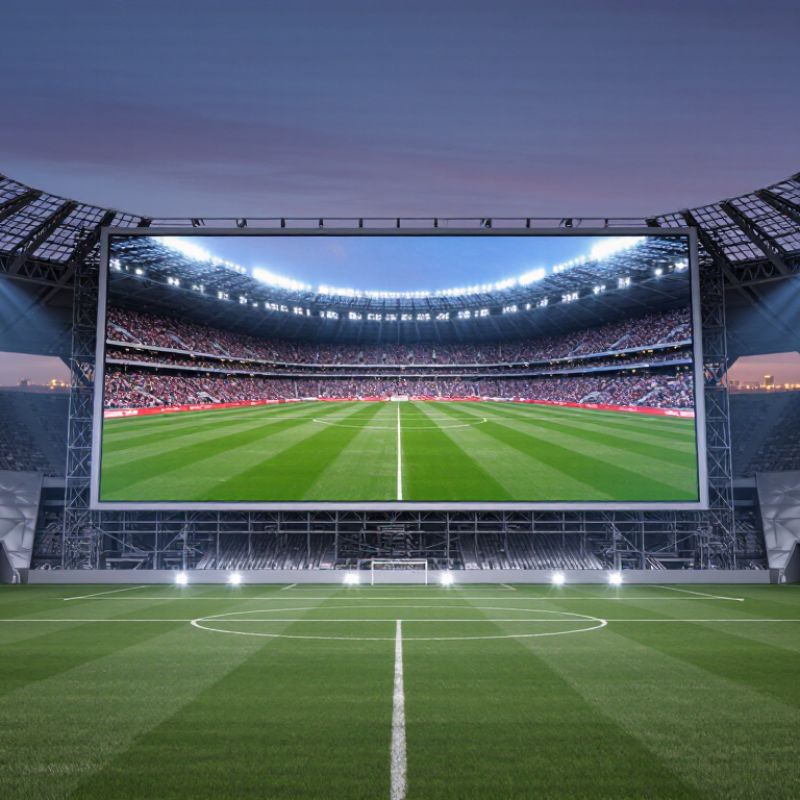
Choosing a Stadium Led Screen in 2026 starts with how fans use a venue, not with a headline specification. A football ground, indoor arena, and multi-use stadium place different demands on image size, viewing distance, and content. Small details matter. The screen must stay readable from upper seats while showing replays, score updates, and sponsor graphics without distracting glare.

Buyers should compare pixel pitch, brightness controls, refresh performance, color consistency, and service access. They also need to assess weather protection, wind loading, mounting structure, power demand, signal paths, and maintenance access with qualified project teams. A specification sheet can look convincing, yet it cannot show whether a fast replay feels clear from the far corner. That gap matters. Demonstrations using real footage and references from comparable venues can help uncover issues early.

In 2026, buyers may also consider energy monitoring, remote diagnostics, and integration with existing control systems. These features help only when staff can operate them reliably and replacement parts remain available. Avoid choosing on price or pixel pitch alone. A lower upfront cost may mean harder servicing, while an impressive display can still be poorly placed. This guide explains how to match screen design, technical performance, installation, and long-term support to a venue’s needs. No screen is perfect. A careful decision starts with measurable requirements, honest site conditions, and a plan for daily operation.
How to Choose a Stadium LED Screen in 2026?

Understanding Stadium LED Screen Types and Uses

A stadium rarely needs one LED screen type everywhere. The main video board carries replays, scores, and close-up action to distant seats. Its size and pixel pitch should match the farthest viewing distance, not just the available wall space. Too fine a pixel pitch can add cost without improving the view. Perimeter LED displays serve a different purpose. They deliver sponsor messages and live graphics around the field, where players, cameras, and spectators all affect visibility. Brightness must remain readable in direct sun, yet adjustable for evening events. That matters.

Ribbon displays wrap around seating levels and keep scores or announcements visible without blocking sightlines. Concourse screens help visitors find entrances, services, and changing event information. Each location needs a different balance of resolution, brightness, and viewing angle. For example, a close-up screen near a walkway benefits from tighter pixel spacing than a board viewed across the field. Outdoor cabinets also need suitable weather protection and accessible maintenance points. A screen that looks impressive in a specification sheet may be awkward to service above crowded seating. I would check sightlines from real seats, including corners and upper rows, before settling on dimensions. It is easy to overvalue maximum brightness. Comfort matters too.

How to Choose a Stadium LED Screen in 2026? — Stadium LED Screen Types and Uses
Screen Type Typical Pixel Pitch Typical Viewing Distance Typical Brightness Common Uses Key Selection Considerations
Perimeter LED About 6–10 mm From roughly 10 m to across the field About 5,000–8,000 nits for outdoor installations Rotating sponsor messages, match information, and animated graphics around the pitch Choose a pitch suited to the farthest important audience view. Use suitable outdoor protection, secure mounting, and impact protection where players or equipment could reach the display.
Main Scoreboard or Video Board About 4–10 mm, depending on screen size and viewing distance From close seating to the opposite side of the stadium About 5,000–8,000 nits outdoors; generally lower for indoor venues Scores, replays, live video, announcements, and event graphics Assess sightlines, resolution, aspect ratio, camera content, and viewing angles. Account for structural loading and access for maintenance.
Ribbon or Fascia LED About 6–10 mm Typically tens of metres or more About 4,000–7,000 nits outdoors Continuous messaging on seating-bowl facias, concourses, or upper-tier edges Check the display’s viewing angle from different seating sections, the curvature of the installation, and whether text and graphics remain legible at distance.
End-Zone or Goal-Line Display About 6–10 mm Typically tens of metres or more About 5,000–8,000 nits outdoors Additional replays, statistics, sponsor content, and event information at field ends Evaluate visibility from the opposite stand and account for sunlight, camera sightlines, structural support, and safe servicing access.
Concourse and Wayfinding Screen About 2.5–6 mm, depending on audience proximity Roughly 2–15 m About 800–2,000 nits indoors; higher where daylight is strong Directions, gate information, concessions, schedules, and emergency messages Prioritize readable text, viewing angles, ambient-light control, and integration with venue information systems. Use a pitch appropriate for people viewing at close range.
Premium Lounge or Club Display About 1.5–4 mm Roughly 2–10 m About 600–1,500 nits indoors Live event coverage, hospitality content, presentations, and room ambience Closer viewing generally calls for finer pixel pitch. Consider room lighting, screen size, quiet operation, and access for maintenance.
Outdoor Fan-Zone or Plaza Screen About 4–10 mm Roughly 5 m to across an open gathering area About 5,000–8,000 nits outdoors Live coverage, public announcements, schedules, and sponsor content Specify protection appropriate to the local weather and installation, plus adequate brightness for daylight. Plan for wind loading, crowd safety, and service access.
Selection note: Pixel-pitch, viewing-distance, and brightness figures are indicative planning ranges, not universal requirements. Final specifications should be based on measured sightlines, ambient light, content, local weather, structural engineering, and applicable electrical and safety codes. A finer pixel pitch can improve close-up image detail, but may increase display cost and processing requirements.

Assessing Venue Needs, Viewing Distance, and Screen Size

How to Choose a Stadium LED Screen in 2026?

Assessing Venue Needs, Viewing Distance, and Screen Size

Start with the venue, not the screen catalogue. Map the nearest and farthest seats, standing areas, sightline obstructions, and the content viewers must read. A replay needs less fine detail than a score graphic. AVIXA’s V202.01:2016 DISCAS standard provides a method for sizing images against viewing distance and content type. Treat it as a planning reference, not a substitute for an on-site sightline review.

Consider a 16:9 screen measuring 20 metres wide. Its height is about 11.25 metres. From a seat 180 metres away, it spans roughly 6.4 degrees horizontally; from 35 metres, about 32 degrees. These are geometric estimates, not guarantees of legibility. Pixel pitch, contrast, ambient light, and camera content all matter. A pitch that looks crisp from the upper tier may reveal individual pixels to nearby fans. Measure both extremes. Then test real scoreboards and replay footage at representative seats. The uncomfortable part: a larger screen can improve distant viewing while blocking sightlines or overwhelming lower rows. Check it in the actual bowl, even if the initial mock-up looked convincing.

Comparing Pixel Pitch, Brightness, Refresh Rate, and Resolution

For a stadium LED screen, pixel pitch should follow the farthest seat that still needs readable detail. A tighter pitch can sharpen close-up views, but it costs more and may add little for distant spectators. Distant seats change everything. Walk the venue and check sightlines before fixing the specification; a spreadsheet cannot show railings, roof shadows, or awkward viewing angles.

Brightness depends on sunlight, screen orientation, and automatic camera exposure. Ask for measured luminance in cd/m², then test at midday and after dark. Too dim, and daylight washes out the image. Too bright, and the display can distract nearby fans.

Refresh rate matters most when cameras capture fast action: request the specified rate and test footage at the shutter settings used for broadcasts. The trade-off is real. A high figure on a datasheet does not guarantee clean slow-motion video.

Resolution is the number of physical pixels, not merely the source format. ITU-R Recommendation BT.2020 defines UHD formats including 3840 × 2160 and 7680 × 4320; a stadium panel may have a different native pixel matrix. Confirm how the video processor maps feeds to that matrix, especially for score graphics and fine text. Compare pixel pitch, brightness, refresh rate, and resolution together, using the actual viewing distances and camera positions. I would still leave room for a compromise: the best specification on paper may not suit every seat.

Planning Installation, Weather Protection, and System Integration

How to Choose a Stadium LED Screen in 2026?

Plan the structure before choosing the screen. A large display adds substantial wind load, so a structural engineer should check the mounting frame, connections, and local wind conditions. ASHRAE Handbook—Fundamentals provides 0.4%, 1%, and 2% annual cooling design conditions; use the relevant local data when estimating operating temperatures and ventilation needs. Heat is easy to underestimate. I would leave access for maintenance, too, even if it makes the frame less tidy.

Weather protection needs more than a sealed cabinet. IEC 60529 defines IP ratings: IP65 means dust-tight protection and resistance to water jets, not protection against every exposure. Consider driving rain, windblown dust, salt air, drainage, and temperature swings at the actual venue. Check cable entries and service doors, where water can find a weak point. A rating on a datasheet cannot replace installation details.

System integration should be designed with the broadcast and venue teams. Confirm viewing distances, pixel pitch, camera refresh behavior, signal formats, control-room access, and backup routes before ordering. Test the screen with real camera feeds; flicker or mismatched color is costly to discover on event day. It is tempting to treat integration as a final wiring task. That assumption deserves a second look.

Evaluating Safety, Maintenance, Energy Use, and Total Cost

How to Choose a Stadium LED Screen in 2026?
Evaluating Safety, Maintenance, Energy Use, and Total Cost

A stadium screen must withstand wind, rain, vibration, and constant public use. Ask for documented structural-load calculations, weather-protection ratings, and electrical safety test records. IEC 62368-1 covers safety requirements for audio, video, and information technology equipment; confirm the proposed system’s applicable certifications with a qualified engineer.

Small details matter. Check that technicians can reach modules without unsafe lifts or lengthy event-day shutdowns. A tidy specification sheet cannot replace an on-site maintenance review.

Energy claims need context. The U.S. Department of Energy’s 2020 U.S. Lighting Market Characterization reported that LEDs represented 48% of installed U.S. lighting stock in 2020. That figure is not a stadium-display benchmark.

For a screen, estimate annual consumption from measured average power, operating hours, and brightness settings, then compare suppliers using the same assumptions. Not glamorous, but useful. Include spare modules, cleaning, access equipment, labor, and likely service intervals in the total-cost estimate.

Ask for both maximum and typical power figures; full-brightness ratings can distort everyday costs. A spreadsheet may still miss the cost of a delayed repair during a live event. That risk deserves a line of its own.

Powder Coat Booths

For those larger-sized parts, or smaller quantity runs, we have 2 independent powder coat booths and ovens. The quality, durability and affordability of today’s powder coating finishes make this the process of choice for world-class companies.

Powder coating advantages over other forms of coating are many. Materials used in the Powder coating process can be metals and non-metals that come in a multitude of thicknesses, textures, colors, etc. Another of Powder coating’s biggest advantages over conventional coatings is its ability to create finishes in many different textures. Powder Coating Booths allow us the ability to apply these advantages to large products.

Wet Paint Line

Tri-State Fabricators runs a full-service conveyor line for painting. Wet painting can provide protection or decoration to many different part styles. From start to finish, every project is easier to undergo random and point-based inspection by our skilled painting team.

Advantages to our Wet Paint Line are these lines start with product prep and ends with a thorough inspection of a high quality finished product. Our ability to complete large and small projects with a superior finish and doing so in a timely and economical fashion. This passes along the savings in production to our customers. When powder coating ins not an option, our Wet Paint Line gets the job done right the first time.

Wet Paint Booths

When the parts get big and heavy we roll-out our custom paint racks and oversize booth. By utilizing our partnerships with all the major paint brands, we can match virtually any color with wet paint.

The advantages of having access to a Wet Paint Booth are many. Large projects of many different shapes can be loaded into the booth. The Wet Paint Booth offers an environment that is much more controlled than a typical parts painting operation.

Not only are they used because of their controlled environment, but they’re are also advantageous when it comes to applying paint to parts that are needed in industries that require specialty coatings such as medical, aerospace, etc.

Military CARC

Our military forces have some very high standards when it comes to the finish of their vehicles and equipment. From the first pre-treatment step to final coat, it takes a great deal of knowledge and experience to protect the men and women of our armed forces. They deserve only the best, and Tri-State Fabricators provides it.

All of our processes are closely monitored by our staff and management teams. Both of which are highly trained in the processes of metal fabrication and finishing. Tri-State Fabricators’ goal is to always fully satisfy each and every customer, including the military. We will always put a 110% into what we do.

Glass-Bead Blasting

Abrasive media blasting is an excellent way to remove old paint, rust, and increase the paint/powder adhesion. Glass beads produce a much smoother and brighter finish than angular abrasives; leaving the part clean yet without any dimensional change. Chemically inert and environmentally friendly, we can recycle our beads approximately 30 times; making them a more preferred method of metal cleaning or surface finishing.

Advantages to Glass Bead Blasting are many. Glass bead blast media is used when a project is needing rough surfaces need to become smooth for applications of coatings such as paint. It is typically used to clean paint and rust from a product surface without deforming the surface it is being used on. Overall, compared to many other blasting media, Glass Bead Blasting is a very economical choice and those savings are always passed on to our customers.

Part Washing

Tri-State Fabricators utilize a zinc phosphate wash to clean and etch the material to ensure the best paint adhesion possible. The unique design of our 3-stage wash system does the work like a 5-stage. From Cleaning and rinsing to conversion coating and post-treatment, Our Part Washing process is a complete service and works throughout the fabrication service and the finishing service.

Along with the previously mentioned benefits, Curing is a vital chemical reaction that leaves the product finish hard and relatively safe from mild abrasion and aggressive corrosion. This process can be done in more than one way; ambient air-dry or in curing ovens at temps that exceed 240°.

Burn-Off Oven

From fixing paint mistakes (someone else’s of course) to simply cleaning our paint line hooks, our burn-off oven is put to good use. After a quick burn-off, a little clean up, and a fresh coat of paint, your parts will look better than new.

Why does our Burn-Off Oven work so well? Because super heating the air around parts turns the materials into ashes. From paint and powder coatings to rubber and machining oils, high temps do the job without degrading the integrity of the part.

Masking

Masking is a vital part of producing high quality products. We have die-cut masking patterns to protect machined surfaces as well as a wide range of plugs and caps to protect threaded holes and bolts. We provide permanent and temporary masking.

Masking allows the selected sections of a product to be protected from a fabrication or finishing service. This can be with both chemicals when etching and tapes, paints when only finishing just a section of the product. Masking is great in aiding the customization process of a project.

Screen Printing

Screen printing is a photographic process that transfers artwork onto a porous nylon screen which allows colored ink to flow through the screen and be deposited on an aluminum or plastic component. We can generally have just about any design created onto a screen for your parts.

Some of the advantages of Screen Printing are, brand recognition for your business displaying on your products, assembly instructions, product warnings/hazards, etc. Tri-State Fabricators produces Screen Printing of the highest quality so you know it’s durable.

Metal Finishing

Metal Finishing is the art of treating the exterior portion of product, often metal but can also be made of other materials, so that the surface is clean and free of any debris. Then the process of applying coats or either paint of powder coat takes place. This coating process improves the quality of the product in both appearance and resistance to wear and corrosion.

Tri-State Fabricators, Inc., understands that a project typically isn’t complete until a high-quality finish has been added to your product. This is why our painting and powder coating teams continuously inspect the products throughout the Metal Finishing process.