


How to Choose a Water Oxygen Meter for Global Sourcing?

Choosing a Water Oxygen Meter for global sourcing is not a simple price comparison. The right instrument must perform reliably in rivers, aquaculture tanks, wastewater channels, laboratories, or storage facilities. Each environment creates different demands.

Dr. Robert G. Wetzel, a respected freshwater scientist, stated, “Dissolved oxygen is one of the most important variables in aquatic ecosystems.” That principle still guides purchasing decisions. A meter should provide stable readings, fast response, and dependable calibration under changing temperatures. It should also support the measurement range required by the application.

Buyers need to examine sensor technology carefully. Optical sensors often reduce maintenance and avoid frequent membrane replacement. Electrochemical probes may offer strong field performance when maintained correctly. Neither option is perfect. That matters.

A practical evaluation should include accuracy, repeatability, temperature compensation, battery life, waterproof protection, data storage, and software compatibility. Certification and factory calibration records can improve confidence, but they do not replace real-world testing. A supplier may present impressive specifications. Field results can tell a different story.

Global sourcing adds further risks. Replacement probes, calibration solutions, technical support, and delivery times should be verified before purchase. A low initial price may become expensive when consumables are unavailable. Language, training, and regional service coverage also deserve attention.

This guide explains how to compare a Water Oxygen Meter by application, sensor design, measurement performance, ownership cost, and supplier reliability. It also questions common buying assumptions, because the “best” instrument is rarely the most expensive or the most advertised.
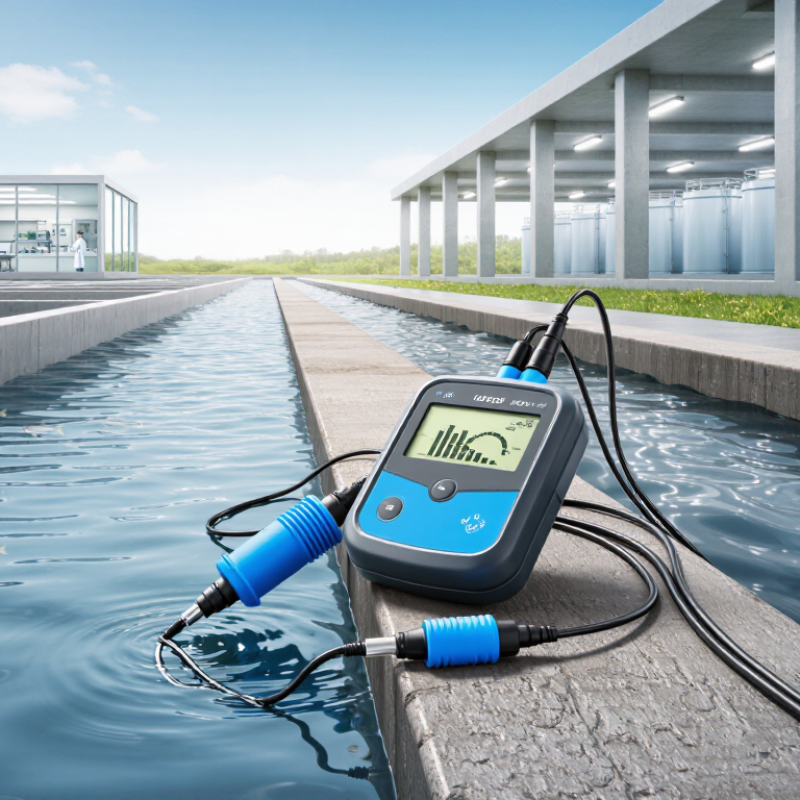
How to Choose a Water Oxygen Meter for Global Sourcing?

Define the Measurement Needs for Your Water Oxygen Meter

When sourcing a water oxygen meter, define the measurement need before comparing specifications. Identify the water first: drinking water, wastewater, aquaculture tanks, rivers, or process lines. Each setting demands a different range, probe design, and cleaning routine. A tank operator may need stable readings near 5–8 mg/L. A field technician may need GPS records and rapid response.

Know the risk level.

The U.S. Environmental Protection Agency commonly references 5 mg/L as a useful dissolved oxygen benchmark for aquatic life, although local criteria vary. NOAA describes water below 2 mg/L as hypoxic, where many organisms struggle to survive. These figures show why a narrow-range meter can create serious blind spots. Ask whether the instrument measures dissolved oxygen in mg/L, percentage saturation, or both. Temperature, salinity, and pressure compensation also matter. Without them, a reading may look precise but remain misleading.

The USGS National Field Manual emphasizes careful calibration, sample handling, and sensor maintenance during field measurements. Therefore, specify calibration frequency, stabilization time, replaceable parts, and data logging needs. Consider a cold river with a wet glove, or a warm tank with foam on the surface. Real work is rarely clean. A specification sheet can still be wrong for the operator. Require documented accuracy across the intended range, not only an attractive headline figure.


Sources: U.S. EPA, Dissolved Oxygen and Water Quality; NOAA Ocean Service, Hypoxia; USGS, National Field Manual for the Collection of Water-Quality Data.

Compare Sensor Types, Accuracy, and Measuring Ranges

Choosing a water oxygen meter starts with the sensor, not the price. Polarographic sensors suit routine field testing, but they need warm-up time and membrane maintenance. Galvanic sensors start faster, although their membranes and electrolyte still require care. Optical luminescent sensors consume almost no oxygen and usually need less servicing. They can still suffer from biofouling and coating damage. That matters.

Accuracy must match the water and the decision. ISO 5814:2012 recognizes electrochemical and optical methods for dissolved oxygen measurement. The US EPA Method 360.1 also requires attention to temperature and calibration conditions. A meter claiming ±0.1 mg/L may be useful in controlled water, yet misleading in warm, saline, or turbulent sites. I would question any specification tested only in clean laboratory water. Field error often comes from bubbles, dirty membranes, or poor temperature compensation.

Measuring range deserves equal attention. USGS Techniques and Methods 9–A6.2 indicates that freshwater holds about 9.1 mg/L dissolved oxygen at 20°C and standard pressure. Therefore, a 0–20 mg/L range covers many freshwater applications, but not every process. Aquaculture, wastewater, high-altitude sampling, and pressurized systems may require percentage saturation, salinity correction, or wider pressure limits. Compare stated accuracy across the full range, not only at one calibration point. Check response time, operating temperature, probe cable length, and replacement-part availability before global sourcing. A cheaper meter can become expensive when calibration solutions and membranes are difficult to import.

Check Water Conditions, Calibration, and Maintenance Requirements

How to Choose a Water Oxygen Meter for Global Sourcing?

A reliable water oxygen meter starts with water conditions, not a product brochure. Measure the expected temperature, salinity, depth, and oxygen range at your site. Clear lake water differs greatly from aerated tanks or dark wastewater. Choose a sensor that matches those conditions. Optical sensors usually need less frequent servicing, while electrochemical probes may require membrane and electrolyte replacement. Do not ignore response time, waterproofing, or readability in bright outdoor conditions.

Ask how calibration is performed and documented. Air-saturation calibration is common, but altitude, temperature, and salinity can affect accuracy. Zero calibration may also be necessary for very low-oxygen testing. At high elevations, factory defaults may not be enough. Calibration records should include the date, reference method, operator, and measured result. One small mistake matters.

Maintenance requirements can decide the real cost. Check whether the supplier provides membranes, electrolyte, sensor caps, cleaning tools, and clear storage instructions. Inspect the probe after muddy or oily sampling, then rinse it with clean water. Plan regular calibration intervals based on use, not only the manual. Confirm battery availability and local technical support before placing a large order. Some specifications look impressive, yet spare parts may be difficult to obtain. That is worth questioning. A slightly slower meter with dependable maintenance support may perform better over years.

Evaluate Portability, Data Features, and Operating Convenience

How to Choose a Water Oxygen Meter for Global Sourcing?

A practical water oxygen meter should match the sampling site, not only the product brochure. Portable models are valuable for aquaculture ponds, rivers, and treatment facilities. Check total weight, probe cable length, battery life, waterproof rating, and calibration stability. A meter with a clear display matters when sunlight reflects across moving water. The US EPA National Aquatic Resource Surveys include dissolved oxygen among important field measurements, showing its value in routine water assessment. ASTM D888 also recognizes membrane and optical methods for dissolved oxygen testing.

Data features can improve purchasing decisions. Look for automatic temperature compensation, salinity correction, calibration records, and downloadable results. USB, Bluetooth, or cloud transfer may reduce manual errors during international inspections. However, advanced connectivity is not always useful. Remote sites may have weak signals. I once valued wireless syncing too highly and ignored the charger design. That mistake could delay sampling.

Tips: Ask suppliers for calibration certificates, detection range, response time, and repeatability data. Test the meter with cold water, gloved hands, and a wet probe. Confirm whether replacement caps, membranes, batteries, and solution are globally available. The World Resources Institute reports that agriculture uses about 70% of global freshwater withdrawals, increasing the need for practical field monitoring. A compact meter with simple maintenance may outperform a more advanced model that operators rarely use.

Assess Suppliers, Certifications, Total Cost, and Global Support

Choosing a water oxygen meter for global sourcing requires more than comparing probe prices. Check the supplier’s testing records, calibration process, and replacement-part availability. ISO/IEC 17025 traceability is valuable when measurements support audits or environmental decisions. For instrument performance, ask whether the design follows methods such as ISO 5814 or ASTM D888.

Global conditions also matter. A meter used on a warm aquaculture site needs temperature compensation and strong fouling resistance. A field team in a humid coastal region may need an IP-rated enclosure under IEC 60529.
UNESCO’s World Water Development Report 2024 states that agriculture accounts for about 70% of global freshwater withdrawals. This makes dependable oxygen readings important for irrigation, treatment, and aquatic production. Yet not every supplier publishes response time, sensor life, or calibration drift. That gap deserves attention.

Tips: Request three months of sample data, not only a brochure. Compare total cost, including calibration kits, membranes, batteries, shipping, duties, training, and service delays. Confirm CE or other regional conformity documents where required. ISO 9001 certification shows management controls, but it does not prove measurement accuracy. Ask for uncertainty data and a signed calibration certificate. WHO and UNICEF’s 2023 JMP report found that 2.2 billion people lacked safely managed drinking water in 2022. The need is substantial, but “global support” can still mean slow email replies. Test the support channel before ordering.

Powder Coat Booths

For those larger-sized parts, or smaller quantity runs, we have 2 independent powder coat booths and ovens. The quality, durability and affordability of today’s powder coating finishes make this the process of choice for world-class companies.

Powder coating advantages over other forms of coating are many. Materials used in the Powder coating process can be metals and non-metals that come in a multitude of thicknesses, textures, colors, etc. Another of Powder coating’s biggest advantages over conventional coatings is its ability to create finishes in many different textures. Powder Coating Booths allow us the ability to apply these advantages to large products.

Wet Paint Line

Tri-State Fabricators runs a full-service conveyor line for painting. Wet painting can provide protection or decoration to many different part styles. From start to finish, every project is easier to undergo random and point-based inspection by our skilled painting team.

Advantages to our Wet Paint Line are these lines start with product prep and ends with a thorough inspection of a high quality finished product. Our ability to complete large and small projects with a superior finish and doing so in a timely and economical fashion. This passes along the savings in production to our customers. When powder coating ins not an option, our Wet Paint Line gets the job done right the first time.

Wet Paint Booths

When the parts get big and heavy we roll-out our custom paint racks and oversize booth. By utilizing our partnerships with all the major paint brands, we can match virtually any color with wet paint.

The advantages of having access to a Wet Paint Booth are many. Large projects of many different shapes can be loaded into the booth. The Wet Paint Booth offers an environment that is much more controlled than a typical parts painting operation.

Not only are they used because of their controlled environment, but they’re are also advantageous when it comes to applying paint to parts that are needed in industries that require specialty coatings such as medical, aerospace, etc.

Military CARC

Our military forces have some very high standards when it comes to the finish of their vehicles and equipment. From the first pre-treatment step to final coat, it takes a great deal of knowledge and experience to protect the men and women of our armed forces. They deserve only the best, and Tri-State Fabricators provides it.

All of our processes are closely monitored by our staff and management teams. Both of which are highly trained in the processes of metal fabrication and finishing. Tri-State Fabricators’ goal is to always fully satisfy each and every customer, including the military. We will always put a 110% into what we do.

Glass-Bead Blasting

Abrasive media blasting is an excellent way to remove old paint, rust, and increase the paint/powder adhesion. Glass beads produce a much smoother and brighter finish than angular abrasives; leaving the part clean yet without any dimensional change. Chemically inert and environmentally friendly, we can recycle our beads approximately 30 times; making them a more preferred method of metal cleaning or surface finishing.

Advantages to Glass Bead Blasting are many. Glass bead blast media is used when a project is needing rough surfaces need to become smooth for applications of coatings such as paint. It is typically used to clean paint and rust from a product surface without deforming the surface it is being used on. Overall, compared to many other blasting media, Glass Bead Blasting is a very economical choice and those savings are always passed on to our customers.

Part Washing

Tri-State Fabricators utilize a zinc phosphate wash to clean and etch the material to ensure the best paint adhesion possible. The unique design of our 3-stage wash system does the work like a 5-stage. From Cleaning and rinsing to conversion coating and post-treatment, Our Part Washing process is a complete service and works throughout the fabrication service and the finishing service.

Along with the previously mentioned benefits, Curing is a vital chemical reaction that leaves the product finish hard and relatively safe from mild abrasion and aggressive corrosion. This process can be done in more than one way; ambient air-dry or in curing ovens at temps that exceed 240°.

Burn-Off Oven

From fixing paint mistakes (someone else’s of course) to simply cleaning our paint line hooks, our burn-off oven is put to good use. After a quick burn-off, a little clean up, and a fresh coat of paint, your parts will look better than new.

Why does our Burn-Off Oven work so well? Because super heating the air around parts turns the materials into ashes. From paint and powder coatings to rubber and machining oils, high temps do the job without degrading the integrity of the part.

Masking

Masking is a vital part of producing high quality products. We have die-cut masking patterns to protect machined surfaces as well as a wide range of plugs and caps to protect threaded holes and bolts. We provide permanent and temporary masking.

Masking allows the selected sections of a product to be protected from a fabrication or finishing service. This can be with both chemicals when etching and tapes, paints when only finishing just a section of the product. Masking is great in aiding the customization process of a project.

Screen Printing

Screen printing is a photographic process that transfers artwork onto a porous nylon screen which allows colored ink to flow through the screen and be deposited on an aluminum or plastic component. We can generally have just about any design created onto a screen for your parts.

Some of the advantages of Screen Printing are, brand recognition for your business displaying on your products, assembly instructions, product warnings/hazards, etc. Tri-State Fabricators produces Screen Printing of the highest quality so you know it’s durable.

Metal Finishing

Metal Finishing is the art of treating the exterior portion of product, often metal but can also be made of other materials, so that the surface is clean and free of any debris. Then the process of applying coats or either paint of powder coat takes place. This coating process improves the quality of the product in both appearance and resistance to wear and corrosion.

Tri-State Fabricators, Inc., understands that a project typically isn’t complete until a high-quality finish has been added to your product. This is why our painting and powder coating teams continuously inspect the products throughout the Metal Finishing process.
