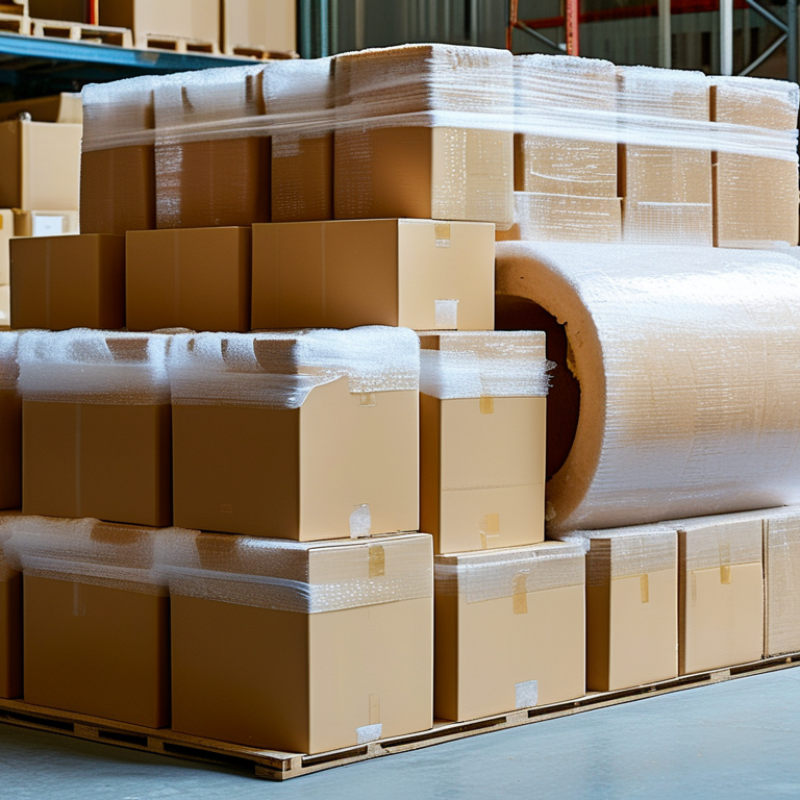
Choosing Air Bubble Wrap for global shipping in 2026 requires more than selecting the thickest roll. Packages may face vibration, compression, humidity, temperature changes, and rough handling. A lightweight cosmetic item needs different protection from a ceramic instrument or electronic component.
Alfred Fielding, co-inventor of Bubble Wrap, once said, “We thought it would be a great way to make wallpaper.” That unexpected beginning still offers a useful lesson. Packaging materials often succeed because they solve real handling problems, not because they look impressive. Today, buyers should examine bubble size, film thickness, recycled content, sealing strength, and roll performance. Material transparency matters too. Some low-cost products appear similar but collapse quickly under stacked cartons.
The correct Air Bubble Wrap should match the product, carton, shipping route, and expected risks. Test samples before committing to a large order. Drop tests, compression checks, and moisture exposure can reveal weaknesses early. International packaging standards, such as ISTA procedures, can support a more reliable evaluation. However, laboratory results may not perfectly reflect every warehouse or delivery network. That limitation deserves attention.
A practical choice balances protection, weight, cost, storage space, and environmental goals. More plastic is not always safer. Less material is not always better. In this guide, we examine how to compare Air Bubble Wrap options for cross-border shipping, while recognizing one uncomfortable truth: packaging decisions still involve informed judgment, not a universal formula.
Air bubble wrap is a flexible plastic film with sealed air cells between two layers. Those small cushions absorb shocks and reduce surface scratches during handling. They do not replace a strong carton. They work best when the product cannot move freely inside it. Pitney Bowes’ Parcel Shipping Index 2024 recorded 161.1 billion parcels worldwide in 2023. More parcels mean more lifting, sorting, vibration, and occasional drops. Global routes also expose packages to changing humidity and temperature. A fragile item needs cushioning that survives the whole journey, not only the warehouse.
Bubble size matters. Small bubbles suit cosmetics, books, and smooth surfaces. Larger bubbles provide more separation for ceramics, equipment, and irregular products. Thicker film can resist punctures, but it may increase material use. In practical packing tests, loose air wrap often fails at corners. Folded layers and firm edge protection perform better. Use antistatic wrap for sensitive electronics when required. Check the material’s technical sheet, puncture resistance, and recommended temperature range. ISTA test procedures can help simulate drops and vibration before export.
Material choice deserves honest reflection. OECD’s Global Plastics Outlook identifies packaging as the largest source of plastic waste, representing about 40% of the total. Recycled-content or recyclable options may reduce impact, but performance must remain reliable. A damaged shipment creates replacement waste, extra transport, and customer frustration. My view is imperfect: the lightest wrap is not always the most sustainable choice. Measure the product, test the route, and avoid adding cushioning where the carton already provides enough protection.
How to Choose Air Bubble Wrap for Global Shipping in 2026?
Global parcel volume reached 161.8 billion shipments in 2023, according to the Pitney Bowes Parcel Shipping Index 2024. That scale makes small packaging mistakes expensive. Air transport adds vibration, pressure changes, handling drops, and condensation risks. Match the wrap to the product, not merely the carton size. Small-cell wrap suits cosmetics, polished surfaces, and lightweight items. Its tighter cushioning helps prevent scratches. Large-cell wrap absorbs stronger impacts around hollow goods, lamps, and irregular components. However, large bubbles can burst against sharp edges.
Electronics need anti-static bubble film, especially when circuit boards or exposed connectors are involved. Moisture-sensitive products benefit from bubble wrap combined with a sealed barrier pouch. Heavy metal parts usually need corner blocks, foam, or corrugated dividers because bubble film alone compresses too easily. I would not trust one layer around a dense object. The edges usually fail first. Keep the product from touching the carton, and fill every visible void without forcing the lid closed.
ISTA 3A testing covers drops, vibration, compression, and atmospheric conditioning for parcel shipments. Test a packed sample before changing the material specification. Record corner crush, film punctures, seal failure, and product movement. The OECD Global Plastics Outlook reports 353 million tonnes of plastic waste in 2019, with packaging as the largest source. Therefore, choose the lightest film that passes testing, and check whether local recycling systems accept it. This part remains imperfect. A recyclable material that cannot survive transit may create more waste through damage and replacement.
Choosing air bubble wrap for global shipping in 2026 requires more than checking bubble size. Cushioning must match the product’s weight, geometry, and fragility. A thin electronic component needs controlled impact absorption, while a ceramic item needs stronger separation and compression resistance. Test the packed product with repeated drops, vibration, and stacked loads, using procedures such as ASTM D4169 or ISTA 3A. Laboratory results matter more than a thicker-looking roll.
Global routes add uncertainty. UNCTAD’s Review of Maritime Transport 2024 reports that over 80% of world merchandise trade by volume moves by sea. Containers may face vibration, pressure changes, heat, and long periods of humidity. Choose film that retains air after compression, resists punctures, and seals consistently. Check the supplier’s tensile, tear, and air-retention data. Bubble diameter alone is not enough.
Moisture protection deserves equal attention. Closed-cell polyethylene helps reduce direct water contact, but it is not a complete vapor barrier. Ask for water vapor transmission data, then combine the wrap with a sealed inner bag when corrosion or staining is possible. The World Bank’s 2023 Logistics Performance Index covers 139 economies, reminding shippers that handling quality varies widely between markets. I still see teams overprotecting corners while leaving exposed surfaces. That is an avoidable mistake. Test one real shipment, inspect it after arrival, and revise the specification honestly.
For global shipping in 2026, choose air bubble wrap by protection, material use, and total delivery cost. Start with the product’s weight, edges, and likely handling pressure. A thin layer may protect ceramics poorly, while heavy wrap can waste space and freight budget. Choose recycled-content film when its strength meets your packing test. Check the supplier’s data, not only a green claim. Ask for thickness, recycled percentage, roll yield, and disposal guidance. These details support dependable purchasing decisions.
Tips: Measure the item and box before ordering. Use smaller bubbles for lightweight surfaces and larger bubbles for fragile corners. Combine wrap with paper cushioning when possible, then secure it without excessive tape. Test a packed sample with vibration, compression, and a short drop. Watch for loose movement inside the carton. It causes avoidable damage. Compare cost per protected shipment, not cost per roll. Also record damaged parcels and unused material each month.
I have learned that sustainable packaging is not automatically the cheapest choice. A thinner roll may reduce plastic, yet require replacement shipments after breakage. That outcome is expensive and less sustainable. I still make imperfect estimates when products vary by season. Reviewing real shipping data corrects those assumptions. For international orders, select packaging that stays stable across temperature and humidity changes. Keep product labels and packing instructions clear. Reliable results come from repeatable tests, honest measurements, and adjustments when evidence disagrees with the original plan.
Compare common air bubble wrap formats using a practical 1–5 planning score. Larger bubbles generally provide stronger cushioning, while small bubbles are easier to fold around lightweight products. Recycled-content polyethylene can improve material sustainability, but local recycling acceptance should always be verified before shipping.
Score guide: 1 = low, 5 = high. The comparison is a neutral packaging-planning benchmark based on typical material characteristics, protection needs, storage efficiency, and recycling considerations; actual performance depends on film thickness, product weight, handling conditions, and destination-country infrastructure.
Choosing air bubble wrap starts with the product, not the carton. A glass bottle needs cushioning that resists impact and movement. A lightweight electronic part may need static control and moisture protection. Use larger bubbles for space, but do not assume they always protect better. Wrap the item twice, then check whether it shifts inside the box. Movement is a warning. In a packing trial, press the sealed parcel from four sides. If the item touches the carton wall, add a suitable insert or fill.
Test the packed product before booking international transport. Use drop tests from realistic handling heights, followed by vibration checks. Inspect corners, seals, and the product surface after each test. Record the wrap type, box size, test height, and damage found. This record supports repeatable decisions and helps explain failures to a logistics partner. Temperature changes can make some films less flexible. A cold shipment may need different handling than a warm warehouse. Do not skip testing because the parcel looks secure. That shortcut can be expensive.
Pack with clean, dry hands, and keep the bubble surface facing the product when abrasion is a concern. Seal every opening firmly, without crushing the contents. Add a clear packing list and accurate customs description. State the actual quantity, material, and purpose of the goods. Use the destination language when required, and make labels readable after rain or friction. Place handling marks on two sides, but treat them as guidance rather than protection. I still recheck labels after packing. A small mismatch can delay a shipment. Before dispatch, photograph the closed carton and its label. That simple evidence is easy to overlook.
| Shipping Scenario | Typical Product Risk | Recommended Bubble Wrap | Suggested Protection Target | Packing Method | Test Approach Before Shipment | Label and Documentation Checklist | International Shipping Notes |
|---|---|---|---|---|---|---|---|
| Small consumer electronics Air parcel; short to medium transit | Screen scratches, connector damage, ESD sensitivity, movement inside the carton | Small-cell wrap, approximately 9–12 mm bubbles; antistatic packaging where required by the product specification | Use enough cushioning to prevent product-to-carton contact; maintain approximately 50–75 mm of cushioning space for fragile items | Place the product in a fitted inner bag or carton, wrap all sides, center it, and fill voids with compatible cushioning material | Perform vibration and drop testing using a representative packed sample; inspect the screen, housing, ports, and internal movement afterward | Shipping label, consignee address, country of origin, HS classification, commercial invoice, packing list, and battery information if applicable | Keep lithium-battery shipments separate from general parcels when required; confirm current carrier and destination-country rules before dispatch |
| Glassware and ceramic products Parcel or consolidated air freight | Fracture, edge chipping, abrasion, and impact from adjacent packages | Medium- to large-cell wrap, approximately 12–25 mm bubbles; use multiple layers or a higher-density cushioning system for heavy pieces | No direct contact between the item and carton wall; protect corners, rims, handles, and other concentrated stress points | Wrap each piece individually, separate multiple items with rigid dividers, and use an inner carton inside a stronger outer carton | Conduct controlled drop tests on corners, edges, and faces; use vibration testing to identify rubbing or divider failure | Shipping label, invoice, packing list, accurate quantity and material description, country of origin, and any applicable import permits | “Fragile” and orientation marks may assist handling but do not replace adequate internal cushioning or correct package testing |
| Cosmetics and personal-care containers International parcel or fulfillment shipment | Leakage, broken caps, pump damage, label scuffing, and temperature-related deformation | Small- or medium-cell wrap with a separate leak-resistant inner bag; use surface protection for printed containers | Prevent cap or pump compression and maintain separation between containers; use absorbent material where regulations or risk assessment require it | Seal each liquid container, place it in a leak-resistant bag, wrap individually, and immobilize products in a fitted carton | Use leak, compression, vibration, and drop checks; test at expected temperature extremes when the formulation or packaging is temperature-sensitive | Product name, ingredient or regulatory information where required, net quantity, country of origin, invoice, HS code, and safety documentation if classified as hazardous | Liquid, aerosol, alcohol-based, or flammable products may have transport restrictions; verify destination and carrier requirements individually |
| Machined metal parts Export carton, pallet, or sea freight | Surface scratches, corrosion, deformation, and excessive package weight | Heavy-duty small- or medium-cell wrap combined with a corrosion-control bag or paper where appropriate | Use wrap as a separation layer, not as the sole structural support; support heavy parts with blocking, inserts, or molded protection | Protect machined surfaces, immobilize the part, distribute weight across the carton base, and prevent metal-to-metal contact | Check abrasion after vibration testing, conduct compression testing on stacked cartons, and inspect for corrosion after humidity exposure when relevant | Part description, quantity, net and gross weight, dimensions, country of origin, HS code, commercial invoice, and packing list | For palletized sea freight, confirm wood packaging compliance and required treatment marks when solid wood is used |
| Apparel and soft goods Postal packet, parcel, or air freight | Moisture, crushing, puncture, contamination, and loss of presentation quality | Lightweight small-cell wrap only for accessories or structured parts; use a moisture-resistant inner bag for textiles | Prioritize moisture and puncture resistance rather than thick cushioning; prevent sharp accessories from contacting fabric | Fold and bag garments, cover buckles or zippers, place items in a strong mailer or carton, and seal against moisture ingress | Perform puncture, compression, seal-strength, and moisture-exposure checks on the complete mailer or carton | Fiber composition or textile labeling where required, size, quantity, country of origin, invoice, packing list, and accurate HS classification | Avoid unnecessary bubble wrap when a moisture barrier and puncture-resistant mailer provide sufficient protection; reduce package volume where possible |
| Precision instruments Long-distance air or multimodal freight | Shock, vibration, calibration drift, contamination, and electrostatic discharge | Small-cell wrap as a surface barrier, combined with engineered foam, suspension packaging, or a rigid inner case | The package should limit movement and transmit shock loads through designed cushioning rather than directly through the instrument | Secure moving components, use protective caps, place the instrument in a rigid inner case, and immobilize the case inside the outer carton | Use instrument-specific shock and vibration limits; perform pre- and post-test functional, calibration, and visual inspections | Serial number, handling instructions, invoice, packing list, country of origin, HS code, insurance value, and technical or export-control documents when applicable | Do not rely on a generic “Handle with Care” label; communicate actual orientation, environmental, and shock-control requirements |
| Large molded plastic products Containerized sea freight or truck-to-port export | Scuffing, bending, corner impact, stacking deformation, and moisture exposure | Large-cell or heavy-duty wrap for surface separation; combine with edge guards and structural supports | Support the load at designed load-bearing points and prevent wrap compression from becoming the only restraint | Wrap contact surfaces, add corner protection, strap to a pallet when appropriate, and use blocking to prevent lateral movement | Conduct compression, vibration, pallet restraint, and handling tests using the final load configuration | Pallet or package marks, dimensions, gross weight, handling instructions, invoice, packing list, country of origin, and HS code | Confirm container loading plan, moisture-control measures, and maximum stacking limits before booking sea freight |
| Food-contact packaging components International parcel or commercial freight | Contamination, odor transfer, crushing, puncture, and non-compliance with destination requirements | Use clean, odor-free small-cell wrap only as an external protective layer; prevent direct contact unless material suitability is documented | Maintain a clean barrier and prevent deformation; separate the product from inks, dust, oils, and non-food-contact materials | Place components in a clean primary bag or carton, add protective wrap outside the barrier, and seal the shipping carton securely | Inspect for contamination and odor, conduct compression and drop tests, and verify that packaging materials meet the intended market requirements | Product description, material declaration where required, quantity, country of origin, invoice, packing list, and applicable food-contact compliance records | Food-contact rules differ by market; obtain current destination-country documentation requirements before commercial export |
| Mixed-product e-commerce carton Multiple-item international parcel | Product-to-product impact, void movement, uneven weight distribution, and repacking damage | Use bubble wrap selected by the most fragile item; combine small-cell wrap for surfaces with larger-cell wrap or engineered inserts for impact protection | Prevent all items from moving when the sealed carton is gently shaken; keep heavy products below and fragile products separated | Individually wrap fragile items, use dividers, fill voids, maintain balanced weight, and apply a tamper-evident closure when appropriate | Test the highest-risk item combination with drop, vibration, compression, and seal-integrity checks on the final carton | One accurate customs description per item category, total quantity, value, country of origin, HS codes, invoice, packing list, and return information | Ensure the outer label remains scannable and unobstructed; package dimensions and volumetric weight can affect international transport cost |
| High-value artwork or collectibles Insured air freight or specialized parcel service | Surface abrasion, corner damage, vibration, humidity variation, and tampering | Soft small-cell wrap over a non-abrasive barrier, combined with rigid boards, corner blocks, and a custom inner case | Do not allow bubble texture, tape, or pressure points to contact delicate surfaces; maintain a stable internal environment where required | Use a protective interleaf, wrap without compression, secure the item in a rigid case, and place the case inside a reinforced outer carton or crate | Use documented shock, vibration, compression, and humidity checks; photograph condition before sealing and after test completion | Detailed description, declared value, insurance records, invoice, packing list, country of origin, HS code, and cultural-property permits if applicable | Use discreet external markings where security is a concern; verify import taxes, restricted-item rules, and insurance exclusions for the destination |



For those larger-sized parts, or smaller quantity runs, we have 2 independent powder coat booths and ovens. The quality, durability and affordability of today’s powder coating finishes make this the process of choice for world-class companies.
Powder coating advantages over other forms of coating are many. Materials used in the Powder coating process can be metals and non-metals that come in a multitude of thicknesses, textures, colors, etc. Another of Powder coating’s biggest advantages over conventional coatings is its ability to create finishes in many different textures. Powder Coating Booths allow us the ability to apply these advantages to large products.
Tri-State Fabricators runs a full-service conveyor line for painting. Wet painting can provide protection or decoration to many different part styles. From start to finish, every project is easier to undergo random and point-based inspection by our skilled painting team.
Advantages to our Wet Paint Line are these lines start with product prep and ends with a thorough inspection of a high quality finished product. Our ability to complete large and small projects with a superior finish and doing so in a timely and economical fashion. This passes along the savings in production to our customers. When powder coating ins not an option, our Wet Paint Line gets the job done right the first time.
When the parts get big and heavy we roll-out our custom paint racks and oversize booth. By utilizing our partnerships with all the major paint brands, we can match virtually any color with wet paint.
The advantages of having access to a Wet Paint Booth are many. Large projects of many different shapes can be loaded into the booth. The Wet Paint Booth offers an environment that is much more controlled than a typical parts painting operation.
Not only are they used because of their controlled environment, but they’re are also advantageous when it comes to applying paint to parts that are needed in industries that require specialty coatings such as medical, aerospace, etc.
Our military forces have some very high standards when it comes to the finish of their vehicles and equipment. From the first pre-treatment step to final coat, it takes a great deal of knowledge and experience to protect the men and women of our armed forces. They deserve only the best, and Tri-State Fabricators provides it.
All of our processes are closely monitored by our staff and management teams. Both of which are highly trained in the processes of metal fabrication and finishing. Tri-State Fabricators’ goal is to always fully satisfy each and every customer, including the military. We will always put a 110% into what we do.
Abrasive media blasting is an excellent way to remove old paint, rust, and increase the paint/powder adhesion. Glass beads produce a much smoother and brighter finish than angular abrasives; leaving the part clean yet without any dimensional change. Chemically inert and environmentally friendly, we can recycle our beads approximately 30 times; making them a more preferred method of metal cleaning or surface finishing.
Advantages to Glass Bead Blasting are many. Glass bead blast media is used when a project is needing rough surfaces need to become smooth for applications of coatings such as paint. It is typically used to clean paint and rust from a product surface without deforming the surface it is being used on. Overall, compared to many other blasting media, Glass Bead Blasting is a very economical choice and those savings are always passed on to our customers.
Tri-State Fabricators utilize a zinc phosphate wash to clean and etch the material to ensure the best paint adhesion possible. The unique design of our 3-stage wash system does the work like a 5-stage. From Cleaning and rinsing to conversion coating and post-treatment, Our Part Washing process is a complete service and works throughout the fabrication service and the finishing service.
Along with the previously mentioned benefits, Curing is a vital chemical reaction that leaves the product finish hard and relatively safe from mild abrasion and aggressive corrosion. This process can be done in more than one way; ambient air-dry or in curing ovens at temps that exceed 240°.
From fixing paint mistakes (someone else’s of course) to simply cleaning our paint line hooks, our burn-off oven is put to good use. After a quick burn-off, a little clean up, and a fresh coat of paint, your parts will look better than new.
Why does our Burn-Off Oven work so well? Because super heating the air around parts turns the materials into ashes. From paint and powder coatings to rubber and machining oils, high temps do the job without degrading the integrity of the part.
Masking is a vital part of producing high quality products. We have die-cut masking patterns to protect machined surfaces as well as a wide range of plugs and caps to protect threaded holes and bolts. We provide permanent and temporary masking.
Masking allows the selected sections of a product to be protected from a fabrication or finishing service. This can be with both chemicals when etching and tapes, paints when only finishing just a section of the product. Masking is great in aiding the customization process of a project.
Screen printing is a photographic process that transfers artwork onto a porous nylon screen which allows colored ink to flow through the screen and be deposited on an aluminum or plastic component. We can generally have just about any design created onto a screen for your parts.
Some of the advantages of Screen Printing are, brand recognition for your business displaying on your products, assembly instructions, product warnings/hazards, etc. Tri-State Fabricators produces Screen Printing of the highest quality so you know it’s durable.
Metal Finishing is the art of treating the exterior portion of product, often metal but can also be made of other materials, so that the surface is clean and free of any debris. Then the process of applying coats or either paint of powder coat takes place. This coating process improves the quality of the product in both appearance and resistance to wear and corrosion.
Tri-State Fabricators, Inc., understands that a project typically isn’t complete until a high-quality finish has been added to your product. This is why our painting and powder coating teams continuously inspect the products throughout the Metal Finishing process.