


Choosing an Ansi Rated Three Phase Oil Transformer For Utility Use requires more than comparing voltage, capacity, and price. Utility networks face changing loads, weather exposure, switching events, and long maintenance intervals. A transformer that looks suitable on paper may perform poorly beside a dusty substation fence. The decision must connect electrical design with real operating conditions.
John J. Winders Jr., a respected transformer engineering author, offers a useful reminder: “Transformer reliability depends on proper application, installation, and maintenance.” His point is practical. The ANSI rating supports recognized performance expectations, but it does not replace site engineering. Buyers should verify primary and secondary voltages, frequency, impedance, cooling class, insulation levels, sound limits, and expected fault duty. They should also review oil containment, bushings, tap arrangements, and accessory quality.
Field experience matters here. Ask how the unit behaved during summer peaks, cold starts, and repeated feeder switching. Request test records, factory inspection details, and clear warranty terms. Check whether replacement parts remain available after installation. This step is often overlooked.
There is no perfect transformer. A slightly oversized unit may improve future capacity, yet it can increase cost and reduce efficiency during light loading. A compact design may fit the site, but leave little room for expansion. That tradeoff deserves honest review. The strongest choice balances safety, efficiency, serviceability, and lifecycle cost. It should also match the utility’s maintenance culture, not just its procurement spreadsheet.
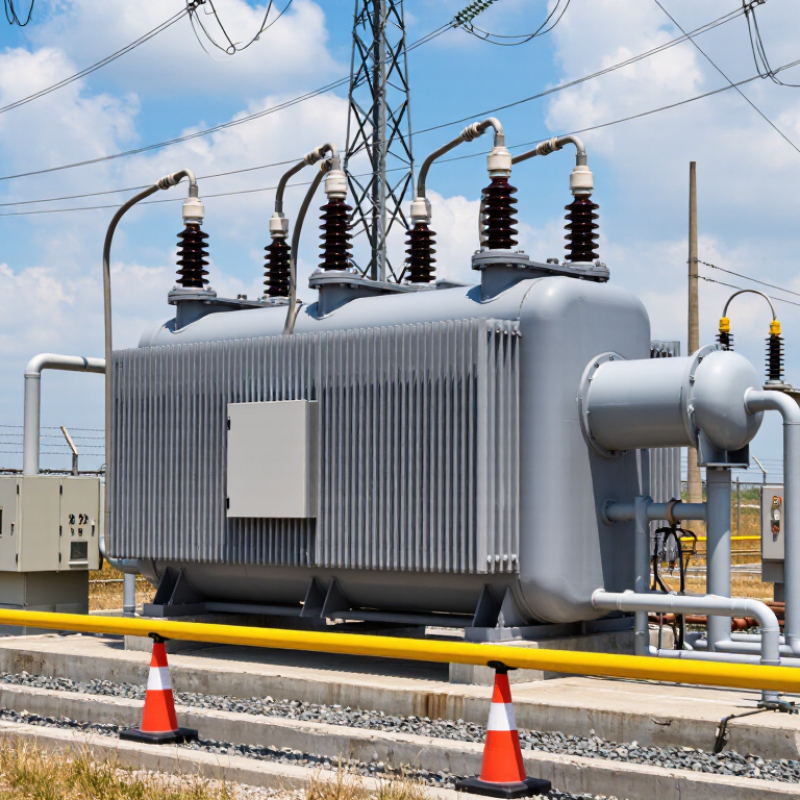
How to Choose an ANSI Rated Three Phase Oil Transformer?
Understanding ANSI Ratings for Three-Phase Oil Transformers
An ANSI rating is not a single performance score. It indicates compliance with applicable ANSI/IEEE C57 standards for design, construction, and testing. These standards address insulation strength, temperature rise, short-circuit capability, sound levels, and dielectric performance. A transformer can meet ANSI requirements yet still be unsuitable for a specific installation. Do not guess.
Start with the electrical duty. Confirm the primary and secondary voltages, kVA capacity, frequency, impedance, tap range, and phase configuration. Load growth matters too. An undersized transformer may run hot, while excessive capacity can increase cost and losses. Field experience shows that nameplate details deserve careful review. A small voltage mismatch can create major operating problems.
Check the installation environment before comparing quotations. Record the ambient temperature, altitude, indoor or outdoor location, available fault current, and required cooling method. Ask for the certified factory test report, routine test results, oil specifications, and applicable ANSI/IEEE references. Inspect the tank, bushings, gauges, and grounding points when the unit arrives. Shipping damage is easy to overlook. It should not be. I also recheck protection coordination after energization, because calculated settings may not reflect actual system behavior. The standard provides a reliable baseline, but site conditions still require engineering judgment.
Selecting an ANSI/IEEE-compliant three phase oil transformer starts with voltage. Confirm the primary voltage, secondary voltage, frequency, and grounding method. A small mismatch can cause overheating or unstable equipment operation. IEEE C57.12.00 provides general requirements for liquid-immersed distribution and Power Transformers. It also supports consistent testing and nameplate information. Review the available tap range, especially where utility voltage changes seasonally.
Capacity must reflect real operating conditions. Calculate connected load, expected demand, motor starting current, and future expansion. A transformer running near its limit may age faster, even when average demand looks acceptable. The U.S. Energy Information Administration reports that transmission and distribution losses commonly represent about 5% of delivered electricity. Efficient transformer selection can reduce part of this system loss. The U.S. Department of Energy’s 2024 distribution-transformer rule also emphasizes stronger efficiency performance and long-term energy savings.
Tips:
Record every load in kVA, not only horsepower. Separate continuous loads from short-duration loads. Check ambient temperature, altitude, enclosure location, and required impedance. Then confirm whether the system needs a delta-wye or wye-wye configuration. Delta-wye units often support grounding on the secondary side, but the grounding design must match the facility. Do not rely on a standard catalog size. Actual harmonics, unbalanced phases, and emergency loading may change the selection. That uncertainty deserves a second review. A qualified engineer should verify the nameplate, protection settings, and installation conditions before purchase.
How to Choose an ANSI Rated Three Phase Oil Transformer?
Insulation deserves careful attention. ANSI/IEEE C57.12.00 defines insulation levels, temperature limits, and dielectric performance. Check the basic impulse insulation level before reviewing price. A 65°C winding-rise design offers a familiar reference point. IEEE C57.91 uses 110°C as a key hot-spot reference for normal insulation aging. Moisture remains a quiet threat. It lowers dielectric strength and accelerates paper deterioration. Field records often reveal more than factory paperwork.
Cooling selection should match real load behavior. ONAN cooling suits steady, moderate loading. ONAF adds fans when heat rises. Verify radiator capacity, fan controls, and alarm settings.
The U.S. Department of Energy’s 2016 Technical Support Document estimated distribution-transformer losses at about 61 billion kWh annually. That figure makes no-load and load-loss data impossible to ignore.
A larger transformer may run cooler, yet cost more during lightly loaded hours. The calculation is not always obvious.
Tips: Request oil test results, moisture limits, and dissolved-gas analysis procedures. Confirm pressure-relief operation and oil-level visibility. Conservator tanks may need Buchholz protection. Sealed tanks reduce air exposure, but they do not eliminate aging. Compare supplier test data with IEEE C57.12.90 methods. Leave room for doubt. Ambient temperature, harmonics, and poor ventilation can defeat a perfect specification.
How to Choose an ANSI Rated Three Phase Oil Transformer?
Comparing Efficiency, Safety, and Installation Standards
Choosing an ANSI-rated three-phase oil transformer requires more than comparing nameplate efficiency. Review the transformer’s tested losses at expected loading, not only its peak rating. A unit operating near 50–75% load may deliver better yearly performance than a larger, lightly loaded model. Ask for certified test data, impedance values, temperature-rise results, and insulation ratings. Small differences become significant across decades of service.
Safety begins with the insulating oil and the installation area. Confirm the oil type, fire characteristics, leak-control provisions, and required separation distances. A concrete containment basin can protect soil and nearby equipment during a serious leak. Ground the tank, neutral, and connected system according to the approved design. Include pressure-relief devices, visible oil-level indicators, and temperature monitoring where required. These details are easy to overlook.
Installation must follow applicable ANSI and IEEE requirements, local electrical codes, and site fire regulations. Check lifting points, cable-bending space, ventilation, access for inspection, and clearance from doors or combustible structures. Commissioning should include insulation resistance, winding resistance, ratio, polarity, and grounding tests. Keep the reports. They support future troubleshooting and compliance reviews.
Efficiency labels can mislead. A transformer with lower losses may still create installation problems if maintenance access is poor. I would also question optimistic load forecasts. Real facilities change faster than drawings suggest. A careful selection balances efficiency, safe containment, verified testing, and practical installation conditions. That balance is rarely perfect.
| Selection Dimension | What to Compare | Typical Data or Requirement | Relevant ANSI/IEEE or Code Reference | Installation and Purchasing Check |
|---|---|---|---|---|
| Transformer Configuration | Three-phase, oil-immersed, two-winding construction | Suitable for balanced three-phase distribution loads; common winding connections include grounded wye, delta, and wye-delta arrangements. | IEEE C57.12.00; IEEE C57.12.01 | Confirm primary and secondary connection, neutral availability, phase sequence, and system grounding method before ordering. |
| Rated Capacity | Continuous apparent-power rating | Select the next suitable standard kVA rating after applying demand, motor-starting, harmonic, ambient-temperature, and future-load allowances. | IEEE C57.12.00; IEEE C57.91 for loading guidance | Avoid routine operation above the nameplate rating. Verify overload duration and emergency loading requirements with the manufacturer. |
| Primary Voltage Class | System line-to-line voltage and insulation level | The transformer voltage class and BIL must match or exceed the system requirements; commonly specified medium-voltage classes include 2.5 kV, 5 kV, 15 kV, 25 kV, and 35 kV classes. | IEEE C57.12.00; IEEE C57.12.01 | Check system voltage, maximum operating voltage, BIL, surge-protection coordination, and primary termination clearances. |
| Secondary Voltage | Output voltage under no-load and full-load conditions | Typical low-voltage outputs include 208Y/120 V, 480Y/277 V, and 600 V class systems, subject to local utility and facility requirements. | IEEE C57.12.00; applicable electrical installation code | Confirm line-to-line voltage, line-to-neutral voltage, neutral grounding, phase balance, and compatibility with downstream equipment. |
| Efficiency | Core loss, winding loss, and efficiency at the expected load profile | Efficiency varies with kVA, voltage, impedance, and loading. Compare guaranteed losses at no-load and specified load rather than relying only on a single peak-efficiency value. | DOE energy-conservation requirements in 10 CFR Part 431, where applicable; IEEE test methods | Request guaranteed no-load loss, load loss, test tolerance, and efficiency data at 25%, 50%, 75%, and 100% load when lifecycle cost matters. |
| Impedance | Percent impedance and its effect on fault current and voltage regulation | A higher impedance generally reduces available secondary fault current but can increase voltage drop; the correct value depends on the system short-circuit study and load requirements. | IEEE C57.12.00; IEEE C57.12.90 | Coordinate transformer impedance with overcurrent-device interrupting ratings, selective coordination, motor starting, and arc-flash calculations. |
| Tap Changer | Primary-side de-energized tap changer or other approved voltage adjustment | Common distribution designs provide several tap positions, often in 2.5% increments, but the available range is design-specific. | IEEE C57.12.00; manufacturer data | Tap changes must be performed only when the transformer is de-energized unless an approved on-load tap changer is provided. |
| Temperature Rise | Average winding and top-oil temperature-rise rating | Common liquid-immersed transformer designs use a 65 °C average winding temperature-rise class, although other ratings may be specified. | IEEE C57.12.00; IEEE C57.12.90 | Check ambient temperature, altitude correction, enclosure ventilation, and clearance from heat-sensitive materials. |
| Insulating Liquid | Liquid type, dielectric performance, fire point, and environmental requirements | Mineral oil is widely used; less-flammable ester liquids may be selected where fire-safety or environmental objectives require a different liquid system. | IEEE C57.106; IEEE C57.12.00; NFPA 70 and NFPA 30 where applicable | Verify liquid classification, spill containment, ventilation, separation distance, fire protection, and local authority approval. |
| Dielectric and Factory Tests | Applied-voltage, induced-voltage, impulse, ratio, polarity, and winding-resistance tests | The test program must correspond to the transformer rating and applicable standard; test reports should identify measured results and acceptance criteria. | IEEE C57.12.90; IEEE C57.12.91 | Require certified routine test reports and review any deviations before shipment or energization. |
| Protection and Monitoring | Overcurrent protection, surge arresters, temperature indication, pressure relief, and liquid-level monitoring | Protection should be coordinated with transformer kVA, available fault current, inrush current, feeder protection, and the transformer enclosure design. | IEEE C57.12.00; IEEE C57.104; NFPA 70 | Confirm alarm and trip contacts, pressure-relief discharge direction, grounding provisions, and accessibility for inspection. |
| Grounding and Bonding | Tank grounding, system neutral grounding, and bonding of metallic components | The tank should have a dedicated grounding connection, while the system grounding arrangement must be designed for the selected winding connection. | IEEE C57.12.00; NFPA 70 Article 250 | Size grounding and bonding conductors according to the applicable electrical code and the facility short-circuit design. |
| Physical Installation | Weight, dimensions, access, clearances, foundation, cable routing, and lifting points | Oil-filled transformers require a level, load-capable foundation and sufficient space for cable bending, inspection, cooling, and safe maintenance. | NFPA 70; local building and fire codes; manufacturer installation instructions | Verify shipping weight, filled operating weight, door and route dimensions, crane or forklift access, and required working space. |
| Routine Maintenance | Liquid sampling, visual inspection, leak checks, bushing inspection, and connection torque | Maintenance frequency depends on loading, environment, criticality, and liquid condition. Dissolved-gas analysis can help identify developing internal faults. | IEEE C57.104; IEEE C57.106; IEEE C57.93 | Provide safe de-energized access, inspection lighting, spill-response materials, and documented maintenance procedures. |
| Documentation | Nameplate, connection diagram, impedance, losses, test reports, liquid information, and installation instructions | Complete documentation should match the serial-numbered transformer and include all field-adjustable settings and safety limitations. | IEEE C57.12.00; applicable project specifications | Do not energize until drawings, test records, protection settings, grounding details, and installation approvals have been reviewed. |
Note: Values and practices shown are typical selection guidance. The final transformer specification must be based on the project short-circuit study, load profile, applicable edition of the electrical code, utility requirements, and the manufacturer’s certified data.
Choosing an ANSI-rated three-phase oil transformer starts with the supplier, not the catalog page. Request the exact design standard, such as IEEE C57.12.00 and applicable test standards. Ask how the supplier interprets ANSI requirements for voltage, insulation, temperature rise, and short-circuit strength. Clear answers matter.
Review the supplier’s quality system, manufacturing records, and previous utility or industrial projects. Request routine test reports for the actual unit, not only sample documents. These reports should cover winding resistance, turns ratio, insulation tests, losses, and leak checks. Confirm that test equipment is calibrated and traceable. A factory inspection can reveal practical details, including oil handling, tank welding, and bushing storage. Small details often become expensive problems.
Check the nameplate against your specification, including impedance, taps, frequency, cooling class, oil type, accessories, and sound limits. Verify that the insulating liquid meets the required specification and that shipping procedures protect seals and bushings. Ask for drawings before production begins. Do not accept vague compliance statements. They are weak evidence.
Many buyers focus on purchase price and overlook service support, spare parts, and response time. That shortcut deserves reconsideration. A perfect document set does not guarantee a perfect installation. Site conditions, grounding, altitude, and protection settings still need engineering review. The supplier should explain deviations in writing, even minor ones. If an answer changes between sales and engineering teams, pause the purchase. Reliability is built through consistent evidence, not confident promises.
The chart shows commonly specified preferred three-phase transformer ratings expressed in kVA. When comparing suppliers, confirm that the proposed nameplate rating, voltage ratio, frequency, insulation level, temperature rise, impedance, and liquid-insulation design match the project requirements.
Request documented routine test results and verify the applicable requirements of ANSI/IEEE C57.12.00 and IEEE C57.12.90. The supplier should also provide traceable design information, certified drawings, loss data, warranty terms, and evidence that the finished transformer was tested before shipment.


For those larger-sized parts, or smaller quantity runs, we have 2 independent powder coat booths and ovens. The quality, durability and affordability of today’s powder coating finishes make this the process of choice for world-class companies.
Powder coating advantages over other forms of coating are many. Materials used in the Powder coating process can be metals and non-metals that come in a multitude of thicknesses, textures, colors, etc. Another of Powder coating’s biggest advantages over conventional coatings is its ability to create finishes in many different textures. Powder Coating Booths allow us the ability to apply these advantages to large products.
Tri-State Fabricators runs a full-service conveyor line for painting. Wet painting can provide protection or decoration to many different part styles. From start to finish, every project is easier to undergo random and point-based inspection by our skilled painting team.
Advantages to our Wet Paint Line are these lines start with product prep and ends with a thorough inspection of a high quality finished product. Our ability to complete large and small projects with a superior finish and doing so in a timely and economical fashion. This passes along the savings in production to our customers. When powder coating ins not an option, our Wet Paint Line gets the job done right the first time.
When the parts get big and heavy we roll-out our custom paint racks and oversize booth. By utilizing our partnerships with all the major paint brands, we can match virtually any color with wet paint.
The advantages of having access to a Wet Paint Booth are many. Large projects of many different shapes can be loaded into the booth. The Wet Paint Booth offers an environment that is much more controlled than a typical parts painting operation.
Not only are they used because of their controlled environment, but they’re are also advantageous when it comes to applying paint to parts that are needed in industries that require specialty coatings such as medical, aerospace, etc.
Our military forces have some very high standards when it comes to the finish of their vehicles and equipment. From the first pre-treatment step to final coat, it takes a great deal of knowledge and experience to protect the men and women of our armed forces. They deserve only the best, and Tri-State Fabricators provides it.
All of our processes are closely monitored by our staff and management teams. Both of which are highly trained in the processes of metal fabrication and finishing. Tri-State Fabricators’ goal is to always fully satisfy each and every customer, including the military. We will always put a 110% into what we do.
Abrasive media blasting is an excellent way to remove old paint, rust, and increase the paint/powder adhesion. Glass beads produce a much smoother and brighter finish than angular abrasives; leaving the part clean yet without any dimensional change. Chemically inert and environmentally friendly, we can recycle our beads approximately 30 times; making them a more preferred method of metal cleaning or surface finishing.
Advantages to Glass Bead Blasting are many. Glass bead blast media is used when a project is needing rough surfaces need to become smooth for applications of coatings such as paint. It is typically used to clean paint and rust from a product surface without deforming the surface it is being used on. Overall, compared to many other blasting media, Glass Bead Blasting is a very economical choice and those savings are always passed on to our customers.
Tri-State Fabricators utilize a zinc phosphate wash to clean and etch the material to ensure the best paint adhesion possible. The unique design of our 3-stage wash system does the work like a 5-stage. From Cleaning and rinsing to conversion coating and post-treatment, Our Part Washing process is a complete service and works throughout the fabrication service and the finishing service.
Along with the previously mentioned benefits, Curing is a vital chemical reaction that leaves the product finish hard and relatively safe from mild abrasion and aggressive corrosion. This process can be done in more than one way; ambient air-dry or in curing ovens at temps that exceed 240°.
From fixing paint mistakes (someone else’s of course) to simply cleaning our paint line hooks, our burn-off oven is put to good use. After a quick burn-off, a little clean up, and a fresh coat of paint, your parts will look better than new.
Why does our Burn-Off Oven work so well? Because super heating the air around parts turns the materials into ashes. From paint and powder coatings to rubber and machining oils, high temps do the job without degrading the integrity of the part.
Masking is a vital part of producing high quality products. We have die-cut masking patterns to protect machined surfaces as well as a wide range of plugs and caps to protect threaded holes and bolts. We provide permanent and temporary masking.
Masking allows the selected sections of a product to be protected from a fabrication or finishing service. This can be with both chemicals when etching and tapes, paints when only finishing just a section of the product. Masking is great in aiding the customization process of a project.
Screen printing is a photographic process that transfers artwork onto a porous nylon screen which allows colored ink to flow through the screen and be deposited on an aluminum or plastic component. We can generally have just about any design created onto a screen for your parts.
Some of the advantages of Screen Printing are, brand recognition for your business displaying on your products, assembly instructions, product warnings/hazards, etc. Tri-State Fabricators produces Screen Printing of the highest quality so you know it’s durable.
Metal Finishing is the art of treating the exterior portion of product, often metal but can also be made of other materials, so that the surface is clean and free of any debris. Then the process of applying coats or either paint of powder coat takes place. This coating process improves the quality of the product in both appearance and resistance to wear and corrosion.
Tri-State Fabricators, Inc., understands that a project typically isn’t complete until a high-quality finish has been added to your product. This is why our painting and powder coating teams continuously inspect the products throughout the Metal Finishing process.

