How to Choose Polypropylene Pall Rings for Global Buyers?
Choosing Polypropylene Pall Rings is not simply a matter of comparing prices. Global buyers must connect product design with tower conditions, supplier capability, and documented performance. A ring that works well in a laboratory column may behave differently in a large packed tower. This difference matters.
Start with the operating details. Review gas and liquid flow rates, temperature, pressure, chemical exposure, and expected service life. Polypropylene is valued for its light weight and broad chemical resistance, but it is not suitable for every environment. Confirm the material grade, operating temperature range, wall thickness, dimensions, and packing factor. Small dimensional changes can affect pressure drop and liquid distribution. They can also influence replacement costs.
Ask suppliers for technical datasheets, inspection records, and representative samples. Check whether the stated surface area and voidage were measured using a recognized method. Photographs are helpful, but they cannot confirm mechanical strength. A sample should be examined for burrs, deformation, uneven molding, and inconsistent color. It should feel uniform in the hand. That simple check is useful.
Global sourcing adds more questions. Packaging must protect the rings from crushing during long-distance transport. Export experience, production capacity, lead time, and communication quality should also be evaluated. A low quotation may hide weak quality control or uncertain delivery. Still, even a detailed supplier file can contain gaps. Recheck important claims independently. This guide explains how buyers can compare Polypropylene Pall Rings more carefully, balance technical evidence with practical experience, and choose a reliable solution for their specific tower application. Perfect certainty is rare. Better decisions come from disciplined questions.
Understanding Polypropylene Pall Rings and Their Industrial Role
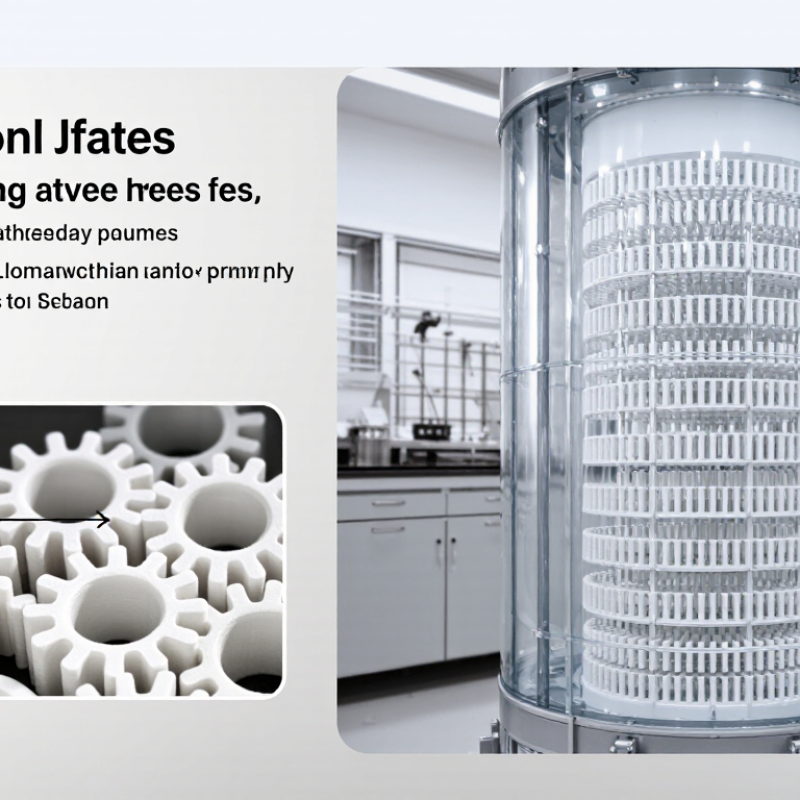
Polypropylene Pall rings are structured packing elements used inside absorption, stripping, and scrubbing columns. Their open, split-wall design improves gas-liquid contact while limiting resistance to airflow. In a packed tower, liquid spreads across the ring surfaces as gas rises through the voids. This creates a larger working area than random packing with dense shapes.
Geometry matters. Ring size affects pressure drop, liquid distribution, and the column’s usable capacity. Smaller rings usually provide more surface area, but they may increase resistance and complicate cleaning. Larger rings can support higher gas rates, although poor wetting may reduce mass transfer. Buyers should compare dimensions, wall thickness, void fraction, and packing factor instead of relying on appearance alone.
Polypropylene resists moisture, many dilute acids, and alkaline process streams, making it useful in demanding chemical environments. Still, temperature limits must be checked against the actual process, not a general material chart. Temperature still matters. A supplier’s technical data should include density, operating range, chemical compatibility, and quality inspection methods. Global buyers also need consistent measurements, export packaging, and traceable batch records. A catalog choice can look correct and still perform poorly if liquid loading, gas velocity, or tower distribution was estimated loosely. That is an uncomfortable but practical lesson. Small design assumptions often become large operating problems.
Comparing Size, Geometry, and Surface Area Options
How to Choose Polypropylene Pall Rings for Global Buyers?
Comparing Size, Geometry, and Surface Area Options
When selecting polypropylene Pall rings, compare more than the catalog diameter. Keep it practical. Size affects void fraction, pressure drop, liquid distribution, and packing support requirements. Smaller rings usually provide greater surface area per cubic meter. They also create narrower passages and may increase fouling risk in dirty service. Larger rings reduce resistance, but poor liquid distribution can leave dry zones inside the column. That trade-off is easy to underestimate.
Geometry matters as much as size. Open windows improve gas-liquid contact and reduce the plastic mass around each ring. However, fragile ribs can deform during loading, especially when bags are dropped into a vessel. Check rib thickness, compression strength, and dimensional consistency from batch to batch. A practical trial should inspect rings after loading, not only before shipment. Do not guess. This detail is often missed.
Surface area values need careful reading. Some suppliers quote nominal geometric area, while others report effective area under test conditions. Ask for the measurement method, voidage, bulk density, and pressure-drop data. For a clean absorption system, a smaller size may offer useful transfer efficiency. For wastewater service, a larger opening may resist blockage better. I once favored maximum surface area in a preliminary comparison, but the result ignored solids loading and cleaning access. That was a useful correction. Also verify polypropylene temperature and chemical-resistance limits for the actual process, because generic compatibility charts can mislead.
How to Choose Polypropylene Pall Rings for Global Buyers? — Comparing Size, Geometry, and Surface Area Options
Typical specific surface area decreases as nominal Pall Ring size increases. Smaller rings provide more surface area per unit volume, while larger rings generally allow greater vapor and liquid capacity.
Values are approximate industry benchmarks for common plastic Pall Ring sizes; actual surface area varies with dimensions and geometry. Confirm supplier specifications and process requirements before selection.
Checking Material Quality, Chemical Resistance, and Durability
Polypropylene Pall Rings should be selected against the actual process conditions, not just by size or price. Plastics Europe’s Plastics – the Fast Facts 2024 reports global plastics production of 413.8 million tonnes in 2023, underscoring the scale of plastic use across industries. That figure does not prove a particular ring’s quality. Ask suppliers for resin-grade documentation and inspect samples for consistent wall thickness, clean edges, and uniform color. Small differences matter.
Chemical resistance depends on the chemical, concentration, temperature, and exposure time. Check compatibility against the full process mixture, including cleaning chemicals, rather than relying on a broad “chemical-resistant” claim. Polypropylene can soften or deform under excessive heat or mechanical load, so confirm the operating limits with documented test data. A glossy surface can still conceal weak spots. I would not skip a small trial under representative conditions.
Tips: Request batch traceability, dimensional tolerances, and the test method behind any durability claims. Compare sample rings by gently flexing them and checking for cracks or brittle areas. Record changes after exposure; visual inspection alone may miss early damage.
Evaluating Suppliers, Compliance, Packaging, and Global Shipping
Choosing polypropylene pall rings starts with measurable evidence, not a low quotation. Ask suppliers for ring dimensions, material grade, bulk density, void fraction, and batch inspection records. Request a sample and compare its weight, wall thickness, and shape against the approved specification. Thin edges may deform during loading. Ask how the supplier checks resin consistency and protects stock from heat and crushing. A polished catalogue is not proof of stable production.
Compliance needs practical paperwork. Request a current technical data sheet, safety data sheet, and a certificate identifying the supplied material and batch. Check that document details match the purchase order and intended process conditions. Requirements vary by destination and application, so confirm them with your importer or technical team. One overlooked mismatch can delay clearance. It happens.
Packaging matters as much as product quality. Confirm ring count or net weight per bag, bag strength, pallet dimensions, and whether pallets can be stacked safely. Photograph the packed shipment before dispatch, and agree on labels and moisture protection. UNCTAD’s Review of Maritime Transport 2024 reported global maritime trade growth of 2.4% in 2023, while noting continuing route disruptions. The World Bank’s 2023 Logistics Performance Index assessed 139 economies across areas including tracking and timeliness. These reports reinforce a simple point: verify the route, handover plan, and delivery window—not just the freight quote. Allow buffer time. My own experience is that buyers sometimes specify the ring carefully, then leave packaging vague. That gap deserves a second look.





