

Choosing Stone Composite Floor for international projects requires more than comparing colors and factory prices. A sample may look identical under showroom lights, yet perform differently in a humid apartment or a busy retail entrance. Global buyers need to examine composition, thickness, wear-layer performance, dimensional stability, surface texture, and installation compatibility before approving a large order.
Practical purchasing experience shows that small details often create the largest costs. Check whether the core contains consistent mineral content and whether each carton has matching dimensions. Measure several planks from different boxes. Review moisture-resistance test results, abrasion ratings, fire-performance documents, and applicable regional certifications. Ask for production-batch traceability, packaging photographs, installation instructions, and a written warranty. A dependable supplier should explain limitations clearly, not promise that one product fits every climate.
There is no universal “best” Stone Composite Floor. Coastal warehouses, cold logistics centers, and luxury hotels demand different specifications. Even attractive digital samples can hide shade variation or uneven embossing. That matters. Buyers should request physical samples, independent test reports, and a pilot installation before final payment. A site review can reveal subfloor moisture, temperature changes, or acoustic concerns that product brochures overlook. Mistakes still happen, especially when specifications are translated poorly or local installers are unfamiliar with the locking system. Careful questions, documented checks, and honest supplier communication create a more reliable buying decision.
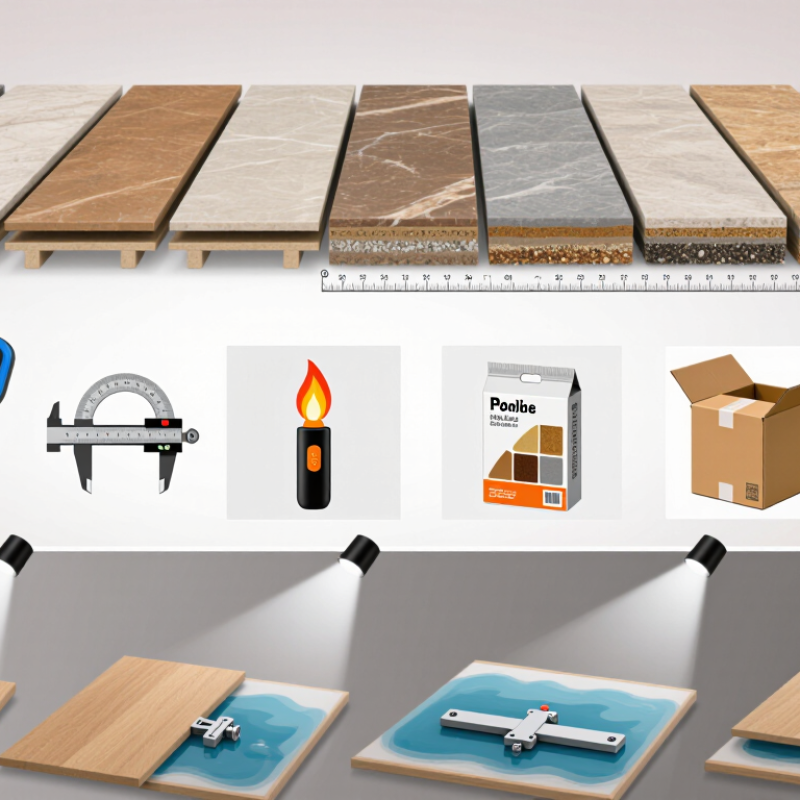
Stone composite flooring is a resilient floor covering with a mineral-rich core. It is often made from limestone powder, PVC resin, and carefully measured stabilizers. The mineral content adds rigidity. The polymer helps control moisture and impact.
Manufacturing starts by blending and heating these materials. The mixture passes through rollers or an extrusion line. It forms a dense, even core. Manufacturers then add a decorative film, wear layer, and protective surface coating. Click profiles are cut after cooling. Each stage affects the final result. Poor mixing may cause weak edges or uneven dimensions. A small flaw matters.
For global buyers, production details deserve close attention. Request test reports for dimensional stability, slip resistance, wear performance, fire behavior, and emissions. Requirements differ between countries and project types. Do not rely only on a product sample. Check several cartons for color variation, locking accuracy, and surface consistency. Measure the subfloor moisture before installation. Uneven concrete can create movement, even with a strong core. I would not treat a heavier board as automatic proof of quality. It may indicate more mineral content, but formulation and processing remain important. Leave the flooring in its installation environment when the technical instructions require acclimation. This step is easy to overlook.
Global buyers should match stone composite flooring to site conditions, not simply choose the thickest board. SPC flooring, with a dense limestone-polymer core, suits retail aisles, offices, and apartments exposed to rolling loads. Its rigid structure can manage minor subfloor imperfections better than softer products. The subfloor still needs preparation. That detail is often underestimated.
WPC flooring provides a warmer, quieter feel underfoot. It works well in hotel rooms, homes, classrooms, and upper-floor renovations where sound reduction matters. For bathrooms, kitchens, and humid coastal properties, water-resistant stone composite flooring is practical. However, the floor is not automatically waterproof after installation. Joints, edges, and pipe openings require careful sealing. Small gaps can become expensive problems.
For healthcare areas and busy public buildings, choose products with tested slip resistance, wear performance, and low emissions. Mineral-core options may suit projects needing stronger dimensional stability, but buyers should check local fire and indoor-air requirements. In sunny regions, confirm UV resistance before selecting dark colors. In cold climates, review temperature limits and expansion guidance. Product samples help, but they do not replace a full installation test. A flooring choice can look excellent in a showroom and behave differently beside a glass wall. Specifications need independent verification.
When evaluating stone composite flooring, inspect the core before admiring the color. A stable core should show consistent thickness, density, and a clean locking profile. Check several boards, not just one sample. Small changes may reveal production variation.
Ask for moisture, dimensional stability, and impact test results from an independent laboratory. Test reports should name the method, sample thickness, and testing date. A heavy board is not automatically stronger. I have seen dense-looking products chip around the click joint during installation. That detail matters. Also inspect the board edge under bright light. Uneven layers may indicate weak bonding or poor calibration.
Surface design needs practical checking. Compare samples under daylight and warm indoor lighting. Look for repeated patterns, blurred printing, or embossing that misses the visual grain. A realistic texture should support grip without trapping dust. Confirm the slip-resistance rating for the intended room and market. Wear resistance deserves equal care. Request the abrasion test method and classification, because ratings are not always directly comparable. Rub the surface near the display edge and inspect gloss change, scratches, and color loss. This simple check is imperfect, but it can expose misleading showroom impressions. Reconsider any supplier who offers only broad claims without complete technical records.
Global buyers should assess stone composite flooring through verified standards, not appearance alone. Request the product specification, installation guide, and batch-based test reports. Check dimensions, thickness, wear-layer performance, dimensional stability, locking strength, and slip resistance. These details affect performance in busy homes, hotels, and retail spaces.
Certification requirements vary by destination. For European sales, review applicable CE obligations and EN 14041 declarations. In North America, check relevant ASTM testing and indoor-air-quality certifications. Ask whether emissions tests cover VOCs, formaldehyde, and restricted substances. A laboratory accredited to ISO/IEC 17025 gives test results greater credibility. Also examine fire classification, acoustic performance, and resistance to moisture. A certificate alone is not enough. Its scope, test date, product name, and factory details must match the flooring supplied.
Tips: Ask for recent reports from an independent laboratory, then compare the tested construction with the shipment. Inspect sample cartons for thickness, surface texture, locking edges, and printed batch information. Confirm whether certification covers accessories, underlayments, and adhesives. Requirements can change by country. Recheck them before ordering. I have seen attractive samples fail because the commercial batch used a thinner wear layer. This small difference can affect service life and warranty discussions. Keep written records of approvals, inspection photos, and corrective actions. Good documentation feels slow, but it prevents expensive misunderstandings.
How to Choose Stone Composite Floor for Global Buyers?
How to Compare Suppliers, Costs, Installation, and Long-Term Value?
A reliable comparison starts with supplier evidence, not attractive photos. Request factory test reports, production details, thickness data, and recent export references. Check whether the quoted specification matches the actual sample. A thicker wear layer may improve durability, but it does not fix weak click joints or poor core stability.
Compare the complete landed cost. Include product price, freight, insurance, import duties, local delivery, underlayment, labor, and expected waste. Ask for a quotation based on the same area and specification. Otherwise, the cheapest offer may only be incomplete. I would also order samples from several suppliers and inspect them under natural light. Small color differences can become obvious across a large floor.
Installation quality strongly affects long-term value. The subfloor should be clean, dry, and sufficiently level before laying begins. Leave the recommended expansion gap around walls and fixed objects. In humid regions, confirm moisture-control requirements before installation. Keep spare planks from the same production batch for future repairs. This is often overlooked. A long warranty sounds reassuring, yet its exclusions, claim process, and local service capacity deserve careful reading. My own assessment would remain provisional until samples, documents, and installation conditions agree.


For those larger-sized parts, or smaller quantity runs, we have 2 independent powder coat booths and ovens. The quality, durability and affordability of today’s powder coating finishes make this the process of choice for world-class companies.
Powder coating advantages over other forms of coating are many. Materials used in the Powder coating process can be metals and non-metals that come in a multitude of thicknesses, textures, colors, etc. Another of Powder coating’s biggest advantages over conventional coatings is its ability to create finishes in many different textures. Powder Coating Booths allow us the ability to apply these advantages to large products.
Tri-State Fabricators runs a full-service conveyor line for painting. Wet painting can provide protection or decoration to many different part styles. From start to finish, every project is easier to undergo random and point-based inspection by our skilled painting team.
Advantages to our Wet Paint Line are these lines start with product prep and ends with a thorough inspection of a high quality finished product. Our ability to complete large and small projects with a superior finish and doing so in a timely and economical fashion. This passes along the savings in production to our customers. When powder coating ins not an option, our Wet Paint Line gets the job done right the first time.
When the parts get big and heavy we roll-out our custom paint racks and oversize booth. By utilizing our partnerships with all the major paint brands, we can match virtually any color with wet paint.
The advantages of having access to a Wet Paint Booth are many. Large projects of many different shapes can be loaded into the booth. The Wet Paint Booth offers an environment that is much more controlled than a typical parts painting operation.
Not only are they used because of their controlled environment, but they’re are also advantageous when it comes to applying paint to parts that are needed in industries that require specialty coatings such as medical, aerospace, etc.
Our military forces have some very high standards when it comes to the finish of their vehicles and equipment. From the first pre-treatment step to final coat, it takes a great deal of knowledge and experience to protect the men and women of our armed forces. They deserve only the best, and Tri-State Fabricators provides it.
All of our processes are closely monitored by our staff and management teams. Both of which are highly trained in the processes of metal fabrication and finishing. Tri-State Fabricators’ goal is to always fully satisfy each and every customer, including the military. We will always put a 110% into what we do.
Abrasive media blasting is an excellent way to remove old paint, rust, and increase the paint/powder adhesion. Glass beads produce a much smoother and brighter finish than angular abrasives; leaving the part clean yet without any dimensional change. Chemically inert and environmentally friendly, we can recycle our beads approximately 30 times; making them a more preferred method of metal cleaning or surface finishing.
Advantages to Glass Bead Blasting are many. Glass bead blast media is used when a project is needing rough surfaces need to become smooth for applications of coatings such as paint. It is typically used to clean paint and rust from a product surface without deforming the surface it is being used on. Overall, compared to many other blasting media, Glass Bead Blasting is a very economical choice and those savings are always passed on to our customers.
Tri-State Fabricators utilize a zinc phosphate wash to clean and etch the material to ensure the best paint adhesion possible. The unique design of our 3-stage wash system does the work like a 5-stage. From Cleaning and rinsing to conversion coating and post-treatment, Our Part Washing process is a complete service and works throughout the fabrication service and the finishing service.
Along with the previously mentioned benefits, Curing is a vital chemical reaction that leaves the product finish hard and relatively safe from mild abrasion and aggressive corrosion. This process can be done in more than one way; ambient air-dry or in curing ovens at temps that exceed 240°.
From fixing paint mistakes (someone else’s of course) to simply cleaning our paint line hooks, our burn-off oven is put to good use. After a quick burn-off, a little clean up, and a fresh coat of paint, your parts will look better than new.
Why does our Burn-Off Oven work so well? Because super heating the air around parts turns the materials into ashes. From paint and powder coatings to rubber and machining oils, high temps do the job without degrading the integrity of the part.
Masking is a vital part of producing high quality products. We have die-cut masking patterns to protect machined surfaces as well as a wide range of plugs and caps to protect threaded holes and bolts. We provide permanent and temporary masking.
Masking allows the selected sections of a product to be protected from a fabrication or finishing service. This can be with both chemicals when etching and tapes, paints when only finishing just a section of the product. Masking is great in aiding the customization process of a project.
Screen printing is a photographic process that transfers artwork onto a porous nylon screen which allows colored ink to flow through the screen and be deposited on an aluminum or plastic component. We can generally have just about any design created onto a screen for your parts.
Some of the advantages of Screen Printing are, brand recognition for your business displaying on your products, assembly instructions, product warnings/hazards, etc. Tri-State Fabricators produces Screen Printing of the highest quality so you know it’s durable.
Metal Finishing is the art of treating the exterior portion of product, often metal but can also be made of other materials, so that the surface is clean and free of any debris. Then the process of applying coats or either paint of powder coat takes place. This coating process improves the quality of the product in both appearance and resistance to wear and corrosion.
Tri-State Fabricators, Inc., understands that a project typically isn’t complete until a high-quality finish has been added to your product. This is why our painting and powder coating teams continuously inspect the products throughout the Metal Finishing process.