

How to Choose the Best Foldable Sunroom from China?

Choosing the best Foldable Sunroom from China requires more than comparing attractive photos and low prices. Buyers must examine materials, engineering details, supplier experience, and after-sales support. A reliable supplier should explain the frame alloy, fabric composition, panel thickness, waterproofing method, wind resistance, and folding mechanism clearly. Vague answers deserve caution.

In practical use, small details matter. Check whether the folded unit fits your storage area. Ask for installation drawings, packed dimensions, product videos, and recent project references. A sunroom placed beside a garden may face rain, strong sunlight, dust, and repeated opening. Its hinges should move smoothly, while seals should remain flexible after temperature changes. Independent inspection reports can add confidence, but documents should be verified rather than accepted blindly.

The “best” model depends on your climate, space, budget, and intended use. A lightweight design may suit seasonal gatherings, while a reinforced structure may perform better in exposed locations. I would not trust a supplier who promises perfect performance without discussing local conditions. That is unrealistic. Confirm production standards, customization limits, warranty terms, replacement parts, and communication responsibilities before payment. Factory visits, video inspections, or third-party quality checks can reveal details that brochures hide. Even careful research has limits. Samples may perform well while large orders require closer control. For this reason, compare several manufacturers and record every specification in writing. A thoughtful decision may take longer, but it reduces costly surprises and creates a safer, more comfortable outdoor room.
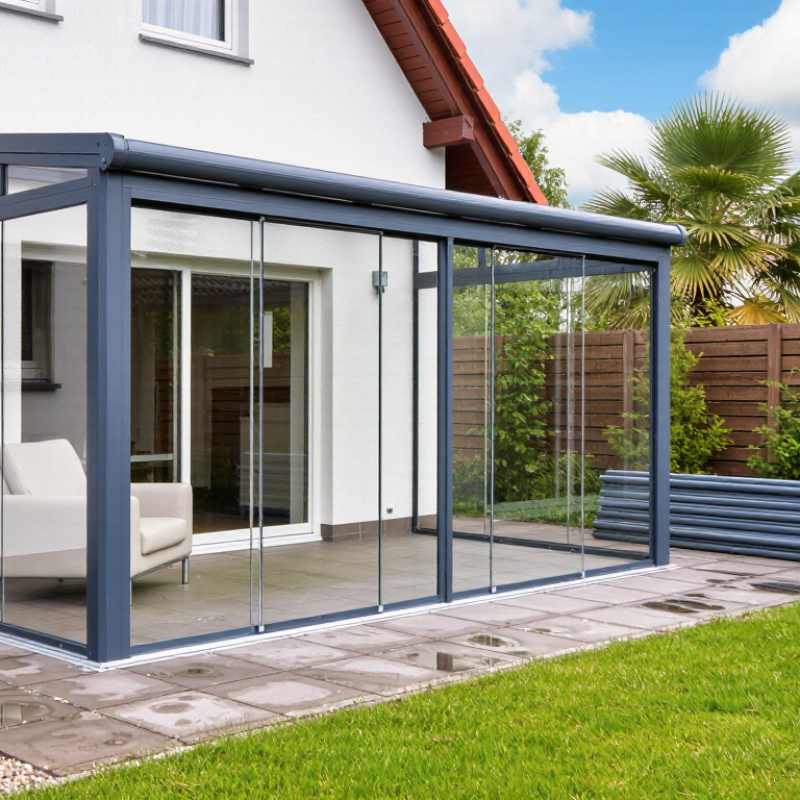
How to Choose the Best Foldable Sunroom from China?

Define Your Foldable Sunroom’s Space, Climate, and Intended Use

Choosing the best foldable sunroom from China begins with your space, climate, and intended use. Measure the opening, floor area, roof height, and drainage path. Measure twice. A compact balcony may need a light folding system, while a garden room requires stronger framing and safer anchoring. Leave clearance for doors, ventilation, and snow or rain runoff. My planning mistake would be treating every square metre as usable space.

Climate determines more than fabric colour. The World Meteorological Organization reported that 2023 was approximately 1.45°C above the pre-industrial average. Hotter conditions increase the need for shading, airflow, and UV-resistant roof materials. In coastal areas, salt-resistant hardware deserves attention. In windy regions, request tested wind-load data and installation limits. Ask the supplier for test reports, material specifications, and replacement-part availability. Photos are not evidence.

Intended use sets the performance target. For occasional dining, prioritize quick folding, insect screens, and easy cleaning. For a home office, check glare control, ventilation, sealing, and electrical planning. The International Energy Agency reports that buildings consume about 30% of global final energy, so passive shading can support lower cooling demand. However, a sunroom is not automatically energy efficient. Inspect gasket quality, panel joints, and thermal bridges before ordering. A detailed site drawing is more reliable than a showroom promise.

How to Choose the Best Foldable Sunroom from China? - Define Your Foldable Sunroom’s Space, Climate, and Intended Use

Selection Dimension Typical Requirement Recommended Foldable Sunroom Specification Best-Fit Application Important Checks Before Ordering
Available Floor Space Small balcony or compact terrace, approximately 4–8 m² Depth of 1.5–2.0 m; lightweight folding panels; inward or stacking operation; minimum clear passage of about 800–900 mm Reading corner, small seating area, balcony enclosure Confirm balcony load capacity, opening clearance, drainage position, and local building restrictions
Medium Outdoor Area Approximately 8–20 m² on a patio, deck, or garden terrace Depth of 2.0–3.5 m; multiple folding modules; roof slope for rainwater runoff; integrated gutter and downspout Dining area, home office, family lounge, seasonal entertaining Measure the finished foundation, verify anchor locations, and allow space for fully folded panels
Large Usable Area More than 20 m² or a multi-zone outdoor extension Modular spans with reinforced posts, independent roof drainage, zoning for ventilation and shading, and engineered connections Restaurant terrace, event space, large family room, commercial outdoor area Request structural calculations for the complete assembled system, including foundations and connection details
Hot and Sunny Climate High solar exposure, strong summer heat, and frequent glare Low-emissivity or solar-control glazing, external shading, roof ventilation, UV-resistant seals, and light-colored roof finishes Daytime lounge, plant area, dining space used mainly in spring and autumn Check solar heat-gain performance, shading compatibility, ventilation area, and glass safety classification
Cold or Snowy Climate Low winter temperatures, frost, and possible snow accumulation Thermally improved aluminum profiles, insulated roof panels or double glazing, weather-resistant gaskets, and a project-specific snow-load design Three-season room or four-season extension when properly engineered Verify the certified snow-load value for the installation location; do not rely on a generic rating
Coastal or Humid Climate Salt spray, high humidity, wind-driven rain, and corrosion risk Powder-coated or anodized aluminum, stainless or corrosion-resistant fasteners, EPDM-type seals, sloped sill drainage, and sealed joints Seaside balcony, waterfront patio, humid garden room Ask for coating specifications, corrosion-resistance testing, drainage details, and a maintenance schedule
Wind-Exposed Location Open rooftop, corner building, exposed terrace, or storm-prone region Reinforced frames, positive locking hardware, engineered anchoring, laminated safety glass where appropriate, and a location-specific wind design Rooftop terrace, high-rise balcony, open garden pavilion Confirm design wind speed, exposure category, anchor pull-out strength, and whether the structure must be closed during severe weather
Three-Season Use Use during mild weather with occasional rain and wind protection Single or double glazing, large operable panels, adjustable screens, roof overhang, and simple manual folding hardware Seasonal dining, outdoor relaxation, garden viewing Prioritize ventilation, waterproof thresholds, smooth operation, and easy cleaning access
Four-Season Use Regular occupancy throughout the year with heating or cooling Thermally broken profiles, insulated roof, double glazing, airtight weather seals, controlled ventilation, and professionally designed heating and cooling Home office, dining room, guest area, year-round living space Check thermal calculations, condensation control, energy performance, electrical routing, and local permit requirements
Frequent Opening and Closing Panels will be operated daily or several times per week Low-friction rollers or hinges, accessible adjustment points, corrosion-resistant hardware, and replaceable seals Flexible dining area, hospitality terrace, entertainment space Request cycle testing, operating-force information, spare hardware availability, and warranty terms
Privacy and Noise Control Urban setting, neighboring buildings, traffic noise, or close property lines Translucent or frosted sections, acoustic laminated glass, privacy screens, and carefully sealed frame joints Urban balcony, bedroom extension, quiet work area Confirm visible-light transmission, acoustic performance, cleaning access, and compliance with local appearance rules
Low-Maintenance Requirement Limited time for cleaning, adjustment, and seasonal servicing Durable coated aluminum, accessible drainage channels, removable screens, stainless or treated hardware, and replaceable weather seals Rental properties, commercial premises, holiday homes, busy households Obtain the cleaning method, inspection interval, replacement-part list, and after-sales service process in writing

Note: Wind, snow, drainage, glass, and foundation requirements must be verified against the applicable building codes and the actual installation site. Generic product ratings should not replace a project-specific structural assessment.

Compare Frame Materials, Fabrics, Insulation, and Weather Resistance

Choosing a foldable sunroom from China requires more than comparing online prices. The frame carries the structure, folding loads, and daily movement. Aluminum is light, corrosion-resistant, and easy to maintain. Steel offers greater stiffness, but poor surface protection can invite rust. Check tube thickness, corner joints, hinge quality, and locking points. Thin sections may look elegant. They can flex in strong wind.

Fabric affects comfort as much as appearance. Look for solution-dyed polyester, UV-resistant coatings, sealed seams, and a measured water-pressure rating. A waterproof label alone proves little. Ask for fabric samples, coating details, and cleaning instructions. For colder regions, insulated panels or layered fabric reduce heat loss better than a single thin cover. Insulation also adds weight. Check the fit. The folding system must handle it without binding. Small details matter.

Weather resistance should be verified, not assumed. Request test data for UV exposure, water penetration, wind performance, and temperature cycling. Review how the supplier defines each result. Numbers can be presented selectively. Inspect a production sample, photograph hinge gaps, and check drainage paths after simulated rain. A factory video is useful, but it is not an inspection. I once underestimated zipper quality; wind-driven rain quickly exposed the weakness. That mistake changed my checklist. Confirm replacement parts, packaging, installation guidance, and written warranty terms before ordering.

Check Chinese Supplier Quality, Certifications, and Customization Options

When choosing a foldable sunroom from China, inspect the supplier behind the product. Ask for factory photos, production videos, and recent project records. A polished brochure proves very little. Look closer. Confirm the workshop has cutting, welding, coating, and assembly areas. Request material specifications for aluminum profiles, roof panels, glass, seals, and fasteners. Reliable suppliers should explain alloy grades, coating thickness, drainage design, and expected service conditions clearly.

Certifications need careful checking. Ask for complete certificates, test reports, issuing bodies, and matching product models. ISO 9001 may indicate a controlled quality system, but it does not prove structural performance. Depending on your market, request relevant safety, electrical, fire, or building compliance documents. Verify certificate numbers independently. I have learned that copied files and expired reports can appear convincing. A third-party factory audit can reveal inconsistent welding, poor packaging, or unfinished surface treatment.

Customization should be discussed before the quotation. Confirm exact width, depth, folding direction, roof style, glazing type, screen options, insulation, colors, drainage outlets, and hardware. Request technical drawings with tolerances. Also ask for a sample corner or operating section when practical. Small details matter. A beautiful design may become difficult to install if the site slope, wall connection, or local wind conditions are ignored. Clarify replacement parts, inspection procedures, delivery protection, and communication responsibilities in writing. Leave room for revision; my first specification is rarely perfect.

Evaluate Pricing, Minimum Orders, Shipping, and Import Requirements

How to Choose the Best Foldable Sunroom from China?

Pricing should be judged by landed cost, not the factory quotation alone. Ask whether the price is EXW, FOB, or CIF. Freight, insurance, import duty, VAT, and local delivery can change the final figure. Request a detailed quotation showing frame material, fabric grade, windows, hardware, and packaging. A low price may hide thinner aluminum or weaker hinges. Check carefully.

Minimum order quantity affects small projects. Some suppliers accept one sample, while production orders may require dozens. Confirm sample fees, customization charges, and whether they are refundable. In my procurement experience, a sample exposed a folding problem that photos never showed. Test the locking points, wheels, seams, and drainage after assembly. The sample was not perfect.

Shipping needs practical measurements. Record the folded carton size, gross weight, cubic volume, and pallet count. Compare courier, LCL, and full-container options with a freight forwarder. Ask for loading photos and moisture-resistant packaging. Import requirements also need early attention. Confirm the correct HS code, commercial invoice, packing list, bill of lading, and certificate of origin. Your country may require documents for structural safety, fire performance, or electrical components. Customs rules differ. Verify them with a licensed broker before payment. Do not assume the supplier knows every local requirement. I once overlooked a labeling detail, causing an avoidable warehouse delay.

Verify Samples, Warranty Terms, Installation Support, and After-Sales Service

How to Choose the Best Foldable Sunroom from China?

A sample is evidence, not decoration. Request one complete unit before placing a large order. Check frame joints, folding resistance, fabric stitching, drainage holes, and glass or panel alignment. Measure the packed size, too. A beautiful sample may hide difficult installation. Grand View Research’s 2024 outdoor living market analysis projects continued market growth through 2030, increasing the need for consistent quality control. Ask whether the production batch follows the approved sample.

Warranty terms require careful reading. Confirm coverage periods for the frame, roof panels, seals, wheels, and hardware separately. Ask whether corrosion, fading, leaking, and wind damage are included. Exclusions matter more than promises. The Houzz & Home 2024 study reported continued investment in outdoor living improvements, but buyers still face repair costs when specifications are vague. Request written limits, replacement procedures, and shipping responsibilities.

Installation support should include drawings, numbered parts, video guidance, and a trained contact. Ask for the recommended tools and foundation tolerances. After-sales service needs measurable commitments, such as response times and spare-part availability. Keep every file and conversation. A five-year warranty means little if replacement hinges are unavailable. I would also request a small hardware reserve. No checklist catches every defect. Inspecting the first shipment may reveal mistakes that the sample review missed.

How to Choose the Best Foldable Sunroom from China

Recommended evaluation priorities for comparing suppliers before purchase

Sample verification and warranty terms should receive the greatest attention because they directly reduce product-quality and long-term ownership risks. Installation support and after-sales service are also essential for ensuring reliable assembly, maintenance, and problem resolution.

Powder Coat Booths

For those larger-sized parts, or smaller quantity runs, we have 2 independent powder coat booths and ovens. The quality, durability and affordability of today’s powder coating finishes make this the process of choice for world-class companies.

Powder coating advantages over other forms of coating are many. Materials used in the Powder coating process can be metals and non-metals that come in a multitude of thicknesses, textures, colors, etc. Another of Powder coating’s biggest advantages over conventional coatings is its ability to create finishes in many different textures. Powder Coating Booths allow us the ability to apply these advantages to large products.

Wet Paint Line

Tri-State Fabricators runs a full-service conveyor line for painting. Wet painting can provide protection or decoration to many different part styles. From start to finish, every project is easier to undergo random and point-based inspection by our skilled painting team.

Advantages to our Wet Paint Line are these lines start with product prep and ends with a thorough inspection of a high quality finished product. Our ability to complete large and small projects with a superior finish and doing so in a timely and economical fashion. This passes along the savings in production to our customers. When powder coating ins not an option, our Wet Paint Line gets the job done right the first time.

Wet Paint Booths

When the parts get big and heavy we roll-out our custom paint racks and oversize booth. By utilizing our partnerships with all the major paint brands, we can match virtually any color with wet paint.

The advantages of having access to a Wet Paint Booth are many. Large projects of many different shapes can be loaded into the booth. The Wet Paint Booth offers an environment that is much more controlled than a typical parts painting operation.

Not only are they used because of their controlled environment, but they’re are also advantageous when it comes to applying paint to parts that are needed in industries that require specialty coatings such as medical, aerospace, etc.

Military CARC

Our military forces have some very high standards when it comes to the finish of their vehicles and equipment. From the first pre-treatment step to final coat, it takes a great deal of knowledge and experience to protect the men and women of our armed forces. They deserve only the best, and Tri-State Fabricators provides it.

All of our processes are closely monitored by our staff and management teams. Both of which are highly trained in the processes of metal fabrication and finishing. Tri-State Fabricators’ goal is to always fully satisfy each and every customer, including the military. We will always put a 110% into what we do.

Glass-Bead Blasting

Abrasive media blasting is an excellent way to remove old paint, rust, and increase the paint/powder adhesion. Glass beads produce a much smoother and brighter finish than angular abrasives; leaving the part clean yet without any dimensional change. Chemically inert and environmentally friendly, we can recycle our beads approximately 30 times; making them a more preferred method of metal cleaning or surface finishing.

Advantages to Glass Bead Blasting are many. Glass bead blast media is used when a project is needing rough surfaces need to become smooth for applications of coatings such as paint. It is typically used to clean paint and rust from a product surface without deforming the surface it is being used on. Overall, compared to many other blasting media, Glass Bead Blasting is a very economical choice and those savings are always passed on to our customers.

Part Washing

Tri-State Fabricators utilize a zinc phosphate wash to clean and etch the material to ensure the best paint adhesion possible. The unique design of our 3-stage wash system does the work like a 5-stage. From Cleaning and rinsing to conversion coating and post-treatment, Our Part Washing process is a complete service and works throughout the fabrication service and the finishing service.

Along with the previously mentioned benefits, Curing is a vital chemical reaction that leaves the product finish hard and relatively safe from mild abrasion and aggressive corrosion. This process can be done in more than one way; ambient air-dry or in curing ovens at temps that exceed 240°.

Burn-Off Oven

From fixing paint mistakes (someone else’s of course) to simply cleaning our paint line hooks, our burn-off oven is put to good use. After a quick burn-off, a little clean up, and a fresh coat of paint, your parts will look better than new.

Why does our Burn-Off Oven work so well? Because super heating the air around parts turns the materials into ashes. From paint and powder coatings to rubber and machining oils, high temps do the job without degrading the integrity of the part.

Masking

Masking is a vital part of producing high quality products. We have die-cut masking patterns to protect machined surfaces as well as a wide range of plugs and caps to protect threaded holes and bolts. We provide permanent and temporary masking.

Masking allows the selected sections of a product to be protected from a fabrication or finishing service. This can be with both chemicals when etching and tapes, paints when only finishing just a section of the product. Masking is great in aiding the customization process of a project.

Screen Printing

Screen printing is a photographic process that transfers artwork onto a porous nylon screen which allows colored ink to flow through the screen and be deposited on an aluminum or plastic component. We can generally have just about any design created onto a screen for your parts.

Some of the advantages of Screen Printing are, brand recognition for your business displaying on your products, assembly instructions, product warnings/hazards, etc. Tri-State Fabricators produces Screen Printing of the highest quality so you know it’s durable.

Metal Finishing

Metal Finishing is the art of treating the exterior portion of product, often metal but can also be made of other materials, so that the surface is clean and free of any debris. Then the process of applying coats or either paint of powder coat takes place. This coating process improves the quality of the product in both appearance and resistance to wear and corrosion.

Tri-State Fabricators, Inc., understands that a project typically isn’t complete until a high-quality finish has been added to your product. This is why our painting and powder coating teams continuously inspect the products throughout the Metal Finishing process.