


How to Choose the Best Hydraulic Actuator Factory in China?

Choosing the right Hydraulic Actuator Factory in China can determine your equipment’s safety, service life, and operating cost. A reliable supplier should offer more than attractive pricing. It should demonstrate practical manufacturing experience, stable engineering processes, and clear quality controls. Look for evidence in production photos, testing records, customer references, and detailed technical documents.

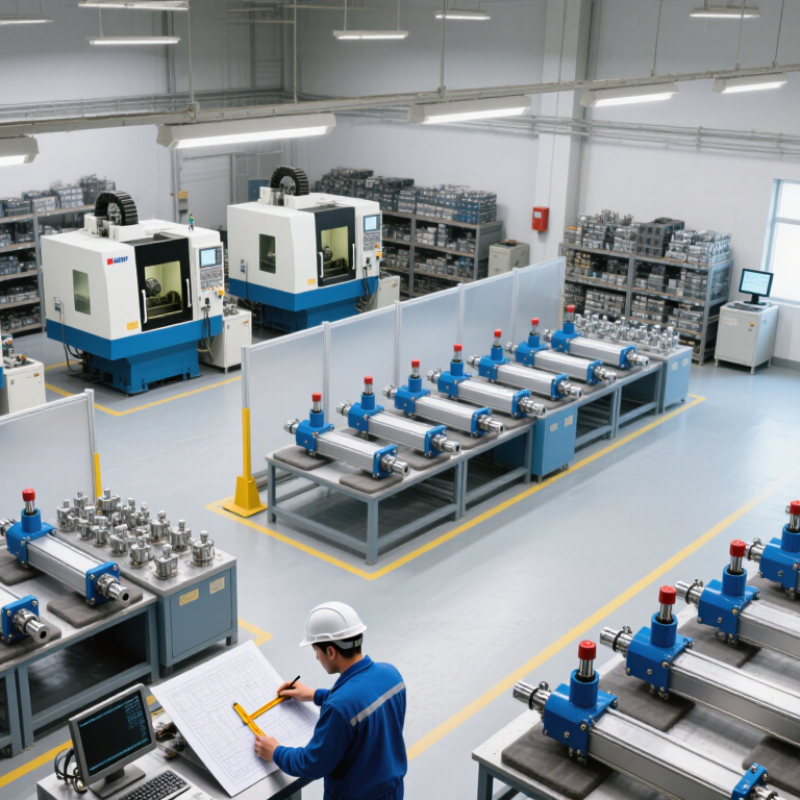
A serious factory should explain how it controls materials, machining tolerances, sealing performance, and surface treatment. Ask whether each actuator receives pressure, leakage, stroke, and endurance testing before shipment. Small details matter. For example, a well-organized workshop may label components, protect cylinder rods, and record inspection results at every stage. Certifications can support credibility, but they should not replace direct verification. A certificate alone proves little.

Communication also deserves careful attention. The supplier should understand your working pressure, load requirements, installation space, duty cycle, and environmental conditions. Experienced engineers can identify risks before production begins. They may recommend a different seal, rod coating, or mounting design. That advice can prevent expensive redesigns later. Still, do not assume every confident answer is correct. Request drawings, samples, test reports, and a clear production schedule.

Factory audits, video inspections, and independent pre-shipment checks can improve reliability. Compare total value rather than the lowest quotation, including tooling, packaging, delivery, maintenance, and warranty support. No factory is perfect. The best partner is transparent about limitations and willing to correct mistakes. Careful evaluation takes time, but it helps build a safer and more dependable hydraulic system.
How to Choose the Best Hydraulic Actuator Factory in China?

Define Your Hydraulic Actuator Requirements and Application Conditions

How to Choose the Best Hydraulic Actuator Factory in China?

Define Your Hydraulic Actuator Requirements and Application Conditions

Before contacting a factory, record the real operating conditions, not only the desired cylinder size. Specify load, stroke, retraction speed, working pressure, duty cycle, mounting space, and fluid type. Calculate force using F = p × A, then allow a practical safety margin. A 100 mm bore at 160 bar produces approximately 126 kN theoretically, but friction and pressure losses reduce the usable output.

Environment matters equally. Describe temperature, humidity, dust, corrosion, vibration, and possible side loading. A construction actuator may need stronger rods and wipers than an indoor industrial cylinder. ISO 4413 recommends managing hydraulic-system risks through suitable design, installation, and maintenance practices. Ask factories for material certificates, dimensional inspection records, pressure-test results, and traceability for seals and tubing.

Market data shows why detailed specifications matter. Grand View Research valued the global hydraulic equipment market at about USD 49.2 billion in 2023 and forecasts continued growth through 2030. That growth creates more supplier choices, but not necessarily better engineering. Request a drawing review, prototype test, and cycle-life evidence under conditions close to yours. Do not accept a generic “tested” statement. It is too vague. I have seen projects fail because engineers ignored side loads and oil-temperature changes. A perfect specification is rare, so review it after field testing and correct what reality exposes.


Evaluate Factory Expertise, Production Capacity, and Quality Systems

How to Choose the Best Hydraulic Actuator Factory in China?

Choosing a hydraulic actuator factory in China requires more than comparing quotations. Examine its engineering experience, application knowledge, and communication habits. A capable factory should explain cylinder design, sealing choices, pressure ratings, and material selection clearly. Ask for examples of similar actuators used in demanding equipment. Request drawings, test records, and references from comparable projects. Expertise becomes visible in technical details, not polished sales language.

Production capacity also deserves close attention. Visit the machining, welding, assembly, and testing areas when possible. Check whether key processes happen in-house or depend on several subcontractors. Ask about monthly output, equipment maintenance, staffing, and peak-season schedules. A crowded workshop may indicate strong demand, but it can also create delays. Verify capacity with recent production records. Numbers without evidence are weak.

Quality systems should control every stage, from incoming steel to final pressure testing. Look for documented inspections, calibrated instruments, welding procedures, and batch traceability. Confirm that each actuator receives dimensional checks and leakage tests before shipment. A certificate alone proves little. Review how the factory handles nonconforming parts and customer complaints. No factory is flawless. What matters is whether problems are recorded, investigated, and corrected. Some suppliers may resist detailed questions, which is a warning sign worth considering. Reliable cooperation needs transparent evidence, not convenient promises.

How to Choose the Best Hydraulic Actuator Factory in China? - Evaluate Factory Expertise, Production Capacity, and Quality Systems
Practical supplier-screening benchmark for hydraulic actuator sourcing; verify every value through current documents, audits, samples, and production records.
Evaluation Dimension Weight What to Verify Practical Benchmark for Shortlisting Recommended Evidence Reference Score
Hydraulic actuator expertise 15% Experience with hydraulic cylinders, rotary actuators, custom mounting arrangements, seals, coatings, and application-specific designs. At least 8 years of relevant hydraulic-actuator manufacturing experience and documented experience with comparable pressure, stroke, and duty-cycle requirements. Engineering portfolio, anonymized project records, drawings, design-review procedure, and technical staff qualifications. 5/5
Engineering and customization capability 12% Ability to convert customer specifications into validated drawings, tolerances, material selections, and prototype plans. Dedicated design engineering team; 2D/3D CAD capability; formal drawing approval; prototype or first-article process before mass production. Sample drawings, tolerance tables, engineering-change records, prototype reports, and design-validation plans. 5/5
Production capacity 15% Monthly output, available machining hours, assembly capacity, bottleneck operations, and ability to support repeat orders. Capacity should exceed the forecasted monthly demand by approximately 20% to 30%, with documented capacity planning for machining, welding, assembly, and testing. Capacity report, machine list, production-flow chart, staffing plan, and recent utilization data. 4/5
Machining and process control 10% Control of bore diameter, rod straightness, surface finish, concentricity, welding distortion, and critical assembly dimensions. Critical characteristics defined on drawings; calibrated measuring equipment available; documented inspection points for machining, welding, and assembly. Process-control plans, inspection standards, calibration certificates, capability studies, and machine-maintenance records. 4/5
Quality management system 15% Control of purchasing, incoming inspection, production records, nonconforming products, corrective actions, and document changes. Valid ISO 9001 certification within its stated scope, supported by internal audits, traceable records, corrective-action tracking, and management reviews. Current certificate, audit reports, quality manual, nonconformance records, corrective-action reports, and document-control samples. 5/5
Material and component traceability 8% Traceability of steel, tubes, rods, seals, fasteners, coatings, and outsourced processes from incoming material to finished actuator. Unique batch or heat-number identification maintained through production, with supplier certificates and clear linkage to the finished-product serial or lot number. Material certificates, receiving logs, batch cards, serial-number records, and subcontractor-control procedures. 4/5
Testing and inspection capability 12% Functional testing, leakage inspection, dimensional inspection, pressure testing, cleanliness checks, and test-data retention. A calibrated test bench capable of testing the specified pressure, stroke, speed, load, and cycle requirements; test acceptance criteria defined before production. Test-bench specifications, calibration records, inspection reports, pressure-test records, and sample certificates of conformity. 5/5
Delivery performance and capacity flexibility 6% Quoted lead time, production scheduling, raw-material availability, contingency planning, and communication during delays. Routine repeat-order lead time commonly planned within 4 to 8 weeks after approved specifications, with milestone updates and documented escalation procedures. Anonymized on-time-delivery data, production schedule, order-status reports, and business-continuity plan. 4/5
After-sales and technical support 4% Response time for technical questions, warranty handling, root-cause analysis, spare-part support, and field-failure communication. Written warranty terms, named technical contacts, initial response within one business day, and a defined corrective-action process for confirmed quality issues. Warranty policy, service workflow, response records, spare-part list, and corrective-action examples with sensitive information removed. 4/5
Environmental and workplace controls 3% Control of welding fumes, oils, chemicals, waste, worker safety, and environmental compliance relevant to the production process. Documented workplace-safety procedures and chemical/waste controls; ISO 14001 certification is beneficial where environmental requirements are significant. Safety inspection records, environmental permits where applicable, training logs, waste-disposal records, and relevant certificates. 4/5
Weighted Supplier-Evaluation Reference Score 4.5/5

Check Materials, Manufacturing Standards, and Product Customization

How to Choose the Best Hydraulic Actuator Factory in China?

Choosing a hydraulic actuator factory in China starts with materials, not attractive sales claims. Ask for material certificates, heat-treatment records, and batch traceability. The cylinder tube should resist deformation under repeated pressure. The piston rod often needs hardened steel and a consistent chrome layer. Seal materials must match the fluid, temperature, and operating cycle. Small details matter.

Manufacturing standards reveal how seriously a factory controls quality. Check whether the supplier follows documented procedures under ISO 9001. Request dimensional inspection reports, welding records, and pressure-test results. Confirm that test equipment is calibrated and regularly maintained. A factory should explain its acceptance criteria clearly. Vague answers deserve caution.

Customization is more than changing the stroke length. Discuss bore size, mounting points, port positions, cushioning, coatings, and installation space. Share drawings, load data, duty cycles, and environmental conditions. A capable engineering team should review these details before quoting. Sample production can expose design problems early. It may also reveal communication gaps. No factory gets every detail right. The important question is how quickly it identifies and corrects mistakes. Visit the workshop when possible, observe machining areas, and inspect finished actuators before shipment. Reliable suppliers welcome practical questions and provide consistent records.

Compare Testing Procedures, Certifications, Pricing, and Lead Times

How to Choose the Best Hydraulic Actuator Factory in China?

Compare Testing Procedures, Certifications, Pricing, and Lead Times

A reliable hydraulic actuator factory should explain its testing process clearly. Ask for pressure-holding records, leakage checks, stroke verification, and dimensional inspection reports. For welded cylinders, request evidence of weld inspection and material traceability. During an audit, inspect the test bench, calibration labels, and recorded results. A clean workshop helps, but documented control matters more.

Check whether the factory holds ISO 9001 certification and can provide valid certificates. CE documentation may apply to certain assemblies or applications, so confirm the exact scope. Do not accept copied certificates. Verify the certificate number, issuing body, and covered production site. This step is easy to skip.

Pricing needs careful comparison. Request a quotation separating materials, machining, seals, testing, packaging, tooling, and shipping. The lowest offer may use thinner tubes or cheaper seals. That saving can disappear after early maintenance. I would also ask for a sample unit before approving bulk production. Samples cost time, but they reveal unfinished threads, rough surfaces, or inaccurate mounting dimensions.

Lead times should be divided into sampling, production, inspection, and dispatch. Ask how capacity changes during peak seasons and public holidays. A factory promising ten days may not include testing or export preparation. Build a small buffer. No plan is perfect. Suppliers should still explain delays quickly, show production progress, and provide a realistic recovery schedule.

Verify Supplier Reliability Through Samples, Audits, and Customer Support

Choosing a hydraulic actuator factory in China requires evidence, not attractive catalog photographs. Request two or three production samples before signing a large order. Test pressure holding, stroke accuracy, leakage, noise, and mounting alignment. Measure results under both normal and maximum rated loads. Keep one sample for future comparison. Small details matter.

The ISO Survey 2023 recorded 1,265,216 ISO 9001 certificates worldwide. This demonstrates quality systems are widely used, but certification alone cannot prove actuator performance. Ask for calibration records, material traceability, inspection plans, and corrective-action reports. Audit the machining area, assembly line, testing station, and warehouse. ISO 19011:2018 provides useful guidance for audit planning and evidence review. A report can look perfect. That is not enough. Confirm production capacity using recent orders, not promises.

Customer support should be tested before purchase. Send technical questions and record response time, accuracy, and language clarity. Require written procedures for seal replacement, troubleshooting, warranty handling, and emergency parts. The World Bank’s 2023 Logistics Performance Index ranked China 19th among 139 economies, supporting strong logistics capability, but delivery performance still varies by factory. Ask for shipment records and realistic lead times. Visit existing users when possible, while protecting confidential information. I would also request a pilot order with clear acceptance criteria. It costs more initially. It can reveal weaknesses that a polished factory tour hides.

Powder Coat Booths

For those larger-sized parts, or smaller quantity runs, we have 2 independent powder coat booths and ovens. The quality, durability and affordability of today’s powder coating finishes make this the process of choice for world-class companies.

Powder coating advantages over other forms of coating are many. Materials used in the Powder coating process can be metals and non-metals that come in a multitude of thicknesses, textures, colors, etc. Another of Powder coating’s biggest advantages over conventional coatings is its ability to create finishes in many different textures. Powder Coating Booths allow us the ability to apply these advantages to large products.

Wet Paint Line

Tri-State Fabricators runs a full-service conveyor line for painting. Wet painting can provide protection or decoration to many different part styles. From start to finish, every project is easier to undergo random and point-based inspection by our skilled painting team.

Advantages to our Wet Paint Line are these lines start with product prep and ends with a thorough inspection of a high quality finished product. Our ability to complete large and small projects with a superior finish and doing so in a timely and economical fashion. This passes along the savings in production to our customers. When powder coating ins not an option, our Wet Paint Line gets the job done right the first time.

Wet Paint Booths

When the parts get big and heavy we roll-out our custom paint racks and oversize booth. By utilizing our partnerships with all the major paint brands, we can match virtually any color with wet paint.

The advantages of having access to a Wet Paint Booth are many. Large projects of many different shapes can be loaded into the booth. The Wet Paint Booth offers an environment that is much more controlled than a typical parts painting operation.

Not only are they used because of their controlled environment, but they’re are also advantageous when it comes to applying paint to parts that are needed in industries that require specialty coatings such as medical, aerospace, etc.

Military CARC

Our military forces have some very high standards when it comes to the finish of their vehicles and equipment. From the first pre-treatment step to final coat, it takes a great deal of knowledge and experience to protect the men and women of our armed forces. They deserve only the best, and Tri-State Fabricators provides it.

All of our processes are closely monitored by our staff and management teams. Both of which are highly trained in the processes of metal fabrication and finishing. Tri-State Fabricators’ goal is to always fully satisfy each and every customer, including the military. We will always put a 110% into what we do.

Glass-Bead Blasting

Abrasive media blasting is an excellent way to remove old paint, rust, and increase the paint/powder adhesion. Glass beads produce a much smoother and brighter finish than angular abrasives; leaving the part clean yet without any dimensional change. Chemically inert and environmentally friendly, we can recycle our beads approximately 30 times; making them a more preferred method of metal cleaning or surface finishing.

Advantages to Glass Bead Blasting are many. Glass bead blast media is used when a project is needing rough surfaces need to become smooth for applications of coatings such as paint. It is typically used to clean paint and rust from a product surface without deforming the surface it is being used on. Overall, compared to many other blasting media, Glass Bead Blasting is a very economical choice and those savings are always passed on to our customers.

Part Washing

Tri-State Fabricators utilize a zinc phosphate wash to clean and etch the material to ensure the best paint adhesion possible. The unique design of our 3-stage wash system does the work like a 5-stage. From Cleaning and rinsing to conversion coating and post-treatment, Our Part Washing process is a complete service and works throughout the fabrication service and the finishing service.

Along with the previously mentioned benefits, Curing is a vital chemical reaction that leaves the product finish hard and relatively safe from mild abrasion and aggressive corrosion. This process can be done in more than one way; ambient air-dry or in curing ovens at temps that exceed 240°.

Burn-Off Oven

From fixing paint mistakes (someone else’s of course) to simply cleaning our paint line hooks, our burn-off oven is put to good use. After a quick burn-off, a little clean up, and a fresh coat of paint, your parts will look better than new.

Why does our Burn-Off Oven work so well? Because super heating the air around parts turns the materials into ashes. From paint and powder coatings to rubber and machining oils, high temps do the job without degrading the integrity of the part.

Masking

Masking is a vital part of producing high quality products. We have die-cut masking patterns to protect machined surfaces as well as a wide range of plugs and caps to protect threaded holes and bolts. We provide permanent and temporary masking.

Masking allows the selected sections of a product to be protected from a fabrication or finishing service. This can be with both chemicals when etching and tapes, paints when only finishing just a section of the product. Masking is great in aiding the customization process of a project.

Screen Printing

Screen printing is a photographic process that transfers artwork onto a porous nylon screen which allows colored ink to flow through the screen and be deposited on an aluminum or plastic component. We can generally have just about any design created onto a screen for your parts.

Some of the advantages of Screen Printing are, brand recognition for your business displaying on your products, assembly instructions, product warnings/hazards, etc. Tri-State Fabricators produces Screen Printing of the highest quality so you know it’s durable.

Metal Finishing

Metal Finishing is the art of treating the exterior portion of product, often metal but can also be made of other materials, so that the surface is clean and free of any debris. Then the process of applying coats or either paint of powder coat takes place. This coating process improves the quality of the product in both appearance and resistance to wear and corrosion.

Tri-State Fabricators, Inc., understands that a project typically isn’t complete until a high-quality finish has been added to your product. This is why our painting and powder coating teams continuously inspect the products throughout the Metal Finishing process.
