


Choosing the right Boiler Pump begins with the system, not the product label. A boiler feed pump and a heating-water circulation pump perform different jobs. One must deliver water against boiler pressure; the other moves heated water through pipes, valves, and emitters. Confusing their duties can lead to poor flow, excess energy use, or unreliable operation. Small details matter.
The U.S. Department of Energy’s Improving Pumping System Performance: A Sourcebook for Industry reports that pumping systems use nearly 20% of global electricity. It also notes that pumps can account for 25–50% of energy use in some industrial facilities. These figures cover pumping broadly, not boiler pumps alone, but they show why correct sizing deserves attention. A pump selected only by motor horsepower may run far from its efficient operating range. That can mean wasted electricity, vibration, and premature wear.
Igor J. Karassik, co-editor of the Pump Handbook, is a recognized authority in pump engineering. A practical principle reflected in his work can be paraphrased this way: select for the system’s actual flow and head, not the nameplate alone. For a boiler installation, check required flow, operating pressure, water temperature, fluid condition, and available suction head. Confirm materials and control compatibility, too. The first estimate may be wrong; measured system data can expose that. This guide explains how to compare pump types, read specifications, and match a Boiler Pump to real operating conditions.
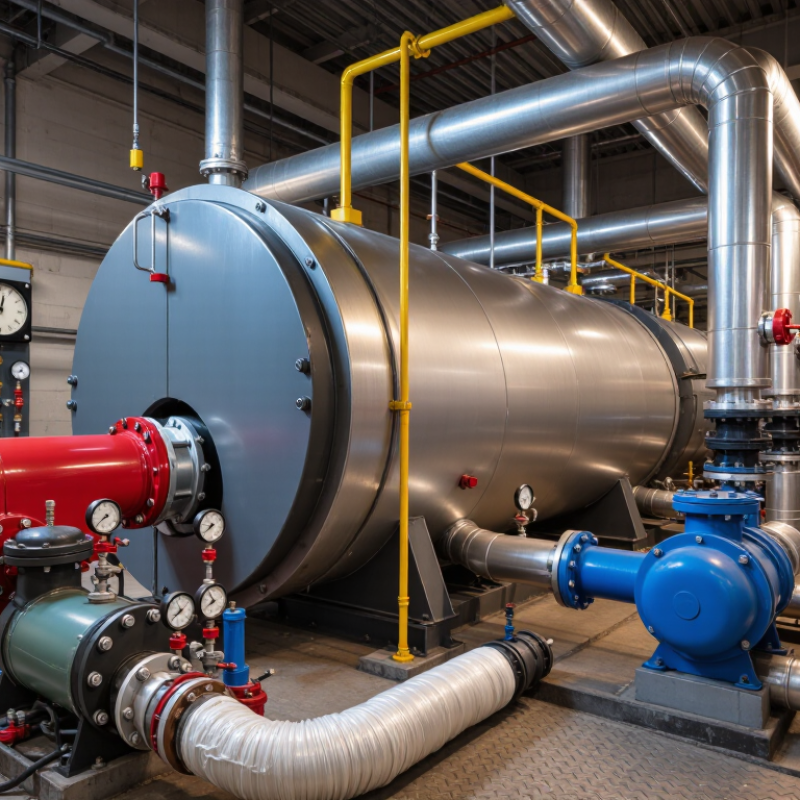
A boiler pump moves heated water through pipes, radiators, and underfloor loops. Without steady circulation, the boiler may run while distant rooms remain cold. The pump also helps transfer heat evenly and prevents long temperature swings. It works against pipe resistance, bends, valves, and elevation changes. These details matter more than appearance.
Start by checking the heating system’s required flow rate and pressure. A qualified heating professional can calculate these values from pipe length, radiator output, and zone design. An oversized pump may create humming, rushing water, and unnecessary energy use. An undersized pump can leave rooms chilly. That is frustrating.
Variable-speed control can adjust circulation as demand changes. This often reduces noise and electricity use. However, the setting must match the system. Automatic controls are useful, but they are not magic. A pump still needs correct installation, clean water, and proper air removal. Trapped air can cause gurgling and uneven heating. Dirty system water may damage internal parts over time.
During selection, check connection size, temperature rating, electrical requirements, and compatibility with the boiler controls. Ask for the pump’s operating range, not only its maximum output. A careful installer should measure actual conditions before replacing an existing unit. Old systems can hide poor balancing or blocked filters. Replacing the pump alone may not solve the real problem.
Choosing a boiler pump begins with identifying the boiler type, not matching pipe size alone. A condensing boiler often needs steady flow and lower return temperatures. A cast-iron boiler may tolerate different temperature patterns. Steam boilers require a different approach entirely; they do not use a standard hydronic circulation pump.
Check the boiler’s rated output, minimum flow requirement, and design temperature difference. The U.S. Department of Energy’s Building America guidance uses the common hydronic formula: flow equals heat load divided by 500 times the temperature difference. For a 100,000 Btu/h load and a 20°F temperature difference, the required flow is about 10 gallons per minute. That is only an estimate. ASHRAE Handbook guidance also stresses calculating system pressure loss through pipes, valves, heat exchangers, and fittings. CIBSE Guide B1 recommends evaluating actual system resistance rather than relying on nominal pipe diameter. Measure supply and return temperatures after operation stabilizes. Listen for rushing water near the pump. Check whether distant radiators remain cool. I have seen oversized pumps create noise without improving room temperature. The calculation can be correct, yet the selection can still be wrong. Recheck flow, head, control method, and the boiler’s minimum circulation requirement before installation.
| Boiler type and example output | Illustrative design temperature difference | Estimated boiler-side water flow | Typical pump arrangement | Selection considerations |
|---|---|---|---|---|
| Residential condensing boiler 24 kW | 20°C (36°F) | 17.2 L/min (4.5 US gpm) | Variable-speed circulator for a small hydronic system | Check the boiler’s required minimum flow and whether the system needs a bypass or hydraulic separation. |
| Residential or light-commercial boiler 30 kW | 20°C (36°F) | 21.5 L/min (5.7 US gpm) | Circulator sized for the boiler loop and system resistance | Confirm the required flow at the boiler’s operating output; account for pipe, valve, and heat-emitter resistance. |
| Commercial hot-water boiler 100 kW | 20°C (36°F) | 71.7 L/min (18.9 US gpm) | Commercial circulator, sometimes serving a primary boiler loop | Check boiler connection requirements, available pump head, and whether multiple boilers need separate loop pumps. |
| Commercial hot-water boiler 250 kW | 20°C (36°F) | 179.1 L/min (47.3 US gpm) | End-suction or in-line pump, depending on system layout | Verify the pump curve at the calculated flow and total dynamic head; consider standby capacity where required. |
| Large commercial hot-water boiler 500 kW | 20°C (36°F) | 358.2 L/min (94.6 US gpm) | Base-mounted or in-line commercial pump; configuration depends on the plant design | Use a system-level hydraulic calculation and check operating range, motor sizing, controls, and redundancy requirements. |
| Any boiler serving a low-temperature radiant system | Often designed around 5–10°C (9–18°F), subject to system design | Calculate from actual boiler output and selected temperature difference | Zone circulators or a variable-speed distribution pump; mixing may be needed | A smaller temperature difference requires more flow for the same heat output. Confirm the boiler’s minimum return temperature and system compatibility. |
How the estimates are calculated: For water, estimated flow in L/min ≈ boiler output in kW × 14.33 ÷ temperature difference in °C. The figures above are illustrative boiler-side flows, not final pump specifications. Select a pump using the required flow and calculated system head, and follow the boiler manufacturer’s minimum-flow and installation requirements.
Choosing the right boiler pump starts with three practical questions: How much water must it move? What resistance must it overcome? How precisely must it respond?
Pump capacity should match the boiler’s required flow rate, not simply the pipe size. Check the system’s heating load, temperature difference, and design flow. A pump that is too small may leave distant radiators cool. An oversized pump can create noise, waste electricity, and increase valve wear. Head pressure describes the resistance created by pipes, bends, valves, heat exchangers, and height changes. Use a system pressure-loss calculation whenever possible. Guessing from an old pump rating is risky, especially after renovations. I have seen a replacement pump perform poorly because added pipework was ignored.
Tips: Plot the required flow and head on the pump curve. Choose a model that operates near its efficient middle range. Variable-speed control is useful when demand changes during the day. Differential-pressure control can reduce noise as thermostatic valves close. Fixed-speed control may suit simple, stable systems, but it offers less flexibility. Confirm electrical compatibility, temperature limits, connection size, and service access before installation. Do not overlook controls. A technically correct pump can still waste energy if its settings are poorly adjusted. Real systems rarely behave exactly like calculations. Recheck flow, noise, and room temperatures after commissioning.
Choosing the right boiler pump starts with system compatibility, not catalogue size.
Match flow rate, head pressure, fluid temperature, pipe diameter, and connection type. A pump that fits physically may still operate poorly. Check whether the boiler requires constant flow, variable flow, or minimum flow protection. The U.S. Department of Energy’s pumping-system guidance identifies potential energy savings of 20–50% through correct sizing and control. Oversizing remains a common mistake. It creates noise, bypass losses, and unnecessary valve throttling.
Energy use also depends on control strategy.
Variable-speed operation can reduce power when heating demand falls. The affinity laws show that pump power changes roughly with the cube of speed. A small speed reduction can therefore make a measurable difference. The International Energy Agency reports that buildings use about 30% of global final energy, so even small circulation loads deserve attention. However, a neat spreadsheet is not enough. Real pipe resistance, air pockets, dirty strainers, and changing water temperatures can disrupt the calculation.
Tips:
Compare the pump curve with the actual duty point. Confirm motor efficiency and control compatibility. Leave service access around the pump. Measure running current after commissioning. Listen for rattling or cavitation during start-up. Installation details matter. Poor alignment, trapped air, or an undersized isolation valve can weaken an otherwise suitable selection. Recheck the system after several heating cycles; the first result may not tell the whole story.
Choosing the right boiler pump starts with the building’s actual heating demand. A larger pump is not automatically better. Excess flow can create pipe noise, uneven radiator temperatures, and unnecessary electricity use. Calculate the required flow rate from the boiler output, system temperature difference, and heating load.
The pump must also overcome resistance from pipes, valves, radiators, and bends. This is called pump head. In a small three-bedroom house, long pipe runs may require more head than expected. Check the pump curve, not just the connection size. A pump that fits the pipe can still deliver poor circulation.
Control features matter during daily operation. Variable-speed control can reduce energy use when only a few rooms need heat. Select materials that suit the water temperature and system chemistry. Radiant-floor systems may require different flow conditions than radiator systems. Ask a qualified heating professional to verify the calculations and electrical requirements.
I have seen systems become quieter after replacing an oversized pump. The improvement was practical, not dramatic. Yet pump selection is sometimes based on habit or guesswork. That can waste energy for years. Recheck the design after insulation, room extensions, or radiator changes. Heating needs can shift, and the original selection may no longer be suitable.
Match the pump’s flow rate to your heating load, then check the pump curve to ensure it can deliver that flow against your system’s resistance.
How to read this chart: These example flow rates assume a 20°F (11.1°C) temperature difference across the heating system. They are calculated using the standard water-heating approximation: GPM = heat output (BTU/h) ÷ [500 × temperature difference (°F)]. Actual pump selection also depends on system pressure drop, piping, and component resistance.


For those larger-sized parts, or smaller quantity runs, we have 2 independent powder coat booths and ovens. The quality, durability and affordability of today’s powder coating finishes make this the process of choice for world-class companies.
Powder coating advantages over other forms of coating are many. Materials used in the Powder coating process can be metals and non-metals that come in a multitude of thicknesses, textures, colors, etc. Another of Powder coating’s biggest advantages over conventional coatings is its ability to create finishes in many different textures. Powder Coating Booths allow us the ability to apply these advantages to large products.
Tri-State Fabricators runs a full-service conveyor line for painting. Wet painting can provide protection or decoration to many different part styles. From start to finish, every project is easier to undergo random and point-based inspection by our skilled painting team.
Advantages to our Wet Paint Line are these lines start with product prep and ends with a thorough inspection of a high quality finished product. Our ability to complete large and small projects with a superior finish and doing so in a timely and economical fashion. This passes along the savings in production to our customers. When powder coating ins not an option, our Wet Paint Line gets the job done right the first time.
When the parts get big and heavy we roll-out our custom paint racks and oversize booth. By utilizing our partnerships with all the major paint brands, we can match virtually any color with wet paint.
The advantages of having access to a Wet Paint Booth are many. Large projects of many different shapes can be loaded into the booth. The Wet Paint Booth offers an environment that is much more controlled than a typical parts painting operation.
Not only are they used because of their controlled environment, but they’re are also advantageous when it comes to applying paint to parts that are needed in industries that require specialty coatings such as medical, aerospace, etc.
Our military forces have some very high standards when it comes to the finish of their vehicles and equipment. From the first pre-treatment step to final coat, it takes a great deal of knowledge and experience to protect the men and women of our armed forces. They deserve only the best, and Tri-State Fabricators provides it.
All of our processes are closely monitored by our staff and management teams. Both of which are highly trained in the processes of metal fabrication and finishing. Tri-State Fabricators’ goal is to always fully satisfy each and every customer, including the military. We will always put a 110% into what we do.
Abrasive media blasting is an excellent way to remove old paint, rust, and increase the paint/powder adhesion. Glass beads produce a much smoother and brighter finish than angular abrasives; leaving the part clean yet without any dimensional change. Chemically inert and environmentally friendly, we can recycle our beads approximately 30 times; making them a more preferred method of metal cleaning or surface finishing.
Advantages to Glass Bead Blasting are many. Glass bead blast media is used when a project is needing rough surfaces need to become smooth for applications of coatings such as paint. It is typically used to clean paint and rust from a product surface without deforming the surface it is being used on. Overall, compared to many other blasting media, Glass Bead Blasting is a very economical choice and those savings are always passed on to our customers.
Tri-State Fabricators utilize a zinc phosphate wash to clean and etch the material to ensure the best paint adhesion possible. The unique design of our 3-stage wash system does the work like a 5-stage. From Cleaning and rinsing to conversion coating and post-treatment, Our Part Washing process is a complete service and works throughout the fabrication service and the finishing service.
Along with the previously mentioned benefits, Curing is a vital chemical reaction that leaves the product finish hard and relatively safe from mild abrasion and aggressive corrosion. This process can be done in more than one way; ambient air-dry or in curing ovens at temps that exceed 240°.
From fixing paint mistakes (someone else’s of course) to simply cleaning our paint line hooks, our burn-off oven is put to good use. After a quick burn-off, a little clean up, and a fresh coat of paint, your parts will look better than new.
Why does our Burn-Off Oven work so well? Because super heating the air around parts turns the materials into ashes. From paint and powder coatings to rubber and machining oils, high temps do the job without degrading the integrity of the part.
Masking is a vital part of producing high quality products. We have die-cut masking patterns to protect machined surfaces as well as a wide range of plugs and caps to protect threaded holes and bolts. We provide permanent and temporary masking.
Masking allows the selected sections of a product to be protected from a fabrication or finishing service. This can be with both chemicals when etching and tapes, paints when only finishing just a section of the product. Masking is great in aiding the customization process of a project.
Screen printing is a photographic process that transfers artwork onto a porous nylon screen which allows colored ink to flow through the screen and be deposited on an aluminum or plastic component. We can generally have just about any design created onto a screen for your parts.
Some of the advantages of Screen Printing are, brand recognition for your business displaying on your products, assembly instructions, product warnings/hazards, etc. Tri-State Fabricators produces Screen Printing of the highest quality so you know it’s durable.
Metal Finishing is the art of treating the exterior portion of product, often metal but can also be made of other materials, so that the surface is clean and free of any debris. Then the process of applying coats or either paint of powder coat takes place. This coating process improves the quality of the product in both appearance and resistance to wear and corrosion.
Tri-State Fabricators, Inc., understands that a project typically isn’t complete until a high-quality finish has been added to your product. This is why our painting and powder coating teams continuously inspect the products throughout the Metal Finishing process.

