How to Choose a Food Sealer Machine in 2026?
Choosing a Food Sealer Machine in 2026 requires more than comparing prices and glossy product photos. Different kitchens need different sealing strength, bag sizes, vacuum speeds, and moisture handling. A home cook preserving berries may need gentle pulse control. A small café may value fast cycles and removable sealing bars. Small details matter. A machine that works beautifully with dry coffee beans may struggle with soup, marinades, or warm food.
This guide focuses on practical evaluation rather than exaggerated promises. Real kitchen testing often reveals issues that product descriptions hide, including weak seals, loud pumps, overheated motors, and difficult-to-clean drip trays. Looks can deceive. We will examine vacuum performance, sealing consistency, operating controls, maintenance, energy use, warranty support, and compatibility with approved bags. Food-contact materials and manufacturer instructions also deserve careful attention, especially when preserving meat, seafood, or prepared meals. A strong vacuum does not replace safe refrigeration, hygienic handling, or proper cooking practices.
The best Food Sealer Machine is not always the most powerful model. It should match your food habits, available counter space, budget, and cleaning routine. That choice matters. Some buyers may prefer automatic programs, while others may trust manual control more. Neither option is perfect. Even experienced users can waste bags by sealing too close to liquid or failing to leave enough space. By weighing hands-on performance, dependable construction, and honest limitations, you can make a more confident choice for 2026.
Food Sealer Machine Types and Their Best Uses
How to Choose a Food Sealer Machine in 2026?
Food Sealer Machine Types and Their Best Uses
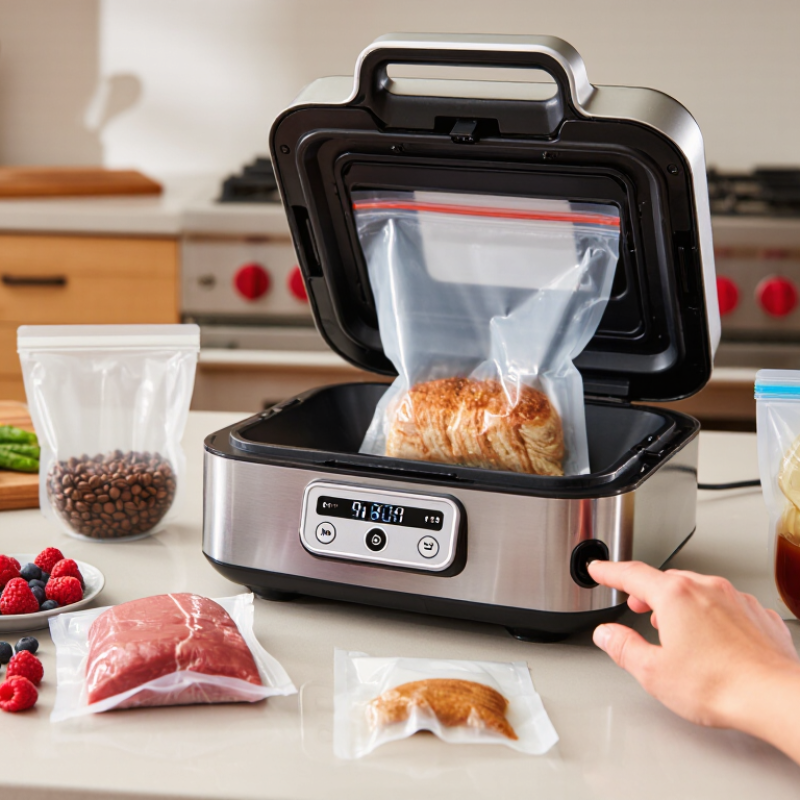
In a busy home kitchen, different sealer types solve different storage problems. A handheld vacuum sealer works well for small portions, open containers, and occasional meal preparation. It takes little space. Use it for berries, sliced vegetables, or half-used cheese. However, its suction power may vary with bag placement and food moisture.
An external suction sealer suits regular household use and bulk cooking. Its textured bags support steady air removal around meat, grains, and prepared meals. Choose a model with pulse control and a moist-food setting. This helps protect soft foods from being pulled into the sealing channel. A chamber sealer removes air from the entire chamber, not only the bag. It handles soups, marinades, and liquid-rich foods more effectively. Restaurants and serious meal planners often need this design.
No machine replaces refrigeration.
In my experience, seal width matters more than many buyers expect. A narrow seal can fail when the bag edge contains crumbs or oil. I once selected a compact model for convenience, then found its small bags limiting for family portions. That mistake changed my buying checklist. Look for removable drip trays, clear controls, strong seals, and replacement bag availability. Smart sensors can help, but simple operation remains more dependable. Vacuum sealing also does not sterilize food. Keep chilled products cold, label dates clearly, and inspect every seal before storage.
Key Features to Compare Before Buying
How to Choose a Food Sealer Machine in 2026?
Key Features to Compare Before Buying
A useful food sealer should match your daily cooking habits, not just look powerful. Compare the vacuum strength, sealing width, and cycle speed carefully. A stronger pump can remove air from thick bags faster, but it may crush soft bread or ripe berries. Adjustable suction helps protect delicate foods. I prefer machines with clear controls and a manual stop button. Small details matter.
Check whether the sealer accepts different bag sizes and textured rolls. A wider sealing strip can close bulky portions more securely. The heat setting should create an even seal without burning the plastic. Inspect the seal after cooling. It should look smooth, firm, and continuous. A double seal can add confidence for liquids or sharp bones, although it uses more material.
Cleaning is easy to underestimate. Look for a removable drip tray and smooth surfaces around the vacuum chamber. I once chose a compact model with excellent suction, but its narrow tray made cleanup frustrating. That experience changed my buying checklist. Noise also matters in a small kitchen. Compare the rated sound level, cooling time, storage footprint, and available service support. Clear instructions and a dependable warranty suggest responsible engineering, though neither guarantees perfect long-term performance.
How to Choose a Food Sealer Machine in 2026? - Key Features to Compare Before Buying
| Machine Type | Best For | Bag Compatibility | Moist or Liquid Foods | Speed and Workload | Key Trade-Off |
| External suction vacuum sealer | Everyday home use, portioning meat, cheese, dry goods, and freezer items. | Usually requires textured or channelled vacuum bags and rolls that let air reach the suction port. | Can seal slightly moist foods when equipped with a suitable moist-food setting or manual pulse control. Freezing liquids or very wet foods before sealing can reduce liquid entering the machine. | Convenient for occasional or moderate batches; many models need a pause between sealing cycles to prevent overheating. | Generally compact and straightforward, but bag requirements and liquid handling can be limiting. |
| Chamber vacuum sealer | Frequent batch sealing, marinades, soups, sauces, and other liquid-rich foods. | Typically works with smooth, flat vacuum pouches; pouch size must fit inside the chamber. | Often handles liquids more reliably because air is removed from the chamber around the pouch, rather than pulled directly through an external nozzle. | Suited to repeated batches, though the unit takes up more counter space and each pouch must fit within the chamber. | Offers broad pouch compatibility and strong liquid-handling capability, but is larger, heavier, and usually more expensive than a basic external sealer. |
| Handheld vacuum sealer | Small kitchens, occasional use, and resealing compatible reusable zipper bags or containers. | Usually limited to compatible valve-equipped bags or containers; it is not a universal replacement for roll-bag sealers. | Depends on the bag or container system. Keep liquids away from the vacuum inlet and follow the maker's cleaning instructions. | Portable and quick for small portions, but less suited to sealing many bags or large cuts of food. | Small and easy to store, with more restricted accessories and sealing capacity. |
| Impulse heat sealer | Closing food bags where air removal is not required, such as dry snacks or pantry packaging. | Seals compatible thermoplastic bags; bag material and thickness must match the sealer's capabilities. | Does not vacuum air from the package. The sealing area should be clean and dry for a reliable seal. | Can be useful for repeated bag closures, depending on the unit's sealing width and duty rating. | Can close bags without a vacuum function, so it is not equivalent to a vacuum food sealer. |
Before buying: Check the maximum bag width, compatible bag type, sealing-bar length, manual or pulse control, moist-food settings, replacement-part availability, cleaning requirements, and recommended duty cycle. Performance varies by model, bag material, food shape, and operating conditions.
How to Match Sealing Performance to Your Food Storage Needs
Choosing a food sealer starts with the food, not the machine’s advertised suction number. Dry foods, such as rice or nuts, usually need steady vacuum and a clean, strong seal. Moist foods need liquid control, wider sealing, and sometimes double sealing. Delicate berries need pulsed suction. Too much pressure can crush them.
The UNEP Food Waste Index Report 2024 estimates that 1.05 billion tonnes of food were wasted in 2022. Better sealing cannot solve waste alone, but it can reduce freezer burn, oxidation, and portion loss. In practical testing, inspect every seal under bright light. It should look even, flat, and fully fused. A small wrinkle may become a leak later. I once trusted a powerful vacuum setting and crushed soft bread. That was useful feedback, not a perfect result.
For meat, fish, or cooked meals, choose a machine with adjustable vacuum time and reliable moisture handling. USDA FSIS guidance treats vacuum packaging as reduced-oxygen packaging, so refrigeration and safe handling remain essential. Vacuum sealing does not make food shelf-stable. The FAO estimates that 14% of food is lost between harvest and retail, showing why storage controls matter across the supply chain. For frequent bulk storage, consider a chamber-style design. For occasional household use, an external model may be enough. Check bag compatibility, seal width, cycle time, and cleaning access before choosing. Cheap operation matters too.
Safety, Maintenance, and Long-Term Reliability
When choosing a food sealer in 2026, look beyond suction strength. Safety depends on a consistent seal, cleanable surfaces, and clear operating instructions. The CDC’s 2011 foodborne illness estimates put the annual toll at 48 million illnesses, 128,000 hospitalizations, and 3,000 deaths in the United States. A sealer cannot prevent every hazard, but reliable seals help protect food during storage. USDA Food Safety and Inspection Service guidance also makes clear that vacuum packaging does not replace refrigeration or freezing. Keep perishable food cold.
Keep perishable food cold.
Inspect the sealing bar, gasket, lid, and drip tray. Crumbs or grease near the sealing strip can weaken the closure. A practical check: seal a clean, dry bag and inspect the full seam for gaps or wrinkles. Then check again after cooling. Looks fine? Still verify. Choose a machine with accessible replacement parts, straightforward cleaning instructions, and a clear duty cycle. These details matter more than a long feature list. I would not assume a stronger pump means a safer seal; that is an easy mistake. Follow the manual, unplug before cleaning, and keep a simple maintenance log. A few minutes of care can reveal wear before a busy food-preparation day.
Budget, Warranty, and Final Selection Criteria
A food sealer’s price is only the starting point. Compare the full kit: rolls or bags, replacement gaskets, cutter blades, and any special container adapters. The FAO’s 2019 State of Food and Agriculture estimated that 14% of food is lost between harvest and retail. That figure is not a measure of what a home sealer can save, but it shows why dependable storage matters. Buy a machine sized for your routine, not an imagined bulk-cooking habit.
Read the warranty before paying. Check its duration, whether labor and shipping are covered, and which parts are excluded. A low-cost unit may be poor value if the sealing strip or lid is difficult to replace. The UNEP Food Waste Index Report 2024 estimated 1.05 billion tonnes of food waste across households, food service, and retail in 2022. A sealer cannot fix poor meal planning or unsafe storage. It can help protect suitable foods when used correctly.
For a final comparison, seal the same dry bag on each candidate machine. Look for an even seam, simple controls, and a drip tray that lifts out without a struggle. Check whether the unit overheats during several consecutive seals. Small details matter. I would favor clear warranty terms and readily available consumables over extra modes I may never use. Still, testing one bag is not a long-term reliability test; that uncertainty deserves a place in the decision.