


Choosing the right grain silo requires more than comparing storage capacity and price. Global buyers must examine grain type, climate, handling systems, and long-term operating costs. Wheat, corn, rice, and soybeans behave differently inside storage structures. Moisture, temperature, and ventilation can quickly affect quality.
Some buyers search for “grain sild,” although “grain silo” is the standard industry term. Clear specifications prevent costly misunderstandings. A reliable supplier should provide steel grades, coating details, load calculations, and performance data. Ask for drawings, installation procedures, inspection records, and customer references. Look closely.
Site conditions matter. A silo near a humid port needs stronger corrosion protection and careful aeration design. A dry inland facility may prioritize dust control and temperature monitoring. Foundation requirements also depend on soil strength, wind exposure, seismic conditions, and local engineering practices. These details are easy to overlook.
Capacity should match actual harvest cycles, not optimistic forecasts. Consider loading speed, discharge time, cleaning access, spare parts, and future expansion. An inexpensive silo can become expensive when fans fail or maintenance access is poor. Experienced engineers can identify these risks before purchase. Still, no checklist is perfect. Supplier promises require verification through testing, documentation, and independent review.
The strongest buying decision balances safety, grain protection, service support, and total ownership cost. Compare complete systems, not isolated equipment. With careful questions and practical site evaluation, global buyers can select a grain silo that performs reliably across seasons and markets.
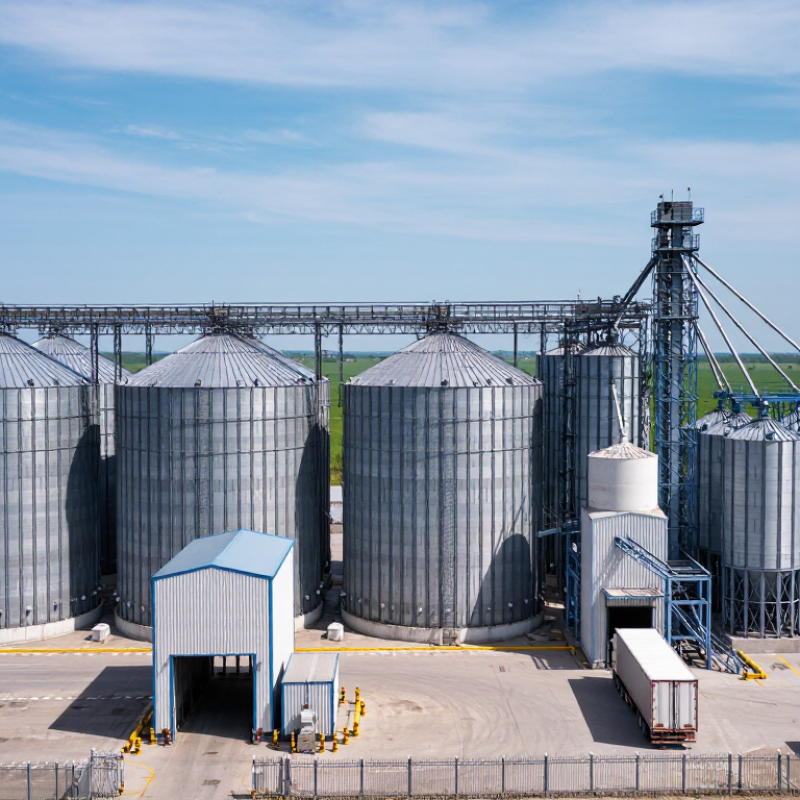
Choosing a grain silo starts with the grain, not the catalogue. Wheat, maize, rice, and oilseeds behave differently during storage. Their moisture levels, bulk density, flow patterns, and spoilage risks affect silo design. A practical assessment should record harvest volume, delivery frequency, storage duration, and local climate. A humid coastal site may require stronger aeration than a dry inland location. Small details matter.
Capacity must match real operating conditions. Calculate usable volume, not only the silo’s advertised capacity. Leave working space for airflow, cleaning, and safe grain movement. A facility receiving 500 tonnes weekly may need more than 500 tonnes of storage. Delayed transport, seasonal peaks, and emergency reserves can quickly fill an undersized system. Yet oversizing also wastes capital and increases maintenance demands. Bigger is not automatically better.
I recommend comparing at least three operating scenarios: normal harvest, peak intake, and delayed shipment. Check whether trucks, conveyors, dryers, and unloading points can support the planned volume. Temperature sensors and aeration equipment should suit the grain type and storage period. A spreadsheet helps, but it can still mislead when moisture data is poor. Recheck measurements from actual harvests. Some estimates will be imperfect. That is acceptable, if the uncertainty is visible before construction begins.
Choosing a grain silo starts with the grain, not the catalogue. Wheat, maize, rice, and oilseeds behave differently during loading and discharge. Flat-bottom silos suit high-capacity storage, while hopper-bottom designs support faster unloading and cleaner turnover. In humid regions, ventilation and aeration deserve more attention than exterior appearance. A polished layout can still fail. Site wind, seismic risk, foundation conditions, and available space must guide the design.
Material selection changes service life and maintenance effort. Galvanized steel offers quick installation and predictable fabrication. Concrete provides thermal stability, but construction takes longer and requires strong local workmanship. Interior coatings may help with corrosion, yet they must suit stored grain and approved food-contact requirements. Ask for coating thickness, weld inspection, drainage details, and repair procedures. Verify local structural, fire, electrical, and food-safety requirements before signing. I have seen buyers compare only steel prices. That is a costly shortcut.
Handling systems should match daily throughput, not an optimistic peak figure. Review bucket elevators, belt or chain conveyors, intake pits, cleaners, dust filters, and emergency shutoffs as one system. Gentle transfer reduces broken kernels and protects quality. Sensors for temperature, moisture, and fill level improve decisions, especially when staff are far from the site. Ask whether spare parts, training, and technical support are available locally. Some designs look efficient on paper but rely on unfamiliar controls. That weakness is easy to underestimate. A practical selection leaves room for inspection, cleaning, and future expansion.
How to Choose the Right Grain Silo for Global Buyers?
For global buyers, silo selection starts with climate, not storage capacity. The FAO’s State of Food and Agriculture 2023 reported a 13.2% global food loss rate between harvest and retail in 2021. Moisture, condensation, and delayed cooling can worsen grain losses. A humid coastal site needs stronger moisture control than a dry inland location. That difference changes the entire specification.
Assess drainage, flood history, groundwater, wind exposure, road access, and power reliability. The IPCC Sixth Assessment Report confirms that climate extremes are becoming more frequent and intense in many regions. Therefore, review roof insulation, reflective coatings, emergency ventilation, and backup power. Raise aeration intakes above dust and possible flood levels. Small details matter.
Grain protection should be measurable, not promotional. The USDA Agricultural Marketing Service Grain Inspection Handbook stresses representative sampling and accurate condition assessment. Specify temperature cables, airflow verification, corrosion resistance, sealed access points, and practical pest-monitoring locations. Ask how operators will inspect grain during a power outage. Test it early. A perfect checklist does not exist. Some buyers still overvalue steel thickness and undervalue local maintenance skills. That is a costly blind spot. Ensure operating procedures match local regulations, trained personnel, and the grain’s actual moisture and temperature profile.
Evaluate climate, site conditions, and grain protection requirements before selecting silo capacity, aeration, insulation, corrosion protection, and foundation design.
High humidity and rainfall call for better sealing, roof drainage, ventilation, and corrosion protection. Hot regions need reliable aeration and temperature monitoring.
Check soil bearing capacity, groundwater, flood risk, access for trucks, foundation elevation, seismic exposure, and local wind loads.
Specify temperature cables, moisture monitoring, aeration fans, insect control access, dust management, and safe discharge systems.
Moisture values are typical long-term storage planning targets and may vary by grain variety, storage duration, local climate, and national regulations. Confirm final specifications with local grain-storage standards and engineering requirements.
How to Choose the Right Grain Silo for Global Buyers?
A suitable grain silo must satisfy both international expectations and the destination country’s requirements. Review structural standards, welding quality, electrical protection, and food-contact materials before comparing prices. Requirements may differ across markets. For example, dust explosion controls, grounding systems, and hazardous-area equipment can require special approval. Confirm the latest rules with an accredited local engineer or inspection body.
Safety begins with practical design. Select reliable temperature cables, level sensors, aeration fans, access ladders, and emergency shutoff systems. The silo should support safe cleaning and reduce dust accumulation around conveyors. Check load calculations for wind, snow, seismic activity, and foundation conditions. A strong shell is not enough. Poor site preparation can still cause settlement, leakage, or difficult maintenance.
Export logistics also influence the correct model. Measure port access, container limits, oversized cargo rules, and inland road restrictions before production. Ask for packing plans, lifting points, installation drawings, spare parts lists, and clear inspection records. Moisture protection matters during long ocean transport. Corrosion can begin before the silo reaches the farm. Do not rely only on supplier documents; verify critical data through independent checks. A checklist may look complete and still miss local fire, food-safety, or customs requirements. That gap deserves honest review.
| Decision Dimension | Buyer Requirement | Practical Reference Data | Relevant Standard or Compliance Area | Recommended Verification | Export and Installation Implication |
|---|---|---|---|---|---|
| Stored Commodity | Identify the grain and its physical properties before selecting the silo. | Common commodities include wheat, maize, rice, barley, sorghum, and oilseeds. Bulk density varies by crop, moisture content, and cleaning condition. | The design should consider bulk density, internal friction, wall friction, aeration behavior, and flow characteristics. Structural load calculations should follow the requirements applicable in the destination market. | Obtain a product data sheet, representative bulk-density range, moisture range, angle-of-repose data, and a written confirmation of the intended commodity. | Incorrect commodity data can cause inaccurate capacity calculations, poor discharge performance, or excessive wall and hopper loads. |
| Storage Capacity | Select working capacity rather than relying only on the advertised geometric volume. | Planning capacity should distinguish geometric volume, usable volume, operating fill level, and reserve space. A practical design normally retains freeboard for safe filling and pressure control. | Structural actions on silos and tanks should be assessed using the applicable national code. In Europe, EN 1991-4 addresses actions in silos and tanks. | Request a capacity calculation showing grain bulk density, filling level, discharge level, cone volume, roof volume, and the stated capacity basis. | Capacity affects foundation size, transport quantity, erection time, storage permits, and total landed cost. |
| Silo Construction | Choose a construction type that matches capacity, climate, maintenance resources, and project schedule. | Galvanized bolted steel silos are commonly shipped in panels and assembled on site. Welded steel silos can reduce field bolting but may require more specialized fabrication and transport planning. | Structural steel fabrication, execution, welding, coating, and corrosion protection should comply with the requirements specified in the purchase contract and destination jurisdiction. | Verify steel grade, plate thickness, galvanizing or coating specification, bolt class, weld procedures where applicable, and inspection records. | Bolted panels usually improve containerization and reduce oversize cargo, while complete welded sections may increase port-handling and inland-transport requirements. |
| Climate and Corrosion | Match the silo protection system to humidity, rainfall, salinity, temperature, and local atmospheric exposure. | Coastal, tropical, and high-humidity locations generally require stronger corrosion-control measures than dry inland locations. Condensation risk increases when warm, moist air contacts cool stored grain or steel surfaces. | The corrosion category, coating system, drainage design, and material selection should be specified for the actual site environment. Galvanizing performance depends on coating thickness, handling, and exposure conditions. | Request coating or galvanizing test results, corrosion-protection details, roof-sealing specifications, and the recommended inspection interval. | Saltwater exposure may require additional packaging, protected fasteners, sealed electrical equipment, and more frequent maintenance after installation. |
| Aeration and Temperature Control | Provide sufficient airflow to control grain temperature and moisture migration during storage. | Aeration system capacity depends on crop, moisture content, storage period, ambient climate, and the required cooling rate. There is no single airflow value suitable for every grain or climate. | Fan, duct, electrical, and control equipment should comply with the electrical and machinery rules applicable in the destination market. Airflow calculations should be documented for the selected grain. | Verify fan duty point, static pressure, airflow measurement method, perforated-floor open area, temperature sensors, and control-panel voltage and frequency. | Fan motors and control panels must match local power supply, such as 50 Hz or 60 Hz operation, and the project’s single-phase or three-phase configuration. |
| Dust and Explosion Safety | Control combustible grain dust, ignition sources, pressure effects, and maintenance hazards. | Grain dust can be combustible. Dust accumulation, inadequate housekeeping, hot bearings, electrical faults, and uncontrolled mechanical friction are recognized hazards in grain facilities. | Applicable references may include NFPA 61 for agricultural and food-processing facilities, OSHA grain-handling requirements in the United States, ATEX requirements in the European Union, and the IEC 60079 series for explosive atmospheres. | Request a hazard assessment, zoning or classification document where required, equipment certification, grounding and bonding details, explosion-relief design, and dust-control procedures. | Certified electrical and mechanical components may affect lead time, documentation, customs clearance, and installation by qualified local personnel. |
| Filling and Discharge | Ensure reliable material flow without excessive breakage, bridging, segregation, or residual grain. | Equipment selection depends on the required throughput, grain fragility, moisture, dust level, discharge pattern, and whether first-in-first-out rotation is needed. | Conveyor, bucket elevator, screw conveyor, rotary valve, slide gate, and control-system requirements should be assessed as part of the complete handling line rather than as isolated components. | Verify rated throughput, test conditions, motor power, inlet and outlet dimensions, emergency stops, inspection doors, clean-out access, and spare-parts list. | Higher throughput may require larger export packages, additional lifting equipment, and a more detailed commissioning plan at the destination site. |
| Structural and Foundation Design | Design the silo for local wind, seismic, snow, temperature, and foundation conditions. | Wind and seismic actions are site-specific. A silo designed for one location should not be transferred to another location without a new structural review. | The applicable building and structural codes may include EN 1991-4 and local wind, seismic, concrete, anchorage, and foundation standards. The final design must be approved under the destination jurisdiction. | Supply geotechnical data, foundation loads, anchor-bolt layout, overturning reactions, settlement limits, empty-silo wind case, full-silo load case, and erection tolerances. | Foundation drawings and anchor details should be released before shipment so civil works can proceed without delaying erection. |
| Food and Feed Hygiene | Prevent contamination, moisture ingress, pest entry, and accumulation of old grain. | Product-contact surfaces should be smooth, cleanable, non-shedding, and suitable for the intended grain or feed application. Paints, sealants, lubricants, and gaskets require compatibility review. | Food or feed hygiene obligations depend on the destination market and product use. Food-safety management may be aligned with ISO 22000, while local food-contact and feed-safety rules remain applicable. | Request material declarations, coating and sealant documentation, cleaning instructions, pest-control provisions, inspection access, and hygienic design details. | Documentation for materials and coatings may be required by importers, food authorities, feed authorities, or third-party auditors. |
| Inspection and Instrumentation | Monitor inventory, temperature, moisture, pressure, and equipment status. | A basic monitoring package may include level indication, high-level alarm, temperature cables, aeration controls, fan status, access inspection points, and emergency-stop circuits. | Electrical panels, sensors, wiring, protection, and machinery controls should satisfy the destination country’s electrical-safety and electromagnetic-compatibility requirements. | Verify instrument range, accuracy, calibration certificates, enclosure rating, cable-entry method, communication protocol, alarm logic, and user manuals. | Confirm local language, voltage, frequency, plug or terminal requirements, spare sensors, and remote-support arrangements before shipment. |
| Access and Worker Safety | Provide safe access for inspection, cleaning, maintenance, and emergency response. | Typical provisions include ladders or stairways, platforms, guardrails, roof handrails, manholes, internal access, lockout points, and fall-protection arrangements. | Occupational-safety requirements vary by country. The design should address fall protection, confined-space entry, machine guarding, emergency access, and lockout/tagout procedures. | Request access-layout drawings, load ratings, guardrail dimensions, fall-arrest details, confined-space warnings, and installation risk assessments. | Access components may be shipped separately and should be clearly labeled to prevent assembly errors during overseas installation. |
| Packaging and Containerization | Optimize packaging for sea freight, inland transport, moisture protection, and unloading efficiency. | Bolted silo panels, fasteners, aeration components, instruments, and accessories should be packed by assembly sequence and protected against corrosion, impact, and seawater exposure. | Wood packaging used in international trade generally needs to comply with ISPM 15 treatment and marking requirements. Other packing materials must meet carrier and import-country rules. | Request a packing list with package number, dimensions, gross and net weight, center of gravity where relevant, lifting points, and moisture-protection method. | Confirm container type, maximum package dimensions, payload limits, port restrictions, and whether any items require flat-rack, breakbulk, or oversize transport. |
| Customs and Documentation | Prepare accurate documents before dispatch to avoid customs holds and storage charges. | A typical export file includes commercial invoice, packing list, transport document, certificate of origin where required, insurance document, technical drawings, manuals, and conformity documents. | The correct HS classification depends on the complete equipment configuration and destination-country tariff interpretation. It should be confirmed with a qualified customs broker or authority. | Verify consignee and importer details, country-of-origin rules, document language, serial-number records, equipment descriptions, and any import permits. | Do not use a generic HS code without checking the destination customs requirements; incorrect classification can affect duty, taxes, and clearance time. |
| Trade Terms and Insurance | Define responsibility for freight, insurance, export clearance, import clearance, and delivery risk. | Incoterms® 2020 terms allocate specific costs and risks between seller and buyer. The selected term should match the buyer’s logistics capability and preferred control point. | The sales contract should state the named place or port, applicable Incoterms® rule, insurance scope, transfer point, inspection terms, payment terms, and claims procedure. | Review the quotation, freight inclusions, cargo-insurance coverage, demurrage responsibility, delivery schedule, and documents required for payment. | A clear named place prevents disputes over inland haulage, port handling, customs clearance, unloading, and final-site delivery. |
| Installation and After-Sales Support | Confirm that the buyer can safely assemble, test, operate, and maintain the complete system. | Installation planning should cover crane capacity, lifting sequence, torque control, alignment, sealing, electrical testing, calibration, trial filling, and operator training. | Local construction permits, electrical approvals, workplace-safety rules, and inspection requirements may apply before operation. | Require assembly drawings, method statements, torque specifications, commissioning checklist, training materials, warranty terms, spare-parts schedule, and remote-support contacts. | Confirm availability of local labor, lifting equipment, certified electricians, replacement parts, and technical support across the expected service life. |
| Selection Scorecard | Compare suppliers using consistent technical, safety, and logistics criteria. | Suggested scoring areas: capacity accuracy, structural design, dust safety, aeration, hygiene, instrumentation, corrosion protection, documentation, delivery plan, and lifecycle cost. | Compliance should be assessed against the buyer’s actual destination-country regulations rather than relying only on a general certificate or supplier declaration. | Use a technical-compliance matrix with columns for requirement, evidence, status, responsible party, and approval date. | Select the lowest-risk compliant solution, not necessarily the lowest initial purchase price. |
Supplier evaluation should begin with evidence, not polished brochures. Request engineering drawings, steel grades, weld records, fan curves, and independent inspection results. Ask for operating references in climates resembling your site. Humid ports, dry plains, and freezing regions require different ventilation strategies. A low quote often excludes foundations, unloading equipment, controls, training, and spare parts. That gap matters.
FAO’s 2023 Food Loss Index Report estimates that 13.2% of food is lost before retail globally. Poor aeration, delayed drying, and weak monitoring can worsen grain losses. USDA’s 2024/25 WASDE report estimated global wheat production near 797 million metric tons. Storage decisions therefore affect both inventory protection and market timing. Capacity is only half.
Compare total ownership costs over fifteen years. Include civil works, energy, cleaning, inspections, corrosion treatment, labor, downtime, and replacement sensors. Ask suppliers to model electricity use under your local tariff. Installation plans should show crane access, foundation tolerances, drainage, emergency routes, and commissioning tests. Long-term support needs written response times, training schedules, software access, and local technician coverage. I have seen technically strong projects underperform because handover documents were incomplete. A spreadsheet can mislead. Recheck every assumption against seasonal moisture, power reliability, and actual loading patterns. Expect some uncertainty, and price it honestly.



For those larger-sized parts, or smaller quantity runs, we have 2 independent powder coat booths and ovens. The quality, durability and affordability of today’s powder coating finishes make this the process of choice for world-class companies.
Powder coating advantages over other forms of coating are many. Materials used in the Powder coating process can be metals and non-metals that come in a multitude of thicknesses, textures, colors, etc. Another of Powder coating’s biggest advantages over conventional coatings is its ability to create finishes in many different textures. Powder Coating Booths allow us the ability to apply these advantages to large products.
Tri-State Fabricators runs a full-service conveyor line for painting. Wet painting can provide protection or decoration to many different part styles. From start to finish, every project is easier to undergo random and point-based inspection by our skilled painting team.
Advantages to our Wet Paint Line are these lines start with product prep and ends with a thorough inspection of a high quality finished product. Our ability to complete large and small projects with a superior finish and doing so in a timely and economical fashion. This passes along the savings in production to our customers. When powder coating ins not an option, our Wet Paint Line gets the job done right the first time.
When the parts get big and heavy we roll-out our custom paint racks and oversize booth. By utilizing our partnerships with all the major paint brands, we can match virtually any color with wet paint.
The advantages of having access to a Wet Paint Booth are many. Large projects of many different shapes can be loaded into the booth. The Wet Paint Booth offers an environment that is much more controlled than a typical parts painting operation.
Not only are they used because of their controlled environment, but they’re are also advantageous when it comes to applying paint to parts that are needed in industries that require specialty coatings such as medical, aerospace, etc.
Our military forces have some very high standards when it comes to the finish of their vehicles and equipment. From the first pre-treatment step to final coat, it takes a great deal of knowledge and experience to protect the men and women of our armed forces. They deserve only the best, and Tri-State Fabricators provides it.
All of our processes are closely monitored by our staff and management teams. Both of which are highly trained in the processes of metal fabrication and finishing. Tri-State Fabricators’ goal is to always fully satisfy each and every customer, including the military. We will always put a 110% into what we do.
Abrasive media blasting is an excellent way to remove old paint, rust, and increase the paint/powder adhesion. Glass beads produce a much smoother and brighter finish than angular abrasives; leaving the part clean yet without any dimensional change. Chemically inert and environmentally friendly, we can recycle our beads approximately 30 times; making them a more preferred method of metal cleaning or surface finishing.
Advantages to Glass Bead Blasting are many. Glass bead blast media is used when a project is needing rough surfaces need to become smooth for applications of coatings such as paint. It is typically used to clean paint and rust from a product surface without deforming the surface it is being used on. Overall, compared to many other blasting media, Glass Bead Blasting is a very economical choice and those savings are always passed on to our customers.
Tri-State Fabricators utilize a zinc phosphate wash to clean and etch the material to ensure the best paint adhesion possible. The unique design of our 3-stage wash system does the work like a 5-stage. From Cleaning and rinsing to conversion coating and post-treatment, Our Part Washing process is a complete service and works throughout the fabrication service and the finishing service.
Along with the previously mentioned benefits, Curing is a vital chemical reaction that leaves the product finish hard and relatively safe from mild abrasion and aggressive corrosion. This process can be done in more than one way; ambient air-dry or in curing ovens at temps that exceed 240°.
From fixing paint mistakes (someone else’s of course) to simply cleaning our paint line hooks, our burn-off oven is put to good use. After a quick burn-off, a little clean up, and a fresh coat of paint, your parts will look better than new.
Why does our Burn-Off Oven work so well? Because super heating the air around parts turns the materials into ashes. From paint and powder coatings to rubber and machining oils, high temps do the job without degrading the integrity of the part.
Masking is a vital part of producing high quality products. We have die-cut masking patterns to protect machined surfaces as well as a wide range of plugs and caps to protect threaded holes and bolts. We provide permanent and temporary masking.
Masking allows the selected sections of a product to be protected from a fabrication or finishing service. This can be with both chemicals when etching and tapes, paints when only finishing just a section of the product. Masking is great in aiding the customization process of a project.
Screen printing is a photographic process that transfers artwork onto a porous nylon screen which allows colored ink to flow through the screen and be deposited on an aluminum or plastic component. We can generally have just about any design created onto a screen for your parts.
Some of the advantages of Screen Printing are, brand recognition for your business displaying on your products, assembly instructions, product warnings/hazards, etc. Tri-State Fabricators produces Screen Printing of the highest quality so you know it’s durable.
Metal Finishing is the art of treating the exterior portion of product, often metal but can also be made of other materials, so that the surface is clean and free of any debris. Then the process of applying coats or either paint of powder coat takes place. This coating process improves the quality of the product in both appearance and resistance to wear and corrosion.
Tri-State Fabricators, Inc., understands that a project typically isn’t complete until a high-quality finish has been added to your product. This is why our painting and powder coating teams continuously inspect the products throughout the Metal Finishing process.