


How to Choose a Lip Gloss Maker in 2026?

Choosing a Lip Gloss Maker in 2026 requires more than comparing glossy samples and attractive packaging. The global lip gloss market continues to expand, with Grand View Research estimating a 2023 value of about USD 3.3 billion and steady growth through 2030. That momentum creates opportunity. It also creates noise.

A reliable supplier should show documented ingredient sourcing, batch testing, stability data, and clear manufacturing controls. Ask to see viscosity results, microbial testing, and packaging compatibility reports. A gloss may look beautiful in a glass vial, then separate after six weeks in heat. That detail matters. Really matters. McKinsey’s beauty industry research also identifies product quality, trust, and innovation as major drivers of consumer purchasing decisions. Those factors should guide your factory audit, not only the lowest quotation.

Cosmetic chemist Perry Romanowski has often warned, “Natural does not mean safe.” His point is practical: botanical oils, pigments, and flavor systems still require careful evaluation. A professional Lip Gloss Maker should explain allergen management, preservative strategy, pigment compliance, and shelf-life testing without hiding behind vague claims. Request pilot batches before placing a large order. Compare applicator feel, color consistency, leakage resistance, and formula stability under different temperatures. I would not treat a polished catalog as proof of expertise. It is only a starting point. The right partner combines technical evidence, transparent communication, scalable production, and responsible quality control. That combination may take longer to verify, but it can prevent expensive reformulation later.
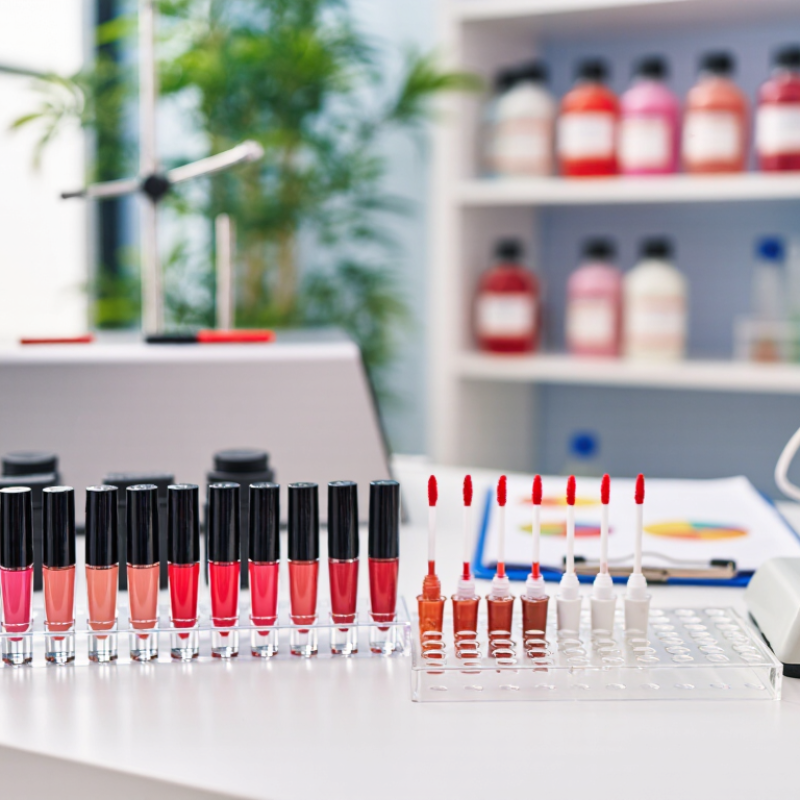
How to Choose a Lip Gloss Maker in 2026?

Define Your Lip Gloss Product Requirements

Before choosing a lip gloss maker, define the product you actually want to create. Specify the target customer, shade range, finish, texture, and expected retail price. A clear brief prevents vague quotations and unsuitable samples. For example, “high-shine nude gloss” is incomplete. State whether it should feel cushiony, non-sticky, lightweight, or plumping. Decide the package size, applicator shape, closure, and decoration requirements. These details affect formula compatibility and production cost.

Formula performance needs measurable expectations. Request information about viscosity, shine retention, scent level, ingredient restrictions, and wear testing. Ask for stability, microbiological, and packaging-compatibility records where appropriate. Do not rely on verbal promises alone. A reliable maker should explain minimum order quantities, sample revisions, lead times, batch controls, and quality inspection procedures. Requirements may also change between markets, so confirm that labeling and product documentation can support your intended sales regions.

Test the samples like a customer would. Apply the gloss over lipstick, eat a light meal, and check separation, leaking, odor changes, and applicator performance. Store samples in warm and cool conditions. Small defects become expensive at scale. A pilot batch is valuable, although it may not reveal every production issue. I would record each test with dates and photographs, then revise the brief honestly. Sometimes the most attractive texture is too sticky, or the perfect package is difficult to fill. That tension deserves attention before signing a manufacturing agreement.

How to Choose a Lip Gloss Maker in 2026? - Define Your Lip Gloss Product Requirements

Requirement Area Recommended Product Requirement Practical Evaluation Criteria Why It Matters When Choosing a Maker
Product Type Define whether the product is clear gloss, tinted gloss, shimmer gloss, plumping gloss, lip oil, or a hybrid formula. Ask for matching samples and confirm that the manufacturer has suitable mixing, filling, and homogenization equipment. Different textures and pigment loads require different formulation and filling capabilities.
Finish and Sensory Profile Specify gloss level, tackiness, slip, cushion, spreadability, after-feel, fragrance intensity, and expected wear time. Use a written sensory scorecard and compare samples at the same temperature and application amount. Sensory performance strongly affects repeat purchase and should be agreed before mass production.
Ingredient Preferences List preferred and restricted ingredients, vegan requirements, mineral-oil position, allergen policy, fragrance policy, and animal-testing requirements. Request the full ingredient declaration, safety data where applicable, allergen information, and formulation change-control procedure. A clear ingredient brief reduces reformulation, claim, and regulatory risks.
Color Range Define the number of shades, color families, opacity, shimmer level, and acceptable batch-to-batch color tolerance. Require shade approval using physical drawdowns or filled samples, not only digital color references. Pigments, pearls, and transparent bases can appear different on the lips than on a screen or paper.
Packaging Format Choose tube, squeeze tube, bottle, or other format; define fill volume, applicator type, closure, decoration, and target dimensions. Confirm compatibility between formula, wiper, applicator, bottle, cap, adhesive, and decoration materials. Packaging compatibility affects leakage, evaporation, contamination control, and consumer experience.
Fill Weight and Tolerance Set the target net content, such as 3–6 g for a standard lip gloss format, together with the permitted production tolerance. Ask how net-content checks are performed and request documented in-process and finished-goods inspection records. Accurate filling supports legal net-content compliance and consistent customer value.
Safety and Stability Testing Require stability, compatibility, microbiological quality, and preservative-effectiveness testing when applicable to the formula. Review test protocols, acceptance criteria, sample conditions, test duration, and final reports before approval. Testing helps identify separation, odor change, color shift, microbial growth, leakage, and packaging interaction.
Quality Management Select a maker with documented batch records, raw-material traceability, sanitation procedures, calibration, and deviation management. Check whether the facility follows cosmetic GMP principles and can provide batch release and inspection documentation. A controlled quality system improves consistency and supports investigation if a complaint occurs.
Regulatory Scope Identify every intended sales market and define required labels, responsible-party information, product files, claims support, and language requirements. Confirm that the maker can support market-specific documentation and does not make unsupported treatment or medical claims. Cosmetic requirements and labeling obligations vary by jurisdiction and product claims.
Minimum Order Quantity Set separate quantities for stock formulas, semi-custom formulas, fully custom formulas, shades, and packaging components. Obtain a written quotation showing minimum order quantity, sampling fees, tooling fees, component minimums, and overage policy. A low formula MOQ may still require a higher packaging MOQ, affecting inventory and cash flow.
Development Timeline Plan time for brief review, laboratory samples, revisions, packaging approval, testing, production, and shipping. Request a milestone schedule and define approval deadlines, revision limits, and the procedure for formula or component changes. A realistic schedule prevents rushed approvals and reduces launch delays.
Cost Structure Compare formula, packaging, decoration, testing, tooling, assembly, freight, duties, and quality-inspection costs. Evaluate total landed cost rather than laboratory or unit price alone, and confirm quotation validity and payment terms. Hidden development and packaging charges can materially change the final product margin.
Sustainability Requirements Define recycled-content targets, recyclability goals, refill options, material restrictions, packaging weight, and certification needs. Request material specifications and verify environmental claims with supplier documentation or recognized certification where required. Sustainability claims should be technically supportable and compatible with local advertising rules.
Intellectual Property Clarify ownership of custom formulas, shade development, artwork, molds, tooling, test data, and product names. Use a written confidentiality and manufacturing agreement before sharing proprietary specifications. Clear ownership terms protect product differentiation and reduce disputes during scale-up or supplier changes.
After-Sales and Continuity Require complaint handling, retained samples, corrective-action procedures, raw-material change notices, and supply-continuity planning. Ask for response times, escalation contacts, backup component options, and procedures for recalls or nonconforming batches. Reliable post-production support is essential for protecting consumers and maintaining long-term availability.

Evaluate Lip Gloss Maker Types and Production Capabilities

How to Choose a Lip Gloss Maker in 2026?
Evaluate Lip Gloss Maker Types and Production Capabilities

Choosing a lip gloss maker starts with identifying the production model you need. A private-label facility suits proven formulas and shorter launch timelines. A custom formulator offers more control over shine, cushion, viscosity, and pigment load. Contract manufacturers may combine development, filling, and packaging under one quality system. The trade-off is often minimum order quantity. Ask for clear figures, not optimistic estimates.

Production capability matters more than a polished sample. Check whether the facility can disperse pigments evenly, manage thick formulas, and fill narrow applicator tubes without air pockets. Review mixer capacity, heating controls, filling accuracy, and batch-size flexibility. A useful test uses your intended formula, tube, wand, and closure together. Watch for leakage after transport simulation. Small details matter.

During supplier evaluations, I have seen attractive samples fail when scaled up. That experience changed my questions. Request pilot-batch records, ingredient specifications, microbial results, stability data, and packaging-compatibility checks. Confirm traceability from incoming materials to finished cartons. Ask how deviations are investigated and corrected. Good documentation builds trust. Still, no facility is perfect. A supplier that admits a weak point may be more reliable than one promising everything. Schedule a live production review, and compare observed controls with written procedures.

How to Choose a Lip Gloss Maker in 2026?

Compare common lip gloss maker types by production capabilities. Scores are normalized from 0 to 100 based on typical industry characteristics, where higher values indicate stronger capability.

Selection guidance: Private label makers are generally suitable for fast launches and smaller orders. Contract manufacturers offer stronger production coordination, while OEM/ODM and full-service factories are better suited to custom formulas, advanced packaging, regulatory support, and large-scale production.

Check Formula Safety, Quality Standards, and Customization Options

How to Choose a Lip Gloss Maker in 2026?

Formula safety should guide every supplier conversation. Ask for the complete ingredient list, including colorants, fragrance components, and preservatives. The maker should explain why each ingredient is used. Clear answers matter.

Request stability, compatibility, and microbiological testing records. These tests can reveal separation, odor changes, contamination, or packaging reactions. Check whether production follows documented cosmetic manufacturing practices, such as ISO 22716 principles. Batch records, ingredient traceability, and quality checks also show operational control. A qualified cosmetic chemist should review formula changes. Do not accept vague promises. Ask for current documents.

One mistake is trusting a beautiful sample too quickly. A gloss may feel smooth on day one, then become sticky after heat exposure. Test samples through temperature changes and repeated opening. Review the applicator, closure, leakage resistance, and label information. Customization should include texture, coverage, shine level, pigment intensity, flavor, and packaging. Confirm minimum order quantities, sample fees, lead times, and ownership of the final formula. Ask how revisions are recorded. Small details become expensive later. A reliable maker will discuss market-specific cosmetic requirements without making unsupported claims. I would also compare several samples under the same lighting, because shimmer can look very different in a showroom.

Compare Minimum Orders, Pricing, Lead Times, and Packaging Services

How to Choose a Lip Gloss Maker in 2026?

Choosing a lip gloss maker in 2026 requires more than comparing a quoted unit price. Ask about minimum order quantities, because 500 tubes and 10,000 tubes create different cash risks. A small test run can protect a new launch, although its unit cost may be higher. Request a written price breakdown for formula, filling, labels, cartons, sampling, and freight. Some quotes look cheap until secondary packaging appears. Check the maker’s manufacturing experience and quality procedures. Request batch records, ingredient specifications, and inspection details. Test a sample tube carefully. The applicator should twist smoothly, seal tightly, and spread gloss evenly without leaking.

Lead time deserves a calendar, not a promise. Confirm sample approval, material purchasing, production, filling, inspection, and dispatch dates separately. Standard shades may move faster, while custom textures can add weeks. Packaging services can simplify the project. Useful options include tube sourcing, color matching, logo printing, carton design, assembly, and barcode placement. Confirm print tolerances and who pays for rejected packaging. Pricing should allow for realistic revisions. One artwork change can delay production. I have seen schedules fail when approvals stayed in scattered email threads. A shared approval sheet is safer. Still, no supplier removes every delay. Build a buffer of at least one week, and test the finished package under heat and movement before ordering heavily.

Verify Suppliers Through Samples, Audits, and Contract Terms

How to Choose a Lip Gloss Maker in 2026?

A dependable lip gloss maker should prove its capabilities before receiving a large order. Request samples from the exact formula, packaging, and production process you plan to purchase. In my sourcing experience, texture can change after filling. A smooth laboratory sample may feel sticky in a production batch. Test shine, scent, applicator performance, leakage, and wear under different temperatures. Keep dated records, including photos and evaluator comments.

A sample is evidence, not proof.

Audit the facility, or hire an independent qualified auditor. Check raw material storage, weighing areas, filling equipment, sanitation routines, and batch records. Confirm that each lot has traceable ingredients and documented quality checks. Ask how rejected units are isolated and investigated. Speak with the quality manager, not only the sales representative.

A clean showroom means little if records are incomplete. I have learned this the hard way.

Your contract should define formula specifications, color tolerances, packaging standards, lead times, inspection rights, and accepted defect levels. Include written approval for any material or process change. Set clear remedies for shortages, contamination, leakage, or inconsistent texture. Require supporting test documents when appropriate. Payment milestones can reduce pressure, but they do not replace inspection. Leave room for honest review; forecasts are rarely perfect, and an overlooked detail may appear during the first commercial batch. Recheck critical terms before signing.

Powder Coat Booths

For those larger-sized parts, or smaller quantity runs, we have 2 independent powder coat booths and ovens. The quality, durability and affordability of today’s powder coating finishes make this the process of choice for world-class companies.

Powder coating advantages over other forms of coating are many. Materials used in the Powder coating process can be metals and non-metals that come in a multitude of thicknesses, textures, colors, etc. Another of Powder coating’s biggest advantages over conventional coatings is its ability to create finishes in many different textures. Powder Coating Booths allow us the ability to apply these advantages to large products.

Wet Paint Line

Tri-State Fabricators runs a full-service conveyor line for painting. Wet painting can provide protection or decoration to many different part styles. From start to finish, every project is easier to undergo random and point-based inspection by our skilled painting team.

Advantages to our Wet Paint Line are these lines start with product prep and ends with a thorough inspection of a high quality finished product. Our ability to complete large and small projects with a superior finish and doing so in a timely and economical fashion. This passes along the savings in production to our customers. When powder coating ins not an option, our Wet Paint Line gets the job done right the first time.

Wet Paint Booths

When the parts get big and heavy we roll-out our custom paint racks and oversize booth. By utilizing our partnerships with all the major paint brands, we can match virtually any color with wet paint.

The advantages of having access to a Wet Paint Booth are many. Large projects of many different shapes can be loaded into the booth. The Wet Paint Booth offers an environment that is much more controlled than a typical parts painting operation.

Not only are they used because of their controlled environment, but they’re are also advantageous when it comes to applying paint to parts that are needed in industries that require specialty coatings such as medical, aerospace, etc.

Military CARC

Our military forces have some very high standards when it comes to the finish of their vehicles and equipment. From the first pre-treatment step to final coat, it takes a great deal of knowledge and experience to protect the men and women of our armed forces. They deserve only the best, and Tri-State Fabricators provides it.

All of our processes are closely monitored by our staff and management teams. Both of which are highly trained in the processes of metal fabrication and finishing. Tri-State Fabricators’ goal is to always fully satisfy each and every customer, including the military. We will always put a 110% into what we do.

Glass-Bead Blasting

Abrasive media blasting is an excellent way to remove old paint, rust, and increase the paint/powder adhesion. Glass beads produce a much smoother and brighter finish than angular abrasives; leaving the part clean yet without any dimensional change. Chemically inert and environmentally friendly, we can recycle our beads approximately 30 times; making them a more preferred method of metal cleaning or surface finishing.

Advantages to Glass Bead Blasting are many. Glass bead blast media is used when a project is needing rough surfaces need to become smooth for applications of coatings such as paint. It is typically used to clean paint and rust from a product surface without deforming the surface it is being used on. Overall, compared to many other blasting media, Glass Bead Blasting is a very economical choice and those savings are always passed on to our customers.

Part Washing

Tri-State Fabricators utilize a zinc phosphate wash to clean and etch the material to ensure the best paint adhesion possible. The unique design of our 3-stage wash system does the work like a 5-stage. From Cleaning and rinsing to conversion coating and post-treatment, Our Part Washing process is a complete service and works throughout the fabrication service and the finishing service.

Along with the previously mentioned benefits, Curing is a vital chemical reaction that leaves the product finish hard and relatively safe from mild abrasion and aggressive corrosion. This process can be done in more than one way; ambient air-dry or in curing ovens at temps that exceed 240°.

Burn-Off Oven

From fixing paint mistakes (someone else’s of course) to simply cleaning our paint line hooks, our burn-off oven is put to good use. After a quick burn-off, a little clean up, and a fresh coat of paint, your parts will look better than new.

Why does our Burn-Off Oven work so well? Because super heating the air around parts turns the materials into ashes. From paint and powder coatings to rubber and machining oils, high temps do the job without degrading the integrity of the part.

Masking

Masking is a vital part of producing high quality products. We have die-cut masking patterns to protect machined surfaces as well as a wide range of plugs and caps to protect threaded holes and bolts. We provide permanent and temporary masking.

Masking allows the selected sections of a product to be protected from a fabrication or finishing service. This can be with both chemicals when etching and tapes, paints when only finishing just a section of the product. Masking is great in aiding the customization process of a project.

Screen Printing

Screen printing is a photographic process that transfers artwork onto a porous nylon screen which allows colored ink to flow through the screen and be deposited on an aluminum or plastic component. We can generally have just about any design created onto a screen for your parts.

Some of the advantages of Screen Printing are, brand recognition for your business displaying on your products, assembly instructions, product warnings/hazards, etc. Tri-State Fabricators produces Screen Printing of the highest quality so you know it’s durable.

Metal Finishing

Metal Finishing is the art of treating the exterior portion of product, often metal but can also be made of other materials, so that the surface is clean and free of any debris. Then the process of applying coats or either paint of powder coat takes place. This coating process improves the quality of the product in both appearance and resistance to wear and corrosion.

Tri-State Fabricators, Inc., understands that a project typically isn’t complete until a high-quality finish has been added to your product. This is why our painting and powder coating teams continuously inspect the products throughout the Metal Finishing process.

