How to Choose the Right Manhole Cover in 2026?

Choosing the right Manhole cover in 2026 requires more than checking its diameter. A safe selection must match traffic loads, installation depth, drainage conditions, and maintenance needs. It must also suit the surrounding pavement, sidewalk, or industrial yard.

“Performance begins with the complete cover-and-frame system, not the lid alone,” says Daniel Harper, a veteran manhole-cover design consultant. His point is practical. A heavy-duty cover can still fail when the frame sits unevenly, the bedding is weak, or the opening is measured incorrectly. Small installation errors can create rocking, noise, and premature damage.

Start with the location. A residential walkway usually needs different protection from a busy freight road. Consider load class, material, locking requirements, ventilation, corrosion exposure, and lifting access. Ductile iron often provides strong load performance. Composite options may reduce weight and corrosion concerns. However, no material is perfect.

That deserves attention.

Buyers should review recognized testing standards, supplier records, and installation guidance. Product photographs are not enough. Ask for documented load ratings, dimensional drawings, inspection procedures, and warranty terms. Experienced contractors can also reveal problems that catalogs rarely mention.

The process is not always tidy. Site measurements may conflict with old drawings. Drainage patterns may change after resurfacing. A low-cost cover may appear attractive, yet create higher maintenance expenses later. The best choice balances safety, service life, local conditions, and practical handling. In 2026, responsible selection means examining the entire system before approving a single Manhole cover.
How to Choose the Right Manhole Cover in 2026?

What Is a Manhole Cover and Why Does the Right Choice Matter?

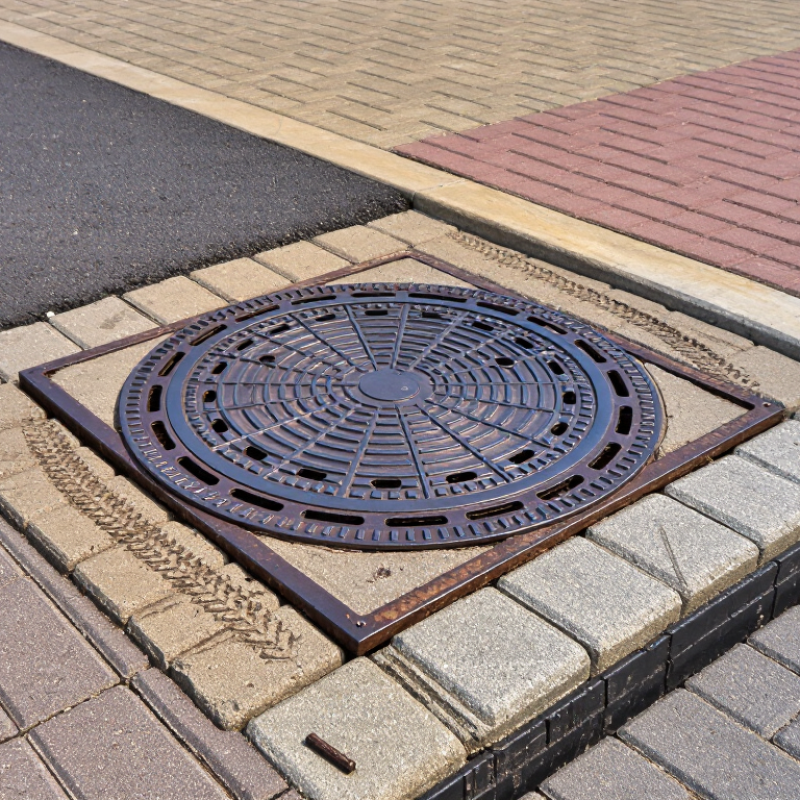
A manhole cover is the removable, load-bearing lid over an underground access chamber. It protects workers, pedestrians, and drainage systems from open shafts. The frame transfers traffic pressure into the surrounding pavement, not just the lid. That detail is often overlooked.

The right choice matters because failure can be sudden. A loose cover may rock under a bus wheel, create noise, or damage the frame. An unsuitable design can also admit stormwater, grit, and debris. The U.S. Environmental Protection Agency’s 2022 Clean Watersheds Needs Survey estimated $630.1 billion in wastewater infrastructure needs. Access components are small, but repeated failures add maintenance costs. The American Society of Civil Engineers gave U.S. wastewater infrastructure a D+ grade in its 2021 report card.

Selection should begin with location and loading. A pedestrian walkway needs a different class from a freight route or airport apron. EN 124 load classes help engineers match covers to expected forces. Material, anti-slip texture, hinge security, ventilation, and corrosion resistance also deserve review. Measure the clear opening and frame before ordering. Field experience shows that drawings are not always accurate. A perfect cover can still fail on a damaged seating ring or weak pavement.

Some choices remain uncertain. Heavy cast iron is durable, yet lifting risks increase. Lightweight composite covers reduce handling effort, but local acceptance may vary. A documented inspection, realistic load assessment, and qualified installation team make the decision more reliable.

How to Choose the Right Manhole Cover in 2026?

What Is a Manhole Cover and Why Does the Right Choice Matter?

Manhole covers provide safe access to underground utility, drainage, and inspection chambers while protecting pedestrians, vehicles, and infrastructure. The chart compares the load-test ratings defined by EN 124-2. Select the class according to the location and expected traffic: A15 is intended for pedestrian areas, while D400 is commonly used for roads and vehicle-access areas. The listed values are test loads in kilonewtons, not a direct estimate of everyday vehicle weight. Always confirm local regulations, installation conditions, support frames, and traffic requirements before specification.

How to Assess Load Ratings, Traffic Conditions, and Safety Requirements

How to Choose the Right Manhole Cover in 2026?

A manhole cover should match the site’s real load, not an optimistic estimate. Record vehicle types, axle weights, turning movements, and traffic frequency. A quiet parking bay differs greatly from a freight route or airport service road. Check the required load rating against current engineering standards and local authority requirements. Leave a reasonable safety margin. Heavy vehicles create dynamic impact, especially over uneven frames.

Inspect the installation area closely. A cover beside a junction may experience braking, vibration, and repeated wheel strikes. Measure the clear opening, frame depth, support condition, and surrounding pavement. The frame must sit firmly and evenly. Even a strong cover can fail when its frame rocks on weak concrete. That detail is often missed.

Safety also depends on daily use. Choose an anti-slip surface where rain, mud, or oil may collect. Locking systems can reduce displacement, theft, and accidental opening. Hinged designs may improve handling, but they still need controlled access. Consider ventilation needs before selecting a sealed model. Workers also need safe lifting points and practical maintenance access.

In field inspections, small defects often reveal larger problems. Rust around the frame, loose bedding, or a sharp height difference deserves immediate review. Never rely only on a catalogue rating. Ask a qualified engineer to verify unusual sites, changing traffic patterns, and flood-prone locations. I have seen simple assumptions age badly. Recheck the choice when road use changes.

Which Materials, Shapes, Sizes, and Locking Features Should You Compare?

Choosing a manhole cover in 2026 starts with the site, not the catalogue. Record traffic loads, opening dimensions, drainage conditions, and maintenance frequency. A cover beside a school entrance needs different protection from one inside a fenced utility yard. Cast iron handles heavy traffic well, while ductile iron offers high strength with reduced weight. Composite materials resist corrosion and can reduce lifting effort, but performance depends on formulation and installation. Stainless steel suits aggressive, wet environments, although its price may challenge a fixed budget. Weight is not everything.

Round covers remain common because they cannot fall through matching circular openings. Square or rectangular covers can fit paved layouts better, especially near walls and channels. Measure the clear opening, frame dimensions, depth, and seating surface separately. A few millimeters matter. Select the load class from actual use, including delivery vehicles, not occasional assumptions. Check surface texture and drainage grooves; standing water can freeze, stain paving, or accelerate corrosion. A recurring inspection lesson is that drawings often omit frame depth, causing expensive site adjustments. That detail is easy to miss.

Compare recessed bolts, hinged locks, captive fasteners, and key-operated systems. The best choice balances tamper resistance with emergency access. Hinges prevent misplaced covers, yet they need clearance and corrosion-resistant pins. Test whether workers can operate the lock while wearing gloves in rain. Request test data, installation tolerances, and replacement-part availability. Independent certificates strengthen supplier claims. A secure lock is useless if the frame rocks under a truck. Recheck the specification after visiting the site; plans are rarely perfect.

How Do Drainage, Corrosion, Maintenance, and Installation Affect Selection?

How to Choose the Right Manhole Cover in 2026?

Drainage conditions should guide the first decision. A cover above a busy road needs reliable load resistance, not just a heavy appearance. EN 124-2:2015 classifies covers by load area, from pedestrian zones to high-traffic locations. Measure traffic, wheel paths, flood depth, and opening size before specifying.

A narrow frame can restrict cleaning tools. That mistake is common.

Corrosion deserves equal attention. NACE’s IMPACT study estimated global corrosion costs at approximately US$2.5 trillion annually, or 3.4% of global GDP. Protective coatings, suitable ductile iron, and stainless components can reduce exposure.

However, no coating survives careless installation indefinitely.

Salt, standing water, and damaged edges create small failures first. Inspect the underside, too. It often tells the truth.

Maintenance access affects the total cost. The World Bank’s What a Waste 2.0 report estimated 2.01 billion tonnes of municipal solid waste generated globally in 2016. Debris can enter drainage systems through damaged or poorly seated covers.

Choose lifting points that crews can safely reach and replaceable seals where odors matter. Installation should leave the frame level with the finished surface.

A few millimeters can cause impact, noise, and premature cracking. I would not specify a cover from drawings alone. Site observation still matters.

How to Match Manhole Cover Standards and Costs to the Project Needs

How to Choose the Right Manhole Cover in 2026?

How to Match Manhole Cover Standards and Costs to the Project Needs

A manhole cover must match its location, traffic load, and maintenance conditions. A pedestrian walkway needs different protection than a busy freight road. In Europe, EN 124 load classes range from A15 to F900. Local authorities may require additional tests, dimensions, or locking systems. Always confirm the project specification before ordering. A familiar standard is not automatically enough.

Cost decisions should include more than the purchase price. Compare material strength, coating quality, hinge design, installation time, and expected service life. Ductile iron may cost more than basic cast iron, but it can reduce cracking and replacement work. Covers in coastal areas also need stronger corrosion resistance. Ask for test reports, load classifications, and traceable production records. These documents support reliable procurement and future inspections.

Small details matter.

A cover that fits poorly can rock, smell, or create dangerous noise. Measure the clear opening, frame depth, surrounding pavement, and drainage level on site. I have seen budgets focus heavily on the cover while ignoring frame installation. That approach creates hidden costs. It is also worth checking whether lifting tools and replacement parts are locally available. Some specifications seem clear until construction begins. Rechecking measurements and standards before delivery may feel repetitive, but it prevents expensive corrections.


Powder Coat Booths

For those larger-sized parts, or smaller quantity runs, we have 2 independent powder coat booths and ovens. The quality, durability and affordability of today’s powder coating finishes make this the process of choice for world-class companies.

Powder coating advantages over other forms of coating are many. Materials used in the Powder coating process can be metals and non-metals that come in a multitude of thicknesses, textures, colors, etc. Another of Powder coating’s biggest advantages over conventional coatings is its ability to create finishes in many different textures. Powder Coating Booths allow us the ability to apply these advantages to large products.

Wet Paint Line

Tri-State Fabricators runs a full-service conveyor line for painting. Wet painting can provide protection or decoration to many different part styles. From start to finish, every project is easier to undergo random and point-based inspection by our skilled painting team.

Advantages to our Wet Paint Line are these lines start with product prep and ends with a thorough inspection of a high quality finished product. Our ability to complete large and small projects with a superior finish and doing so in a timely and economical fashion. This passes along the savings in production to our customers. When powder coating ins not an option, our Wet Paint Line gets the job done right the first time.

Wet Paint Booths

When the parts get big and heavy we roll-out our custom paint racks and oversize booth. By utilizing our partnerships with all the major paint brands, we can match virtually any color with wet paint.

The advantages of having access to a Wet Paint Booth are many. Large projects of many different shapes can be loaded into the booth. The Wet Paint Booth offers an environment that is much more controlled than a typical parts painting operation.

Not only are they used because of their controlled environment, but they’re are also advantageous when it comes to applying paint to parts that are needed in industries that require specialty coatings such as medical, aerospace, etc.

Military CARC

Our military forces have some very high standards when it comes to the finish of their vehicles and equipment. From the first pre-treatment step to final coat, it takes a great deal of knowledge and experience to protect the men and women of our armed forces. They deserve only the best, and Tri-State Fabricators provides it.

All of our processes are closely monitored by our staff and management teams. Both of which are highly trained in the processes of metal fabrication and finishing. Tri-State Fabricators’ goal is to always fully satisfy each and every customer, including the military. We will always put a 110% into what we do.

Glass-Bead Blasting

Abrasive media blasting is an excellent way to remove old paint, rust, and increase the paint/powder adhesion. Glass beads produce a much smoother and brighter finish than angular abrasives; leaving the part clean yet without any dimensional change. Chemically inert and environmentally friendly, we can recycle our beads approximately 30 times; making them a more preferred method of metal cleaning or surface finishing.

Advantages to Glass Bead Blasting are many. Glass bead blast media is used when a project is needing rough surfaces need to become smooth for applications of coatings such as paint. It is typically used to clean paint and rust from a product surface without deforming the surface it is being used on. Overall, compared to many other blasting media, Glass Bead Blasting is a very economical choice and those savings are always passed on to our customers.

Part Washing

Tri-State Fabricators utilize a zinc phosphate wash to clean and etch the material to ensure the best paint adhesion possible. The unique design of our 3-stage wash system does the work like a 5-stage. From Cleaning and rinsing to conversion coating and post-treatment, Our Part Washing process is a complete service and works throughout the fabrication service and the finishing service.

Along with the previously mentioned benefits, Curing is a vital chemical reaction that leaves the product finish hard and relatively safe from mild abrasion and aggressive corrosion. This process can be done in more than one way; ambient air-dry or in curing ovens at temps that exceed 240°.

Burn-Off Oven

From fixing paint mistakes (someone else’s of course) to simply cleaning our paint line hooks, our burn-off oven is put to good use. After a quick burn-off, a little clean up, and a fresh coat of paint, your parts will look better than new.

Why does our Burn-Off Oven work so well? Because super heating the air around parts turns the materials into ashes. From paint and powder coatings to rubber and machining oils, high temps do the job without degrading the integrity of the part.

Masking

Masking is a vital part of producing high quality products. We have die-cut masking patterns to protect machined surfaces as well as a wide range of plugs and caps to protect threaded holes and bolts. We provide permanent and temporary masking.

Masking allows the selected sections of a product to be protected from a fabrication or finishing service. This can be with both chemicals when etching and tapes, paints when only finishing just a section of the product. Masking is great in aiding the customization process of a project.

Screen Printing

Screen printing is a photographic process that transfers artwork onto a porous nylon screen which allows colored ink to flow through the screen and be deposited on an aluminum or plastic component. We can generally have just about any design created onto a screen for your parts.

Some of the advantages of Screen Printing are, brand recognition for your business displaying on your products, assembly instructions, product warnings/hazards, etc. Tri-State Fabricators produces Screen Printing of the highest quality so you know it’s durable.

Metal Finishing

Metal Finishing is the art of treating the exterior portion of product, often metal but can also be made of other materials, so that the surface is clean and free of any debris. Then the process of applying coats or either paint of powder coat takes place. This coating process improves the quality of the product in both appearance and resistance to wear and corrosion.

Tri-State Fabricators, Inc., understands that a project typically isn’t complete until a high-quality finish has been added to your product. This is why our painting and powder coating teams continuously inspect the products throughout the Metal Finishing process.


