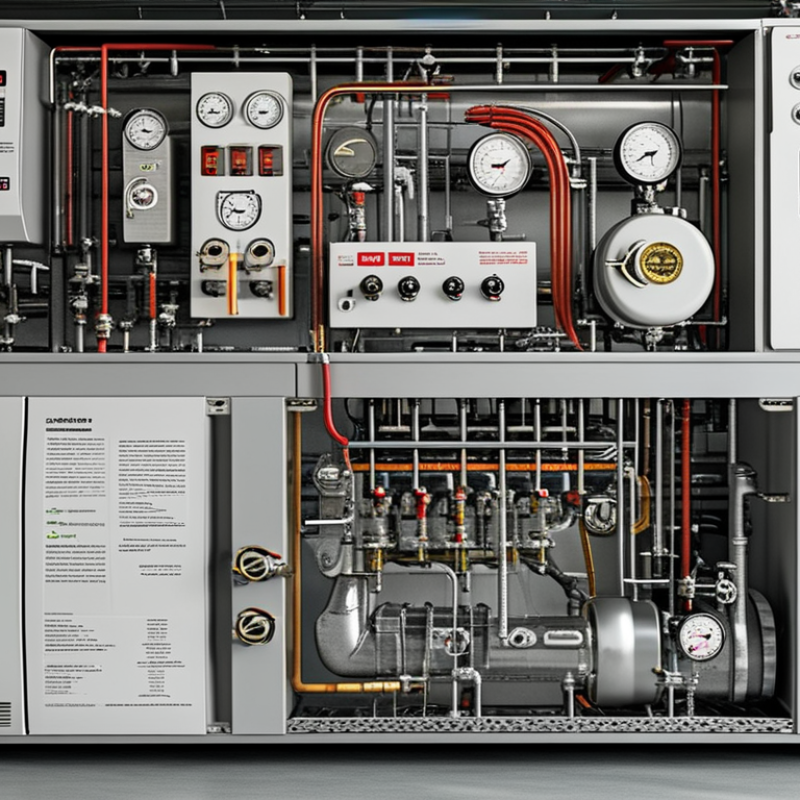
How to Choose the Right Oil Steam Boiler?

Choosing the right Oil Steam Boiler is not simply a matter of selecting the highest output. It requires a careful match between steam demand, fuel availability, operating pressure, and site conditions. A small food factory may need steady process steam at 6 bar, while a hotel could require shorter heating cycles and flexible load control. These differences matter. A boiler that performs well in one building may waste fuel in another.

This guide examines practical factors that influence a reliable purchase. It considers thermal efficiency, burner control, water treatment, emissions performance, safety systems, and maintenance access. Experienced operators often check the inspection door, burner response, and drain points before trusting a supplier’s brochure. Technical documents should clearly state capacity, pressure ratings, fuel consumption, and applicable certification requirements. Independent engineers can also verify whether the proposed Oil Steam Boiler fits the plant’s piping and electrical systems.

Details are easy to overlook.

For example, poor water quality can create scale inside tubes, reducing heat transfer and increasing operating costs. Inadequate ventilation may affect combustion and workplace safety. A low purchase price can also hide expensive servicing, difficult parts availability, or frequent shutdowns. These concerns deserve honest consideration, not optimistic assumptions. Even careful planning has limits, because future production may change. By comparing lifecycle costs, supplier support, and real operating conditions, buyers can make a more defensible and dependable decision.

How to Choose the Right Oil Steam Boiler?

Define Steam Demand and Pressure Under ASME Section I or IV Limits

How to Choose the Right Oil Steam Boiler?

Define Steam Demand and Pressure Under ASME Section I or IV Limits

Begin with measured steam demand, not burner capacity. Record the lowest, normal, and peak loads in lb/h. Include startup loads, seasonal variation, and future production changes. The U.S. Department of Energy’s Steam System Survey Guide notes that steam systems can represent nearly 30% of industrial energy use. That figure makes correct sizing financially important.

Pressure determines the applicable ASME pathway. Section IV generally covers low-pressure steam heating boilers operating at 15 psig or below. Section I covers power boilers, commonly above 15 psig, subject to jurisdictional requirements. Confirm the design pressure, safety-valve setting, and allowable working pressure with a qualified engineer. Do not treat operating pressure as a casual estimate.

Oil selection also depends on feedwater temperature, condensate return, blowdown, and burner turndown. The IEA’s Energy Efficiency 2023 report places industry near 37% of global final energy demand. Small efficiency losses can therefore become persistent costs. Field checks often reveal oversized boilers cycling every few minutes. That wastes fuel and may shorten component life. A neat spreadsheet can still be wrong. Validate calculations against pressure logs, flow meters, and actual operating hours. Some assumptions may need revision after commissioning.

Compare Fire-Tube and Water-Tube Designs by Capacity and Operating Pressure

How to Choose the Right Oil Steam Boiler?

Capacity and operating pressure should guide the boiler choice, not appearance or purchase price. Fire-tube boilers send hot combustion gases through tubes surrounded by water. They suit small to medium steam loads and low or moderate pressures. Their design is relatively simple, and operators often find routine inspection manageable. However, the large water volume stores more energy and can make load changes slower.

Water-tube boilers move water through narrow tubes heated by external gases. This arrangement handles higher pressures and larger capacities more effectively. It also responds quickly when production demand rises, such as during a sharp morning start-up. The trade-off is greater sensitivity to water quality, burner adjustment, and maintenance discipline. Poor treatment can damage tubes quickly.

A useful selection begins with measured steam demand, not an estimated peak. Record normal load, maximum load, start-up time, and required pressure. A 10-ton-per-hour boiler may be wasteful if the plant usually needs four tons. That mistake is common. Check whether the system needs saturated steam or tighter pressure control. Fire-tube equipment may be practical for steady process heating, while water-tube equipment often fits high-pressure, rapidly changing operations. Oil type, fuel availability, chimney design, local codes, and qualified inspection requirements also affect the decision. In real projects, I would rather question an optimistic load calculation than approve an oversized boiler. Pressure safety margins must be verified by a licensed engineer.

How to Choose the Right Oil Steam Boiler?

Fire-Tube vs. Water-Tube Designs by Typical Capacity and Operating Pressure

Water-tube boilers are generally better suited to large steam outputs and higher operating pressures, while fire-tube boilers are commonly selected for small-to-medium industrial steam applications with moderate pressure requirements.

The values shown are representative upper-range design figures for oil-fired industrial steam boilers, not fixed limits. Actual performance depends on boiler code, fuel system, materials, feedwater conditions, and manufacturer-specific design.

Use the 80–85% Efficiency Range to Assess Oil Boiler Performance

How to Choose the Right Oil Steam Boiler?

The 80–85% efficiency range is a practical screening point for many oil-fired steam systems. It is not a guarantee of low fuel use. Ask whether the figure means combustion efficiency, seasonal efficiency, or AFUE. These measurements are different. A boiler showing 84% during a burner test may perform worse across a cold, poorly insulated winter. Look beyond the label.

During inspection, check the flue, burner, piping, and steam controls. A qualified technician should record stack temperature, oxygen, carbon monoxide, smoke level, and draft. Clean heat-transfer surfaces usually keep stack temperatures controlled. Soot acts like an insulating blanket. Small losses matter. Steam distribution also affects performance. Uninsulated mains can fill a basement with heat while rooms remain chilly. Incorrect near-boiler piping can cause wet steam, short cycling, and extra firing. Choose a design that matches the building load, not only the boiler size.

A reliable purchase should include written commissioning data and a clear maintenance schedule. In practice, the 80–85% range is useful, but it needs context. Fuel quality, nozzle condition, operating pressure, and chimney draft can change results. I would question any quote promising identical savings in every building. That expectation needs testing. Compare fuel records before and after installation, preferably through a full heating season. Have qualified professionals verify combustion and safety controls. A modestly rated boiler with sound piping may outperform a larger unit installed poorly.

Check Burner Emissions and Safety Compliance with NFPA 31 Standards

How to Choose the Right Oil Steam Boiler?

Choosing an oil steam boiler requires more than comparing heating capacity. Check the burner’s combustion performance, venting design, and safety controls against the locally adopted NFPA 31 requirements. A qualified technician should verify fuel piping, emergency shutoff access, clearances, and chimney connections before startup.

During commissioning, measure carbon monoxide, oxygen, carbon dioxide, smoke level, draft, and flue-gas temperature with calibrated instruments. Do not judge combustion by flame color alone. It is only a clue. A clean flame can still hide poor draft or excessive carbon monoxide. Confirm that the burner shuts down when flame failure, overheating, or low-water conditions occur. Test each control under realistic operating conditions.

NFPA 31 addresses installation and fire safety, while local environmental rules may set separate emissions limits. Ask the installer to identify both requirements in writing. Keep combustion readings, inspection dates, control tests, and maintenance records near the boiler. A carbon monoxide alarm should also be installed outside sleeping areas, according to local guidance. One detail is easy to miss: an accessible shutoff valve matters during a smoky startup or fuel leak. I would rather question an undersized vent, an unclear inspection record, or a rushed adjustment than accept a boiler that merely appears to run well.

How to Choose the Right Oil Steam Boiler? — Burner Emissions and NFPA 31 Safety Compliance

Selection Dimension Recommended Evaluation Data Preferred Selection Guidance NFPA 31 / Safety Consideration
Required Steam Output Select the boiler from the calculated connected load, expressed in Btu/h or kg/h of steam. Include a reasonable design margin without significantly oversizing the boiler. Use a heat-loss and steam-load calculation rather than selecting solely by building floor area. Proper sizing supports stable firing, reduces short cycling, and helps maintain safe operating conditions. Installation must follow the manufacturer’s instructions and applicable codes.
Oil Grade and Fuel Compatibility Confirm the approved fuel grade, viscosity range, sulfur content, storage temperature, and burner nozzle specification. Choose a burner and pump that are listed for the intended fuel and operating conditions. Do not change fuel grade without checking the burner manufacturer’s instructions. Fuel piping, tanks, valves, supports, leak protection, and emergency shutoff arrangements must comply with the adopted edition of NFPA 31 and local regulations.
Combustion Efficiency Review the manufacturer’s tested steady-state efficiency, stack temperature, excess oxygen, smoke number, and operating turndown data. Prefer a properly matched burner and boiler with stable combustion across the normal operating range. Efficiency claims should be supported by commissioning measurements. NFPA 31 addresses safe installation and operation; it does not replace local air-quality emission limits.
Carbon Monoxide (CO) Measure CO in the flue gas with a calibrated combustion analyzer and verify that indoor ambient CO remains within the limits required by local health and building regulations. Select equipment that can be tuned to low, stable CO under both start-up and normal load conditions. NFPA 31 requires safe combustion-air, venting, and equipment installation practices; it should not be interpreted as a universal numerical CO emission limit. Follow the appliance listing and jurisdictional requirements.
Smoke and Soot Check smoke level using an approved smoke test method and inspect heat-transfer surfaces for soot accumulation during commissioning and service. Reject a burner that produces visible smoke, unstable flame, repeated lockouts, or rapid soot formation after correct adjustment. Correct nozzle selection, draft, combustion air, fuel pressure, and chamber conditions are essential to prevent incomplete combustion and fire hazards.
Combustion Air Supply Verify that the boiler room has adequate permanent combustion and ventilation air for the total fuel-burning equipment load. Provide engineered openings or a listed mechanical air-supply system where natural air supply is insufficient. Combustion-air openings must remain unobstructed and must be arranged in accordance with NFPA 31, the appliance instructions, and the adopted building code.
Draft and Flue-Gas Venting Record breeching or chimney draft, flue-gas temperature, vent diameter, material, height, and termination arrangement. Use a correctly sized, listed venting system that maintains stable draft without causing flame impingement or excessive heat loss. The venting system must be compatible with the appliance, protected from unsafe temperatures, accessible for inspection, and installed according to NFPA 31 and the applicable mechanical code.
Primary Safety Control Confirm the burner has a listed primary safety control with flame detection, ignition supervision, safety lockout, and manual reset after unsafe ignition failure. Choose controls listed for the specific burner and fuel system, with clearly documented trial-for-ignition and lockout functions. Never bypass flame safeguards, interlocks, or lockout controls. Safety controls should be tested by qualified personnel during commissioning and maintenance.
Fuel Shutoff and Emergency Stop Verify the location, accessibility, labeling, and operation of the manual fuel shutoff valve and emergency burner shutdown device. Install shutoff controls where operators and emergency responders can reach them without entering an unsafe area. Fuel shutoff arrangements, emergency controls, piping, and valve accessibility must follow NFPA 31, the equipment listing, and local fire-code requirements.
Operating Pressure and Relief Protection Check the maximum allowable working pressure, operating pressure setting, safety-valve capacity, low-water cutoff, and feedwater-control arrangement. Select a boiler with safety devices suitable for the required steam pressure and have controls verified before operation. Steam boilers require code-compliant pressure relief and low-water protection. Applicable boiler and pressure-vessel codes may impose requirements in addition to NFPA 31.
Clearances and Service Access Record required clearance from combustible materials, burner service space, access-panel clearance, and room ventilation space. Allow enough space to remove the burner, inspect the heat exchanger, clean the flue passages, and test safety devices. Use the greater of the manufacturer’s listed clearance or the applicable code requirement. Do not store combustible materials in the boiler service area.
Commissioning Documentation Keep records of nozzle size, pump pressure, draft, O₂, CO, stack temperature, smoke test, safety-control tests, and final operating settings. Require a signed start-up report from a qualified technician and retain it with the equipment service records. Documentation helps demonstrate that installation, adjustment, inspection, and maintenance were completed in accordance with the adopted standards and manufacturer instructions.
Maintenance and Inspection Frequency Schedule at least annual professional inspection and combustion testing, with more frequent service for high-use, dirty-fuel, or soot-prone systems. Choose equipment with accessible filters, nozzles, electrodes, inspection ports, and heat-transfer surfaces. Maintenance should include leak inspection, vent inspection, burner adjustment, safety-control testing, and cleaning. Follow NFPA 31, the manufacturer’s schedule, and local authority requirements.

Note: NFPA 31 primarily addresses the safe installation of oil-burning equipment and related fuel systems. Emission limits, boiler certification, pressure-vessel rules, and inspection requirements may also be governed by local air-quality authorities, mechanical codes, fire codes, and adopted boiler standards.

Calculate Lifecycle Cost Across Fuel Use, Maintenance, and 15-Year Service Life

How to Choose the Right Oil Steam Boiler?

Choosing an oil steam boiler requires more than comparing purchase prices. The real decision is its lifecycle cost over fifteen years. Start with measured steam demand, operating hours, and local fuel prices. A boiler running below its practical load may waste fuel through cycling and standby losses. Record seasonal demand, not just the busiest production day.

Estimate annual fuel use from rated efficiency and expected operating load. Then add burner servicing, water treatment, inspections, seals, pumps, controls, and soot removal. Include installation costs, storage equipment, chimney work, and disposal fees. Fuel often dominates the budget. Maintenance still matters. A neglected heat-transfer surface can raise consumption while reducing steam output. Small losses accumulate.

Use a spreadsheet with yearly costs, expected fuel-price increases, and a realistic discount rate. Compare the total present value, not merely the first invoice.

Include major repairs, such as refractory replacement or burner renewal, during the fifteen-year period. Also price lost production during shutdowns.

A technician’s inspection can reveal poor insulation, unstable combustion, or difficult access to service parts. Those details affect labor hours.

The numbers will never be perfect. Fuel prices change. Production may fall. A confident forecast can still be wrong. Test several scenarios, including low-load operation and unusually expensive fuel. Water quality deserves special attention because scale can quietly shorten service life. Choose the boiler with the strongest cost performance under your actual operating conditions, leaving a sensible contingency reserve.

Powder Coat Booths

For those larger-sized parts, or smaller quantity runs, we have 2 independent powder coat booths and ovens. The quality, durability and affordability of today’s powder coating finishes make this the process of choice for world-class companies.

Powder coating advantages over other forms of coating are many. Materials used in the Powder coating process can be metals and non-metals that come in a multitude of thicknesses, textures, colors, etc. Another of Powder coating’s biggest advantages over conventional coatings is its ability to create finishes in many different textures. Powder Coating Booths allow us the ability to apply these advantages to large products.

Wet Paint Line

Tri-State Fabricators runs a full-service conveyor line for painting. Wet painting can provide protection or decoration to many different part styles. From start to finish, every project is easier to undergo random and point-based inspection by our skilled painting team.

Advantages to our Wet Paint Line are these lines start with product prep and ends with a thorough inspection of a high quality finished product. Our ability to complete large and small projects with a superior finish and doing so in a timely and economical fashion. This passes along the savings in production to our customers. When powder coating ins not an option, our Wet Paint Line gets the job done right the first time.

Wet Paint Booths

When the parts get big and heavy we roll-out our custom paint racks and oversize booth. By utilizing our partnerships with all the major paint brands, we can match virtually any color with wet paint.

The advantages of having access to a Wet Paint Booth are many. Large projects of many different shapes can be loaded into the booth. The Wet Paint Booth offers an environment that is much more controlled than a typical parts painting operation.

Not only are they used because of their controlled environment, but they’re are also advantageous when it comes to applying paint to parts that are needed in industries that require specialty coatings such as medical, aerospace, etc.

Military CARC

Our military forces have some very high standards when it comes to the finish of their vehicles and equipment. From the first pre-treatment step to final coat, it takes a great deal of knowledge and experience to protect the men and women of our armed forces. They deserve only the best, and Tri-State Fabricators provides it.

All of our processes are closely monitored by our staff and management teams. Both of which are highly trained in the processes of metal fabrication and finishing. Tri-State Fabricators’ goal is to always fully satisfy each and every customer, including the military. We will always put a 110% into what we do.

Glass-Bead Blasting

Abrasive media blasting is an excellent way to remove old paint, rust, and increase the paint/powder adhesion. Glass beads produce a much smoother and brighter finish than angular abrasives; leaving the part clean yet without any dimensional change. Chemically inert and environmentally friendly, we can recycle our beads approximately 30 times; making them a more preferred method of metal cleaning or surface finishing.

Advantages to Glass Bead Blasting are many. Glass bead blast media is used when a project is needing rough surfaces need to become smooth for applications of coatings such as paint. It is typically used to clean paint and rust from a product surface without deforming the surface it is being used on. Overall, compared to many other blasting media, Glass Bead Blasting is a very economical choice and those savings are always passed on to our customers.

Part Washing

Tri-State Fabricators utilize a zinc phosphate wash to clean and etch the material to ensure the best paint adhesion possible. The unique design of our 3-stage wash system does the work like a 5-stage. From Cleaning and rinsing to conversion coating and post-treatment, Our Part Washing process is a complete service and works throughout the fabrication service and the finishing service.

Along with the previously mentioned benefits, Curing is a vital chemical reaction that leaves the product finish hard and relatively safe from mild abrasion and aggressive corrosion. This process can be done in more than one way; ambient air-dry or in curing ovens at temps that exceed 240°.

Burn-Off Oven

From fixing paint mistakes (someone else’s of course) to simply cleaning our paint line hooks, our burn-off oven is put to good use. After a quick burn-off, a little clean up, and a fresh coat of paint, your parts will look better than new.

Why does our Burn-Off Oven work so well? Because super heating the air around parts turns the materials into ashes. From paint and powder coatings to rubber and machining oils, high temps do the job without degrading the integrity of the part.

Masking

Masking is a vital part of producing high quality products. We have die-cut masking patterns to protect machined surfaces as well as a wide range of plugs and caps to protect threaded holes and bolts. We provide permanent and temporary masking.

Masking allows the selected sections of a product to be protected from a fabrication or finishing service. This can be with both chemicals when etching and tapes, paints when only finishing just a section of the product. Masking is great in aiding the customization process of a project.

Screen Printing

Screen printing is a photographic process that transfers artwork onto a porous nylon screen which allows colored ink to flow through the screen and be deposited on an aluminum or plastic component. We can generally have just about any design created onto a screen for your parts.

Some of the advantages of Screen Printing are, brand recognition for your business displaying on your products, assembly instructions, product warnings/hazards, etc. Tri-State Fabricators produces Screen Printing of the highest quality so you know it’s durable.

Metal Finishing

Metal Finishing is the art of treating the exterior portion of product, often metal but can also be made of other materials, so that the surface is clean and free of any debris. Then the process of applying coats or either paint of powder coat takes place. This coating process improves the quality of the product in both appearance and resistance to wear and corrosion.

Tri-State Fabricators, Inc., understands that a project typically isn’t complete until a high-quality finish has been added to your product. This is why our painting and powder coating teams continuously inspect the products throughout the Metal Finishing process.